IP-Based Board Games - TCbH Podcast
Games in This Video
3 games are featured in this video — they unlock as you watch.


Transcript
Hello and welcome to the Cardboard Herald podcast. I am Eric joined uh as usual by my lovely Nebulous co-host Jack. Nailed it. Absolutely nailed it. The center of what you been playing Nebulus. Um I the main thing I've been playing is a game that I am play testing for myself. I've been working on a design the last couple weeks. Uh, how dare you not tell me all about this over the last couple of weeks. What you playing? Honeymoon Wist trick taking game, which is two-player trick taking. Whoever wins the trick gets a card that's face up on the deck and then whoever loses the trick just gets a random card. Uh, so you are trying to lose tricks that aren't going to help you and you try to win tricks that are going to help you.
And that's just that's space. That's what honeymoon wist is. Uh, and I'm trying to make it a astro mining. You are trying to place all of your space stations by the end of the game and you get different resources based on what combination of tricks you win. Um, is the theme at all inspired by Galactic Cruise plays that you've had lately? Well, a little bit. Um, it started well and it started way I I've had this one kicking around in my head for for a while. Uh, I I mentioned it at PAX Unplugged to somebody who asked me what I've been designing recently and I've just now finally gotten it to the table. Not because I take a while to get things to the table. Like when I have an idea of play testing, I usually do it pretty quickly, but I just had such a I don't even know what this game is going to look like. whereas like I don't even know like what the objectives are going to be.
Um but it was actually gazebo that got me back into thinking about this game because I really liked the the win condition in gazebo is to actually get all of your pieces onto the board. Like that's how you win. There's no victory points. It doesn't matter how well you've played throughout. It is just how many who can be the first to get all of their gazeos onto the board. And that got me back into the, oh wait, this this is something that I've been wanting to try out. So, uh, are we going to see this at Pax Unplugged as like a unpub game? I mean, that might be a good opportunity for you. I mean, when you think about it, you are relatively early in your game design journey, uh, having dipped your toes into it, but you've gotten progressively more and more immersed. You've studied a lot. you have a lot of game designs that you've played around with that you've gotten to prototype stages and uh that's a big part of how you immerse yourself in this hobby and now you're in DC there's a vibrant design community there there's conventions you have access to I'd love to see it if the Cardboard Herald has a person who is in the UNPUB room not just looking at games but showing off games this is the game I have to offer. Well, yeah. And I mean, I think that's the that's the hope is that I will have something that is like easy to show or like able to show, especially you just because I like playing games with you.
And I also like your opinions on games for the most part. There are a couple we disagree on, but for the most part, I like your opinions on games. And so, it works out pretty well for me to like have you even just as like a oh, this is what I've this is what I got kicking around. what's what's going on with it? What can I fix here? Um, which that's just helpful. Um, but yeah, so I've been playing that. Uh, I've got another play of Galactic Cruisin. Uh, the solo mode is growing on me. I kind of wasn't the biggest fan of it to start. Like I I think it's such a solid game, but I think I mentioned previously that it feels like it's losing something by being solo mode. Like it feels like a lot of the part of the game that I'm going to really enjoy is going to be the social interaction and like the bumping players and like making choices of which players to bump. But the most recent playthroughs I've had have felt very uh much cleaner. And I think that also is just I'm I'm learning the game more.
I'm jumping up the difficulty scale because it has like a couple different difficulties you can play at. So remind me, are you playing that on BGA or is that a physical copy? Physical copy. Baby right there. Oh, it's a chunker. Big is a big Yeah. I was going to ask how is the setup and takedown on that game. So, so, so, so the when I first got the game, it has a welcome packet. I'm trying to open it to show you the welcome packet. which is hard to do. We get to have this amazing documentation of Eric's struggle to open a box. It comes with a welcome packet that first of all, I don't know if this comes with everybody's, but it for mine came with a lanyard. Uh it comes with like this letter like introducing you to the concept of the game.
Um a postcard. None of these have any functional reason to be in the game. Like none of these actually affect the game. It's all just flare. But then they have a system that is how you organize everything. It took me two hours to organize this. That's a chonker. But it's got a lot going on. Now it's all like generally pretty easy. Like these are all the pieces one player needs and I can just hand this to a player and that they're done. They're set up. They can do the rest of the setup by themselves, but that's that's all of their pieces. And it does it does get organized pretty well. The setup, I would say, is generally pretty easy, especially once you've played it a couple times. It still takes a little bit just cuz there are a lot of little pieces.
But all things considered, for how big of a game it is, setup is pretty smooth. Takeown not as smooth. That's the kicker. You know, you know, sometimes they always give you a take with it. You know, the the game that I wanted to mention uh that I've been playing is Rolling Heights, uh which is not like a brand new game, but it is cool. It's a John Declair joint that uh doesn't use a card sleeving mechanism like a lot of his most popular and innovative stuff. Um or or I guess the stuff he's most well known for. Um, but it's kind of like a mix between Suburbia and Past the Pig. Have you played Rolling Heights at all? I've not played Rolling Heights. I have played Past the Pig, which is very fun. Yeah, you're you're rolling meeples in a little chamber and the different meeples have different things that they give you. The basic ones give you resources. I I did the the Board Gamegeeek giveaway quiz for this. Okay.
I It's coming back to me. It's coming back to me. Yes, I remember this now. Yeah. So, it's I don't know that it's like a super innovative game. It combines two uh interesting concept cityb building and the classic game of Pass the Pigs. Uh and it does it with the uh I guess board game mascot that is Meeples. Uh, it takes a lot of, you know, little things in my brain that like to see things go up. You know, the meeples are doing things, contributing things, and I get to push my luck a little to have them actually do even better things based off of how they're standing or cocked or laying on their back. And it's just a real pleasant citybuer engine building game that uh you wouldn't anticipate uh really having that smooth of a transition in something that has rolling freaking meeples in a chamber on it. Um so you know that's pretty cool. And then uh also John Declair related. I haven't played these yet, but I did just get a bunch of All Play uh games in because they release like a billion games a year and they're like, "Hey reviewers, take a look at these games." But I'm legit excited about uh these ones, especially uh Ruins and Oddland uh looked particularly cool. And Ruins is another John Declair game that does have a sleeping mechanism, but it's like a card
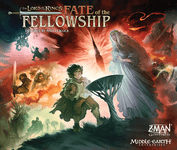
shedding game. So, kind of like, you know, a a an offshoot of trick taking, but you're also sle translucent um uh cards into an existing card to make them more powerful or modify them so that way they can be part of playing better hands. So, cool ideas. Looking forward to it. We'll probably cover that on the channel here soon. And that's uh that's kind of what's shaking around here. Well, and we also covered something else on the channel recently that I just think is worth noting, which is Fate of the Fellowship. Uh, The Lord of the Rings: The Pandemic System game. Yeah. What a title. That's the full title, right? That's that's what it is. I I think the full title is The Lord of the Rings, Fate of the Fellowship, and then there's like subtitle, a pandemic system game. Or maybe that's just kind of off in the margins on the box. I've noticed that in the iterations of their pandemic system games, which are not pandemic games, like this is not pandemic Iberia or, you know, the fall of Rome. This is the um Wrath of the Lich King, the Clone Wars, and now this.
They're very much like, "Hey, this is this game, a pandemic system game." Um, but yeah, it was on the channel and uh the the review seems to be doing really well. Uh the game is at the top of the hotness right now. Um it's probably probably because of the review almost certainly. Exactly. Yeah. And we'll take we'll take full credit for that. Um but that as well as uh our conversation last week uh has brought us to the topic of games based on other intellectual properties. Um Uhhuh. that's the theme for this week. The transition was not as smooth as it normally is. I'm so sorry for new listeners. Um, but we typically uh have a very smooth transition, not juttery at all. Uh, and by bringing it up, the fact that it's not smooth and that it's juttery this time, it makes it less juttery. Right.
Yeah. It's hanging a lamp on it, I think, is the like literary term, which many of these games are based off of literary properties. That is true. Well, and I think to start off with, we I just want to quickly talk about how we got to this topic because first of all, I suggested thematic games, which is a very nebulous concept, which is one of the reasons I gave you that adjective today. Uh, and it is just like we were going back and forth on what does this even mean for the the Golden Geek Awards. Uh, and then that kind of spiraled into, well, you know, Fate of the Fellowship I feel like is very thematic. And then he got on to other IP based games. And I think we also mentioned it in the podcast last week that this is a thing that gets done all the time in other forms of media where you are making something that is based off of an IP that already exists because it it makes it easier to sell it to an audience.
like there's already an audience that is wanting to buy content of this style. Like so much so many Star Wars books have been written because the universe already exists. It's easy to write within that universe. Uh some of that is no longer canon. So sorry to those people who wrote all of those pages about uh is Mara Jade still canon in Star Wars? Do you know that off the top of your head? Uh, come on. Star Wars is not like one of my, you know, like heartstrings. You know, I I like Star Wars, but I didn't go down the like offshoot novel route with Star Wars in the way that a lot of people have. You know, you want to talk to me about some Trek, you want to talk to me about some Middle Earth, I got your back on that.
I've read some Wikipedia articles about Warhammer 40k without ever playing Warhammer 40k proper outside of a couple skirmishes in high school. You know, like I, you know, played some while I worked at the shop, but you haven't gone on to Wikipedia. Listen, I can tell you who I88 is. You know, that's actually impressive. Good job. I know Salacious Crumb, okay? I know characters that have been in core Star Wars movies and I've gone down those rabbit holes. Beyond that, I I don't know what's legacy, what's canon. It's all a mess at this point. It is all a mess at this point.
Somehow Palpatine returned. That's all. Somehow he he always is doing that. It's nonsense. Even in the even in the extended universe. So, we I kind of wanted to talk about this just because there are so many games out there that are kind of trying to use other intellectual properties as a base. And I think that there is a unfortunate side effect that comes with that for a lot of these games, which is that they become these big bloated Kickstarter campaigns that end up being like not very fun games, but just a ton of miniatures thrown in there. So, there are a couple games that I've seen that are like that. Not going to name them necessarily, but there are there are a lot especially recently, especially as we've gone into the I think a lot more board games are have done that with Kickstarter where there are these huge massive campaigns for an IP that already exists. But then sometimes we get games that are kind of like that that then are very wellreceived. Like I know Slay the Spire has been very wellreceived.
Dead Cells has been very well received recently and those are based on video games. So I think that there's maybe something to that, but there's so many games entering our the zeitgeist based on uh other intellectual properties outside of board games such as Fate of the Fellowship. The latest entry such such as Fate of the Fellowship. And what's cool is in that review, uh, I was able to provide some historical context for some Lord of the Rings games as well as Matt Leok's relationship to cooperative games and impact on the um, impact on just board games as a whole.
But licensed games go back way farther than that, including the original War for the Ring, which was an SPI game. Like when we think of War of the Ring or War of the Ring second edition, that name is a reuse of an older war game, which I actually have on the shelf over there. I should have brought over for a nice visual, but yeah. uh you know like the the old War of the Ring SPI game is ancient uh by modern standards. I want to say it came out in the uh7s and it's um you know like something that the the Lord of the Rings was a massively popular book series, but it was still a book series.
It wasn't a movie series at that point, you know, like uh sure, yes, there's all this stuff about the Beatles were possibly going to do a Lord of the Rings uh movie there. There's cartoon adaptations, but you know, board games have been looking at ways of using uh fiction uh as a backdrop and not just as kind of cheap cashins like skins of uh you know, Risk and Monopoly and that kind of stuff for for ages. Um, so before we start talking about like specifically some of our favorites, what I thought would be a good starting point for us is like what what do you think is key to having a successful adaptation? You know, like to you what are the things that you look for?
I am really looking for a a game that plays with some of the themes from the at from from the original source material in a way that lets you connect with them further. So like that that felt like kind of surface level. So, one that I'll say is I think that Dune Imperium does a good job adapting the like political intrigue and you're kind of battling for Arachus, but you're also battling to just have more power and influence over the the world that you are on. Um, I think that does a great job for me. So, when I think of a good adaptation, that's one that I think of.
Um, yeah. So, something that I'm always looking for, you know, like uh one of the things in Fate of the Fellowship that I was worried about is that it would be a lazy adaptation, you know, like when something feels like a cash in um that doesn't understand, I guess, the thematic point of its material. Uh so you know like bringing it back to the Lord of the Rings uh with the Rhinarch Kitia Lord of the Rings game um you know one thing that's easy to give it flak for is the fact that uh the Lord of the Rings um famously you have your four hobbits who are going on this journey. You have Frodo, Sam, Mary and Pippen. Uh, and within the books, there is another part of their band, uh, Fatty Bulier, who's another friend, a part of their gang, and he has a role to play in Shire, but he he stays in Shire, essentially acting as Frodo. Spoilers for, you know, a 70-year-old book.
And um but uh he he's just kind of like a a an afterthought and it's also fun to you know make fun of his name. He's fatty. He's a little chunko. Uh you know his friends tease him but that's all in good hobbit jest. Um, and uh, Fredigar Bulier does not really take place uh, in the journey, but they needed a fifth player in the Rhinoia game. And so you can play as Fatty, which is a little immersionbreaking when you think about it. It's like Fatty Bulier was not, you know, like hanging out in Loth Laurian. This is not working for him. What? He wasn't. He wasn't there. But, but here's the thing. Here's what I'll say about that game. Uh, and I thought a lot about theme because we initially had the concept of just like theme and I think that we're going to do a part two to this conversation because we're starting with intellectual property and next week I would like to talk about like how theme is displayed in games. Just a a broader conversation. We don't have to have, you know, a top list or anything, but like ways that that games convey theme. And while there is the narrative breaking essence of having Fatty Bulier be a fifth hobbit that you can play as, the
game actually understands that none of the events are literally true to the books. You know, like the fact that you could have Strider as part of the fellowship going to Mordor, that's just as wrong to the narrative as having Fatty there. So, if that's going to be the case, okay, some concessions could be made because we need a fifth player. What I find so beautiful about that game is that it understands that inherently the Lord of the Rings, even though it's an adventuresome uh story and there's a lot of fighting happening, I don't think part of the messaging by Tolken was that war is won by by like winning great battles, like true war against evil, like you know, a a society struggling to survive. and persist and have identity and and understanding what it costs to participate in battle. Um, and that game, it has a lot of the kind of like hippie- dippy crap that a lot of people don't like about The Lord of the Rings, you know, like it's a lot of fellowship uh running away. It's a lot of um pacifism uh is used to conquer certain elements uh fight the despair and to be able to endure the pain of bringing the
ring to Mordor. And for being a game that came out in the late '9s uh in the naance of modern tabletop gaming, I think it does some really brilliant things to evoke the overall tone and essence of the Lord of the Rings, whether that was by design or by accident. um that a lot of Lord of the Rings games where it's like, yo, you could be Gimly and chop off a bunch of orcheads kind of misses the the fundamental point of the Lord of the Rings. Yeah. And I think that kind of goes hand inhand with just the the goal of the game.
It's tough to say that the goal of the game should be anything other than we want a fun game because we do want a fun game first and foremost. Absolutely. The game should be fun. Second of all, the game should treat the source material with respect and just in the way of like, you know, I think that having Fatty Bulier maybe an odd choice, but if it is like this is the core trait of what makes Lord of the Rings Lord of the Rings, uh, then I think all the play and especially if it's a fun game at that point, all the players are going to be pretty Yeah. And also, you know, like there's a way of being respectful, but also being playful in the right way, you know, laughing alongside something instead of uh laughing at, you know, um it's nice to have little memes and hilarious things uh here and there. Of course, Middle Earth is is one of my settings, right? And so, you know, like there are things that I make fun about it all the time. And I would say games like uh Fate of the Fellowship as well as uh The Lord of the Rings tricktaking game do a very good job at having Easter eggs that are the kind of sillier things that the fandom itself embraces, makes fun of, acknowledges. Um so you can have a little irreverence while still being reverent in a way. Um, but you know,
like I I I don't want to just saddle myself entirely in the world of uh Lord of the Rings or even Dune uh because I think that's um uh you know like Dune is like the sci-fi equivalent of the Lord of the Rings. Um, that's a So, one intellectual property that I I think is is worth just kind of like diving into is Lovecraft, you know, like the the shared universe of Lovecraft. And of course, that's because it's in the public domain, right? So, you know, like and of course, you have other things like uh Frankenstein or Frankenstein's monster. Um, you have Dracula and kind of Eastern European vampire uh, mythos, but those aren't nearly as popular in tabletop gaming as Lovecraft. Just Cthulhu, the, you know, Shagaths. Uh, just who doesn't love a good shith?
Exactly. Who doesn't love a good insmouth fishy people abound for whatever reason? Um, this has really been part of the core identity of tabletop gaming for so long. And I think there's probably like a cool documentary to be made on the history and like obsession that uh, Tabletop Gaming has with Lovecraft. There's just so much. And I I think that part of it comes with first of all it's in public domain so it's it it's you can adapt it pretty freely which I think does incentivize people to adapt it. Um right second of all it is just such a well doumented lore. It's a really interesting lore of like here are all the monsters. here are the things that need to happen for these monsters to to really ruin some days uh or all of the days. Um and it it gives uh automatic stakes, you know, cosmic horror gives like worldending stakes, but the characters, the human characters generally tend to be regular people, right?
And I I think the other appealing thing about it is that you don't have to have the same level of reverence mainly because of the kind of like terrible reputation by modern standards of Lovecraft himself. You know, like he's a an incredibly problematic individual and not even from a like, oh, you know, he's of his time. like even at his time. No, even at his time was pretty pretty wild uh in some of his opinions. And that said, that said, he uh is one of the foundational pillars of American contribution to literature uh in how the the horror genre developed uh in America based off of a lot of his work. And so I think because of that it gives permission to kind of dissect the lore and do with it what you will as opposed to say uh uh Middle Earth which I think if Middle Earth were in the public domain there would still be deep nerds like myself who are like but Tolken had it this way and we need to treat it this way. And yes, there are plenty of reasons why Tolken is a product of his time and you could get into he's not a
perfect individual, but I will die on the hill that he was a far cry from uh HP Lovecraft as far as Do we know what he literary? Do we know what Tolkien named his cat? We should look this up. Uh no, but we do know uh how he told off the Nazis when they asked him if he had any Jewish heritage. so that way they could publish a translation of The Hobbit in German. And he was essentially like, "F you. How dare you ask that? And I am sorry to say that I do not have the noble heritage of the Jewish people, but you are the most awful and I hate you and do not publish my book." Um, so we have that. We have that. It doesn't seem like he had a cat from my very, very quick duck. Go search.
He does have a granddaughter who is a blind fencing duelist. That's so that's kind of cool. And like uh yeah, we can go on tangents, right? We could go on tangents. We definitely have the time to do that. Okay. So, um, you know, like now one thing that while we're on this public domain discussion and Lovecraft and kind of pivoting around, you as a game designer, someone who's looking for uh, you know, ways to uh, bring games to life, you're looking at themes. Have you considered uh using a public domain thing, you know, an intellectual property? And if so, you know, like does that feel like it somehow cheapens or strengthens uh a product that you're working on? Um I think that it And when are we getting your Steamboat Willie trick game? Dude, Steamboat Willie trick taking game coming soon.
Um, I would say that for me at least as a designer, I think that there can be a lot of fun to be had with having guardrail set in place of like this is the theme. This is how the world works. You don't you don't have to make those choices. the burden of making choices of like how does this theme actually like play out is taken off of your shoulders and that does free you to try to figure out ways to play within that and that can be really fun and guiding you as a game designer to be like this is where I am this is what I have to play with I can't go outside of this theme this is where I'm at I can't come up with a new character I can't come up with like a new faction that would fix maybe some of the issues I'm having. At the same time, there are definitely things that come up with that where you aren't able to do that. Um, I haven't really gotten too far into any of the things I'm doing to to have it set on a theme. I mean, in theory, Astro Mining could pretty easily become like a Ray Bradberry short story.
Uh, which he believe. No, there's no way. What am I? No, he's too recent. Yeah, he's too recent. come back in 50 years and we'll get your Martian Chronicles uh uh adaptation. I would love to do a Martian Chronicles adaptation. I love that book so much. So, but uh you could probably do like some Edgar Allen Poe stuff, you know, Edgar Allan Poe. I could probably do the uh the Oh, I'm forgetting the name of it. The movie where they shoot a thing into the moon and the moon is a face and he gets shot into his eye. Trip to the Moon by like the Lumiere brothers, right? Something like that. Um, but I think you could also do Night of the Living Dead because that movie is in the public domain because like the copyright lapsed, which is why it is like everywhere and seen in countless other movies and stuff. Oh, good for them. Um, well, probably bad for John Romero, but well, he's probably he's probably got he's he's doing okay, I'm guessing. Um, but yeah, I think that especially as a designer, having the rails put in place for you, it alleviates some things off your plate, but then it throws some other like just rules of what you're allowed to do and what you're allowed to change to make work. Because in theory, if you're starting your own design, you can say, "Whoa, well, I think that it would probably be really good if there was another faction that does this thing to help balance out the other four
people we got going on." But if you know, you're working with an IP, you can't just do that. You have to adapt it from within the world. And I think I haven't tried it. Maybe I should. I was thinking I had a game that I was thinking from a IP that's not in public domain which is why I haven't gone anywhere with it. But there's a uh there's a book series that I'm really liking. It's coming out as we speak. So it's like the first two books are out. Uh it's the God Killer series. Uh, and there's like a really interesting world that exists and there's an interesting city that like people go into occasionally and you're not supposed to go in there and you're supposed to people go in there to like give things to gods and gods are like banned in this world and they're like wild gods and I had like a really interesting game or I I think it's interesting of like hidden movement as you try to go in to give gifts to gods. Uh, but I haven't that is about as far as my thinking had gone on the topic, but maybe I'll revisit it. Um, there's another book that I uh read recently that I I owned it for a bit and was like, "Oh, I'll read it at some point cuz I like the author." Um, but then Misborn, no. Well, yes, I did also read
that recently. Um, but the one that I'm thinking of, I saw at Platypus Con had been adapted into a board game, which is what made me go that that got adapted into a board game because it is uh Jonathan Strange and Dr. Nor and Mr. Noral, right? A game of a board game of English magic is what the adaptation was. But that made me go back and read the book cuz I was like, wait, this has this has a board game based on it. I thought this was just some random book I picked up because I like the author. I think any of those like you I mentioned deep nerd earlier, you know, like any of these things that are really beloved uh within the nerd counterculture space, especially uh dating back to like before the explosion of comic book movies.
Um, a lot of those types of properties uh saw a lot of media uh usage in board games. Game of Thrones second edition is one of my pillars of uh of just adapting an existing IP into a game and that predates the show. Yeah. um predates turns out um the finishing of the book series uh which they never would have thought because we're still waiting on it. Um but um uh Game of Thrones and Game of Thrones second edition, which is the the edition that's currently out, uh really to me represents uh some of peak game design, understanding of the uh the things that people like most about a game. um designing it to be a really fun game uh while also understanding why people come to the uh the the fictional property as well. So, like you could have just had, "All right, this is a war game. Great." And then you have the different um uh premier houses of the Song of Vice and Firew World. That could have worked, you know, uh the the house is paramount, the lord's paramount. Um, and that could have worked. But going a step deeper,
uh, the two things that to me really distinguish the game, uh, from other war games, area control games, uh, are that it has a system for, uh, giving titles uh, to different players uh, that are vi for from different means. It could be either through uh providing power, through having uh supplies, uh or having the most lordship over castles at any time. And those titles then become their own independent tiebreers or mechanical usage that are additives to the other mechanics of the game. And so you may have times where you want the Iron Throne just so that way you have the non-combative tiebreers. Sometimes you want to have the raven so that way you uh have the ability to uh do some uh subturfuge. Sometimes you want to have uh the uh sword so that way you can have the military tiebreers and that awesome uh activatable once per round plus one in combat. But all these things are fought over and and woven together independent of the actual fighting that's happening on the board.
Yeah. And that adds such a great layer to it. And that's only one of the two pillars that I think the game really understands uh the nuances and interconnectiveness of Martin's work, which the other one is that it operates off of orders that you place in advance um and then you reveal and then activate them once you uh can see what's on the board. Yeah. And that allows you to have a huge amount of negotiation and bluffing. Uh, of course, it's influenced by diplomacy uh as a game design. However, there's more mechanical layers and it provides this sense that you are uh having to anticipate things while you know relying on trust uh and mistrust that you've uh placed on others. uh and uh a fog of war uh essentially where while you're making your plans, you can't know for certain what everyone else's plans are. And then once things are in motion, you only have so much ability to pivot. You do have some ability to pivot, but you're limited in the ways in which you can react. And that is so true to the essence of the military conflicts in Song of Ice and Fire. And that gives it realism not only to the the
immersiveness of a cool war game, but it gives it such resonance to what some of the things that George Martin was trying to convey with the written work. Yeah. So that's like a masterful job at adapting this stuff. Yeah. I would say there is just so they playing within the world of A Song of Ice and Fire just gives you so many cool levers to pull on and it s it it's it's really heartening to hear that they were able to pull on so many of the levers that the world provided them like especially to play in. Yeah, cuz I I haven't played that game. I just have never gotten to a player account where I could play it. Uh yeah, but it it's a chonker. It's another chonker.
Yeah, this one. Um yeah, I mean I think that there's there's something to be said of with these games like just making use of the intellectual property in a way that makes it feel rewarding. like or identifiable is probably what I would say. So like one game that I love like I love this game is Treasure Island, right? I don't think it really made amazing use of the intellectual property. Like it clearly is. It's your pirates. You're playing as pirates and there's like you're searching for treasure, but like it could be it could be any pirate. any of these pirate like it does not from from what I have seen does not really play into the world of of Treasure Island like it just uses the character names. I don't really know how uh John Hawthorne I don't know what within the book makes him use the outer ring of his circle versus the inner ring of his circle but he does I guess. Uh um and I think that there's and it's it's a good game. So again, going based off of principle number one, make a fun game, but the principle number two of like making use of the intellectual property in a way that makes it feel distinctly you could not rethe this game to another
intellectual property and keep it the same. Right. So, I think some things to be aware of when you're thinking about intellectual property as like a a board game consumer is that it's a very different business, of course, because most of the time you're having to license the uh intellectual property and it also means that you have a degree of uh checks. If you're making the game, you have to have all kinds of checks and insuranceances that you're going to uh handle the game appropriately. Um, speaking of John Declair earlier, I mentioned Misborn earlier. He designed the Misborn game for Brotherwise Games and Brandon Sanderson had to play the game to vet it. Now, Brandon Sanderson is famously also a Magic the Gathering player. Yeah, he knows his stuff when it comes to games, but you know, like he needed to play it and actually make sure that it was a game that he liked as well as doing all this stuff with Dragon Steel to ensure that it was appropriately handled and that you weren't misrepresenting something, that you weren't spoiling something in a way that you didn't want the audience to know. that creates additional uh uh constraints uh that happen uh when it comes to these games. And then there's even like weird movie tie-in
stuff like with Dune Imperium when that came out. Timothy, there there were images I remember in the Dune subreddit where people were scouring the uh artist renderings of Dune Imperium that had been released because the movie had been delayed enough and we had barely seen anything in the movie. So, you know, like even trailers hadn't shown us what Peter Dere looked like, and so people were like, "Oh, we get our first look at Peter Dere from Dune Imperium." All kinds of weird stuff happens when you have these licensed tie-ins. Point being, um, there are a lot more hands in the pie when it comes to these things. What What's going on here?
It did the thumbs up again. It always gets me. It's really not that funny. It really is not that funny. Whenever deck does a thumbs up, it just pops up with like a little bubble. Thumbs up. Um, I'm happy you touched on it. Our comment from our post asking about everybody's favorite IP baseboard games or like any hot takes they had uh was from D Lararsson27 saying uh their favorite game and therefore their favorite IP game is Dune uh 2019. uh does a great job of pulling you into the setting. There are multiple good games in the Dune universe, but they are far more set in Middle Earth. Uh and they ask, "What makes Lord Ring such fertile ground for board games? Is it simply that so many people are so familiar with the stories via the books and movies and are inspired by them to design board games?
It does seem like the game rights have been spread around to many publishers, which helps a lot as opposed to something like Star Wars, which uh they believe is exclusively held by Fantasy Flight Games for board games, and their Star Wars output seems to be fairly slow these days outside of the CCG. Uh I believe we can take at face value that it is such a like intro to Nerdom like world. So between the movies and the books and all of the other content that has already come beforehand, it is it is a very gateway setting into being like a hardcore nerd. On top of that, because Asthma and Middleear are are one and the same for most intents and purposes, they can easily get these games like the the copyright approved.
Like they don't need to like license it. like they just they own it, which I think does make it a setting that people can play in a lot more, at least recently. So, I think that's part of it. I I think that conflict and collaboration are at the heart of gameplay, right? And I think that there are much easier analoges to pull on in the Lord of the Rings and Middle Earth in general when it comes to conflict and collaboration. both of those aspects. Even in a competitive game, collaboration and conflict th those are, you know, like one way that games oscillate between one another. Like even sitting down to play a game is inherently collaborative. Even if we're competing against one another, that game doesn't exist until, you know, the a suitable number of players, barring solo games, um, is sitting down to play. And it's a much cleaner uh easier to pill to easier pill to swallow when it comes to Lord of the Rings as opposed to say something like Dune which is much more morally gray, much more subjective. Um I think they're both incredibly rich uh and both worthwhile from a literary perspective.
Uh, and I love both. Absolutely. And have read like all the material that Frank Herbert put into Dune. I've read all the material that uh Tolken put into Middle Earth. But um I I think Middle Earth is like Star Wars in that it is easier to have these analoges. Um it's easier to have good versus bad. it's easier to have these kind of like iconic characters. Um, so familiarity definitely goes into it. Um, and then I I think that uh as far as things like Star Wars, for example, uh Star Wars has become so specific that there are people who would probably not play a Star Wars game because they just they're like, I don't like Star Wars. If I don't like Star Wars, I don't want to play a Star Wars game.
Um whereas I think with Middle Earth it is so easy to just kind of call it generic fantasy at this point because everything has built upon uh that that it's very easy to just kind of dismiss the middleeariness about things. Yeah. Um if you're just like man I hate Tolken's work. I like much more uh grim dark nuanced anti-hero fantasy. that's totally fine. You probably can still enjoy the game and just kind of like dismiss that whole heart of it. Yeah. Um harder to do with a lot of other properties. Yeah. And I think there's just there's so many different Middle Earth just gives you so many different lenses to view it from where you can have it be like this very wide out one person versus one person duel for Middle Earth.
uh where one person is taking on as sour on one person as the fellowship. You also could do let's we're gonna all play together. We're going to do chapter by chapter Lord of the Rings tricktaking game or fight of the fellowship like there's oh darkness is spreading the the battle is against darkness. There's like so many different avenues to approach it because there is so much it and again this kind of goes back to your it is very easy to like black and white this is good this is evil this is one person is playing this one person's playing that done this is great yeah even conflict I you know like if you're having war happen in Middle Earth It's one of the weaknesses of uh Tolken's work is that you kind of just have generic bad guys. The there is some degree of nuance. I I I could get into refuting some of it, but that that is an acknowledged weakness of the work is that the war is never that easy. Uh and people aren't monocultures.
Um, however, Frank Herbert was very interested in war not being that easy, uh, and, uh, there not being monocultures. And where there are monocultures that that can be a problem and taken advantage of. And so when you have war and conflict in say Dune, the the more it taps into the themes of the uh source material, the more you're calling into com calling into question the like I I guess uh unease that you might have with some of the things that are happening. Um, it it's it's easier to uh start questioning, you know, like is it this clean? Is it this easy? You know, was Paul a hero? Um, what are charismatic leaders? Am I like a Mabelian uh evildoer who's just manipulating these people? Am I uh confined to my fate uh because of my precient vision? Like there's there's all kinds of things in there that that question the whole premise of what is often fun about a game, which is I just want to throw down and kill some dudes.
Yeah, totally. And who doesn't want to just throw down and kill some dudes? We're all here for that. We're all We're all here to just throw down, take some dudes out back and kill them. That's what Blood Rage is for. Yeah. But I think next week we will talk about uh much more just like how does a game reflect theme and how does it express it? Yeah, exactly. That's a good way of putting it, you know, like what makes a game thematic is and what are some of the levers that a game designer might pull? What are the things that we look for and the things that resonate with us when we're playing a game? Because a a lot of times as a reviewer, you'll play a game and you'll go like, "This feels really thematic, but what does that mean? It has a lot of art. It feels thematic." We'll dissect that a little bit more next week. Absolutely.
If you have any questions that are related to that, please feel free to comment them on YouTube or on Spotify or email them into us at cardboard herald@gmail.com. Uh thank you to Dlarson27 for commenting. We appreciate you and we appreciate that you picked Dune. We both love Dune. So glad that that was represented here uh by somebody. And thank you so much for tuning in. Uh thanks for listening. Uh if you have any topics you want us to take a gander at or uh just anything you want to let us know, feel free to reach us through the avenues mentioned previously. Uh thanks for tuning in. I have been Eric with the Cardboard Herald. joined most of the time by Jack.
Peace.