Board Game Highlights Episode 6: The Small Box SPECTACULAR!



Transcript
Hi everyone. I'm Tally. This is Farrell. This is Spven. And we are Borovit. And welcome to Bord of Board Game Highlights, episode 6. And this time we've got a little small box edition for you.
Yeah, the small box special. And Sven's here because he wouldn't get out of my chair and then I had to drag him kicking, screaming. So now
he loves jumping on the chairs just of his own valition.
Yeah. So now he's he's just sat here. Uh yeah. So we're going to start small, end small, and get through them. So, let's begin with our first game and I think the smallest box. Let's go smallest box to biggest.
Okay,
flip seven.
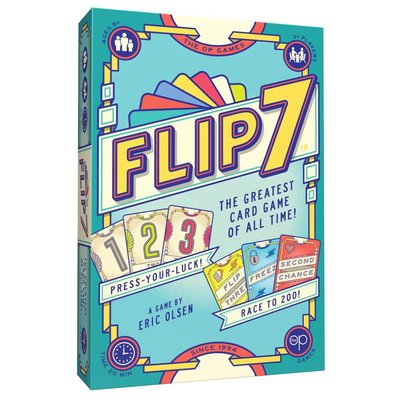
Here we have probably one of our favorite games of the year. Uh, definitely brought the most laughter and shenan out of any game this year. And we've played it. It's definitely going to be on our most played list. We've played it like endlessly since we got it. So this is a review copy from the publisher and flip 7 is a very simple UNO like game really. It's basically in some ways a mix of like uno like elements and blackjack where everyone's going to be dealt one card and the cards are mostly numbers and there's some power cards but the cards with numbers the number is how many times that card appears in the deck. So there's 12 12elves, 11 11s, and so on. And you get a card in front of you, and then the next time it comes around, you hit or you stick. And the cards are your points. So you want to have a lot of cards because you get a lot of points.
But if you get the same number twice, two 12elves, then you bust and you get nothing. Yeah.
Uh, and it's just great because it's a silly little gambling game, but at the same time, these power cards where you can kind of get like one life or you can make someone take three cards at once or you can freeze someone out of the round so they can't get any more points. And it there's just something really really funny and engaging and silly about it.
Yeah.
Yeah. No, exactly. We've played this with a few different sort of groups of people now and it's always just been such a big hit. It's small box but high impact is what I would say. Exactly. And it is so simple. You just go around and the turns are over within seconds because it's just hit stick.
But the laughter that comes out of it and watching someone else spectacularly bust is just really entertaining. Very easy to get to grips with. I think it would be a really perfect one for the upcoming like holidays. Uh spending time with the family. I think you just can't go wrong with this one. Um, yeah, nice little box as well. It's nicely designed. Uh, could be a perfect stocking filler. Okay, you want to get down,
I would say. So, yeah, big hit with us in our groups. And we've played it with up to seven people as well, but it goes up to
I think it's infinity. It just says three plus,
right? Okay. So,
you can play with as many people as you want.
Yeah. And works super well.
Yeah. So, yeah, it's really great. And we do think it's a little bit better with more people just cuz it was somehow I think it's somehow funnier, but also there's better card spread rather than if you have like three or four or something.
Yeah.
Um but I mean we've had some great times where like there's people who, you know, one or two people's going to win the round and then one person's ahead of the other in turn order. So they flip a card and they don't bust and then you've got to flip a card because otherwise they're winning. And
is this first to 200? You didn't say that, right?
Yeah. Sorry. So, whoever gets 200 points or that triggers the end of the game and then whoever has the most wins.
But yeah, such just such a silly game. Such a fun game. If you just want a little filler time waster, you could do a lot worse than Flip Seven. Next up, we have Castle Combo. Another really terrific game and another game we received from the publisher for review. So, this is a very classic Tableau builder, but it's just a game that I think hits a sweet spot of just being really streamlined and like simple to play, but really engaging in terms of interesting decisions.
So, you kind of have two rows of three cards in the marketplace and there'll be a little pawn who's on one row or the other and that's where you can select from. Although, you can manipulate that at cost kind of to points to yourself or money or something.
Yeah. So yeah, keys. So what you're doing is you're building a 3x3 tableau in front of you by taking a card that you can take and paying the cost putting it. Yeah, I mean obviously the first card really can be anywhere but then you build out and build out become more limited as you obviously have to keep this 3x3 grid and you're just basically each card has its own scoring condition. So you're putting yourself in scoring conditions like this card might want to be in this specific space. this card might want you to have a lot of this other type of card and so on and so forth.
Yeah, exactly. No, I think you hit the nail on the head there. It's a sweet spot of quick play time, but it is surprisingly crunchy, I would say. So, obviously, we do like heavier games, although we also like these little box uh games as well, but this is keeping us engaged. I think it's just because the puzzle is very engaging because you're really having to weigh up each turn a decision about whether you like sacrifice a little bit.
So because the space is limited, you might be holding out for like the perfect card that would really elevate your scoring because maybe you need x amount of blue symbols or whatever, but you don't know if that blue card is ever going to come out. So, at some point you have to make the decision, oh, I'm going to have to sacrifice that, but maybe I can spin this out into something else, right? And also, the shared marketplace is there's only three cards per row and you might not be able to manipulate the little pawn.
So, is also quite funny for us at least if you take that one card the other person really needs.
Yeah. Uh, so that's something that we personally enjoy because we're savages is um screwing each other over a little bit accidentally or on purpose, you know, you just don't know.
But at the same time, it's just such a quick, neat little game that, you know, it's not that deep. It is just a bit of fun.
Yeah, I think you hit it on the head there with the play time. It's really excellent. I mean, it's like what 20 25 minutes maybe if that for two players and this is 224, I believe. And yeah, I mean it's just like you get so much bang for your buck in that time and like we've played it a lot of times now, like eight or 10 uh just because it is so quick and you usually do two, three back to back to back.
Uh yeah, and I think something that's really interesting as well is it has quite a tight economy at times
because you have these keys
and which are kind of worth points at the end, but you have money which is what you use to buy the cards. Some cards might be free, some cards might cost seven money. And sometimes you might really want a card, but you can't afford it. So managing your money is very interesting. There's a system as well where some cards will let you put money on at the end of the game that you have left over and otherwise money isn't worth anything, but then you kind of want to obviously have money and be in the money. And it's um
it's just like really interesting because some cards also have a balance of points verse giving you money. might be low points but give you a lot of money depending on the situation.
Yeah. Then give you a bit more flexibility,
you know, and then that's one space gone. So
exactly. And you can also choose if you just completely run out of money that you take a card, but you put it face down in your tableau. So that's also quite an interesting decision. Should you
get more money so that it gives you more flexibility for more cards, but then you're completely wasting one out of the nine spaces,
but also some cards will score off that. So it's also quite interesting in that way, right?
Yeah. But yeah, I think for me it's like in a position like Cascadia, which sounds like a weird comparison, but it's that very simple but very crunchy.
Mhm.
You know, in terms of the mental load, but not the rules load.
Yeah.
So again, Castle Combo, huge recommendation from us. If you like these little kinds of things, if you want a little portable game, want a filler game, warm-up game, Costa Combo, terrific.
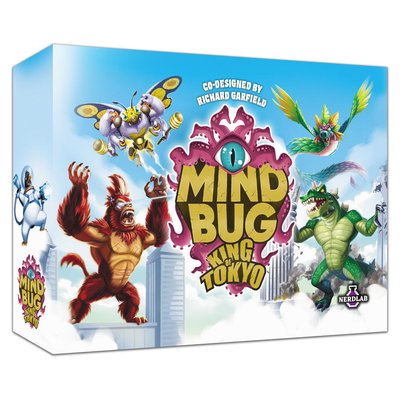
Would recommend. So, I realized already that the system is broken because I thought these were the same size, King Mine Bug and Castle Combo, but actually this is like 1 millm smaller. So, the whole system's gone now. It's really annoying. Uh, so this is Mindbug: King of Tokyo, the new version of Mindbug sent to us by the publisher for review, but we're also wrapping in a little review of Mindbug, basically. So, what this is is a two-player card game, uh, head-to-head. And essentially, it's just quite a silly little you play on your turn, you either play a card in front of you, which is like some sort of monster creation thing. Uh, so if we just take King of Tokyo, it's some sort of monster like, you know, Godzilla type thing.
Uh, or you attack with one of the monsters you've played basically. And there's all kinds of the effects you would expect like effects when you put a creature into play will do something, effects when it's removed from play, it will do something or effects when you kind of do a certain type of attack with it, stuff like that. Uh, and the gimmick in mind bug is that each player has to mind bugs where basically they can mind bug an opponent's card when they play it and take it and it's theirs basically. So that's kind of the rub of the game that you always know your player can take it the other player can take anything you play and it makes it really spicy. And what King of Tokyo edition of Mindbug adds is essentially this uh kind of secondary marketplace where you have this resource called energy which just energy I guess and then you spend it to buy cards from this marketplace which do one-off effects essentially like uh defeat an enemy of value five or less, you know, revive an enemy from your graveyard or just stuff like that or even uh damage an enemy basically Because what you're trying to do is reduce their life down to zero. They start with three. Uh and so when you attack, you're attacking their life, but they can throw a monster in front of it to block it. Yeah.
So most of the time you don't do damage to their life.
Yeah.
Yeah. So you have this energy. You can buy these cards and certain monsters in the set also let you roll dice when you play them or sorry, attack with them. And this dice will either add kind of value to their attack or it will also give you free energy or make the opponent discard a card depending what you roll.
Yeah. Yeah. Been enjoying this one. I have to say at some point I didn't find the system that intuitive. I think I was just tired.
Yeah, you were very tired
because I was like, "Huh? You blocking with what?" And then some of the powers, they are very cool, but like um was it the sneaky creature? if it has a sneaky tag, then it can only block a creature with sneaky or vice versa. Um, so yeah, there's a little bit to think about in terms of what you're playing, what you attack with, and then what your opponent has. So, you do have to kind of look over and see what they have.
Yeah.
But I do think it's very interesting about all of how all of the powers fit together. So, you only have five cards in your hand at a time. How much is your total deck?
10.
Probably like 10. Yeah, 10. So you always have five in in your hand. And I find it really interesting how like you said some of the powers actually you want your creature to get defeated because it will give you something but then you might have something else in your hand which lets you take something from your discard pile. So maybe you want to play maybe you want that creature to get defeated, put them in the discard and then you can go bam, I'm going to play it this other card and then take it from the discard. So, I think the powers are very cool in the way that they can interact together and you can make a lot of like very cool interesting combos basically
and the mind bug mechanism. My god, so annoying when it's you're on the receiving end.
Yeah, I think
very very fun to do to someone else. It's really fun and a lot of times you will forget like somebody will forget they can mind bug and then you'll lose a game because like you basically they've mind bugged you at the worst time and you've just completely forgotten and you can't get them back cuz they're out of cards or something.
Yeah. I think there was one game where I had played all my cards and then I mind bugged you to like get a card and you kind of forgot that you could do that then you couldn't mind bug me back because
that was like you didn't have any cards. Yeah, it was quite funny.
Yeah. So that's quite funny. I think it's just again like one of those
fun little
head-to-head, you know, little card games that again is only lasting something like 20 minutes.
Yeah, if that.
If that.
So, I think for me it does stand out in like this crowded space cuz I think the mind bug gimmick is excellent. I think it's really good.
Um, I think it's got enough to make interesting plays like you're saying about the powers and the way they interact. And what I like is that there's only ever like one deck in each set and you just randomly give it out to the players. So there will always be like monsters not in play.
Yeah.
Uh and it's not that each player has their own separate deck. I think that's quite an interesting concept as well.
And it's just Yeah, it's just silly. It's a lot of fun. It allows you to be clever in a short time.
Yeah.
And yeah, for me it just is it does stand out.
It is a good one. So, do you have any opinion on the King of Tokyo version versus the normal version with the energy and the cards?
Yeah, I think the energy does add another layer of interest actually. Yeah, I think we had a game where I was trying to get a specific card from the marketplace because that would be like my one saving grace basically. I think I was sort of looking like I was going to lose then. I think that was one where I did want one of my creatures to get defeated because it gave me energy. So then I could try to buy a card from the marketplace. I think that was the example where then I could get something out of my discard or get something from your discard.
Yeah.
So it's adding another layer of things to think about. Uh the the dice to change the strength of the creature. Yeah. I think it's I do think it's quite fun. I think for me cuz I'm risk averse. Maybe I don't like it as much as you because you could try to
I think it to me it hasn't really come into it that much.
Because I think it's good because you can reroll once whatever you roll and it hasn't really like come in so much except for one time where I was cuz I had powers that made you discard cards. So I was like also making you threw the dice.
Yeah. But I think that the energy is much more of a a presence in this new version than than the dice
cuz only certain monsters will let you roll dice anyway. So
exactly. I mean I think there was maybe one instance where we had creatures that were equal value and if I was going to roll then I would have gone ahead and like beaten you. So it can
situational basically the dice more.
Yeah. Yeah.
So that is the new version of Mindbug. Mindbug vers King of Tokyo. And yeah, a great little two-player game that stands up above all the other kind of card battler type two-player games. Here we have Cat Blues. This is a game that we received from the publisher for review. And this is a re-implementation of an older Rhinoitzia game. And here, this is for two to four players. And it's an auction game where essentially you're gonna have a hand of cards and there'll be one, two, three, four, or five. All you're trying to do is you're trying to get sets of four, make jazz quartets, uh, using cats because there's cats on the cards, which why it's cat blues. Uh, but the the rub is that when you kind of you flip cards from the middle until there's like a duplicate or a joker, and then everyone bids, but you bid using the cards in your hand. So you'll say, "I'm bidding two ones," which will be beaten by two twos and two threes. Or somebody could say, "I bid three different cards," which would beat that, but then it'll be beaten by three ones. So you're auctioning your cards and you're kind of trying to scrabble to get a better hand while still retaining something. And then only if you've won a bid, you can lay down one or more quartets and say, you know, I've got four fours. And then you take that many mouse tips from the uh kind of mice that
are giving out tips.
We're unsure why the mice are the punters, but yeah.
Yeah, exactly.
Why not ask?
But we do like saying mouse tips. Mouse tips. So
yeah.
So yeah, you take four mouse tips cuz you had four and uh or the cards with value of four. And then um you also get like a little token that says you made a set of four using fours. Excuse me. And then essentially there's three rounds and each round there's only 20 mouse tips. So there's a bit of a scramble for like who gets what when because
you can play five and then there's only one mouse tip left and you get one mouse tip. So there's a bit of a race there and then at the end of the game whoever has the most across the whole game will win with a bonus for who's collected the most different types of sets. So like set of ones, set of twos
and Yeah.
Yep. Exactly. There's also the joker mechanism. So, uh, joker suit. So, they can be used in place of anything essentially, and you can use however many you like, but the person that use the most jokers, uh, will also get fined five mouse tips at the end of each round.
So, yeah, I think that's really interesting mechanism because sometimes when they come out in the central marketplace,
is it? You're the joker queen. You always you always have the most jokers. I always anticipate that people are going to use the jokers more than me and then they never do. Or in my mind, I'm trying to use the jokers. If you're already the one that has the most jokers in the middle of the round, you might as well just lean into it and try to get as many points as you as you can, right? Even though you know you're going to get negative five at the end, but if you can get net five on top of that from completing quartets, then it's worth it. Um, but it can be quite interesting because you can if they come out in a central marketplace, maybe people don't want to take them if they haven't used jokers. So then you might have a better standing if you're the one that's okay, I'm just going to use the jokers.
But also, if you get a quartet of jokers, then you can put them down as a quartet and then they go out of the game and you don't get fined for them as well
because if they're stuck in your hand at the end of the round, you do get fined for them even if you haven't used them.
So I think that's quite interesting as well. Uh yeah, I do really like the mechanism that what you're bidding from your hand is also the thing that you're trying to get because it's always an interesting decision. You know what? I've got these cards in my hand. I'm trying to make a quartet of threes and maybe I have three threes. I just need one more three, but I could also use those three threes as a very high bargaining chip because there might be
better cards in the middle. So, you're always trying to weigh up, I was working on this, but actually something better has come out in the middle. Should I now bid that and give it up? So, yeah, that's where it is interesting for me. The thing I think we found or at least I found is actually I didn't like it as much when there was more players which might be a bit surprising but the
issue was at least in our games if you're the last person in the round and there's four players let's say by the time it gets to you the third player might have bid so high made such a good bid that you just can't beat it. So, I found the bids are so limited and you might only have a hand of cards of minimum four,
maybe like up to eight if you've really been like taking and taking without playing them down.
And that's obviously not a lot of maneuverability. If someone's bid like
made me jump there, it's just hit me with his paw. Uh if you have like someone says three fives, it's very unlikely someone's gonna want to give up four different cards or have four ones or something, right? So there's such a limited amount of increase in the bid like you're saying.
Yeah. When there's one play and then I found that like it was a lot of just get round to pass pass and then it wasn't
that interesting in the end. I think it was much better with like three people
cuz it's like maximum it almost goes around once and then like that's it. Whereas with less players, it can go around a little bit more.
Yeah, there's a little bit more incremental bidding, I would say. So, yeah, personal opinion maybe.
No, I do think um I think is a game that I I think you've said and we've said all that there's these interesting elements in it, but it's a game I like the sound of more than I like playing. M
I think I'm pretty ambivalent on it in the end after playing it a couple times because
yeah, it's weird cuz it's an auction game that's not better at the higher player count in our opinion.
It's fair.
It's uh it's also, you know, when you play at two, I think it actually, weirdly, we prefer it than four, but then
an auction game at two also isn't like the most fun in in the sense that you're familiar with, which is why most auction games are for more players. Um, and yeah, it's just there's just something about it that I think it just doesn't quite hit the notes, no pun intended,
which uh we would like it to. And yeah, I can't really recommend it as like an auction game or a card game because there's ones I just rather play.
Yeah, I agree.
Uh I don't know if you have anything else.
No. Uh no, totally agree. in the I think I liked it way more in the beginning and then the more we played it I just went off it a bit.
I think I actually remember now another point that
it has these weird like things you kind of need to know because your initial instinct is to get a quartet in your hand and play it down like when you kind of win that quartet. But then often you might go down and you might only have two cards so then you drop to four. But everyone starts with six cards uh at the beginning of the round. So then it means that you have much fewer cards
than the other players maybe depending on the space in the round. But then it's really hard to ever out bid them.
Yeah.
And you kind of get stuck in this loop. And it's like this thing you kind of need to know and understand
uh when you're playing, but then if you're a new player, you're never going to be able you're never going to really think of that until you see it. Yeah.
And it kind of makes this weird like Yeah. like meta games where you need to understand how to play properly and yeah just becomes a bit much and it didn't quite come together in the way I'd like. But kind of spoiler for upcoming videos, this is part of a trilogy and the others are much bigger games. The Jazz trilogy from Bywing Games and we are really enamored with the other two. So more on that later. Next up, we have Tokaido Duo. And this is a copy we got from the publisher for review. And this is the two-player obviously implementation of Tokaido.
So, we have no experience with that game. Uh, this is our first Tokaido experience.
Uh, but to be honest, we were really enamored with Tokaido Der. We found it a really fun game of a kind of lightweight setting.
Yeah. So, the way it works is that you have yeah a setup for two players and you kind of have three people and I'm definitely not going to remember what they are now.
The merchant,
the artist,
the artist, uh the traveler or something like that.
I think I think that's it.
The traveler,
I think. So,
so you have all these different areas. You basically have this kind of like um almost like roll and move type surrounding area surrounding the main part of the board. which is kind of like these towns either like inland like kind of cities or coastal towns with like lines going like paths going off them and then there's kind of these path divide sections into quarters.
So each person is going to type of person is going to move. So the traveler will be kind of going along this move and roll around the outside board. the artist is going to be kind of like in the intersections between the pass and then the um merchant is going to be moving between like the the coastal towns and the cities in the middle. Uh and basically it's like a dice drafting game. So you roll three dice and whoever's leading the the round will take two of them. One and then the other player and then they'll take the last one. and you assign the dice values to one of your people basically. So every round you move one of them or maybe two of them if you if you're the lead player for that round
and they all have their own different miniame. So the artists you're trying to go to where a lot of people are and then you kind of get to flip your paintings over and then on other turns you're trying to go to specific locations where you can like sell them and get them off your board for points. uh the traveler is trying to land on specific spaces who um which will let them move up like one of two tracks and the tracks multiply together. So you want to balance them
and then lastly the merchant is like picking up goods in the coastal towns and bringing them to the cities to sell them for points essentially. Um and like well for money and then that money will give you points depending on how much money you make.
Mhm.
Yeah. So it what do you think?
Yeah. And I really enjoyed this game. Um, again, one with some, it's not that deep. Again, it's just a little lightweight game, but the decision over what dice to take and how to optimize what you kind of already have going for you, I do find it very interesting.
So, for example, maybe you kept taking the artist dice. So, you have a lot of dice, uh, sorry, paintings on your little playerboard for the artist that you flipped over that you're ready to sell. But maybe the number on the dice doesn't quite match up because they have to basically match symbols to as to where what you painted and where you sell them.
You have to move exactly what the dice show. So sometimes it's quite difficult.
Exactly. Um then you might want to like you said with the one the the traveler with the two tracks trying to get the dice right number to land on the right spaces so that you're always moving up the two tracks in equal measure to maximize on the points just yeah it's very
interesting and crunchy because especially if you're the first player you've got the choice of like the three in the beginning
you don't know obviously what your opponent is going to take even though you're going to get two dice so it's like okay should I go for that one now to try and do what I can or risk it then hope that you won't take it.
So yeah, it's just a nice it's just a nice little game to be honest and just very beautifully produced like with nice artwork. Probably takes what 25 minutes, half an hour, something like that.
I think it's a game we had no expectations going in. Yeah. Uh to be honest, we took it because it was Stonem and we're big fans of Stone Meer, even though I know it's Well, this is originally Stonem, but the game it's based on wasn't originally Stonem,
but we really really enjoyed it to be honest. Um uh I just Yeah, I really like
very simple decision of, you know, which dice to take and then a kind of secondary decision of which person to move with that dice.
Yeah. Uh, and I like that it's a kind of race game in a sense because somebody completing certain elements of like a character, um, like let's say filling out one of those two tracks that you multiply together for the traveler, that will end the game. So, there can be a little bit of a race as well to get enough points before your opponent ends it.
Sometimes there's a a fight for space because your opponent will be where you want to go and it's like very annoying. Uh, so it has some nice interaction as well. Um,
yeah. It's also like with the merchant, you might have because you can only sell a certain type of good in a certain place. Exactly.
You might want to try and maximize your visit to that place where you're going to sell it by having like, you know, filling up your playerboard with that certain type of good, but you pull the goods out of a
No, wait. You get them No, you pull them out the bag, right? Yeah. You pull them out the bag.
Yeah.
And then you can only sell them in certain place. So, it's always Yeah. Um, the risk of like doing something right away just to get it done because the right dice is there or should you try and hold on a little bit longer to try and maximize even more, but then you might not get the right dice to go to the right town.
Yeah. I should say I think I got them backwards with it's actually you sell the goods in the coastal towns, but you pick them up in the middle.
Yeah. So, not the way I said, but yeah, it's just it's just a really engaging two-player head-to-head like quick, easy, fun little game basically. Just the fact that it could be quite boring, but I think the fact that you can't max out each type of person.
Yeah. uh in one game because there's not enough time and that you'll lean into one or maybe two and the way that you decide that and keep an eye what you the other players doing. I think it's really engaging. I think it's really pleasant to play.
Yes.
So really yeah big fan of Tokaido Duel Duo just so used to saying dual for these type of games
and I definitely recommend it if it's something you're interested in. I'm not sure I would say it's my favorite uh duo dual game I've ever played. No,
but I do really like it and I do think it feels quite different to all the other duo games I've played in terms of like how it's working. So
I think it's just a nice like Saturday afternoon with a cup of tea,
you know, sit down for half an hour type of thing.
Exactly. That's a really good way to put it. So duo. Finally, we come to the biggest box game in this series, which is Redside Legacy. And while it's not the smallest box, it is the smallest Legacy box I've ever seen. So, that's something.
And this is the second time we've tried to do it because our dogs are going crazy in the background doing all kinds of shenanigans and like trying to fight each other and stuff.
It's very distracting.
Yeah, exactly. So, let's try and get through this. So, if you don't know what Reicide is, uh the original game, it's essentially was a a game that was created based on a 52 card deck. So, anyone could play it if you have a 52 card deck. But the kind of uh designers of the game made, you know, a special deck, um like a fancy one, so you could buy that and kind of play the proper deck, but you can Yeah, there's rules online, so you can play it with a normal deck. Then Redside Legacy turns this into legacy game. So the base of Redside is essentially you separate out the jacks, the queens, and the kings. And their bosses that you have to fight one at a time, starting with the jacks and going upwards. And each suit has a special power. So you kind of have a hand of cards of the rest of the cards in the 52 card deck.
Um, and each Yeah. suit has a different power. So, one will let you double damage of whatever the value you're playing is. One will protect you from damage that that boss will do to you at the end of your turn. One of them will let you take cards from discard pile and put them back in the deck. And then the final one will let you draw cards from the deck, refilling your hand. So, it's a bit of a yeah, hand management, like manipulating because the twist is that whatever boss you're facing,
their power the power of their suit is useless against them. M
so it might be that you can't defend against that boss's attack and and when you get attacked you have to discard cards and if you can't draw them up in time you lose right
so it's like a tough fun little cooperative game one to four players
and this makes that a legacy game so it's got the classic legacy game of you know you have like a little tiny card with a tiny touch of story on it and then it adds new mechanisms and yeah it's just kind of adding new mechanisms on this system And honestly, it's been an absolute blast. I think it's one of the best games I've played this year. I've really really enjoyed playing it. I don't know what you think going into it completely blind.
Exactly. No, I agree. I have to say when you first got the like just the cards out.
Yeah.
Didn't really get it and was confused how that could be in any way a legacy game. But yeah, I think it is a stroke of genius to make a game like this just from cards and the way that like you said the system is manipulated every round and you're sort of fighting different types of bosses but all within this system of just some cards basically.
It's also quite funny that it's cooperative but basically you're not allowed to speak to your um
your the other player. So you might have an idea what's in their hand, but you you can't tell basically. So it's I like that because you are able to make your own decisions. Again, sometimes I'm not such a fan of cooperatives when I feel like I'm not making my own decisions or such,
but I think this is super smart that you're working together on something, but because you can't talk, you are free to just try and make what you can out of the hand that you have essentially with like very minimal, if not anything, like no input
from the other player. So, I agree. I think it's um I had no expectations, but it did blow me away actually about how addictive it is and it just makes you want to
go and go again.
Yeah. One more game. One more game cuz it's also very quick playing like each attempt like you know maybe 30 minutes something like that. So if you fail after 20 you're like let's just go again. And I think what the best part about legacy version is it's just a masterclass in how you riff on a core system that's very strong and introduce new elements and I don't really want to spoil them a bit
but it handles failure really well.
Yeah.
Uh it it makes really interesting kind of variations on how you tackle bosses and what challenges they bring. Mhm.
Um the story is actually not the worst, although it's very like a light touch, but I think that's
you don't want more. I think with this type of game when it's mainly mechanical.
Yeah.
But there's also a lot of content to be honest, like small box, but I think there's 12 missions, but obviously it's very very rare you're going to succeed on the mission the first time.
Yeah. So, I think we've played like something like 10, 12, 14 games of it. And I think we're only on mission five or something. So, there's a great amount of content as well.
Yeah.
So, yeah. Again, I don't want to spoil too much about it, but
it's it's Yeah. I mean, I've really really enjoyed playing this. Um, which is crazy because it's just a little card game. Yeah.
It's cooperative.
Mhm.
Yeah. So, I just think it's a really great design essentially. Exactly. Big uh again big impact here from not a lot of components basically.
Yeah. So that is redside legacy and I really really recommend you check it out but that is our small box extravaganza. So
small to medium
small to medium. I think it's still small compared to like a normal size game.
So yeah, those are our games. If you have any questions about them, please please ask us. And we really appreciate you watching. We hope it was fun to watch. We hope it was informative. And we'll see you next time. Thanks. Bye.