Worth the Play? 8 Board Game Reviews | Druids of Edora, Orapa Mine, Agent Avenue
Games in This Video
7 games are featured in this video — they unlock as you watch.




Transcript
Hi everyone. Today I'm taking a look at eight new to me board games and sharing my overall thoughts on them. Starting from my least favorite and working my way up to my favorite. And there's a good spread of games today. You know, ranging from games that I absolutely hated up to games uh that I really loved. But before I get started on these eight games, I want to give a shout out to the show sponsor kienda.co.uk who are my go-to online retailer. And if you use the link in the show notes or the QR code, then you can get 5% off your first order. But let's get started with number eight with Deep Dive. So this is a pure entrylevel push your luck game um that doesn't really have many bells or whistles. So essentially you are playing the roles of these penguins and on your turn you can stop off on these different kind of pools of tokens.
um you know, supposed to be representing, you know, shallow waters down to deep waters. The shallow waters offer fewer points but also have fewer predators. But, you know, if you flip over your token and you're not quite satisfied, you can go to the next pool and do the same thing. Of course, the yield of point go points goes up, but the risk of predators also uh increases. There are a few other little twists as well where you can get these rocks and you can kind of skip over pools or you can skip over pools based on your previously captured penguins. And once all your penguins are captured, you can spend your whole turn picking them back up and kind of restarting again and almost wasting uh your turn. And the objective of this game is to obviously collect those points tokens, but you will collecting them based on colors and collecting sets uh of them. So, unfortunately for me, you know, I think the only way I can describe this game is completely uninspired. There's nothing new here, nothing creative. It's just pure b, you know, um, bare bones push your luck. Um, and there are other games out there that just have a few little twists without being too complicated that are way better games. So, I'm thinking of games like Circus Flow Carti, games like Push, games like Rapido. They are just leagues ahead when it comes to quality, but still staying very simple. This one is just simple to the point where it's boring. So that is a deep dive at number eight and I would give that probably a three out of 10. Uh going on to number seven now we have ortholos. This is a game I did pick up on a complete whim. I didn't really know
much about it but I thought the the visuals of the game were quite impressive as you and your opponent this is a a twoplayer only abstract strategy game. you are building up these kind of Corinthian columns um with your own colored bricks, obviously your opponent's bricks, and also some neutral bricks. And a turn is pretty simple where all you're going to be doing is you are going to be either taking more stone into your supply and you do have a a strict capacity or you are adding your stones to the um to the different columns. Now, the objective is that you are trying to have the majority of your color in each of those columns, but you are rewarded at the end of the game in terms of more points if your opponent has at least contributed something to those columns. So, you kind of want to walk that tight rope of your opponent investing a lot, but you just sneaking the win. Um, and there are further kind of skull dugy that you can do here where when you go to certain locations, you can kind of swap stones and so on or get some passive income in terms of more stones. And something that is definitely worth noting is that you don't just have the ability to control your own color stones. You can actually take your opponent's stones from the supply and therefore add them to maybe pillars they don't want or again pillars that you you know you're going to win. Um, so you know, as a concept, I thought it was a cool idea. Um, I thought it did sound dry, but I thought there might be some spark of magic here. And in reality, it was bone dry. There wasn't really much to get excited about here. Very rigid,
very um transparent in where the where the strategy was. And some players are going to absolutely love that because there's like no luck factor here at all. For me, it just felt left me wanting really. It just lacked a creative spark and it just felt a bit boring and mundane. And I I know my opponent felt the same way. So, um, despite looking lovely with this, you know those lovely columns and, um, even the box adds to the display, um, it just wasn't a very fun game at all. So, uh, that is Thos. Again, I'd probably give that a three or a four, uh, out of 10. Uh, moving on to number six with Tact. So, this is a game I didn't know much too much about it, but I had heard quite a few people talking about it online and, um, it seemed to be a little bit of a buzz about it. Uh this is a a card game where you are trying to lay cards out flat onto the table and each of these cards will have kind of a number of cutouts on them where which will show what you can cover um already on the board or what cards can cover it as well. So what you're trying to do is you're trying to cover up your opponent's little spots on their cards while leaving as many of yours exposed as possible. And you're going to use that or try to do that by kind of manipulating space or not leaving your opponent enough room to put their cards in. Um, in reality, and I quite like the concept here, but in reality, um, number one, the game is a huge table hog because you have a spread
of cards going everywhere. Um, and of course, you naturally the spaces where you want to go later is where the table's edges and you just can't play there, which is just, you know, you are straight out of luck. Um, also there's a great deal of imprecision with this game, which I find there's a bit of a bug there in general with board games. You know, I don't like it when there's some imprecision. You know, does this card fit here or not? Um, you know, what we're going to base that on. There's no again, there's no um definitive answer to where these cards can go at sometimes. And in fact, those sometimes become quite regular the more you uh the more you play this one. Um, something I did like about this game is the the hand management system where your deck of cards is in your hands and you can only play the furthest, you know, left card or the furthest back card. So, you don't have the ability to filter through all your cards being having that kind of um, uh, being overwhelmed by decisions you can make or options. So, I did like that you only restricted to those two, but at the same time, you know, your opponent might have all their high points value cards at the end and therefore can smash all their points down and you've already spent yours and they've been covered up by the other players. So, I think this is more of an activity than a good game.
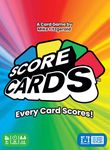
I think it's I don't know. I think it's a neater concept than it is in practice. I just felt like it was so luck dependent, so card dependent, too much of a table hog, and again just too messy when it comes to clarity uh on those rulings. So that is Tact. I'd give that one probably a four out of 10. Uh at number five, I have Scorecards. So Scorecards is actually a game that I've been wanting to get a copy of for some time. It's very difficult to get a copy here in the uh UK. Now, this is actually a very straightforward uh tactical card game where you're playing cards from your hand and scoring the the criteria on that card based not only on what you've previously played, but also what all the other players have played.
So, for example, this card might say uh it's a it's a blue two and it will say score two points for every other two on the table. Or some might say, well, score the highest points card on the table again or score the points difference between the lowest the lowest and the highest points card on the table or score four points for every even green card. You see where I'm going with this? And of course, you do have a hand of cards and you can hold off on playing cards that might build up in terms of their their point scoring and wait till the end of the round, then play them where they're going to be worth more points. But that does also mean that you're gonna have quite a few rounds in this game where you just don't have the cards to score you anything back. And that might apply to you, but not to other players, which can feel a little bit can leave you a little bit of a salty taste in your mouth because one player might have a hand of great cards and you will just have a hand of rubbish cards. Um, and you could say, yeah, you need to play in a smart way, whatever.
But that's just not the case with this game. You are as good as the cards in your hand. Even if you want to play them optimally, which is not a difficult thing to do, um you can just simply lose based on the cards you have. You know, for example, um you know, by the end of the round, you could have worked out even if I played all my cards optimally, uh the average points of each card might be say seven points, whereas your card if as long as you play them optimally, uh the average points could have been 12 points. So, um that for me, it just felt a little bit cheesy, a little bit too luck dependent. Now, I'm not against luck in games, but this one kind of tries to add this uh mirage or illusion that you are playing cleverly and you you're just not. It is just purely down to uh luck, which was a shame because I thought actually the cleanliness of this system has a lot of potential.
And um there could have been some cool things going on here. Maybe if people had the same set of cards or something like that, of course, have access to different cards each time, but just purely top decking just meant that it was just completely in the in the lap of the gods on who was going to win this one. I also thought that playing four rounds in this game was one too many. I think a three rounds would have been perfect. Um, four just one too many and just dragged on a little bit too long. So again, it's a real big shame because the game has a lot of potential. Um, I just felt like it was just, yeah, it was just a bit too frustrating when you knew you could do nothing with the cards that you have or at least way less potential than your opponents can. So, that is a score cards and I wanted to love it, but unfortunately it has a lot of problems which meant I'd grade it a four out of 10. Moving on then to number four with Super Mega Lucky Box. So, one of the lightest games that I've played and maybe full stop. Uh, this is a bingo adjacent game by I believe it's the great Phil Walker Harding, who's a fantastic designer, made some very popular and great games. Uh, this one you have a set of cards all with numbers on them. I think it's a little 3x3 grid.
Each round there's going to be a card prepped over and everybody can tick off that number um on the one of their sheets. And what you are essentially trying to do is you are trying to of course tick off all the numbers on a sheet um in order as early as you can because you'll score victory points. But you have the ability to combo these cards together because whenever you complete a row or column, you might get a bonus number that you can tick off somewhere else. Or you might get these stars which will score you set collection bonuses or these moons that will score you points based on majorities at the end of the game. And of course, as long as you um do things in the right order, you can create these amazing chains and just take off this box or just take off this box, which take off this box, and then you can complete several cards um at once. So, this is one of those games where you can pretty much switch your brain off and just enjoy the process, but it's satisfying, it's fun, um it's very low pressure, and I think this game has a has its place and its niche in a collection. So, each time I played this one, I've really enjoyed it. Some of the players I played it with, you know, especially my girlfriend, she's really enjoyed this one. Um, because again, it's a highly accessible game, but it's not stupid and it's not I don't know, it just has this certain charm to it, which um which just works. So, doesn't pretend to be anything. It's not pretty much bingo on steroids. Um, but it's fun. You know, you're going to like it or you're going to hate it based on the description basically. Um, you know, despite me enjoying it, I can't really rate it terribly high because it is just bingo. So, I'd give that a five out of
10, but maybe that doesn't reflect the fun that it offers. Maybe the fun would be something like a six or a seven, but the game play I'd give it a five. So, that is a super mega lucky box. Let's get into the u the three much stronger recommendations then. So, at number three, I have Agent Avenue. And this game completely caught me by surprise because I wasn't quite expecting it to be as good as it is. So, especially considering how easy this game is to play. So, this is a twoplayer only kind of a cat and mouse game with a lot of bluffing. And in this game, you are going to have a hand of, I believe, four cards at all times. And on your turn, you will place one of these cards face up and one face down. and your opponent is going to choose which one of those that they want and you will get the remaining one. Now, when they take a card, the card will have a number of information on it. Um, particularly three pieces of information, which is the first time you take a card, how many spaces it moves. Uh, the second time you take a card of that type, how many spaces move, and also the third type.
And this could be kind of positive or negative. It could be zero, or it could even be like an instant victory or an instant loss depending on the card that you've taken. So, as you can imagine, the more information is on the table, you know, you might know that your opponent needs their final codereaker, which is the instant win one. So, are you going to put that one face down and hope your opponent doesn't choose it um and force them to take something else and so on? So, the actual degree of bluffing is fantastic. And actually, the more you play it and the more you become familiar with the cards, you can get into the head of your opponent a little bit more. And I should say the objective of the game is to try and move a number of spaces so that you catch up catch up to your opponent. Um or of course force your opponent to move back enough spaces where they run into you. Now one of the standout things which I cannot praise enough about this game is how tense it is from the very start. I even think from round two you can be captured. Um which is again it completely means that you are locked in from the very start of the game. And I've even won this game, I think, in turn two before. Um, but I've also had a long drawn out game which have been very tense. So, I think it's very important that games make every turn meaningful, and Agent Avenue does that almost better than any game I've played in a in a long time. Now, there's also two versions of the games that you can play. You can play the basic version which simply uses the the cards I've mentioned or you can use these special cards where if you land on certain
magical or special spots, then you can draw these um these bonus cards which will give you kind of gamebreaking abilities. You know, maybe they'll transfer the negative gaining or movement cards into positive movement cards or ones that will give you like an instant ability and so on. And these cards are are, you know, they're super powerful and they're all worth having. And it can even mean that you might deliberately want to move back a space so that you get one of those bonus cards which will help you get out of of a tricky uh situation. So, you know, I probably made this sound more complicated than it is. This is like as light as it gets, but the decisions are there. Um, again, I love that cerebral thing going on where, you know, I want that card. Have you put it face down and presented a nice card to me so that I'm distracted by that one? Or, you know, do you know that I know that and I might be going for the face down one and taking a really horrible punishment card that moves me back and into you. Uh, tons of fun. Uh, could not be more dynamic and fast. And this one has been definitely a shoein for one of the pleasant surprises of the year for me. So, that is Agent Avenue. Um, I'd give that one a seven out of 10.
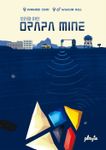
At number two, I have Ara Mine. Now, this is certainly a strange game. It's a It's a twoplayer. Technically, it's not a two-player only game, but for me, it is a two-player only uh deduction game. You can play with more, but if you play with more one players like the games master, whereas if you play with two players, you're playing head-to-head. You each have your own setup. Um, and you're trying to work it out. But this is basically a spin on something like battleships. Um, but it's way more interesting than that. Is at the start of the game you are um mapping out these kind of geometric shapes on this grid. You have like triangles and um squares and so on of different colors and they all have to be put in a very particular way although there's a lot of ways you can move that around. And as the game progresses, you are going to be asking questions to your opponents to try and decipher where each of the shapes are on that sheet. And you do that by giving a particular um column or row reference number. So for example, you could say um two. And then what the what the person answering the question would do is they would look at number two. They would draw like a straight line almost like a laser beam um and see where that particular laser beam would hit and where it would deflect to and what colors it would hit as well as where on the grid it would come out of. Now again that sounds complicated but it's not actually that bad. And basically depending on the number of colors it
hits and where it comes out you'll give an answer back. So, for example, you could say um maybe purple M or something, which means that it came out a purple. Sorry, it came out of M and it hit a red and a blue shape on a on the way. So, for example, red and blue together, make a purple. Or, you know, if it hit a yellow, you just say a yellow. If it hit a yellow and a blue, you would say green. Uh and so on. But it's really fascinating how quickly you can start kind of penciling in where these shapes could be, the different angles things are. When you get a particularly um diverted laser beam and it pings off lots of different shapes, it throw a bit of a spanner in the works. And it's just a pure efficiency logical deduction puzzle where you want to make every question matter um and get get the answer before your opponent does. It's super smart. And you know, deduction games are another genre that is highly saturated. We've seen the same take on the same mechanisms again and again and again. You know, who's the murderer and so on. And this one just completely throws it on a side. It adds in that battleship feel to it and it's just a a totally fresh design. And you know, I don't say that very often and you know, for me, whenever there is an originality, I give that full props. And it's a lot of fun and also super quick to play. You know, you can play this one in about 30 minutes. Now, I will say there might be a couple of kind of teething issues with the game. If you are teaching it to maybe someone who isn't so good with geometry or
understanding how laser beams are deflected, they you know, I haven't had a couple of um growing pains when when teaching this one, but once the penny drops, it will drop pretty quickly. And it is worth that little bit of effort to maybe take that minute or two to explain how those um how those deflections work. But still very pleasant game, a ton of fun, and you know, totally unique. So that is uh Ora Mine. I'd give that one another seven out of 10. So at number one, um and probably no surprise here is The Druids of Adora. So, this is the newest Stefan Feld game, and it's from the AA line. It's not actually from the Stefan Feld City collection, which to me is a huge bonus.
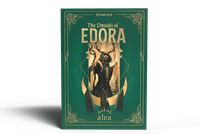
I tend to love the AA Feld games. Uh, this one is pure failure. It is the most um, you know, watching the gears move, um, abstracted Euro games you'll ever see, and I love everything about it. So, like a lot of other fail games, this one does use dice as a kind of a core feature in the game. However, in this one, you are just randomly rolling your dice, which are kind of your your player pieces. And what you're doing is you are moving your little totem pole from um from the shrines to shrines going along these tracks and activating certain actions. Now, when you activate these actions, you are going to place a die on that spot, meaning that it's blocked out for anybody else, but you're also going to have to pay resources based on the number on that dice. So, obviously, the lower value dice are way more efficient and cheap to place, but the higher valued dice are great because they will score you points for um kind of controlling regions um if anyone was to go there in the future and also for collecting these other totems at the end of the game which can score you endame points. So, I love these games that have this kind of push and pull where the low value dice are great cuz they're cheap, but the the higher value dice are great because they can score you points in different ways. Uh, all these separate actions in this game are are so easy.
You know, just collect tokens, get little bonus actions, go along this track, unlock abilities, put these totems down, score multipliers. It is a true point salad, but the game is actually pretty rapid. You know, this is like a 60 to 75 minute euro. I believe you only get like 13 turns each. I love the kind of cash flow in this game where you always need to make sure that you have uh your provisions to keep on taking actions, but also to have dice in your pool at all times to make sure that you can keep on taking turns and not have to waste your whole turn um kind of just taking one from the supply. So, it is a true efficiency puzzle. I love the engine building. As again, you can ramp up these abilities and flip these tokens over and um give you abilities that maybe no one else has. Um, and there's also like mechanisms within mechanisms here as not only are you trying to do your best in terms of scoring points um based on what's available to you, but also trying to link up certain sections of the board by creating like a root of your dice and to score a big chunk of points that way too. Now, a difficult game to explain because it is, you know, pure mechanisms. It's pure dice. It's pure tokens, points here, here, there, and everywhere. There are no real kind of thematic ties, but if you like the same same games that I do, if you like your uh, you know, your dry dusty feldian euros, then I'm pretty sure you're going to love this one. It's so easy to jump into. It's a lot of fun.
Again, I love that management of your resources and dice. I love how many things you are pulled to do because again, not only are you trying to make those links, you're trying to score points in different ways, you also can acquire these objectives as the game goes on. So, think of something like Bonfire where you can have your own little personal goals that you're trying to achieve to score you more points at the end. So, again, so much to do, so little time to do it. I love the old school look of this game as well. And all in all, it just ticks every single box that I want um from a Euro. So, um the Druids of Adora are sure going to be, you know, a contender for game of the year for me. It is just brilliant. So, that is the Druids of Adora uh at number one. And I'd give that one, you know, I'd give it an official eight out of 10. Um but I probably more lean towards more of an eight and a half, but I've stopped doing halves now. So, uh I'd give it an eight out of 10. So, that is The Druids of Adora at number one. So, there we have it. That concludes another review video.
Hopefully, there's something on here that has piqu your interest or maybe given you a bit of clarity if it's not so good or if a game has issues because I understand there's quite a bit of negativity on this video, which I don't normally like doing. But there we go. So, uh, if you have enjoyed the video, please be sure to hit like and subscribe to the channel. But for everybody else, I'll see you next time on Chairman of the Board. Bye-bye.