Worth the Play? 8 Board Game Reviews
Games in This Video
7 games are featured in this video — they unlock as you watch.





Transcript
Hey everybody and welcome to another Chairman of the Board ranking video. So this is where I take a look at the last eight new to me board games that I've played and I rank and review them in order of preference to give you an idea if these games are worth your time. And I have a good spread of games here reg from games that I absolutely hate up to games that I absolutely love. So there's a good mix here for you to enjoy. But before I do get started on these reviews, I want to give a shout out to the show sponsor keyander.co.uk who are my go-to online retailer. And if you use the link in the show notes or the QR code, then you can get 5% off your first order. Now, at number eight, um it's a very weird kind of situation for me because this is one of the only occasions where um my pure disliking of the game brings it down rather than the actual quality of the design. So, the game I'm talking about is The Bottle Imp. So, this is actually considered as one of the kind of gold standard trick taking games out there. And I hold my hands up. I can completely see why anybody would say that because this is a really well-designed game and with some fascinating ideas. I personally, however, absolutely hate it. So, I don't like anything about this game. I don't enjoy it in one aspect. So, it's a trick- taking game, which for me is also an instant, you know, negative 10 points. I hate trick taking. I don't
like it at all. Um, it just does nothing for me. But this one has some pretty interesting concepts where um there's basically there's a marker and if you are bas if everyone plays a card above the marker then I think the lowest player will get the kind of the bottle imp which means that their cards are going to be worth nothing at the end of the game and you also score some kind of negative points. Um but if everyone goes below the marker and you're the highest to it then you'll get the bottle limp that way as well. So, it's kind of trying to manipulate your hand to, you know, either float above or below that limit and not to take those negative cards. Um, it's trick. I don't again I don't like trick taking. Um, this one for me in particular I didn't like because it leaves one person at the end of the game shafted with all these negative points. It kind of feels like the first half of the game is just throwing cards out there and just seeing it works out. You know, I I did that and I I did pretty well. So, I didn't really think it's much there's much to it. Um, I don't know. I just I just hate everything about it. I don't want to beat the drum too much. It's just not my cup of tea. Um, again, if you like trick clicking games, you're probably going to like this one. I don't like them. Um, so there we go. We'll move on. So, at number seven, um, I'm sorry, I should say for the bottle, I'd give that a two out of 10 just based on pure disliking of the game. Uh, at number seven, I have Vampire Queen. So, this is almost like a
trick taking game, but it's more like a card shedding game. And I actually had to check twice that this was from um, Wolf Gang Karma, who for me is one of the best designers in the game. Um, I did not like this game at all, so I was quite shocked why his name was on the box because I thought it was a pretty bad design, to be honest. So again, this is a a card shedding game. Uh a genre of games that is certainly um maybe oversaturated at the moment. So this one you are playing sets of cards. Um and basically the following player has to play the same quantity of cards but a higher number if they can [snorts] in order to of course get rid of their cards quicker than you do. Um, but the twist on this game is that you have these vampire hunters where if per if people play them, then I believe you you're trying to play your lowest card.
Um, but the person who played the highest card will have to pick them up as negative points or fill their hand back up. Um, again, it kind of leaves that feeling of someone being shafted. Um, I don't really like that. I'd rather have more kind of positive interaction and ways you can get yourself out of sticky situations. And this one, there was a lot of times in the game when you just couldn't take a turn because you can't follow the other player. I don't believe you top up your hand very often. So, it felt like often for several turns in the round, almost the entire round at times, you just couldn't do a single thing, which of course is not fun. And you just sat there just twiddling your thumbs, not doing anything. Again, I also didn't like the idea of someone getting shafted with a bunch of negative points that they can't get rid of. So again, it just felt like a a mean-spirited, very rigid, and I don't know, cumbersome game where you can't get yourself out of any predicament. Honestly, just choose another one. There are so many great shedding games out there. Choose something like Scout, something like Linko. Um again, there's lots of great ones out there, even like, you know, um Panda Spin, Ruins. There's tons of them now. This one is not good. I would not recommend it in one bit. That is Vampire Queen. I'd give that one probably a three out of 10. Uh, staying on the shedding games at number six, we have Odin.
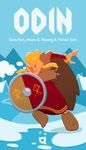
Odin. Um, a much lighter game. Again, you are just trying to, um, play cards, trying to improve or ladder climb on the previous set. Uh, I suppose the concept of playing these high cards is a bit more interesting in this one because you are doing it based on the numbers of the cards. And you can either play I think it's all of the same number or all of the same color as long as you can get build a higher number than your opponent does. So say for example your opponent played I don't know like a seven and a seven that's that's 77. But then say I had a blue eight and a blue one. I could maybe play the eight and the one for 81 and therefore stay in the round. And that's basically the concept of the game. But I believe like Vampire Queen, you don't actually pick up cards when you drop out of the round. Meaning that once you're out, you're pretty much out and there's not much you can do because again, that central target just goes up and up and up each time nudging it up and meaning you can't play. Well, you're even further away from playing. So, um, yeah, it had some real pacing issues, some real uh rough edges that I couldn't quite gro. Uh I had to read the brawl book like three times to make sure that I'm not missing anything here when it comes to picking up cards. Um but you simply just don't. So uh it's again it's very rigid. You spend a lot of the time doing nothing. Um so therefore I did not like it one bit. Again choose those other games that I've mentioned. They are way better than these games. So that is Odin. I'll give that one another
three out of 10. At number five, I have In front of the elevators. So, this is a a queueing game based on games like, you know, Guillotine or games like Beasty Bar. However, this is by um Sashi. So, you know, Sashi's generally a designer I get on with a lot of his designs I've thoroughly enjoyed over the years. I think he's very creative. I think he has a distinct identity and I just like what he puts out there and I like his kind of philosophy on design. So this one um you are playing with three cues of cards and you are trying to get your color to the front of these cues. Basically simulating a a queue for the elevators of course. And now once you've played through all your cards if you are in I believe it's the first like three or four slots then you'll get points.
Sometimes the person in the front might not get as many points as the person in, you know, second, third, or fourth place uh in those cues. But as you can imagine, each of these cards that you play has a unique ability on it. Now, unlike those other games I've mentioned, your guillotines, your beasty bars, the abilities on these cards are much more reigned in. They're much more simplistic and they well 90% of the cards are simply placing them in front of another character. So, for example, you know, the old men want to go in front of the little girls or the little girls, I believe, go in front of the of the um the adult men and so on. So, of course, you're just constantly just jumping in front of people and so on, trying to push your people to the front. Now, the twist on this game is that you do not only pick up your own cards. So, there's mutual draw piles where your own cards are spread or filtered throughout. So, you know what you're picking up in terms of its suit and who those cards belong to, but you don't know the exact card that you are picking up. And to be honest, I'm not quite sure I like that. I don't like my kind of my fate being in the hand of somebody else when it comes to playing my cards. It just feels a bit frustrating when, you know, you've got my best card and you're playing it at the back of that queue, which is pretty obvious. So, again, this one felt like a the decisions were fairly obvious. You know, of course, if I pick up your your highscoring granddad card that needs to be in this car, this queue, I'm going to put it right at the back where it's got no hope at all in getting to the front.
Or, of course, if I've got my guy here, I'm going to push it to the front of the queue here. So, it's extremely tactical. And not only that, it seems like the first half of the game, you're just kind of just doing things for the sake of it because you do not know how these cues are going to work out. Um, it's quite unlikely, although not impossible, that if you put your thing in the front of the queue, it's not going to be there by the end of the round, either by being pushed back or by players playing like a trio of the same type of card and then taking them out of the line. So, you know, there's a there's a good funny degree of cards shifting back and forwards. Um, but it's just so tactical. I think the the depth here is almost nothing. Um, I like the the visual aesthetic of it. I like the concept of it, but I've yet to find a queuing style game that really works for me. They're either way too chaotic or they're just way too tactical um and just too w in terms of decision space. So, a bit of a disappointment if I'm honest because I was expecting more. I know people do really like this game. For me, I did struggle to find where the where the depth was and where the decisions really were. So, I can't really recommend it. I suppose it's not bad for a game just to turn your brain off and just smash some cards down. Um, but I think the the veneer of strategy is just not there or it doesn't exist. So that is uh in front of the elevators at number five.
At number four, I have Panda Panda. This is a uh a feather light card game where you are trying to build up towards uh predetermined sets of cards to instantly win the round. Now on your turn, you can either draw a new card from the deck or from another player's discard pile, or you can discard a card. And discarding cards in this game is actually quite important because a lot of these pre-selected um you know arrangements of cards that you aiming towards will vary in terms of the quantity. So for example it might say have uh the A B CDE E F and G card which is of course seven. Um therefore you might want to keep a flush hand of cards but some of them might only need two cards which means you're spending a lot of your turn just dumping cards out of your hand. But of course, the other players are going to notice that, probably think that you're going to be close to finishing soon and maybe aim for something else or even try to mess with your hand of cards by shedding one of the most frequent cards, which is the A card, and then everyone has to pass one of their cards to the player to their left. So, there's a little bit of skull duggery messing with your opponent, but there are ways to mitigate that by keeping a card back or two just so that you can get yourself out of those situations.
It's kind of like sudden death from the get-go. Um, of course, some players are going to start with very strong hands and be one or two cards away from completing a set, whereas somebody else might have a bunch of cards that just are rubbish and they're they're not going to get anything with it. Um, but the game is light and fast enough not to worry about that and not to that to be a big negative with the game. So again, it's another game where you're just going to turn your brain off, just go through the motions, and just hopefully the cards work out for you. But it does have a certain charm to it. Each round only takes around 5 minutes. Um, and it's pleasant enough to play and enjoy. So that one I would give maybe a five out of 10 for Panda Panda. At number three, I have Pixies.
Pixies. Again, I went into this one completely blind. didn't know anything about it and I came away, excuse me, I came away pleasantly surprised with the gameplay. So, this one you are building up a tableau of nine cards. Each card has its predetermined place. You know, 1 2 3 4 5 6 7 8 9. Um, and the way you acquire these cards is through a very straightforward draft where you'll draw as many cards as the number of players. The first player will get the first pick and so on until all those cards are gone. you'll put the cards in the relevant space on your grid. Uh, and basically, as long as you have two of the same number, then the number of that card is going to be eligible for scoring at the end. But there are other things you need to consider as well, as there are bonus points on the cards or negative points on the cards. And I suppose one of the the main threats of the game is when the game is or when the round is going to end because the game will end or the round will end once somebody has filled up those nine spaces on their personal tableau and you can use that to your advantage as you might, you know, try to rush towards the finish. Um, or that might really work against you because you might only need like the six space to be filled in, but all your other cards are rubbish because you haven't got any duplicates.
Therefore, you want to just try and avoid a six as much as you can and try to boost up your points and hopefully end the round when you have the jump on your opponents. So, the actual drafting part of the game is quite interesting because sometimes the best card for you at face value is not actually the best card for you to take because you might want to force someone to take a card that they don't want or you know something like that as you know as is a a regular thing when it comes to these card drafting games. But this one, I think it had some some, you know, degree of charm. It had that magical ingredient that left me, I don't know, it left me feeling really positive about the game. Um, I think it's super fast. It's very charming. Um, again, it's very low low pressure, low barrier to entry. It looks nice. Um, and this is one of those games that I can really see um improving for me based on the comfort levels. You know, it's such an easy game just to pick off the shelf, uh, smash it on the table, and just to finish a game's night where there's going to be no difficulty teaching this to anybody.
If you've played it before, there's enough game to keep you satisfied. Um, it's not a gimmick, but at the same time, it's again, it's just so light and fluffy that you can just, you know, you can just enjoy it. So, uh, again, very pleasant surprise for me. That is Pixies at number three. And I'd give that one a, you know, a solid six out of 10. At number two, I have the shipwreck arcana. So, this is certainly an unusual game that's not going to be the easiest to explain. So, this is actually a purely cooperative uh deduction game where you are trying to guess a numbered tile in your teammate's hand. So, each round there's going to be an active player. They're going to have two tiles. Um, one of them is going to be put face up next to one of these clue cards. The other one is going to remain in their hand and the other players are going to try to guess what that number is based on the clue that they've given. Now, at any time, I believe there's there's four of these clue cards out there, which I must admit there's a ton of them to play with. Um, so you're never going to really see the same uh variation of them. and you're going to try and pick the most pertinent clue to help of course help your teammates guess what the number is. So, for example, it might say things like um well, the other number is um is odd or it might say, well, there's another tile face up somewhere that squeezes in between the gap of my two tiles or something like that. You know, something
based on the the uh the polarity of those numbers. But because you have to assign this token next to one of these clue cards, it doesn't necessarily mean that the other clue cards don't apply to. Uh so not only are you trying to place it next to a pertinent card, you're trying to place it next to the most pertinent card um hoping that your opponents will gro and understand why you didn't choose the other ones. And that might sound um you know not too difficult, but there are kind of layers to the onion here that you need to think or get into the head of your teammates think why didn't they go there? Why did they choose this one and not that one? And as you start to kind of dig a bit deeper, you can actually start to wean some information from that which surprisingly works more often than you would think. So, this isn't a game like a lot of other pure logical deduction games where the information you have is concrete evidence. Now, you can wait and wait and wait until you do get that concrete evidence, but generally speaking, you're going to want to be a bit punchier and take the punt every now and then because you are against a timer because whenever you go next to a certain clues, um if you go there too many times, then the clue will flip over which will kind of add as a a countdown to losing the game. So you want to be making sure you're making frequent successful guesses and based on the information that's given. So I don't think I can explain it much more than that. But the game does tick along really nicely. You can be creative with
it. It has this real kind of ethereal dance going on. It it's again it's very difficult game to put your finger on why this works as well as it does. So, um, I think some players are going to bounce off this hard. If you are, you know, much more number orientated. If you are a pure logical person, you might not like it as much as going off the feeling of things as much, which Shipwrecker kind of does rely on a bit more than some other, you know, pure logical deduction games. So, I liked it a lot. Um, I think this is a nice game for a different feeling game tonight. you know, if you want something that's not so, I don't know, you're not feeling so competitive or you don't want kind of a euro feeling game, ship is quite a nice one for you to play cooperatively, but without that stereotypical, you know, pandemic system or anything like that.
So, this is has this kind of unique identity when it comes to a co-op game. Now, I tend to enjoy deduction games as well, and having a deduction game that co-op that actually works is is nice and it does have its own little uh niche. So, um, completely original design. I I can't really compare anything directly to it. Um, but again, be prepared that the game is a little bit more, uh, nebulous, a little bit more ethereal than a lot of other pure deduction style games, which again might work for you, it might not. So, that is the Shipwreck Arcana at number two. And I'd give that one I've given it a six out of 10, but I'll probably more more like a six and a half. So, that is the shipwreck arcana. [snorts] And finally, at number one, I have Leaders. So, Leaders, by far my favorite game from this bunch. Uh, so this is a twoplayeron abstract strategy game where you are going to be uh drafting characters onto your team throughout the game and then trying to capture or trap your opponent's leader piece. Now, face value, this sounds very dry. It sounds very chesslike. And while that's somewhat true, it's also not true because this game has a kind of a real dynamic, exciting feeling to it, which is something that doesn't normally come through with games like this. And a big part of that is because these characters that you're drafting all have unique
abilities that are just gamebreaking, really fun to play with, and great to try and exploit. So, the way the game works could not be uh more simple. Um you're going to draft a character from the bench, add it to the uh add it to your side, and then you can move all your player pieces or use a power. Now, the powers of these characters are fantastic. You know, for example, you've got this guy with like a grapple hook who can grab a piece and bring them to you, or you can use the grapple hook to teleport to them. Or you've got ones that don't you can't even control, but whenever your opponent moves their piece, this like walking death goes and walks towards them. Or you've got like these frog piece that just hops over pieces and so on. And the g the game board is so congested that each of these powers is so important and every single movement is again it's of paramount importance from the very get-go. And this game really does a great job of avoiding that kind of stuffy stalemate feeling again chesslike gameplay. Um because again the board is so cluttered um in a good way that the game just naturally progresses towards an ending because that you just got to move out run out of spaces uh to move. But it's all about those player powers, how to exploit them, where to where to stand, where to try and um you know, pressure your opponent to move this way or that way. It's just such a fun and dynamic
game um that completely blew me away really because I wasn't sure I was going to like it as much as I did. Don't get me wrong, I do like these styles of games, but it is a bit of a tight rope for me. Is it going to fall on the too stuffy side or is it going to fall on the side that I enjoy? You know, for example, games like War Chest or Icor I I really love. For me, Leaders is a bit like war chess, but boiled down into its most core parts. So, it doesn't have all the bells and whistles or as many rules as a game like War Chess. Um, but it does have again the variability of the different characters. I love the way the different characters don't show up every game as well because you get a ton of them. I hope there's more coming. Um, and you know, you're always going to have a different uh different lineup of pieces you can play with which will combo with each other. And again, it can really work together in harmony if you play just right. And something I always praise in games like this is when the game manages to keep it low pressure or keep the the stakes feeling quite low.
So this one, it's super fast. You can play in like 5 to 15 minutes. Um, and when you lose, you don't feel like you've been hard done by. You're not going to kick yourself for making a a stupid mistake. And if you do, you can just rerack, go again, and it's going to, you know, you can just get another game played in the time that you can, you know, think about the last one. So, um, this game does kind of strikes that perfect balance for me for being fun, thinky, tactical, strategic, having good, um, variability, being super fast, looks great. Um, so yeah, so many things going for this almost like timeless feeling abstract strategy. And I think even if you don't like abstracts, you might like this one because it does feel kind of really alive and just fun. So that is uh leaders uh definitive number one. A fantastic game. I'll give that one an eight out of 10. So there we have it.
That concludes a another bunch of games. Hopefully something here has piqu your interest. If it has, please be sure to um hit like and subscribe to the channel and check out my other content. But for everybody else, I'll see you next time on Chairman of the Board. Bye-bye.