ORBIT, EGO, & SILOS Triple Review: The Cosmic Silos Trilogy Buyer's Guide
Games in This Video
3 games are featured in this video — they unlock as you watch.

Transcript
Hello everyone. I'm Tally. This is Farrell and we're bored of it. And welcome to our buyers guide slashtriple review for the Cosmic Silos trilogy. Three games by Rhina Canitia published by Bitewing Games all sharing theme of space and aliens. Now we're going to cover all three games here which includes Ego, Orbit, and Silos along with their mini expansions as each game has one.
Yes. So, this video will be timestamped, so feel free to jump if you only care about one of the games. And what we're going to do is we're going to rank them from our least favorite to our most. Although, we did enjoy all three of these games just to kind of give a spoiler.
And please know that each one of these games was sent to us by the publisher for review.
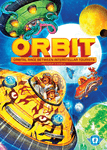
Orbit is the only game of the three that's brand new. I.e. it's not a redevelopment of an older Rhinoitzia game like the other two. In orbit, which is for two to four players, you'll be undertaking an interstellar race with the goal being to visit every other planet in this solar system before making it back to your home planet with your spaceship.
However, the twist is that the planets will orbit and move around, meaning that you can move these planets closer towards you or you can move them further away from your opponents. So on your turn, you'll always play one card. And usually this card will indicate one of the planets on the board and you'll move that planet one maybe two spaces. Then the cards will also let you move your little spaceship and this can be a variable number of spaces. And then there might also be a bonus on that card. One might reverse which direction the planet moves in. Another bonus might be to get batteries which you can spend when you move to move further. And there's also things that come in in the expansion, which we'll get to in a sec.
The Nebula expansion contains three modules, the first of which adds nebulas. Certain cards will allow you to place nebulas on planet spaces, shortening that planet track as they must skip over the nebulas. Secondly, there are the navigation tokens to add, which give you one-time powers. And then lastly, there's the hyper accelerator module, which allows players to shoot as far as they want in a straight line once they've fully upgraded their battery capacity.
One of the main things to point out about Orbit is its flexibility because it comes with quite a lot of of different ways to play and things to do. So, what I mean by this is that there's two it's a kind of two-sided map. So, one side is more complex, one side is more familyfriendly, you could say. You can play with kind of an extra planet, you can play without it. You can add the mini expansion in you, which is modular. You can play with some of them or all of them. You can play a team variant. You can play a kind of advanced two-player variant. So, what's great is that there's something for everyone.
But going on to the gameplay, what what did you think? It is a fun game. It's always fun to try and race for something, right? Especially
we enjoy that kind of tense type
race game for us personally, but at the same time, it's not a combat game, right? So, it's maybe a nice way of adding some tension without it being kind of direct
combat, I would say, because a lot of people aren't necessarily into that.
So, yeah, we had fun playing it. I like it, but it is maybe a game that if I never played it again, I wouldn't give too much thought about it afterwards.
Yeah.
Um,
it's something that I would maybe just get out when you had friends over or family. I'm not sure it's crunchy enough for us to just really really want to play a game of Orbit.
It's just Yeah, it's it's a nice game.
Yeah. But it's yeah, it doesn't make me crave to play it again. It's just maybe a little bit flat even with all the variability of the expansions like you talked about, but
it's just not so much to get out of it.
So, I think what it has going for it is that it's got a very very simple rule set. It's very approachable and it is enjoyable. I think it's a great kind of family weight game. Something that will go down well with Yeah. family and maybe children
uh of kind of maybe like older children but I think it in one way and you pointed out this almost first time we played it there's a little bit diminishing returns
which in terms of that the the puzzle while fun it it feels like each game feels the same to a certain extent.
Yes,
there's not going to be wild swings in what happens. Everyone's going to be close. You're going to have some laughs as you move planets away from people. Yeah. They move it away from you.
And that might be one thing actually that some people don't like is that sometimes we've seen when you get to kind of the end game.
It's a little bit like circling like or lobsters. Is it no crabs in a bucket?
Yeah. where each everyone's just pulling one person down who's closest till it just so happens that one person can get out spite everyone else
which is fine but then you know that might be something that bothers people because
like everyone around the table focuses on moving the planets away from the person
who's closest right and that can be also a little unfun if you're that person you're just like sat there not doing anything every turn
yeah I think there's just so not so much strategy to play around with here. It's kind of maybe a little bit dependent on what cards come out as well, which of course you can increase your probability of getting better cards by upgrading your hand size.
But even then, I can't go into this game another time and say, "Oh, okay. I'm going to try this slightly different strategy." You're you're just moving your spaceship and the planets around.
It's like very opportunistic because you can't control like the more players as well how much things are moving. So, it is very like opportunistic.
Yeah. Yeah. And I mean, I do think that you could say the two-player variant, which is kind of advanced where you're both controlling two spaceships, you know, it does go away to making it a more kind of mindful game,
but it's still that I think,
yeah, it's just I would always be okay with playing it, but I wouldn't run to get it basically
unless had the right kind of people that I think it might appeal to. Mhm.
And then I think also the the expansion is a little bit of a mixed bag cuz I think the nebulas are are interesting in how they can change the strategies because you can kind of let's say make it so that your uh home planet, you know, moves very has very few spaces to move on. So it's easier to get to at the end of the game. You can use them to move planets closer to you by like blocking off spaces. But the other two modules are kind of more about like making the game go faster, which is like a little bit of a
weird thing when it's not an over long game anyway. Um, but yeah, I think that's that's Orbit. We enjoyed it. Wouldn't tell anyone to go out of their way for it, but definitely check it out if it if it sounds good. You're looking for a fun family weight game. It's got a nice production.
Yeah. All of it. Ego is a re-implementation of Bearwolf the legend. And let us first start by saying what a reimplementation it is. In Ego, which is for two to five players, each player will take on the role of a human ambassador from a different human civilization to a bunch of newly discovered alien races. And while you're all in it together, you're also trying to get a leg up over the others in an effort to appear more suave, we guess, towards the new alien races.
The goal of the game is to get the most success points, which will mean that you win. Gameplay works by moving the group's ship along boards which represent the different systems and going through the printed events one by one. The main focus though are the auction events which come in two types, negotiation and bidding events. Throughout the game, players will collect cards that have different symbols on them and these will be used in order to bid and the symbols used to bid have to match those on that specific event. Negotiation events start by the lead player playing a card from their hand and announcing how many icons are on that card. Then next player in turn order will have to equal or match the number of icons by playing cards from their hand. And it will go on and go on in that manner until people start dropping out of the auction. So when you drop out, you just say them out and then you'll take a token marking at what position you dropped out. When it's all resolved, people will pick prizes from a kind of wheel on the board uh with the winner of the auction going first and the first person to drop out going last.
And the prizes is kind of a loose term because there will often be negative things in this wheel of stuff that you take and you can't not take it. So often whoever dropped out first will get punished actually. Then when you have the bidding events, you essentially are going to do a blind bid where you select a number of cards under the table and then 3 2 1 you will reveal and whoever has played the most icons that are required will win the auction and get first pick and whoever has the lowest number of icons, they will get last pick and probably get a penalty as like the negotiation events. As you move through the boards, there'll be all kinds of other events. Some events will give you stuff for free. Some events will let you trade stuff for stuff. Other events might let you trade stuff for points.
But a particularly important secondary event are the risk events. So what these do is they say, "Hey, you can flip a number of cards from the top of the deck and you're trying to match the symbols that are shown there. If every symbol uh if every card that you flip matches the symbols that are required, then you get those cards. If it's a kind of partial success where some match, some don't, you keep the cards that do match, but you get a little bit of a penalty. And if none of the cards match, then you've just embarrassed yourself, but nothing bad happens to you. Now, you are actually able to do these within the negotiation events on your turn. But in this case, if you get a partial success, you end up being punished like usual.
But if you completely fail, then you've really embarrassed yourself and you get kicked out of that negotiation event. So, you kind of are forced to go out. While we haven't played the original game, Ego is based on, what I do know is that Ego is a particularly good game. And personally, I think it's one that grew on me. I think it doesn't
reveal everything it has on first play, second play necessarily. But, uh, after I think five or six plays now, we really have a good appreciation for all the things it has to offer. So, what did you think about Ego?
I think I actually quite liked it from the first game.
Yeah, you did kind of lean that way.
I called that one. Yeah. I just think it's very smart, maybe. I don't know how to quite phrase it, but it's strategic with gambling and sort of push your luck elements that don't feel that feel sort of in your control in a way. Um, so I just think it's very fun to try and you you can go after a strategy like I don't know just take as many like miscommunication tokens as possible in order to try and take gamles and maximize other things or maybe be a little more conservative and try different things in different games. But at the same time because you never know how it's going to go with the bidding and how much other players are going to outbid you. You have to pivot as well.
Yeah. I just think it's very novel to me to mix all of these elements together and throw it into one game and for it to work so well.
Yeah. I think so the kind of bottom line for Ego is that you're obviously doing like in some elements a bit of gambling. You're doing some bidding.
Uh which and those two things are always exciting and I think it does them really well.
Yeah. I think it has a lot of for such a kind of simple rule set as you kind of move through a set path in some sense
it has a lot of surprises and what I really like is so something we haven't talked about
is that you can kind of pick up these alliance token which you kind of draw randomly out of a bag and they can be a number of different things. Um, you can pick up coins, which are are coins, and they're different values. And what the game does is even though there's randomness, it lets you use that to your advantage. So, for example, let's just say I take three things out of the bag. You take three things. I might get a three-point token, a three-point token, and a kind of three value coin.
You might get a good hole.
You might get three single coins. So like a 111 and on the surface that looks particularly uh unfair but then what happens is there are these events which let you spend those. So they might say oh give up three like distinct coin tokens and get 10 points or something right or five points
whereas
I can't do that and you from those have gotten more points than I have from my kind of three and three and than the coin. Yeah. And I think that's really interesting and how that plays together.
Yeah.
And then something we didn't touch upon in the rules explanation, but you kind of just said, you have these what we call miscommunication tokens uh that you get when you embarrass yourself. And essentially they have this kind of weird scale where you can lose a lot of victory points at the end of the game if you have loads of them or you can gain a lot of victory points if you have like kind of none of them or one.
And then in the middle is very soupy because you kind of lose points for taking more very slowly.
Yeah. So, it's kind of like almost like a bell curve in terms of like the how the points work and then like you said, it can make for really interesting strategies as well to to kind of never take them or to take a lot of them and just like focus on everything else.
Yeah, exactly. Cuz if you start taking a lot of them, it could be because you
are gambling and you're trying to get better cards or whatever it might be. So, yeah, and just the whole trying to forecast because you can see exactly what events are going to happen. you can say, "Okay, I'm going to take a hit now because I can see that further down the line I can potentially get rid of the music communication tokens or trade those alliance tokens in." But I think until you get there, you never quite know if you can actually do it because it's so hard to know what the other players are going to do,
which doesn't sound maybe sounds like a bit annoying, but in the moment it's very fun to try and take opportunity on it. Yeah, I'm I'm a really big fan of this game. Yeah, I think it's really really grown in me and I think like you say with the force casting, that's another kind of nice element of this game that lets you basically have different strategies where yes, you can try and win big on the auctions and spend your cards that way, but at the very kind of end of the game, you're allowed to trade in stuff for points. So sometimes you can kind of hold back and just be like, I'm just going to lose these two auctions because I know that I can keep these cards and get loads of points at the end. And you can kind of forecast that way. You know, there's kind of cards that act as a wild symbol, but if you keep them, you get a lot of points at the end of the game. So
I think there's there's a lot of fun to be had here.
The one thing might say that might put people off is that
it is somewhat on rails, though. I think it doesn't feel as because of all the reasons we've just said as constricted as you might think, but it is like very on rails. Yeah. Um cuz you're moving from one event to the next. And although kind of the middle of the game is randomized, you could say there's not so much variation besides
like all the randomness that you get out of it. But we really enjoy it. I think it's good at basically all player counts. We're really surprised by how fun it was at two cuz it really feels like a game that shouldn't work at two and it does. We played it with five. That was also good fun.
Yeah.
Uh so really recommend it. I think the one kind of negative is I think the art is terrific, but there is a little bit of a problem with like the graphic design in terms of the symbology. At least I think the first time you play.
Yeah. because the back of the cards decks don't match the symbology like fully cuz they're kind of black and white outlines on the boards and on the cards backs that are not and that really confused people the first time we played and you get used to it but it's something that's like a bit weird.
Yeah. I think we played with some friends and they were also just commenting that it's very busy and because so much of what you're doing well all you're doing is looking at the board to determine what the next event is
and yeah there's a lot of background art which is very cool actually but just putting it all together. We just had um yeah a couple of comments say that it's just a little bit tricky to get into in that first game or so just because it's so busy and there's a lot going on which affects a little bit the
barrier to entry. But yeah, you're right. Now we've played it quite a few times. I don't even think twice about that anymore.
Yeah, you grow into it. So that's our thoughts on Ego. And I think, sorry, just one last thing actually is that what's kind of great is you can play a very quick game or you can play a longer one.
So you kind of have the basic boards and then you have these like little boards that come with the main game that you kind of extend the game. you kind of extend each board with more events and special kind of or more unique events and then the expansion kind of does that in a similar way just makes them even longer. Uh and to be honest, unless you're pressed for time, I don't know why you wouldn't just include everything at once because it's just like more things to do.
Yeah.
Um so yeah, I suppose maybe in a five player game you might strip some of it down, but in a lower player count, include it all in.
Yeah. It's not a different rule. So like it's the same.
Exactly. all the time.
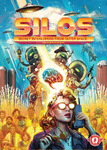
So yeah, that is our thoughts on ego. Last up, we have an absolute belter of a game, Silos, which is another wonderful reimagining of an old and oftforgot runi game titled Municipium. And here, Silos is for two to four players. And in this reimagining retheing, we are now all aliens. And basically, we've decided to take over Earth. We're going to start small, go after a small town, but to make it interesting, we're going to have a friendly bet. We're essentially going to see which of us can get the most political influence in this small town over a period of time. And obviously, whoever gets the most will be the winner. What you'll be trying to do is to collect sets of human meuples. There are four different colors of humans. And once you have a set that contains all four colors, you will trade it in and you'll get an influence token. The first player to get five influence tokens will win the game. So, how are you going to do this? Through area control.
Basically, there are kind of various area control things that are going on. And the main board is representing seven different locations in the small town. And you have seven alien meuples each. They're all going to go on the board and will be on the board at all times. And you're going to use them as kind of markers of area control. So, if I have three aliens in one location in Tal 2, then I'm winning that location because I have more aliens. You definitely want to have the most presence in each location or all the locations you're able to because you'll get some good bonuses. Although, second place isn't too bad either. And this is because the way a turn works is that you'll get some limited movement to move your aliens around the board and then you'll play a card, either one of the onetime use cards in front of you, which are very limited, or more likely, you'll flip a card from the main deck, which will trigger a random event. And these events might include an abduction event, which sees this big alien mele move to the next location. And there whoever controls that next location is going to get a cow which acts as kind of a wild human. So it can be used as any color.
Then another type of event might be the mind control events which is basically where you kind of load up humans into certain areas on the board. And when that area is filled up, whoever controls the region that area is in will get their pick of two out of the three humans that are there. And if you're in second place in either of these cases, you'll kind of get the leftover human at that location. Another type of event that might trigger is a power event. And this will trigger the locations on the board because each location has a special and unique power. Now, when there's a power event, only the player in control of that location will get to activate the power. But these are all very interesting and zany and really shake up and kind of change the potential strategies in the game.
They're what makes it spicy essentially. Also of note is that the game comes with alternative powers for each location. So you can have an entirely different map of powers or you can mix and match how you like. The crop circles expansion contains two modules within it. And the first module is unsurprisingly the crop circles module. What this does is replace a location power of your choice. And then that location's power, if you control it when the powers trigger, is to gain a crop circle. And these crop circles are essentially little cubes that you will put next to a location on the board. And it gives you a permanent plus one influence at that location. And it can't be removed unless you get to the point where the board is completely full and then somebody else triggers that power and wants to knock yours out the way. The second module is a permanent skill tiles module. And what this does is put a little tile at each location. And if you're the first person in that game to win that location when you know all powers are triggered or one power is triggered, whatever, the first time you trigger that location's power, you also take this skill tile and then it gives you a personal power that you can use for the rest of the game every turn if you so wish. Uh, and I think that's pretty exciting. And with that, we'll get into what we think. Obviously, from its position in this video, you can tell that Silos is our favorite game of three. And why don't you tell them what happened on our first play?
I gave it the very famous tally standing ovation, which only happens maybe once every two years, something like this for a game. But Silos was a very honorable receiver.
Exactly. And I think it comes from a great combination in this game of a very small kind of tight rule set.
Yeah.
Versus a lot of kind of fun game space and variability and zany action and powers going off.
Yep. For sure. I very much judged this by the artwork and the cover. I wasn't quite sure what to expect. I think that's why it got the Sterling Evasion because it really Yeah. flipped my expectations. I thought it looked very old school, which of course it does, but then I played it and realized that it's fully meant to look like that and tapping into the kind of 80s theme.
So immediately I was hit with the kind of light touch humor.
So I really enjoyed that
and yeah, I think
it's just a really clever game because you only have seven pieces and you only ever have seven pieces on the board. So one player can't really dominate the other in terms of the whole board. So, you've just got to lean into trying to hold different powers and and
activate different powers knowing that you're never going to be able to activate everything. So, that's where that decision space really comes in because that, okay, what can I go for? What power should I try and activate right now to help me in the current situation that I'm in? Because you just can't do everything. So, you have to lean in.
I think it's really good at spinning plates. So, it's kind of a lot of shifting focus, which is really fun because the UFO is going to move around every time. And then a lot sometimes you'll be like, "Okay, I'm going to shift my focus to where the UFO is going next." Other times it'll be over the powers, so you can get an edge there. And I think the powers are kind of the star of the show.
Uh because they allow you to come up with these really fun strategies. And sometimes if you can kind of get like an all powers card flipped over that lets everything activate and you own like three of the locations, you can get a really really big turns going and kind of, you know, like get multiple um influence tokens in one go.
I think it's a lot of fun in terms of that you can have different types of aliens on the board. So you have your leaders which have the cowboy hat are worth a bit more. You can upgrade them through the university action.
And there's a lot of fun and strategy in there as well.
Yeah. I also really like when you pull the cards, they get displayed.
Yes.
Because then you know what's more likely to come out towards the end of the deck and then that's when you maybe want to start pivoting, but then everyone else has the same information as you. So, it's the decision of shall I lean into it knowing that the UFO like you said might come out because I can see that the all the other cards sort of gone or try to just go for something else on the off chance that you know another card will come out or you can use your own cuz everyone else is going for it. So, I think that's a really cool element that
Yeah, I think the cards are also I think they're a core of the game uh or another part of the game that makes it really wonderful and that's that there's very little downtime in this game.
Yeah. because generally every card that is flipped uh on someone's turn is of interest to everyone else and often they will affect everyone else like everyone will get to do something everyone will get to activate a power um and even when it's not you're obviously concerned about where the UFO is going where uh people are in terms of how many tokens and humans they have and so I think that's really uh great at keeping everyone's attention focused and keeping everyone engaged which I think is is really
a great thing for this type of game to have.
And I think one thing on top of that all that is the terrific production.
I think it's got kind of terrific Yeah. kind of as we said vibe and artwork. I think the components are wonderful. The theme is hilarious.
Yeah. And I also really like the variability with the kind of expansion that comes in and also the skill tiles which you can modify in and out.
Yeah. Also, it works super well for two players no matter like any player count basically,
but you might not think that an area control game would work so well with two, but yeah, we've played quite a few games with two players and it really does work just as well because
it is all about activating the powers, right? So no matter how many players are, you're focused on how you can best move around to like activate the powers rather than it just being about pure area control itself. So that's also a really great thing about this.
Yeah, I think it's it's great at all player counts, which is just another reason that silos really shines. So I think that is our thoughts about silos. We fully recommend it if it sounds of interest to you. It's It's just one of these kind of lighter games that provides a lot more enjoyment than it has any right to in a weird way.
Yeah.
Uh so yeah. So I think with that we'll go to our final thoughts. Rounding up, we've discussed these three games of the Cosmic Silos trilogy and as we've said we are really enamored particularly with Ego and Silos. I think personally for me we put silos as top because it's I think a little bit more although the theme of ego is good the the theme of silos is a bit more zany. I think the powers really
enliven it. I just think that yeah it's there's just something about it that's very like in your face and silly.
Yeah. Whereas ego is more of of a kind of tactical uh working with what you have gambling auction type game.
Yeah.
Uh and for me that's why I think Sil is just in the kind of ziness wins out there.
Yeah. I think anything with a touch of humor will win my heart.
So that's probably why Silas is coming up the ultimate winner. And as much as I love ego, I think it's not so much Yeah. zany and it's not so much of a I don't want to say party game because it's not a party game, but
when you sit down to play this, you're being maybe a little bit more serious.
Yes.
This is more fun.
Exactly. And I think this has a good like theme to gameplay
combination whereas theme in ego which is if we didn't say you're kind of like intergalactic ambassadors. Uh once like that's a great theme but then once you're playing that does not come across at all.
No that is uh yeah by the by really. Yeah. And then as you said, Orbit is a very pleasant experience, but it's also Yeah. not something that was was really exciting to us. Uh don't really have any criticisms, but just doesn't really have anything to to grip us either. Kind of like what you were saying.
No. Yeah. Totally agree. Doesn't have the humor of Silos. Doesn't have the depth of ego.
Yes.
But there's nothing wrong with it.
No. No. It's a perfectly good race game. But yeah, just I think our least favorite of the three.
So, I think hopefully we have have helped you here if you kind of looking amongst these games and want to decide which one to get. And honestly, if any of them sound like your kind of thing, then you're not going to go wrong. They were all genuinely good games that we enjoyed playing.
Yes.
Just that I think probably Yeah. Silos and Ego are going to be the ones that stay in our collection and we're going to play a lot more. So yeah, that is our roundup of this trilogy. If it was helpful to you, please consider subscribing and we hopefully will see you again next time. See you. Bye.