Vantage Vs Sleeping Gods vs The 7th continent - BUY THIS, NOT THAT (surprising...)
Games in This Video
3 games are featured in this video — they unlock as you watch.

Transcript
We've been playing Sleeping Gods, Vantage, and The Seventh Continent backto back for weeks now. And honestly, the which one should you actually buy question is way more complicated than I thought it would be.
When we started this comparison, I was convinced Sleeping Gods was the clear winner. But after actually sitting down with all three across multiple sessions, I'm way more torn than I expected. Let's break down what we actually learned from playing them headto-head.
So, here's the context. We grabbed copies of all three because they're all marketed as these huge adventure games, right? Sleeping Gods, Vantage, Continent. They feel similar on the surface, but man, playing them revealed how different they actually are. Sleeping Gods is Red Raven's 20our campaign with this ringbound atlas and a 170 page story book. We were playing the base game at two to three players, which is honestly where it shines. Then we grabbed Vantage, which is Stonemer Meer's brand new 2025 release. Totally different vibe. It's 1 to six players, but our sessions ran two to three hours max. Completely standalone. No campaign, no storybook persistence. Then the seventh continent, which we had to hunt down because it's out of print. But the solo experience is something else entirely. We're talking 10 to 20 hours per curse. brutal survival mechanics, pure puzzle optimization,
right? So, immediately you notice player count and time commitment are everything. Our first Sleeping God session was 3 and 1/2 hours, and we didn't even finish one quest cycle. In the same evening, we played two full games of Vantage. That's night and day different in terms of what you're signing up for. The Seventh Continent, we played solo mostly because honestly, even our two-player attempts felt clunky compared to the solo experience. But that's also the point where I realize these three aren't really competitors. They're answering different questions.
Okay, but let's talk mechanics because that's where it gets interesting. Sleeping Gods has this captain activation system. You pick a room on your ship, do an action there, maybe explore a location from the Atlas, then rotate who's captain. Combat involves drawing numbered enemies, assigning your crew, using fate cards, and managing synergy tokens. In our sessions, that system felt elegant. But by combat five or six, it started to feel a bit rote. Meanwhile, Vantage's entire core loop is pick one action from your location card, roll challenge dice, slot dice on your grid to avoid consequences, gain cards. Sounds simple, but it creates this snowball effect where early game you're desperate, and late game you're juggling boosts like crazy. The seventh continent, though, that's pure deck management. You draw action cards as your cost. count stars against difficulty and every failed action burns cards from your life deck. When that deck empties and reshuffles, that's when a curse card shows up and you die instantly.
Yeah. And here's what blew my mind. The complexity just dropped differently for each one. Sleeping Gods has rules overhead, crew management, keywords to remember, but once it clicks, it's smooth. We spent maybe 20 minutes in our first session confused about fatigue tokens and synergy. Then it flowed. Vantage had this weird thing where the first 45 minutes of our first game felt like controlled chaos. We didn't understand whether we were winning or failing at anything. By turn 15, we'd mapped about 15 locations mentally and suddenly understood the sandbox. The seventh continent though, we needed watch it played 33minute rules video, then the BGG FAQ. Then we were still not sure about hidden numbers on terrain cards until our third curse attempt.
rules were opaque in a way the other two weren't.
But here's the thing, that learning curve connected to the experience each game wants to deliver. The seventh continent makes you earn that understanding. Every session, you get better at reading the map, optimizing deck draws, spotting shortcuts. Our second curse was 5 hours faster than our first one because we understood resource management better. Sleeping God's learning curve is just because it's juggling a lot of subsystems. Crew abilities, quest keywords, port mechanics, combat timing. Once you get it, the game isn't hiding anything from you. Vantage's confusion is legitimate, though. I mean, we had a 20-minute debate in turn 8 about what we were actually trying to accomplish. No clear victory condition announced until you complete a mission. That sandbox freedom that makes replayability great, it made first play paralyzing. Okay, so strategic depth. This is where things actually get contentious between us. In Sleeping Gods, strategy exists, but it's softer. You're optimizing crew synergies. Kasumi for combat, Mac for damage stacking, dock for healing.
You're managing fatigue tokens so your specialists don't tank. You're deciding whether to explore a location or hit the market or rest at port. But honestly, by campaign 4, the pattern felt familiar. We knew the rhythm. With Vantage though, strategy is weird because the world's open. Our first game, we grabbed high-V value items inefficiently, wasted half our time. Second game, we belined the tower location because we'd learned it had a vehicle worth 10 points. By game five, our mental map of 126 locations created this meta strategy of complete mission 1583 because I know where all the high-v value cards are. Now, that's replayability through knowledge. The seventh continent though, that's pure deck management. After our first curse took 15 hours, we got the second one done in 10 because we'd learned rest at camp sufficiently. Beline ritual locations. Craft a fishing rod for unlimited food. Speedrunners finish curses in 5 hours. That's skill-based replayability.
Yeah, but I'll push back on the sleeping god strategy being soft. The event deck cycling three times creates real pressure. You've got limited turns before events refresh. Keywords lock you out of branches you've already explored. The quest system means you're chasing totems across 50 plus locations on a map that's 10% discovered per campaign. Our second campaign was completely different because we explored different islands. First keywords branched differently. That's legitimate strategic replayability, not just I know where the good cards are. Plus, Seventh Continent's optimal strategy is kind of depressing. Don't split the party, take the same character pairs, follow the same route. Dominant strategies exist. Once you solve a curse, replaying it feels hollow compared to Sleeping Gods, where key words genuinely create different outcomes. That's fair. I came out loving Seventh Continent solo, but being kind of frustrated with repeat curses, and I'll admit, Sleeping God's keyword system is clever. Once we understood that quest cards represented story memory, the whole 170page story book clicking into place made sense. But here's my honest take. In our two-player sleeping god sessions, there was downtime. Your partners doing combat, resolving events, and you're sitting waiting. In Vantage, turns are fast, maybe 5 minutes tops, so multiplayer doesn't slow crawl. Seventh Continent solo is just smooth pacing because
you're not waiting on anyone. Sleeping Gods at three players felt sluggish and at four players I'd probably quit.
Okay, let's talk player count directly because that's massive. Sleeping Gods is designed for 1 to four, but absolutely sings at 2 to three. We played it at two and everything felt tight. You split crew management, cooperation felt natural, downtime was minimal. At three, we added a third player and suddenly turns stretched. Someone's exploring while reading storybook entries, doing combat, drawing events, 15 minutes while two people wait. The rule book supports jump in out for casual play, but honestly, the sweet spot is 2 to three with committed players. Vantage though, two to four players feels pretty consistent. We played solo at 45 minutes, two player at 90, three player at 2 hours 15. The cooperative token sharing and skill dice pooling means more players actually don't slow the game. They just create more decisions to negotiate. We had a 10-minute debate in our three-player game about who should spend tokens for difficulty reduction, but that was fun collaborative moment, not downtime. The Seventh Continent at two players with two characters worked fine, but felt less like cooperation and more like I'm controlling one character, you're controlling the other. Solo, it's perfect. The action deck feels like a shared life force you're both managing.
But four player, BGG forum reports are pretty clear. Don't do it. table sprawl hand management nightmare takes forever and optimal strategy becomes don't split party so you're functionally solo anyway
yeah our two-player seventh continent was weird because we'd discuss every draw should we craft the club or rest at camp but then one of us would execute the action and the other would just watch felt less collaborative than sleeping gods where both players are genuinely making simultaneous decisions like in Sleeping Gods Both players activate rooms on the ship independently, so you're constantly problem-olving together without one person's turn dominating. Vantage, that's where group decision-making actually shined. Okay, I'm going to fish, but I'm worried about the dice. Should we spend tokens? Everyone weighs in. But here's the thing about player count. It completely changes the game you're buying. If you're solo or two-player couple, these three are totally different products. Sleeping Gods at two is transcendent. Vantage at two is streamlined fun. Seventh Continent at solo is a masterpiece. But Vantage at four is chaos. Seventh Continent at three is broken. And Sleeping Gods at four is a slog.
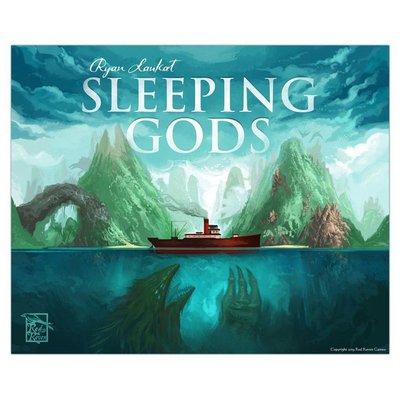
Right. So here's where I want to dig into theme and narrative because they're wildly different. Sleeping Gods has a story book, 170 pages, numbered entries, branches based on quest keywords you hold. Ryan LaCat's watercolor art everywhere. You're sailing a ship with crew personalities. There's an actual story. Wake the sleeping gods, get 13 different endings. In our campaign, we felt like we were progressing a narrative. Found an island, completed a quest, gained a totem, opened new story branches. That mattered emotionally. Vantage totally different. You crash land, explore 126 locations, complete a mission like collect 30 card value, or discover your hidden destiny. There's barely a narrative, maybe one sentence per location card, but the world is coherent. Double-sided cards, wraparound planets, composition system for crafting. It's thematic mechanically.
You're building up a collection through exploration. The Seventh Continent is sparse text, but high atmosphere. EC comics horror tone mystery curse puzzles. When you solve it, you feel like you've cracked code, but there's no character arc, no crew relationships like sleeping gods. I have to be honest, theme was where I personally clicked hardest with Sleeping Gods. After 12 hours, our first campaign started dragging mechanically, but the story kept us invested. What happened to Ulim's son? Do we explore the shadow creature layer next? That narrative poll is real. Vantage's theme works differently. It's environmental storytelling. The world tells you what's possible through card design and location flavor, but you're not reading a story. You're discovering it through play. Some people find that liberating.
Some people want a story book. But The Seventh Continent's tone is unique, though. It's not Lovecraft cosmic horror despite the character name. It's pulp adventure with horror seasoning. Tales from the Crypt vibes. When you hit a twist, find a cursed idol, discover an underwater temple, there's real atmosphere despite sparse text.
Okay. Component quality. This matters for table presence and longevity. Sleeping God's ringbound atlas. Beautiful. Flips easily. 170 page story book. Glossy. Reads like an actual book. Crew boards. Functional but honestly a bit plain. Probably 150 plus cards between market and quests. and events. Metal coins if you went Kickstarter. We had cardboard and honestly they're fine. Linen finished cards that shuffle smooth after 20 hours of play. Production quality is Stonemer adjacent. Excellent. Vantage 400 plus double-sided location cards with dividers. Genius organization. Seven color-coded story books 30 pages each. Glossy covers.
Challenge dice. Skill tokens. and this satisfying box organization. The card art is inconsistent. Some locations gorgeous, others feel like lazy 3D renders, but handling-wise, the linen finish is premium. Cards don't bend. The composition icon system is thematic and well-designed. Seventh Continent is a thousand cards. Terrain, adventure, exploration, skills, curse cards. That's insane component count. Linen finish holds up. Terrain cards have these gorgeous painterly illustrations, but honestly, the generic curse cards, five blank cards per curse, feel cheap for a $125 game, could have had line art like Robinson Caruso. The journey log for Seventh Continent is where production shines, though. Takes 45 seconds to save. List terrain, hand, item durability, discard counts, state cards.
No other campaign game does that elegantly. Sleeping God's jump in out support is good, but not that clean. Vantage doesn't need saving because standalone sessions. But yeah, opening Sleeping Gods and seeing that ringbound atlas hit different than opening Vantage's card box. Lockat's watercolors are just more visually striking than either of the others. Vantage's box organization is more functional. Seventh Continent's component count is overwhelming, but Sleeping Gods aesthetic wins.
Okay, let's talk playtime because this is where things get real. Box says Sleeping Gods is 60 to 120 minutes per session, 20 hours campaign. We played 3.5 hours first session, and we weren't even done with one quest cycle. Second session was 3 hours 15 minutes. So, expect 3 to 4 hour chunks if you're doing meaningful progression. That's significant. Vantage Box says 90 to 120 minutes. Our games were 2 to 2.5 hours every time, including setup. Tight play time. Seventh Continent per purse is 10 to 20 hours, but you're saving between sessions. Our first curse was 15 hours spread across three sessions of 4 to 6 hours each. None of them felt slow pacing wise. You're constantly solving puzzles, but accumulated time investment is massive. So, if you have three-hour window, Vantage is your game. Sleeping Gods requires commitment to sessions.
Seventh Continent is long-term investment, but flexible with saves.
Yeah, and here's something that matters. Engagement density. In Sleeping Gods, you're managing crew, optimizing synergies, but there are downtime moments where the rule set feels like you're executing wrote actions. In Vantage, every turn feels like a fresh decision. Which action, which difficulty, which boosts to spend. Engagement stays high because stakes feel different each location. Seventh Continent, constant tension. Every card drawn matters. Hand management is critical. You're never on autopilot. But that constant tension is exhausting. 15-hour first curse on seventh had us burnt out by our 10. Sleeping gods let us breathe. Let's just explore this island and see what happens. Feels less consequential, more relaxing sometimes.
Vantage hits a middle ground, engaged, but not drained. That's honestly the emotional experience difference that matters. Sleeping Gods feels like settling in for an epic voyage with friends. There's urgency from event deck cycling, but also luxury of exploration. Vantage feels like let's quest for 2 hours and see what happens. Lower stakes, higher freedom. Seventh Continent feels like surviving. Every decision carries weight. Mistakes cost resources. Victory feels earned. They're different vibes entirely. Our group is split on which vibe appeals most. Honestly, I personally like Sleeping God's narrative pull and world building, but I'll admit Vantage's sandbox and fast pacing appeal to people who want less overhead. And Seventh Continent appeals to massochists and solo gamers.
Okay, so actual value, Sleeping Gods runs about $70 retail right now base game. That's roughly $1 per hour of content if you do two to three campaigns, which is honestly the sweet spot. Vantage is $75 to $90 MSRP, probably 75 online. You're getting 2 to2 hour sessions, and the replayability ceiling is about 20 to 30 plays before you've mapped most locations mentally. That's 40 to 75 hours theoretically, but realistically people burn out faster. So $75 for 40 to 60 hours is reasonable. Maybe $125 to $2 per hour depending on replay appetite. Seventh continent, we paid $125 on the secondary market because it's out of print. That's $125 for three base curses, roughly 45 hours baseline. So 278 per hour for the base game, which is steep. But if you get expansions, which adds five more curses, suddenly you're at $300 total for 130 hours, which brings it to $2.30 per hour. Still pricier than the other two, but the content depth is legitimate.
Okay, but availability matters for value. Sleeping Gods is in print, easy to find, $70. Vantage is in print, easy to find, $75. Seventh Continent is out of print. Hunting grounds are secondary market at $100 to $150. And the second edition retail reprint probably isn't happening until 2026, if it happens at all. That pricing premium for Seventh Continent feels less justified when you have to hunt it down. If you can find it under $100, grab it. At $125 to $150, that's a lot for a solo first game. Sleeping Gods and Vantage are both current products at fair prices, which honestly impacts the what should you buy question more than people think. If Seventh Continent was in print at $70, different story entirely.
All right, so here's where I want to get honest about who these games are actually for. Sleeping Gods is for people who want a storydriven campaign with crew management and exploration. You're committing to 20 hours probably. You're playing with two to three consistent friends. Ideally, you want keywords to matter and storybook branches to reward your choices. You're okay with 3 to 4 hour sessions, and you like seeing narrative payoff. That's a specific but solid audience. Vantage is for people who want sandbox freedom, two to 2 and 1/2 hour chunks, and don't need narrative structure. You're happy exploring, optimizing, discovering the world through play. You're probably playing with two to four people. You like emergent gameplay over scripted moments. You want fast engagement without teaching overhead once you learn the basics. Very different person.
Seventh Continent is for solo players or dedicated two-player pairs who love puzzles and survival mechanics. You want mastery through replays. You don't mind spending 20 hours on a single curse. You love efficiency optimization. You're probably not the casual Friday night crowd. You're the person who studies BGG forums to optimize strategies.
Right? And here's the real talk. These three aren't actually in competition. They're answering fundamentally different needs. Sleeping Gods says, "I want a campaign." Vantage says, "I want freedom." Seventh Continent says, "I want a puzzle." If someone asks us which one they should buy without giving us more context, we're going to ask them what they actually want, not declare a winner. But if you force us to pick one,
Yeah. Okay. Here's where Eve and I disagree. After all our sessions, if I had to choose one to recommend to most board gamers, it's Sleeping Gods. The 20-hour campaign structure with keyword memory creates genuine replayability. The art and production are excellent. The two, three player count is accessible. Sure, it starts slow. First 12 hours feel like tutorial, but once keywords click and you understand crew synergies, the game soarses. Ryan LaCat's storytelling carries weight. You finish a campaign feeling like you've been somewhere. Vantage is mechanically elegant but emotionally hollow after the novelty wears off. By game five, the missions blend. Seventh Continent is brilliant, but only if you're solo or deeply committed to mastery replace.
Most people aren't. Sleeping Gods wins as the complete package for committed groups.
I see that. And I'm not going to argue Sleeping Gods is bad, but I'd argue it depends on what the person actually plays. If they're coming from a background of campaign games, Gloom Haven, Tainted Grail, Spirit Island, Sleeping Gods is perfect. But if they're coming from Euro games, or they prefer snappy mechanics and fast sessions, Vantage's elegance is less appreciated. And like, I loved Sleeping Gods, but I also had moments where I sat through a 20inut combat that felt wrote. Vantage never had that. Every session felt fresh. Plus, Vantage is 2025. In print $75, widely available. Seventh Continent is out of print at 125. Sleeping Gods is $70, but commits you to 20 hours. Vantage you can grab and play tonight.
That's not insignificant for actual purchasing decisions.
That's fair. If someone walks into a store today and wants to grab something immediately, Vantage and Sleeping Gods are both options. Seventh Continent isn't realistically. And yeah, if someone wants bite-sized two-hour sessions repeatedly, Vantage wins. But our job is to tell people what's actually the best game, not what's the easiest to get. And I genuinely believe Sleeping Gods is the best of the three for most people. It does more. The narrative matters. The keywords create genuine branches. After 20 hours, you feel like you've been on an adventure, not just solve the puzzle or optimized item collection. But I'll give you this. If you play Vantage 10 times before deciding, you might prefer it. It grows on you. The world familiarity becomes the content.
Okay, so here's my actual recommendation, then. Buy Sleeping Gods if you want a storydriven campaign with genuine replayability through keyword branching. Buy Vantage if you want streamlined engagement, fast sessions, and sandbox freedom without campaign overhead. Do not buy Seventh Continent unless you're specifically a solo player or you commit to mastery replays. It's niche brilliance, not a universally good game. But honestly, the honest answer is depends on your group. We have friends who'd bounce off Sleeping God's slow start and 20our commitment, but they'd love Vantage's freedom. We have friends who'd find Vantage aimless and prefer Sleeping God's structure. We have one friend who's solo only and Seventh Continent is their favorite game ever.
So, the real verdict is Sleeping Gods for narrative campaign lovers, Vantage for Eurogame lovers, Seventh Continent for solo puzzle addicts. Not buy this, not that, but buy the one that matches your brain.
That's the most non-committal recommendation ever, but actually, I'll revise my earlier take slightly. If I had to pick one game for the average board gamer, let's say someone with a group of two to three consistent players who like both crunch and story, Sleeping Gods is the right call. Full stop. It delivers the most across the most dimensions. But yeah, that caveat matters. Know your group, know your time commitment tolerance, know whether you want narrative or freedom. These three don't compete. They serve different needs. And that's actually kind of beautiful because they're all excellent at what they do. But we've been geeking out about this stuff for weeks. And here's what we genuinely came away thinking after playing all three repeatedly. Sleeping Gods nails the campaign experience. Vantage nails the sandbox experience. Seventh Continent nails the solo puzzle experience. Pick the experience you actually want and you'll love whichever one you get.
Thanks for hanging with us while we nerded out way too hard about these games. We're the board game critique crew and we'll catch you in the next one where we probably overthink something even more than