Six Short Game Reviews - with Tom Vasel



Transcript
Hey everybody, I'm Tom Vassal and today we're taking a look at six different games here and I'm going to be giving a kind of a short reviews of all of them. Um I just kind of overall Well, you know what? I'm not going to spoil it. I was about to tell you what I thought about all the games overall, but one game is different than the rest. We're going to go through the games smallest to largest-ish. So, here we go. Brumble Quest is from Plaid Hat Games and says on it from three to 50 players. Well, considering there's 50 sheets in the game, that means you'll play it once. If you play it with 50 players, I guess it's a really cheap little game and you could just make copies of some of these. But anyhow, uh you and up to 49 of your closest friends. Good luck if you have 49 close friends. But anyhow, it's sort of a party game. Here's how it plays. At the beginning of the game, each person's going to get a character here. Every character is pretty much the same and you'll fold it like this showing that you have four hit points.
As you get gems, you'll fold it out. Here, for example, I have one gem. Here I have four gems and if someone gets all their gems first, they're the winner or someone loses all their life, whoever has the most gems is the winner. You're going to be doing this by each round of the game putting out three cards in the middle of the table. You'll spread them out more. Um they're close just so I can show them here in the screen and then everyone is going to say 3 2 1 Brumble and point at a card. The card you point at is how many gems you will get. Also, everyone takes a damage unless you avoid damage. So, here you can avoid damage if another card has more players pointing at it. Here you avoid damage if the number of players pointing here does not match another card. And here you avoid damage if there's an odd number of players pointing here.
So, everyone takes the gems. You see if any Maybe you'll take damage or not, and then the cards are wiped and you'll add three more cards. So, here you avoid damage if the player to your right is pointing here, if the same number of players pointing at another card, if another player has fewer points. Here this one is worth five gems, but you only avoid damage if only one person's there, and things like that. This one you lose. Lose a a gem, but you take no damage and you gain a life, although your life is max four. But if no player points here, everyone loses a life.
So, anyhow, once someone loses all their life, the game ends, or when someone gets all their gems. That's how you play. This game is an amusing time here. It's It feels almost It's It's like an activity. I Everyone point at cards. Oh, that card's an odd number of people. Boy, I sure hope an odd number of people point at it. Or this one, you know, the one that only if one person points at it, you don't take a wound. But it has six gems on it. So, obviously more than one person's going to point at it. I'm like, you know what? I don't even care. I got four wounds. But once you're down to two or one wound, you're like, Mhm. I would like to not die here. It's very chaotic. It's very silly. And frankly, there ain't no way 50 players are playing this game. You're just not getting around a table. Maybe if 50 players sat in an audience and had a little button and all press which one they're going to go to. But also there's three of them, and there's one that says if only one person points at it, so it just doesn't work with that. I I kind of I get haha, it goes to 50 people, but it really goes to like eight, maybe 10, but about the amount you can get around a table.
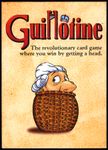
Like I said, it's amusing. If what I said and what this sounds like is just a silly little game that you might want to get, go for it. For me, it's a six. It's fine. I played it. I did I didn't dislike it. But then I was like, "What else?" And I don't know that I would buy it. But if you know some people who just want to get around and kind of all point at something and then laugh and see what happens, Rumble Quest is your game. Guillotine, it's back, baby. This game was originally published in the '90s from Paul Peterson, the designer. Although, I will say as a side note here, this game says "Original design by Paul Peterson." And they they say that even in the rules, like uh they want to say thanks to Paul Peterson as original This game's kind of based on something he did. I don't really get that because the game I mean, I played the game when it first came out, and there might be some very very very very minor changes here. It's his game, so it just seems like some odd wording that they're not just saying "Designed by Paul Peterson."
Uh but anyhow, this is a game about the French Revolution, and you are an executioner trying to chop people's heads off. If that theme bothers you, yeah, you're not going to love this. But if it doesn't bother you, here's how it plays. So, you have a guillotine, which annoyingly doesn't fit in the box very well. Um but you're going to have 12 nobles placed in a line. I have them here in two rows of six just so it fits on screen a little bit better that are drawn from a pile of nobles. Each one has a different color in the background. Players are going to get a handful of action cards, and on your turn, you may play an action card. So, let's say for example, I play this one. Move a noble forward exactly two places in line. So, I move this lady up two spots in line.
Now, why would I do that? I don't even know. Uh you then the first person in line is yours. You chop their head off. So, here I get three points. And the line moves forward. Now, I suppose if this person was here, that would have made sense to move them up so that I would have done that. You don't have to play an action card, but you can. Here, you don't collect a noble this turn, but you get three more cards. Pick someone they can't play an action card, discard a noble line replace with the top card from the deck, place a noble to front of line into another player's score pile because there are cards here that are worth negative points. You don't want to kill the hero of the people. Now, these cards aren't replaced. After all 12 of these cards are gone, the day is over and you start another day. You will draw another card at the end of your turn. There's no limit to cards in your hands. At the end, you add up all the points. There are positive points.
There are palace guards here who are worth number points equal to the number of palace guards that you have and there's basically all these different cards in here. Sometimes when you capture them, it says after you collect this noble at the top noble from the deck to the end of the line. Um this master spy, each time an action card's played, he moves to the end of the line. After you collect the clown, put him in another person's score pile. If you have the count and the countess together, they're worth extra points and things like that. After these three days, whoever has the most points is the winner. I don't know where we get to the point where like too soon because, you know, I I doubt anyone here is going, "My grandfather was it was one of these people beheaded because we're talking hundreds of years in the past." That being said, I don't think you're particularly good guy being the executioner chopping people's heads off. It's silly and cartoonish and so just you have to take that in mind.
It's also a silly take that style game. Now, Paul Peterson has designed Smash Up and I think Smash Up is his magnum opus, but for a long time this was the game he was most associated with. Uh but it really is silly. It's a game in which you are maneuvering a line trying to get points to go to the front so that you get the most and points to go to back. This is definitely the first game I ever played where there was a card that if you have one of them it's worth one. If you have two, they're both worth two. If you have three, they're both worth all three are worth three and I was like, "Holy moly, that's so cool." Now, that's done in lots of games, but this was the first one I saw it in. I'm amused by this game. But again, I don't know that I would pay to buy it. It's a fun silly time, but I'd give it a six out of 10. There's some interesting factors, but those cards are wild and chaotic and crazy, and you're trying to get the most points and maybe you will, maybe you won't.
There's pretty much no strategy here. But it is a silly thing that I think will appeal to some people and irritate others. Either way, that's Get Lit. Bring your own book. This is a party game where you need to have a book for each player. Not a very difficult process. Just look around, find a book somewhere, and bring it. And it's for all ages. You can bring a Richard Scarry book, and I can bring War and Peace, and you can bring the biography of Abraham Lincoln. It's up to everyone, but you bring a book and you play. Here's how it works. So in this game, each player needs their own book. Anything you want. A cookbook or D&D Dungeon Master Guide, whatever it might be. What's going to happen is you'll flip a card over, and one person's the judge each round. That person picks a thing, and I would have got away with it if it weren't for and then everyone starts looking through their book for anything that might meet that. If I would have got away with it if it hadn't been for and I'm going through here and I'm like, hmm.
Would have got away with it through if it hadn't been for tears from chopping onions. Any part of the book I want. And as soon as I find something, I'm going to flip this timer, and then everyone else has that time and they have to quick find something in their book. And um I would have got for away with it too if it hadn't been for oh, failing an ability check. The judge picks the one they like best. That person gets the card. And then you go to the next player to be the judge. As soon as someone has collected two cards, everyone passes their books to the left. You get a new book. And the first person to get a certain number of cards, depending on the number of players, is the win of the game. You can play the the one book wins or the last person to find an answer each turn. They're the judge, whatever you have.
But, that is it. Some more prompts in here. A slang term for having a good time. Text on a motivational poster. Something you'll lie awake thinking about tonight. This will be an unhackable password. Something overheard at the White House. An unusual Halloween costume, etc., etc. This is a very good party game. I really liked it. This isn't the first time. It was originally from Game Right Now. Happy Camper has it. And Jason Heatley was involved who's a very renowned board game {slash} book reviewer. So, this is kind of right up his wheelhouse. It's really well done. Now, the prompts in this game my only caveat here is the game says 12 and up and I really liked how the original one was even for younger kids and all. Some of the prompts here are a little heady for young kids. I'm not saying that that's like an adult game, but some things that you're like, "What does that mean, Dad? I don't really get that." Yeah. So, 12 and up is pretty accurate in this regard, but I kind of wish there was a version for kids that they could bring their story books and still point to a funny name in there.
That being said, some of the stuff that's in books is hilarious. It has been a long time since I remember playing the first one. I don't remember the passing of books, but I liked that one a lot. You're like, "Well, that's that's no fair. You have this really great Terry Pratchett book." Well, guess what? That's going to come around to me at some point and I can use it. And you're just flipping through and sometimes the answer that people find in their book is so spot on. It's better than a game where you write down the answer. Well, I mean, well, I think so. I know for some people they might be more creative, but you're just going through the book and you're like, "That's perfect." And just a statement that someone says has nothing to do with anything, but fits the answer to a question. I think this one is a lot of fun. Eight out of 10. If it's it's a novel party game and that is correct in more ways than one.
Bring your own book. Seashells is the newest game from KTBG from Bruno Faidutti, best known for Citadels, and this is a game where you're going to be collecting shells. And you want to get as many as you can and try to have majorities of colors and types. Here's how it plays. At the beginning of the game, you'll put out all these shells here and a few other things like bottles and little sand dollars. Each person has a sheet that shows a spot to put all the different shells and the colors. There's one of each. The bucket's going to be put at a random spot based on you drawing a color and a shell. That one is going to be placed here as a kind of a tiebreaker. And each person gets a card, so maybe I have the purple cowrie here in my hand. On your turn, you are simply going to take the bucket and go anywhere in the same column or row. So maybe I'll move here.
And I'll take this green shell. I'll take the green scallop and place it on my board and it's the next person's turn. If you get one of these bottles on a future turn, you can use this to take two turns in a row. And that's pretty much it. You just keep moving around until all the pieces you or not till all they're all gone, but till you can't move the bucket anymore. You can also play where you move around a circle like this. That's an alternate way to play. At the end of the game, you're going to score for each shell and for each color. You'll just call them out one at a time and whoever has the most of them will get three points. The cards you have at the beginning count as if I have an extra purple and an extra of this type of shell. And then second place gets one point. Also, if you get complete fish, the head and the tail of a fish, you get three points for that and a point for the different scallops that you've collected. And whoever has the most points is the winner. If there's a tie, you'll use the shell here. Whoever has the most of the color and type here will break that tie.
That's how you play. Funnily enough, this is not the only seashell collecting game that came out this year. Sanibel came out from Elizabeth Hargrave, but Seashells here is a very simple game. And I thought Sanibel wasn't very particularly complicated. Seashells is moving the same row or column. There's actually a game that's like this that I enjoy a lot called butterfly. Seashells is fine. You move, you collect. What are you collecting? Well, I don't know. I'll take this green conch because I'm trying to get I already have two conchs and I already have a green, so now I'm trying kind of in the running for both of those. But I don't want to have six green because I'm definitely winning that already. So, maybe I'll take something else. A bottle is interesting, but all it is is I'm not taking a turn this turn to take a turn later.
And then collecting two five What I mean is everything gives you points and everything gives points here and nothing feels like it's It doesn't feel particularly exciting. You're just moving around and collecting stuff. And it's fine. There's some interesting ideas, some interesting concepts, but I wouldn't I don't get too excited about it. It's just a nice mild game. And I don't know that I would buy it. I'm giving it a six out of 10. Not Again, it's not a bad game, but it's just it's just I I you know, I mentioned Sanibel. Sanibel was super interesting, all these different ways of scoring. This one it feels like there's very few points to get. You're going to get points no matter what you do. Collecting something Sometimes it's obvious. Don't collect that purple, you know, spiral shell because you have no purples and no spiral shells and John has four purple and Susan has two, so it's kind of a waste of your time to take it. That's kind of an obvious choice, so you just try to get the majorities, but everyone else trying to get majorities. And it doesn't It doesn't really feel like a tug-of-war.
This feels like everyone gets a few majorities. Who got the most points? It was you. That. But also it's easy and simple to play, so I think a lot of people will like that. That's Seashells. Caminito is a game about coloring. Uh this is a game in which you are going to color a little uh section of Well, it's actually based on this actual place called Caminito. Immigrants settling in Argentina, they painted their homes with leftover paints from the ships they arrived on. So, that's what you're doing here. You're painting your homes by coloring them in with colored pencils, but also, here's the catch, you roll those pencils. Now, this is not the first game that rolls pencils. Reiner Knizia has designed a trio of games about this, but this one here is the first from this one from Breaking Games. Uh so, let's take a look at this one. Pedro Medem is the designer. Here's how it plays. In this game, players are going to take either a small, large, or medium building here. They're going to pick their colors for their bonuses at the end of the game. There's a quick reference guide in the book. But the game is going to revolve around these pencils. Each round of the game, you're going to roll these pencils in a turn order. Players are going to take that pencil, and depending on what it shows here are the things that they can color.
So, for example, here, this shows you can color a wall and a door because you're looking at it from this angle here. This is a wild one of anything. You don't have to do both. You can just do one. And so, as the game goes by, you're going to be coloring in different sections on your sheet. When you finish a row or a column of walls, you'll notice this is takes two spots. If every color wall is different, you get these bonuses here. So, if you don't finish one by the end of the game, then you won't get those bonuses. Also, every time you have these matching you color these at the beginning, so every green with a blue window. So, I got one here, so I got one star, but I could have got more if I had gotten three greens with blue windows or oranges with red doors. And then if you're the first person to color in all your doors, all your roofs, or all your windows, you get bonus. So, there's also you'll be getting coins as the game goes by, and you can use coins to change an object to whatever you want it to be, but if you don't they're worth a point. So, you add up all these things at the end of the game to get your total and that's how you play. Yeah, it's it's it's it's it's okay. Like I said, it's kind of hard to sometimes we take these games it's kind of hard to divorce these games from other games that exist.
Reiner Knizia has one where you roll pencils. There's a problem with rolling these pencils. You take a color out if you want to, which is almost always yellow for me, but whatever it might be and and you roll these pencils, but I'll tell you what, when you roll a pencil and you're like, "Ooh, this pencil gives me a door and a window." You pick up that pencil and you go, "Okay, here's the door I'll color." The other symbol was window, right? It seems really obvious, but it is an easy thing to forget.
Yeah, and this has happened several times when playing the game. Um I wouldn't mind if you just had some dice that you rolled and then you could use whatever pencils you wanted or markers if you wanted. Coloring everything everything gives you points. The row and column being different gives you points, being the first to color in windows and roofs and doors gives you points, and matching your own little things at the beginning. And it's not particularly hard to do. The large is not that much larger. The large is a 5x I'm sorry, uh Yeah, it's a 5x3, I think. Um and the the medium is also a 5x3, but it's slightly different and the small is a 4x3. It's it's okay. Maybe the large is a 6x3. It But it's okay. You get to color a lot. You make things look nice. I think it might appeal to kids a little bit more because they're coloring. Although, I think they're going to struggle with how the scoring works, but you roll, you color, everyone scores points, everyone's scores are going to be tremendously close.
And so, it lacks a little bit of excitement in that regard. And like I said, there's a ton of these roll and color {slash} roll and write games out out I don't know that this one stands out. It's fun, it's interesting, it's almost there. I give it a 6.5. I liked a lot of things about it. I think it the box is colorful. I think the theme is fun. But it just misses the mark for me saying that you should get it. That's Coming Eat You. Boo! Festive Fortunes. This is a game in which you are joining the zodiac animals as exchange red envelopes to compete for festive treats on Chinese New Year. So this is a game where you are going to get points for different things that you eat. But the only way to get them is to have someone else sell them to you. So it's an economic style game, but you're putting money in red envelopes and giving it to people secretly. Here's how. In this game, players are going to try to score points by collecting different foods or eating different foods. So example, every two of these mandarin oranges you eat at the end of the game is worth a point, but if you have an odd number that you've eaten, you'll lose two points. While these melon seeds, whoever eats the most gets six points and the second most gets three points. But how do you do this?
Each round of the game, players are going to be first placing workers on the board. You place them on one of these spots, you'll start with a certain amount of money depending on what year it is. And you pay five, you can buy one or two of that kind of food. Here I can buy one or two of the pineapple tarts. Here I can buy one or two shrimp rolls by putting my workers there. Once you get this food, you're going to serve it. You can also go over here and buy these cards which will give you special abilities and other ways to get points. But if you do that, you open up a spot here that somebody else can go to simply to get money. Like I said, you're going to get food and serve it. So let's say I bought these on my turn. I bought two of the shrimp rolls and I bought two melon seeds. I'm going to split it up and maybe I'll do it like this. You can't put the different kinds of food in the same area. You I can sell these two together. I could split up them. So I have three things here. Each player then is going to give me an envelope. You're going to take an envelope. Each player has an envelope, so I'm the dog. I'll have these four. I can put money into these envelopes, and I have denominations of fives and 10s that I'll put envelopes, and I can also give an empty envelope, and it tells me which player to give those envelopes to.
Once you've gotten your envelopes, you'll open up your envelopes, and if the person gave you money at all, you'll move their figure to where that amount of money they give you, and it stay standing up. If they gave you no money, it goes down. Here's the deal. Let's say the pig player gives me 15. From now on, they must always give me at least 15, or they automatically will lay down. So, that's how much you have to give in the future. And then, starting with the whoever gave me the most money, the standing up players can take one of these spots here, and then possibly more, and then they will take those and put them on their board in the section where it shows that they've eaten food. And that's pretty much it. You're going to get one point for each person who comes and gives you money, so you're encouraged to buy these to give to other people. And then, putting them down in these spots at the end of the game will give you points, again, depending on how many you get. And then, of course, other things like this here. At the end of the game, this gives you one point or two if you have a pair of spring couplets.
So, those might give you some points, also. Most points is the winner. Huh. There is a lot involved with this game. I like economic I like the idea of trying to figure out what it is to get ahead, but this one falls for me a little bit. Not a negative way. I'm giving this one a six. It kind of just is there, but there's a few issues with this. First of all, there's very, very, very, very few points in this game. And so, because of that, you like you saw the points, like the one gives you six if you have the most, three if you have the second most. Another one gives you a point for every one you have one, and then I mean two you have and then if you get an odd number you you lose points. So you have to be very cautious and the scores if people come and give you an envelope you get one point for each. Even those special scoring cards, that's the advanced game you don't have to play with them, feel very minor and I think that's an issue with the game overall is because it's hard to tell how much anything is worth.
You're giving money to other players. Well, that's fantastic. You're paying for their things, but you have to put stuff in your you have to buy food as cheaply as possible so that you have money left over to send to other players and you're also are trying to attract people to come to you for a few measly points. It just feels like the concept, the idea of giving people envelopes is interesting. Less interesting is this whole idea of if I've given you 15 I can never give you less than that in the future. Okay, I get you know, there's some thematic reasoning I suppose that you don't want to be insulting to them, but game wise that's kind of a pain in the neck. You're always afraid to increase the amount you give. If you increase the amount, I might never be able to come back and visit you again because I've given you too much. And I think for some people that's fascinating, but with the game with this few points, that means any move you make you might just cross and go sideways and it's not worth it.
Ah, so that's why it's a six out of 10 for me. It's it's closer, there's interesting ideas. I love the idea of putting envelopes there and revealing them, but there's also one where nobody goes to that person so they spent a lot of money to get food, didn't sell any Oh, and I will I guess they can eat it themselves, but it it's hard to pinpoint down what this game's missing, but it feels too tight and restrictive for how silly and fun the theme is like a pig came to eat a spring roll at your house. Not a pork one I suppose. And and and mixed with this really really tight economic game, I feel like that's a mishmash that doesn't quite work. So, that is Fu Festive Fortunes. And there we go, folks. Six different games. Kind of a mediocre lot in a lot of sense, but one I really liked, which was Bring Your Own Book. Which one of these do you like? Do you Maybe you have different thoughts than me. Let us know in the comments. Until next time though, I'm Tom Vasel, and you've been watching Six Short Reviews on the Dice Tower.
Hey everybody, thanks for watching another video from the Dice Tower. Hey, do you want to learn more about us, communicate with us? We have a Facebook group, we have a Discord channel. Lots of different ways to get involved with the Dice Tower. You can find that in our link tree link below. So, just click that, it will take you, and you can communicate with us on Facebook, join our Facebook groups. There's lots of cool things that you can find and become part of the Dice Tower. Thanks so much for watching. I'm Tom Vasel.