Looot, Overparked, Great Evening Banquet, 1 AM Jailbreak, Medieval Academy - Ranked & Reviewed
Games in This Video
4 games are featured in this video — they unlock as you watch.


Transcript
Hey everybody and welcome to another Chairman of the Board ranking video. This is where I take a look at the last five new to me board games that I've played and I rank and review them in order of preference. But before I get started on today's five games, I want to give a shout out to the show sponsor keyup.co.uk who are my go-to online retailer. And if you use the link in the show notes or the QR code, then you can get 5% off your first order. At number five, I have Medieval Academy. This is a closed drafting and track climbing hybrid, and that's definitely tailored to more of a gateway introductory uh audience.
Straightforward stuff here. You are passing and drafting cards that will allow you to climb tracks at different rates. The tracks score in different ways. So, there's like an end of round scoring one. There's an endgame scoring track as well as ones that will score you negative points at the end of the round or negative points at the end of the game. Um, and you're constantly trying to, you know, go back and forth with the other players on who's in the front or who's behind on these tracks. There is an additional touch where or additional couple of tracks. Number one is there's one that will let you boost up the other ones of your choice to give you some kind of passive income if you want to put it that way. Um, and you've also got one that will just simply score you pure points if you reach certain checkpoints or thresholds on that relevant track. That's pretty much the gist of the game. There isn't really anything hidden here or any hidden depth or layers. Um, but it is a great tool to introduce some, you know, very common and repeated board game mechanisms to, you know, first time gamers. Definitely younger children are going to understand this and it's going to be a nice way to drip feed them some of those mechanisms.
But that being said, you can still try and um you know try and milk every point you can out of this game if even if you are a more seasoned gamer. You can try and understand what your opponents are going for, prevent them from getting certain cards and so on. So it's all very straightforward stuff. I think maybe if you're watching this channel, it might be a little bit too a little bit too primitive for you. Um because there are so many other great um deck build, not deck build, there's so many great closed drafting games out there. Um this one again, it does what it's supposed to do. Uh it doesn't shy away from saying that it is a gateway game. Um and I think it stays in its lane in that respect. So nothing negative at all about it. It's just one that's not really for me because it's just too straightforward. So that is Medieval Academy at number five. At number four, I have 1 a.m. Jailbreak. So this is one of Sashi's newest games. And it's a card shedding game. Um that's definitely, you know, 90% DNA shared with other uh card shedding games where you're trying to get rid of cards as quickly as you can from your hand. Um but in this one you are much like other games is trying to play same sets of cards or runs of cards. Um but the strength of those sets or runs isn't actually relevant. It's more of the quantity of cards in those runs or sets. So basically you are going to have to play an amount of cards equal to one more or one fewer cards than the
previous played set. So say somebody played I don't know four twos. the next chance I could play um you know a run of five cards or run of four cards or a run of three cards again as long as it's in that one card uh leeway as in relation to the the previous played cards. But there is a a slight little trick on the game, a little twist on the game where you can actually boost the previously played display of cards that someone else played. um which will of course um almost shift the goalposts, meaning that you can now play more cards than you would have been able to do. And the way you do that is you simply just tag on a card from your hand um as long as it follows the relevant pattern as the previous played set. So for example, if the previous player played, I know, as I said, four twos and I had a two in my card, I could play a card onto their set to make it five twos, and then I could play six cards in my turn. So again, it's all about trying to milk those cards in your hand, try to get rid of them as quickly as you can. I believe at the end of each turn anyway, you're always forced to draw up a card so you can fill in those gaps and try to make bigger runs. And you can do that by drawing from a, you know, face down top decking or from a central uh display.
Um, and that's pretty much what this game is. You know, you want to be get getting rid of your cards. If somebody or I think it's if two or more players break out of jail, as in shed their cards, then everybody else will score points equal to the number of cards in their hand, which is a bad thing in this game. So, you want to score um you don't want to score points at all really. And that's what it is. So, again, I like card shredding games. This is a good one. Um, I'm not sure if the uh the actual little tag on mechanism is is that much of a difference to make it feel, you know, radically different to many other of the car shing games I have. But, you know, I like it. It does what it, you know, it does what it's supposed to do. Um, and it does what I want it to do. So, I think, you know, now I've got quite a few of these shedding games in my collection. you know, thinking of games like, you know, Scout, of course, now 1 a.m. Jailbreak, games like Linko, um, and others. I probably, you know, longterm, I'm probably not going to keep them all.
I'll wait and see which ones are starting to rise to the top and ones are hitting the table more than the others before I make that decision of which ones to part with and which ones to keep. But, as it stands, I'm liking have the having the variety and it's always nice to try new things. So, so a a really good game. It's supposed to do again. It's a a good example of a shedding game. I think maybe that negative one or you know, one fewer equal or one more card mechanism might confuse people at first. And I've certainly seen that there's been a few little um a little bit of a learning curve. It's not it's not a complex rule, but it's a rule that doesn't feel so um so organic as some other card shredding games. So, it might just take a a few turns for people to gro how this one works, but still, it's nothing it's not exactly rocket science, and it's it's a fun game. So, that is 1 a.m.
Jailbreak at number four. At number three, I have another Sashi and Sasha game. This is uh The Great Evening Banquet, which is a new release. I think this was released for the first time at the UK Games Expo, which is where uh we picked this one up. This is one of those restrictive puzzle style games, but this one is built around this banquet and these banquet tables and you are drafting these kind of diners and placing them on their dining tables trying to abide by as many restrictions as you can. So, some tables might say, well, you don't want to put um a certain color on this table or this one might want a certain type of customer and so on. But at the same time you are trying to match what's on those tables. You do have these goals in the rows and columns as well which might um you know butt heads with the ones on those columns and make it even more restrictive. So you want very particular patrons on very particular tables. But of course Sashi tries to make it as difficult as possible because when you're drafting these diners you're not drafting drafting them alone. They do come in sets. I think varying from two up to four people at once. So there might be a lot of people where you want three of them are perfect for you, but that one is just going to ruin your pattern and cost you some points. Now the scoring in this game is a little bit funky. Um you know, not nothing bad, but it just it
just works a little bit different than some other games of this nature. So when you are um when you've completed a particular table, you are going to look at who's on it, what colors are on it, and of course the actual the requirement of the table itself. Now you you will score points based on who's on it based on these different sliding scales. You know, have you got four different people? Then there'll be loads of points. Have you got, you know, two of the same? You know, two pairs and so on. All different points available there. um but you only score half the amount of points if you do not um complete that table requirement perfectly. So you again that's kind of one of the main sticking points that you want to try and achieve. On the whole it's a pretty lowcoring game anyway. Um and the game does throw tiles at you thick and fast.
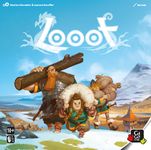
So the the turns do go by quite rapidly. And of course, the more tiles you're placing, more seats are filled, which means your restrictions are getting tighter and tighter. Now, the the kind of base game alone is interesting enough, and it does remind me of some other games that I've covered on the show recently, such as uh Lost Seas. Um, but what I really like about this game is the option to play the advanced mode, which is when these tables will start to synergize with each other, meaning that a particular seat will actually add towards two different requirements at once. Yes, that does increase the complexity and the restrictions even more, but when you pull off those big moves, it makes it that much more satisfying. And it's nice that this game gives you that flexibility to play it at face value or really up the ante and put you under a lot of pressure um to play with that advanced mode. So yeah, I like games of this nature. If you like games like you know Cascadia, Calico, Harmonies, the games that again put you in a chokeold, put things in the right place, then I'm pretty sure you are going to like uh The Great Evening Banquet. So that's the Great Evening Banquet at number three. At number two, I have Loot uh with three O's. This is kind of an old school feeling Euro puzzly game as you are deploying your little workforce onto this shared board, taking tiles from it and placing them on your own player board.
And when you're placing these tiles on your own player area, you are trying to almost fulfill these contracts by surrounding particular requirements with particular tiles. So, you know, you start with someone on your main board which might say, well, you want um two houses surrounding this and two watchtowers. Um and and of course you're trying to populate that main board not only to get the resources but also to try and chain things together because the way you acquire some of these buildings on the main board does vary. So, for example, I think with the watchtowers, you want to try and connect them together with an unbroken route of your own meeples or the houses would just simply give you you'll get a house if you place next to a house. Um, and you've even got these castles which are high scoring and if you build I think it's a chain of five workers connecting to that castle, then you can place the castle on your main board. So, not only are you trying to again fulfill those initial contracts on your playerboard by placing things perfectly, as the game progresses, you will have the option to claim these other objectives and place them on your playerboard, which will have their own requirements based on the resources. So, some might say, well, you want two trees and two sheep touching this particular tile. If you do that, you will flip it over and that will increase the yield of points you get from other features on your player board. So, for example, it might say, "Well, now your castles are worth four points more," which is obviously a great thing to do if you focused on claiming castles. Um, the
interaction in this game is pretty interesting because you can always deploy your meles next to where anybody else has deployed. And based on the fact that you do have these powers that will let you break normal rules by being able to spawn anywhere on the map or getting double yield of resources, sometimes you might want to piggy back off other players efforts. Um the turnax is good in this one because although initially the display of resources looks rich in terms of you know the quantity they do very quickly get grabbed up and you'll find that certain areas of the board are quite dry on certain resources meaning that you might want to use your power token to teleport into a different region of the board but the other players are going to start gobbling up all the tiles around that. So again, it's all about trying to um try and act quickly before your opponents might grab what you want, but of course, you are fighting so many other things at once by trying to connect things together and so on. So, I was really impressed with how clean this game is. I also like the tempo of the game because you do have a pretty limited amount of workers which dictate your turns in the game. I think it's only like 13 turns or so, meaning that you have to make each turn count.
And it's one of those games where um you know, you're always trying to place things optimally on your playerboard so that a certain resource token can contribute towards several objectives at once. Um but you know, unavoidably you're going to start placing things and then change your game plan and then kind of ru the mistakes you've made earlier and wish you did things differently. Still, it's it's a very well thoughtout game. Nice and smooth, nice and fast. I think everything's nice and clear and it's kind of the style of game that I like really. So, and very puzzly in its nature, but that mixed with the tension of grabbing what you need um does come through nicely. So, that is loot at number two. And finally, at number one, I have Overparked.
So, this is a kind of a drafting spatial puzzle uh tile placement style game as you are trying to chain as many of these same vehicles together um by you know connecting them on your really congested uh player board. Now, the way you place things on your board is through this card drafting system. That is pretty much a carbon copy of a really good polyomino game called Planet Unknown, where when you choose your particular um card that you want, everybody else will get theirs at the same time based on what you've chosen. And I really like that degree of simultaneous play to keep things moving and to keep players engaged. Now, once you've taken your card, you're going to take those um relevant vehicles from the supply, place them on your playerboard, again with the aim of trying to chain things together, um but there are lots of things you need to consider. Um because not only are there variable objectives which you're trying to race towards, which might say if you get the outer edge of your playerboard done first, you'll get X amount of points, or if you fill this region in first, you'll get X amount of points. of stuff we've seen before. Um, but what's different about this game is that, you know, not only are all of the shapes not technically polyominos, they're all just straight rectangles or or squares, you can actually uh move them later um based on other restrictions. So, basically, when you do certain actions or draft certain cards, you get these key symbols, and then
these key symbols will allow you to drive the cars in a straight line into an empty space. So you have like this slide puzzle thing going on at the same time which I think is a really cool touch and I'm surprised it's not been done before. And of course with that mixed with the the over park the crowded car park theme or skin of the game it just works wonderfully. I like the potential to string things together because you do have the option to take these little moped markers which are just pure squares. Um, and they will actually act as a kind of like a junction to chain many things together because they're wild and those can be used as wild for several different routes at once, which I think is a really nice touch and gives you that potential to make really powerful um, you know, bonuses. Uh, additionally, uh, there are other kind of punishments you need to be careful of because if you can never not place a particular vehicle, then it will go in this kind of overspill car park which will score you negative points at the end of the game.
There are ways to get that back on the board, but you need to consider what you're going for to get that. And also, there's the like traffic cones on the board as well, which you want to try and avoid touching, which is almost impossible uh to do. So, so you know this game has a lot of competition on the market. You know, there are so many polyomino spatial puzzle style games, but I actually loved this one because of um not not only the drafting system, which I think is great and was done perfectly in Planet Unknown, but I love the idea of the potential to slide things along by spending these little key tokens. You can move this one, which let you move this one, which might let you do even bigger routes and get things out the way that you didn't want there. And so you have that little bit of mitigation, but the mitigation comes at a cost. And you want to make sure that you use those tokens very very wisely.
And I just generally like the the overall feel of the chaotic nature of this game because it does really pack in to that car park and you can't really have much maneuverability as the game goes on. And I just I think it just hit the sweet spot for me with what I want with one of these style games. And um hopefully this one can gain some traction. I don't think it's the easiest game to get a hold of, but I think if you have um you know played several of these games, you're just trying to figure out which one's the best one for you to keep, I would say give a give overparked a look because I think this one might be one of the best ones I've ever played. So that is overparked. Um very welld deserved number one. So there we have it. That concludes the video. Uh hopefully you have enjoyed it and discovered a game or two. If you have, please be sure to hit like and subscribe to the channel and check out my other content, too. But for everybody else, I'll see you next time on Chairman of the Board.