Six Quick Game Reviews - with Tom Vasel


Transcript
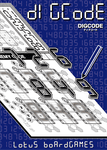
Hey everybody, I'm Tom Vassel and today we're taking a look at six different games. I'm going to give you short reviews and roundups on each of these. Some interesting stuff here from making kebabs to scooping ice cream to entering a dragon tournament to logic. So here we go. Let's get started. Alphabet Code. This is a two or more player game, but it it shows you on the back of the box that it's two to five, but it's really a two-player game. Um, and in this you're going to make a code using the calculator. Oo, look when I turned upside down little letters on my calculator. What does it mean? Calculator like letters, but your opponents can use logic to deduce them. Here's how it plays. In this game, each player is going to get a sheet of paper, and in it, you're going to make a code. These are the 10 letters that you can use. Although you can play an advanced way with 20 letters if you so desire, but these 10 letters and you're going to put them in here somewhere where none of them are touching each other. So there's the she the game comes with an example sheet here on the outside. So this shows you're going to have five letters, all different letters here, and you can rotate them and move them in this as you want to. Now, once you get them in there, you're then going to take turns ask each other questions back and forth trying to solve it. You can point to a white space. So I can say H O or O H.
And in this white space, how many walls are done? So they'll look, let's say it was here, they would say zero. So I know there would be nothing in those spots. And you can see there's the answers that you got. If you get four or zero, that's great. But if you get a 1, two, or three, you're not quite sure which ones are filled in. You can also ask if you want to a row or a column and how many are done there. So you can see here that the rows and the columns are in gray. And then you're going to specifically ask a spot. So I would say P B for example, this spot right here, yes or no. So most of the time you're just asking one of these spots and filling it in. Once you think you know the letters of your opponent, you will tell them the code. And if you're correct, you win. If you're incorrect, doesn't matter how many you got right or wrong, you can keep playing. But if you get two incorrect, your opponent wins. So here for example is a sample game that we played and filling in that and filling in the answers down here till you solve it. And that's how you play. Very simple game. If you play with more than two players, one person is giving everyone the clues and everyone's trying to figure it out at the same time. Eh, that's okay. Again, it's best with two players going back and forth. I like this one. It would be better if the letters weren't always so non-intuitive what they are. Some of you know exactly what the letter is. you're constantly checking over. But I like the idea and it's very simple. There's a a sister game, Digit Code, which I think is slightly better with just math. But I think this one has a little bit of flare
to it because it's letters, especially if you play with all 20 letters that are in the game. But I'd give this one a 7 out of 10 if you like logic back and forth. Uh, Plate has done some good stuff. This is not as good as their best one, which is a rapam mine, but I I do like this one a lot. Alphabet code. Digit Code is a two-player game from plate. Well, you can play more than two, but uh if you play, it's a back and forth logic game. So, if one person, if you're playing with more than two, one person's giving the clues to everyone, it doesn't play as well. It's mostly a two-player game. Trying to figure out a six-digit code. Here's how you play. In this game, each player is going to be making a code for the other player to guess and then trying to guess it. This is an example sheet here, and inside here are the actual sheets, which happily are two-sided. So, first you're going to make a number code using the numbers that it shows here, a six-digit number code. The rules that you to follow is you can only use each digit at most twice and you can never have the same digit next to each other. So, if I put a two here, I cannot put a two there or here. And then you fill that in. So, you're going to make this code and then your opponent is going to try to guess it. So, there's different questions you can ask in your turn. There are four types of questions you can ask. You can say for example how many filled spots there are in a row or column. So if I said C for example you would say three 1 2 3 and you have to figure out what they are going up and down. You're going to you can ask rows and columns. You can
also ask a very specific thing. You could say is NB filled in or not? And they'll say yes or no. You can ask if one number you can say this is T and U for example. You can say which one is bigger than the other. and you have to say because remember they can never be the same number next to something. And so you're going to fill those in. You have the little numbers here that you can write down to see how many sections are filled in on a side. And then the last question that you can ask is is a number an odd or even. I could say is x odd or even and you would tell me whether it was an odd or even number. In this game zero is considered even. As soon as you think you figured out your opponent's number, you can guess. If you're wrong, you keep playing. But if you guess twice and you're wrong, then they win. Otherwise, the first person to guess correctly is the winner. Digit Code has a sister game, Alphabet Code.
Not quite as good. Digit Code is the better game in my opinion. I think they're both good, but I like this one. This is an eight out of 10. Digit Code is a lot of fun. The questions you get to ask are really useful. You know, as you build these numbers, you can start using that logic. Well, this number is a three, so these can't be three next to it. And you said that one was even. So therefore that if and you also said it was bigger than this one. So therefore it can't be a two. So that's a four or a six that goes there. And because these lines are here, I can cross off six. Therefore, it's a four. Very fun, intuitive game. 20 minutes. I really like this one a lot. There's one negative for this game, and that is the pencil marks on this one here are a little hard to see. Even though it pains me to say you should probably play it with a pen over a pencil, but still a cool little game. Digit code. Kebab is a game about well literally sticking wooden pieces on your kebab. A shush kebab. Very delicious food of course.
And this is what this game is all about. Collecting these and making patterns, but on your stick. A cute looking game. Here's how it plays. Each player gets a card drawn off a special guest card. You have a deck of 10 guest cards here. And then you have a bag full of ingredients that are various types. You got onions and pineapples and different sorts of meats. And everyone's going to get a skewer. So you're going to put some ingredients out in the middle of the table equal to twice the number of players plus one. Then you'll turn over two of these guest cards. One of these cards is going to score. So I might So whoever's the first player is going to choose is I might pick this one. So for every shrimp you have at the end of a skewer, you're going to get two points at the end of the game. The other card's not going to score. So every round, two cards will come out and you'll pick one.
Maybe there'll be no if there's no onions, you get two points. Or if you have this many in a row, you get points, but you're also taking one of those ingredients out when you do that. After that, you're going to pick one of the ingredients. You can pick one of the two that's on the grill or one of the other ones. And you just take your stick and you will skewer that ingredient on your stick. And then the first one's on your stick. After that, each ingredient needs to go on one of the two sides of that. If you take the last ingredient off the grill, you'll take the grill. And that just means you're going to be first player in the next round. If at any point you make the Let me flip this. Whoop. make this here. Then you've completed that card which going to be worth points at the end of the game and you'll draw another card hopefully to complete that. Otherwise, we keep doing this round after round at the end of the game. Hey, I have a shrimp at the end here. I get two points, but you're going to have more ingredients. So, I'd have to put everything else here for that.
And you'll add up these points plus the points you've gotten for completing your one or two special guest cards. And whoever has the most points is the winner. This game is cute. It's simple. It's easy to play. There is some disadvantages to it. The thing I like this game. It's almost there. I'm giving this one a 6.5. It's almost to a game that I would prove. I'll tell you why though. It just misses the mark. Because those special guests where you have three in a row, they're just too lucky. Especially drawing the second one. The first one, you might say, "Well, I need a mushroom." Well, no mushrooms ever come out. Finally, one comes out, someone else takes it. You're like, "Well, I'll never get it." But let's say you do get it. Mushroom, pepper, pineapple. Great. You draw the next one. It's pepper, pineapple, shrimp. You're like, "Well, I already have two. This is easy to solve, and it's too many points for that to be worth it." Other than that, it's kind of a cute filler.
There's some nods and nice things. It's just that the scoring is just not quite there. It's just a little bit below what would make it a fast, fun little interesting game. But I still bits of it I like and think it's going to appeal to people who like physical games. That's kebab. Triple scoops with a cherry on top is about ice cream. Ice cream's very, very popular. Here in Fort Myers, where I live, there's about 800 different ice cream stores. Well, in this game, you're scooping people scoops as fast as they can, getting them the ice cream flavor of their choice. Here's how it plays. In this game, you're going to be making a deck of ice cream cards based on the scoopers that players will pick as their player. Each player is going to get a cone. You're going to have some customers placed that in the middle of the table, and you will get a hand of cards from the deck. These are different scoops. On your turn, you can play as many scoops as you want to. When you play a scoop, you play it on a cone.
The next scoop I would put on top of that. The next scoop on top of that. And you're trying to match these patterns here, which I haven't even got close to doing. As you place a scoop, you get to do the ability on it. This one, trade the top scoop of a cone with the top scoop of another cone. This one's just a wild scoop. And this one says, flip a customer in the line. However, I could also discard a card to flip my cone from the sugar cone to the waffle cone. I can discard two custom cards to flip a customer. But let's say, for example, I get three orange here, which matches this customer here. They want three orange and a sugar cone. By the way, you see what's on the other side. It tells you right here. The other side's always going to be the opposite cone and something different, which it shows in the picture. But I'm going to score this. I'll keep this. These customers move down the line, a new customer comes out, there's always five. If you have the same customer, that means they just changed their mind. So now they want something different. And again, these customers can flip to the other side.
And the first person to serve five customers is going to win the game. These scoops being discarded when you do that. There's also cherries where you can play with a cherry card. And these give tokens. Whenever someone's served, you'll put cherries on the people next to them. And at the end of the game, cherries will give you a point or they give you a special ability. Here they're worth one point. Here, two are worth three. Here, three are worth five, etc. And you can also play with assignment cards, which these will give you points based on what you have on the finished customers that you've served at the end, as well as a boss who will show up and do different rules. Uh, but that's basically how the game plays. There's some fun stuff in here. If you have three scoops and you put another scoop on top, it you've over scooped or whatever and the bottom one comes out and it slides down and you're flipping things over. This game is good with kids, especially when there's a lot of different special things going on. But I think a lot of people are not going to love it. They're not going to love the take that aspect of it. They're not going to love that you have two orange and you're about to get the third and someone else flips that character and then takes it. There's a lot of that going on. If you play it with a light heart, I think you'll enjoy it. I would definitely play with the cherries. I don't know if I'd play with all the other stuff, the bosses and the things, but it adds a little bit more to the game. So, I'd give this one a six out of 10 because it's not bad. I I was I found it to be a pleasant affair to play this to just go through and scooping ice cream and getting cherries. But the and the special abilities is almost like, hey, we're trying to play Dominion, a
deck building game. But this isn't Dominion. This is put out ice cream scoops and try to just match patterns and flipping the cones. So, like I said, there's some clever stuff here. There was one rule of the game I don't like. I didn't mention overview. At the end of your turn, you draw two cards plus one for every scoop on your ice cream cone. So, the idea I think is if you completely fill an ice cream cone, you don't get that many scoops. But if you also don't play a lot of scoops, it just you get a whole bunch of cards, you put them out. I don't know. I just I just thought that was a weird rule. Why not just draw three cards every turn and that's it? But there might be more going on in this. But still a decent game, like I said, for kids and families. a six out of 10. Viva Katrina is a game about having the Mexican festival here and you are the Day of the Dead Festival and you're just putting up balloons and all sorts of fun things and building a little town and you're doing that by placing tiles um like carcassone style.
Here's how it plays. In this game, each player is going to be building their own little festival. They'll start with a tile in front of them. That tile has a little shop in it with a symbol on it. At the end of the game, the number of different symbols will give you points. On your turn, you're going to draft a tile. Take a tile. It has to be from one of the ends. So, I can take this tile. The next person can take this one, this one, this one, or this one. And when you take a tile, you'll attach it. You don't have to make the paths connect when you place these. But when you have different thing items, you want them to connect back to your main plaza if possible or they won't score points. So, one of the things that you can collect are balloons. You'll see here that I'm collecting blue balloons. And when I collect three blue balloons, I'll take the top token here, which is worth five points. If I collect three more and get six, then I'll get 10 points. And these will go down in value as you go down farther. Some tiles when you take them just give you points for things at the end of the game. This, for example, give me one point for every green balloon that I've gotten. Also, you want to build pedestals. As the game progresses, you might build a small or a large pedestal. Whenever you build a pedestal that matches the size of one of these chamaras, you'll take it and put it there. The small ones are worth three, and the large ones are worth five points. And then finally, you want to build a path of monarchs, and you want to build a path for these little people here. And those paths need to go back to
your main thing. So you'll pick the path with the most butterflies on it that connects back here and that's going to be two points per butterfly and the people is one point per person connecting back to your main station. You will be taking these tiles, like I said, from the end. When they're all gone, that's the end of a round. You'll play a number of rounds equal to the players. After that, whoever has the most points is the winner. This game is fun. There's a few small issues I have with how things look. The little shops are sometimes hard to see and the you know sometimes the the right tile you need is not there. You are constrained by the four ends. So you have to think what tile am I taking as it and what I'm opening up to other players. It also goes to six players now is not a six player game. But I do find it to be interesting enough beyond that. I think it's fun to build the paths. It's a lighter game. You might want to collect balloons. You might want to do shops. It feels like there's all kinds of fun things you can do. You want to surround it and get those chimeas out there on the puzzles and it just looks really bright and cheerful and all that comes together in a game that not quite, I hate to use the word cozy these days, but it's almost there. It's just this game of collecting things, building out stuff, building a long butterfly path, and when you're done, you feel like you've accomplished something. And the game is the right length for me, too, where you do one set per player, which means with more players, it's longer.
Again, not playing this with six, but I but the two and three player board also has longer rows than the four plus player board. So, the the game it tends to even out. I think the sweet spot here is three, four players. But when you're done, you look and say that's mine. And it's not as I think tense as Carcasson, but it alo it also offers kind of a fun neat flavor. It's I was very pleased with this one. I give this one a 7.5 out of 10. That's Viva Katrina. Champions of Wind and Fire. This is from ID Venture, who's made a game that we really were excited about and then didn't do so well called Cryptic Nature. This one here is about a dragon tournament. And it's based on a mechanism that a lot of people like called Ipplit. You choose.
Here's how it works. In this game, you're playing either a basic game or an advanced game. I'm going to talk about the elements that are similar in both of these. We'll talk a little bit more about the advanced game at the end, but in a round players are going to roll these dice and one player is the first player and that person's going to split the dice up in different sections. Maybe they do this and then the person to their left is going to draft a dieice, a group of dice. And you keep going till it gets back to the start player and they'll have two to pick from. Now, when you take these dice, you're going to be worrying about your board over here. If you take a color on these dice, you can take a disc of that color and put it in the row that matches that color. If you uh take or you can take that gem off your board and put that on the spot there. If you take a dye that shows a black crystal on it, well, that's not very good. You'll get black crystals up here. And if you get two black crystals, you have to put one of them on one of the pieces of your dragon, which will make it weaker. And if you ever have to take a color and let's say for example you have the yellow ones filled here and you decide to take another yellow one.
There's no spot to take it. Then you'll take a black crystal instead. When you finish a complete row here, you'll get a coin for finishing those. And then these coins go up here. When you have two coins, you can put those coins on dragons and that will add one. Now what you're trying to do is you're trying to get more pieces of a dragon. So, if you have this pattern filled on your board down here, you will turn those tokens over to show that you've used them. And then you'll replace the section of your dragon like this. You're also whenever you take these crystals, let's say you take this yellow crystal here, this blue crystal is already taken. So, I get the bonus in between them. If I take this green crystal, I get the bonus in between those and the bonus in between those. So, the more these crystals, the more bonuses you get. Many bonuses will give you these cards which let you do all kinds of cool things. Gaining a gold, uh removing black crystals, so some usefulness on that, changing a value of one of your dice, etc. So, this is going to happen when someone has completely filled up their dragon. And by the way, these numbers go down. The easier ones over here have smaller numbers. But when someone has completely filled their dragon, and when you replace a dragon, the coins and black chips follow up on top of that. That's going to be your starting value here.
But then there's going to be a tournament. Now, in the base tournament, there's going to be three tournaments down here. And these tournaments will often have to do with colors and the parts of the body. And players are going to use dice that they have. They're going to have dice that match the different colors of each of the four different tournaments being played. And they're going to see the value. So, like this one, for example, takes the value of your head. And so we'll take the value of the head plus or minus bonuses plus other things. Or there's also a full tournament you can play which will allow people to play these extra cards that they've gotten to spend tokens and do various things to manipulate it. And whoever wins these tournaments is also going to get bonus points. And you'll be adding these points to the value of your dragon. And whoever has the most points wins. So that's kind of a very very dumbed down version of what's going on.
This dial is used in the big tournament, but that's sort of how the game works. I'm gonna start with my rating for this game and that rating is a seven. I like this game, but there are some mismatch. The components of this game are amazing. The artwork phenomenal. The pieces are great. Satisfying to put those tiles in. And the mechanisms are fun. The reason this doesn't get a bigger score for me is because the tournament almost feels antilimatic at the end of the game. Even if you play the advanced tournament, the advanced tournament, you're kind of bidding with the dials on how much you're going to go for each thing. That's fine. But the game itself is about drafting those dice and filling in the board and getting lots of bonuses and getting cards and upgrading your dragon and getting the pieces to it. I almost feel like the game could have just stopped with that instead of adding the tournament on at the end in the simple. I would almost and I think I prefer the simple tournament because the advanced tournament adds a lot more rules and tournament cards and this and that and I don't know that it does that much better, but you also might be dissatisfied with the basic tournament on just how little it brings out.
Getting good dragon sections and upgrading them is the best part. The game is not prohibitively long. It says on here 45 to 60 minutes and I'm telling you a good 15 minutes is probably setting everything up and you know all the pieces. But there's some neat stuff here. The idea is fun. And it almost has a Harry Potteresque look on the outside where I guess your dragons are flying through rings of fire and things like that. But I think a lot of people will enjoy it. It almost like I said, it just feels like there's one mechanism too many to keep it from becoming great. But as is putting out those dice and sitting there going, "Ah, you put the you put two black gems there, but there's also two other colors. I want those colors. You know, I need those colors. Ah, should I take it or not?" That's good decision-making. I split you choose is always a lot of fun and thrown in a package like this, I think it comes across well. So, a seven out of 10 for Champions of Wind and Fire. And there you go, folks. A bunch of games. I liked several of these. What do you think? Let me know in the comments which of these you like the best or disagree with me or agree with me on. Thanks for watching.
I'm Tom Bassel and this has been the Dice Tower. Hey everybody, thanks for watching another video from the Dice Tower. Hey, you want to learn more about us, communicate with us, we have a Facebook group, we have a Discord channel, lots of different ways to get involved with the Dice Tower. You can find that in our link tree link below. So, just click that and we'll take you and you can communicate with us on Facebook, join our Facebook groups. There's lots of cool things that you can find and become part of the Dice Tower. Thanks so much for watching. I'm Tom Bassel.