The Best Cosy Board Games
Games in This Video
5 games are featured in this video — they unlock as you watch.


Transcript
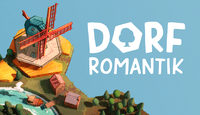
Shut up, knitting. Playing board games is the coziest pastime. Today I want to recommend you five cozy games that are actually worthy of the candle you're going to light while you play it. If you want to buy any of them, there's links below that support the channel. Dorf Romantik was originally a cozy video game that looked like a board game, and then it became a board game based on a video game inspired by board games. But despite that, the board game feels a lot more like a video game because Dorf Romantik is a game you can't win and you can't lose. And when I first heard that, I vomited all over my calyx. Turns a breezy. You take a tile from the stack and decide where it should go, and you can put it wherever you want. The only hard rule is you can't connect a river into the land.
What you're trying to do is to complete your tasks, like building a forest that's five tiles big. These are your stakes. That's when you realize you're being gentle parented by the game. It's okay, sweetie. You don't need to win, but I saw how hard you were concentrating on that puzzle, and you did it all by yourself, because completing tasks feels good. Bite-sized jobs that are achievable. At all times you've got three tasks on the go. When you complete one, you take another one, adding it to the map. They're asking you to build a forest or a farm or a river that is a certain number of tiles big. When you draw your tile every turn, you've got a focus. Which task can you help with? It's so simple to follow and it's comforting. You're never overwhelmed. You know exactly what you're doing at all times. And then it just becomes a delightful spatial puzzle. The tiles are a mix of trees, farms, houses, and rivers. You've just got to spend time finding the right place for it to go and make sure you're not closing anything off so it can keep expanding.
It's just the right level of challenging. It's something to think about, but not for long. It's like a well-adjusted person deciding what to have for dinner. And you're sharing the Dorfromantik is a cooperative game. Your partner will chip in with some mild suggestion, but they won't care if you ignore it because being controlling isn't cozy. And this just isn't the kind of game you can get het up about, which does beg the question, do you even need a partner? It doesn't have to mean divorce, but you can play this game solo and it will be exactly the same, except you'll get twice as many turns. But I personally prefer the lazy cooperative experience. It's the perfect pastime to enjoy with someone you like passing time with, like doing a jigsaw puzzle together. And playing together is a justification. If I'm alone, I feel guilty that I'm not doing something important, but spending uninterrupted time with my partner is important. And it's nice to share the achievement with someone. I mean, if a tree is placed in a solo game, does it make a sound? The game ends when you run out of tiles and you score points for all the tasks you completed. So you're trying to complete as many as possible and do it efficiently because each tile has more than one thing on it, so it could contribute to two or three tasks at once. These wrap-around tasks are really good for multitasking because you complete them when you surrounded that tile with other tiles, and they could be helping out with something else. And if you've just finished a size four forest task and then get a size five one, you
can add it to the same forest and immediately complete it. Some of that is luck and timing, but as you get better at the game, you'll know what tasks are still waiting to come out and try to plan for them while doing everything else. It's optional strategizing. You can choose how much effort you want to put in, and that's cozy. You're also trying to make the river as big as possible because at the end of the game, you get a point for every tile in the longest river. And that's how you get points. As games go, it couldn't be easier to get into. And that's partly because the game holds back some complexity until it thinks you're ready for it. If you get a bigger score than your last game, you move up the table and introduce new special tiles and gold cards. It's nothing scary, and to be honest, it's a welcome addition to shake things up when it starts to feel samey.
It adds new tiles like the bird watcher, which gives you points for every bird it's connected to. It's like starting a new side hustle while trying to keep up with your usual job, which you're so good at now you could do with your eyes closed. And the gold cards are a similar vibe. This one gives you 10 extra points if all the wrap around tasks are part of the Longest River. So it makes things trickier, but rewards you if you can pull it off. If you want to, sweetheart, I'll still love you no matter what you choose. The crucial thing is that all these extras make it possible to get loads more points, so you're always on the way up. It's that cozy video game progress. Your landscape gets bigger and more impressive every time you play, unless you have a tough game. But all that happens then is you just play again at the same level until you have more luck or better strategy. This game originally came in a big box and said it could play six players, and that is a crime against board games. It's barely a three player game. You can definitely get that version if that's what you can find because it's basically the same game, but I really love this light luggage version because it's a much smaller box and it's cheaper. But also the tiles are smaller, so it takes up less space on a table. You can even play it in a pub or a cafe for extra cozy vibes.
This game is called Cozy Stickerville, and I've got at least two issues with that name. One, you can't just call your game cozy because you want people to think it's cozy. That's cheating. It's like telling everyone to call you Handsome John. You don't get to decide your own nickname. We'll decide if it's cozy. And okay, luckily this time it is, but don't go making a habit of it. Two, cozy with a Z is less cozy. You've taken our word from the land of cottages and pubs to a country that is decidedly less cozy and ruined it. S is booba and Z is kiki. There's nothing cozy about Kiki. Cozy Stickerville is board gaming's answer to Stardew Valley or Animal Crossing because it captures that same relaxed gameplay. You're building a town from scratch, adding houses, trees, animals, and people by sticking them on the board. And you don't win or lose, you just play. The joy comes from the progress you're making and the story you're telling. And that works when you can play on your own for hours and hours and pause it by just pressing a button.
But board games don't work like that, do they? Board gamers need a clear structure and a way to win, or you end up with an existential crisis or what some people call role-playing games. Cozy Stickerville achieves that endless feeling by actually being a campaign game. You build your town over 10 years. Each year is a new game, but it doesn't really feel like that because there's almost no setup, so each one just flows into the next. Really, it's like one long game punctuated by 10 stoppages so you can go to bed on time. You start with an empty land, and over 10 chapters you will stick hundreds of stickers on this board building a town, but building it your way. Everyone will end up with a different map by the end. There's no right way to do things. You decide, do you want a library or a market? Do you want a theater or a toy shop? Those decisions will have consequences, but when you make them you have no idea what they'll be. It's incredibly freeing.
There are loads of things you can build. You have a free choice, and you have your own preconceptions about why you should build a water tower, and they're often close, but the game gives you no hints about how things will play out. You're making your decisions blind, and I found that disconcerting at times. It's like trying on skinny jeans. I can't tell, are they bad or is it just that I'm not used to the way it feels? It reminds me of a choose your own adventure book. You can overthink the decision as much as you want, but sometimes the writer has a very different vision than you, or you're being led to a trap door on purpose. Most of the time, the story is incredibly wholesome. You, the main character, have left home to escape a judgmental father who tells you you're useless. This endeavor to build an entire town is your hero's journey to prove him wrong and teach yourself that you don't need him or his judgment. And each turn, you read a card from this year's deck, which gives you a little burst of story. Maybe someone new is visiting town or you've received a letter from your father. It's a light dusting of detail, but it's nice and anymore might get tiresome. Then you're given an action and as the game goes on, there's lots for you to choose from. In the early days, you can go fishing or hunt for wood to get vital resources to build something else. Later, you'll want gold to build big, impressive buildings.
But with many of the cards, it's an either or. You can't have a theater and a toy shop. You have to choose because once you've built one, stuck it on your map, you discard the card. It's a fork in the road of your town's future and you've made your choice. There's no going back. If you don't build something, you might live to regret it. In the later years, the event cards will ask you, do you have this building? And if you don't, something unpleasant will happen to your town that that thing could have saved you from. I won't tell you what, but just let it be known that stickers can be stickered over and some stickers are bad. Every decision you make has a consequence, but it can be years and years later. You barely remember a choice that you made, but now it's paying off for you. It's a lovely surprise.
And it's not just a story response. You will win something, usually some food or gold, but sometimes you receive a happiness that you track on the side of your map. This is the closest you'll get to victory points. Remember, you can't lose this game, but even still, you end up really wanting them and they can be very hard to come by. Once again, the decisions you make are informed by your own sense of how to build a thriving town. And it makes sense to build a farm or a berry bush because they will reward you with food every year. Planting trees will get you more wood, but if you chop down a tree, you'll get more wood in the short term and less wood in the long term. Where the stories get richer is with encounters. When you build certain things, especially houses, you're introducing new people to your town and they open up story paths for you.
Printed on their sticker is a number to turn to in the story book. You read a short encounter and usually make a decision which will have an impact. And often you can go back, investing further into that relationship to get more out of the story. Once you reach the end of that storyline, you're rewarded with a milestone. And so you're rewarded for investing in specific relationships. Rather than jumping about, it pays to focus on certain paths. And sometimes that felt a bit slow because you have to keep returning to the same person to make the progress that you were hoping for. On the whole, the game is incredibly quick, but if you have a few turns where nothing interesting happens, you get antsy waiting for your next dopamine hit. This game feels like an advent calendar. Every day you open a window and get a little treat. You get to put a sticker down and that puts a smile on your face. You make a little choice and you get a little reward. It won't touch you deeply, but it's jolly nice. It's cozy as fireplace, as fallen leaves, as fudge. And it's perfect for kids. This is a brilliant game for a parent and child to enjoy together, taking it turns to make choices and just enjoying this town that you're creating.
Legacy games have that ability to create something more permanent, a core memory. Winter 2026, back when your daughter was nine and still wanted to have anything to do with you. It's still great fun for adults. It's a great couple's game as any cozy game should be, but two players is almost its limit because in essence it's a solo game that you're sharing. I don't criticize it for that. It works for this game, but the more players you're trying to share that amongst, the more you'll dilute the experience for yourself, the less choices you'll get to make. Playing this at six players would not appeal to me at all. Even if I had that many children, I just wait until some of them had left home, drop them off at university in the morning and start playing Cozy Stickerville that evening with enough time to cry over lunch.
Do you ever lay awake at night worrying about what you'd do if all the games in the world suddenly disappeared or if you were cast adrift to a desert island, how you'd survive? Before you start spiraling, I have the answers. Let me show you this beautiful book. This is the ultimate guide to rebuilding a civilization from today's sponsor, Hungry Minds. This is packed full of answers to so many of life's questions. It's like an encyclopedia you would expect to find buried in an ancient tomb. Every page is wonderfully illustrated with mechanical drawings that look like they came from Renaissance Italy, and the explanations are both informative and entertaining. Over 50 people were involved in this book's creation and no AI was used. And they've got a whole section on games.
There's even a game here that you can play with dice. It tells you what you could make dice out of. And I just love the illustrations, the way they teach you how to play Mancala with these beautiful drawings. Really makes it so enticing. And then you've got Go. I mean, if civilization was to come to an end, maybe that would be a good opportunity for me to actually learn Go and get good at it. And every time I pick it up, I discover something new, whether it's about compasses or metal casting or pigeon mail. And it really makes you think about the power, resourcefulness, and creativity of humans. It makes a great gift for anyone who has a love of learning. And you can get 10% off the book using the code actuallove. So check it out using the link in the description.
Is springtime cozy? Is the Netherlands cozy? These are the sorts of questions I've had to ask myself while making this video. And no, I don't think the Netherlands is cozy, but this game set in springtime in the Netherlands is cozy because they've typed in the cozy cheat code, a pastoral puzzle. Never can a game be more cozy than making plans with plants, the tessellation of vegetation. In Frosted Blooms, you're arranging flowers to try and create the best tulip farm. And on the surface, it looks like a Tetris game. You're taking polyomino tiles and adding them to your farm, but it feels nothing like patchwork or other Tetris games because here gaps are good. You're not trying to escape them, you're trying to create them because the gaps let you build barns and windmills.
Except, hold on, you are a tulip farmer. You need your fields to be connected because you're about to score them right now. Every turn you play a scoring card, this one gives you two points for every orange tulip that your new tile is connected to. So, of course, you need to connect it to your biggest field and get 20 points. That's huge, but that's bad news for your gap game. If you do close off a gap, you immediately fill it with your reward, a worker, barn, or windmill depending on how big the space is. A windmill is worth 25 points, but you have to build a space exactly 2 by 2 and it takes a few turns of careful planning to pull that off. So, it's a satisfying achievement if you do, but it will ruin your tulip fields. It's like turning your child into a chess grandmaster. You can do it, but you'll have to neglect every other aspect of their personality.
They can checkmate in six, but they can't swim. The grail that this game is dangling in front of your Dutch face like a slice of Gouda or Gouda is to have it all, tulips and windmills. That's what they call the Dutch dream. It seems possible. The tiles are so awkwardly shaped that you can pollinate your tulips with one end and leave a hole open with the other. And that's what hooks you. You're convinced you can find a way to make it work. Live in the moment with your tulips and plan for your future windmill at the same time. It's a satisfying puzzle to get lost in. You might even catch a little analysis paralysis, but you only place 10 tiles. That's the whole game, so everyone feels important. And in a two-player game, a little pensive meandering is forgivable, right? It would be positively uncozy to be clock watching. Clocks are cozy, but watching them isn't. And if that was the whole game, it would be good. But the frosting on top are these goals. This is where you have to look up from your field and remember that your opponent exists because if you can connect eight white tulips before they do, you get those 10 points and they don't. It's a race, except you decide which races to run. There's lots of goals up for grabs, so you can plan your strategy around some of them. I love the tension that it adds. You're not living in a tulip bubble. You have to keep an eye on your opponent's farms and make sure they're not going to get there first and break your heart. And that adds some really
tough decisions because you can't finish off your windmill and keep up your pace in the race for a massive lake. If you don't expand it this turn and someone else does, they'll grab those 25 points and you'll never get them. With some, there's two goals, but you can only claim one of each type. So when you complete the easier one, you have to decide, do you take it or do you plow on, confident that you'll get the better one before the end of the game? The goals are different every time you play, and it really shifts the dynamic of the game because now windmills are worth even more. So everyone's ruining their fields to make them fit. If you close off a single space, you get a worker and a coin, and the coins are vital for getting the shape you need because to skip over a tile that you don't want, you leave a coin on it. It's such a simple game to play out, but I love the depth of choice for why you should take a tile and where you should put it. If you enjoy tile laying games, this one feels fresh, like the early morning dew on a field of flowers in spring. Ugh, it's just not cozy. Take me back inside.
Sometimes you just want to be left alone. You can be here, but don't touch my stuff. And there are thousands of board games that get that. I call them personal puzzles where you're building your own thing and no one can ruin it. So it's like you're hiding in your bedroom playing The Sims, absorbing yourself in your own creation for an hour. But your friends are there too. Or not. If you want, these games can all be played solo. In Tenby, you're each building your own quaint seaside town in Wales. Every card is either a house with flower boxes and shutters or a fish and chip shop with a punny name. It is cute. And as we know, cute and cozy are bed fellows, but who only like to cuddle. You're creating these colorful streets in front of you by adding a card either side of what you have. In terms of placement, it's really easy. You connect streets to streets and piers to piers.
But you're in search of planning perfection because every card will score you points if you can satisfy it. This blue house wants some benches. This red house wants some lamp posts. This ice cream shop wants seagulls. Who wants seagulls? But not just anywhere on the street. They want them close by. This red house wants clouds next door to it, which really speaks to the permanence of the weather in Wales. In a change from most games, there's no icon to show that the card contains seagulls or flower boxes. It's just part of the artwork. It means it's not as immediately obvious. You do have to hunt for them. And it could be a challenge for people who are visually impaired, but it does make for a cleaner aesthetic that sets it apart from other games. These goals are not a must, but a nice to have. So it doesn't feel pressured. You can't possibly keep every house happy. You just do the best you can. And because you're only adding to the ends of the street, you only have to think about what those houses want rather than being overwhelmed by all their requests. So when it's your turn to choose cards, you've got a shopping list of seagulls and lobster pots that you're looking for. And hopefully those new houses like what you've already got going on. Taking cards is where you have to acknowledge the other people at the table because they might take what you want. But there are quite a few ways in Tenby to make sure you're not disappointed. Every round there's a selection of cards available. Terrace cards, which are your standard houses and shops. Pier cards, which are by the sea. And landmark cards, which are special cards that you really want. A
war memorial, a statue, a bandstand. These are the places that really make Tenby like every other British seaside town. I've never even been there and I feel like I have. The landmark cards are amazing because they have special goals that count for the whole street. Three points for every bench. That's huge. It's great to get one early and let it inform your whole game. But how do you snag a landmark card? With some difficulty because there's not enough to go around. In every round you pick one of these cards. They tell you what you can take. If you take number six, you'll get a landmark but nothing else. If you take number 11, you won't get a landmark but you'll get a terrace and two piers. Maybe that'll get you more points in the long run. The clever trick is that if you pick the weaker card, you get in first. You get first dibs on the cards and leave them with your dregs. So sometimes it's worth getting less cards so you can get the one you really need.
Another cool detail are these life rings. You collect them throughout the game and you can use them to improve your options. Spend one to flip an extra card, hoping that you'll reveal something better. But for two you can buy an extra terrace and for four you can get a landmark or a resident. Residents are secret objectives. Another thing to have in the back of your mind when picking cards. Like the electrician will score six points if you have eight lamp posts on a single street. Overall, I think there's probably one too many things going on. It's not the cleanest design in history. Like, for example, your streets can just go and go, that you can run out of table space for them. But Tenby wins you round with its charm, and the core puzzle of trying to line up the houses that like each other is simple and engrossing.
There's something cozy about being in the same room as other people, but you're all doing your own thing. I'm knitting while she's baking bread. And that's how it feels to play Fromage or Formaggio, because you're taking your turns at the same time. It's split screen, simultaneous play. The board is divided into four wedges, and while you're making cheese in your quadrant, your opponents are busy making cheese in theirs. And that's what you're doing, sending your workers to make cheese across France or Italy. You see, Fromage and Formaggio are two different games, but they have the same vibe. It's like comparing Roquefort and Gorgonzola. If you like one, you're going to like the other. There's some differences, but ultimately they're both great.
I slightly prefer Gorgonzola, sorry, Formaggio, so that's the one I'm going to focus on. These games are such a joy to discover because they're full of innovation. The board is a wheel of cheese divided into four for the four players. Each round, everyone places their workers into their section. Then the board rotates and you do it all again. It means you all get a chance to see the whole board, but in bite-sized chunks. You're all playing at the same time, which gives you time to consider your turn without worrying about holding up the game. There's plenty to think about and plan, and this structure is designed to support that. Each quadrant acts like a mini game for you to do your best in. For example, in Regioni, you're trying to get your cheese in as many regions of Italy as possible, but you also want these Italian flags. At the end, you multiply your flags by the number of regions, and that's how many points you get.
There's limited spaces, so your opponents will be stealing the spots and getting in your way. And yet, it doesn' feel stressful because when Reggione is yours, it's yours. You feel like you're working on your own personal puzzle. You have free reign to do whatever you like there. Then the board rotates and you pass it onto your neighbor and you forget about it because now you're focused on Venice and trying to get your cheeses next to as many canal boats as possible. Eventually, Reggione will come back to you and your opponents will have had their wicked way with it, but you've been so distracted, you've forgotten how it was when you last saw it. There are three types of cheese, hard, soft, and blue, and each space on the board wants a specific type. So if I want to sell a cheese to Turano, it needs to be blue. To make it, I place a cheese wedge in the spot and put my blue cheese worker on top. This is the next really cool bit. I can't make blue cheese again until they finish making it. And when are they finished? When they're facing me again because as the board rotates with each round, so do the workers. You can take them back at the start of your turn when they're pointing at you. You see, each cheese spot on the board, which is reset so nothing ever gets knocked out of place, is pointing in a certain direction. Turano wanted a silver cheese. That takes two rounds to make, so I'll get it back when I'm in Venice in two rounds. And you can plan around that. You know that you really want a specific spot in Venice that also needs blue cheese. Thankfully, you'll be able to make that work. If you made a gold cheese, it would have taken three
rounds and you wouldn't have had them back in time to use the worker again in Venice. It's such a clear system and a really satisfying part of the game. Planning when you're going to get them back and it all coming together feels really rewarding. The better spots that will get you more points want gold cheeses, so your job is to manage the workload. Make sure you'll have workers when you need them. If you make a bunch of gold or platinum cheeses, you can go whole rounds with nothing to do, but maybe that's worth it. It's up to you to work that out. You also need your workers to collect resources. Fruit is needed to make certain cheeses, and you track how much you've used on your player board fruit times by jam is points at the end of the game. You collect barns to unlock new skills like this one which gives you a resource when the right season comes around. So if you get that early, you can really benefit from it. Cows let you make an extra cheese on your turns which can really help you win those mini games. And these cards are special orders which help you get extra points. You keep them by your board, and if you make a matching cheese, say a gold blue cheese, you keep that card for points at the end. It gives you something else to think about when you're deciding which cheese to make each round. There's a few things going on, but it's really intuitive and everything interlocks with each other to help you take exciting turns where you do a bit of this and then this and then this. The core of the game is just in timing your workers and how you approach each mini game. Even though it's
tempting, you can't possibly do well in all four. I usually pick two or three to focus on. In Vigneto, you're making cheeses that pair with wines. When you collect a wine bottle, you need to match a symbol of one you already have, so they connect up and you get more wine or bonuses. And by the end, the more full wine bottles you have, the more points you'll get. If you make gold cheeses, you get better wines that will get you more wine bottles. Every mini game presents you with tough choices about what cheeses to make and where you can outdo your opponents. That's at the heart of all of them in Fromage too, but the ones in Formaggio are just a tiny bit more engaging. You can mix and match them, cross France with Italy like some sexy alpine Fromage à Trois, but I don't think it's worth owning both. Get one.
If Formaggio is available, then get that. Or if you're French, get Fromage because I know you're quite particular about these things. And I'll keep my fingers crossed for an English version called Cheese. We have new actual old merch for sale, t-shirts, hats, tote bags, and sweaters. The hats are embroidered. The tote bags hold two ticket to ride size games, and the embroidered sweater is on the smaller side, so do size up. I've put a link to our merch store in the description below. That was my cozy games video. If you want to buy any of the games, there are links below. This was an extra video funded by the benefactors on my Patreon. If you'd like to bring more videos like this to life, please become a patron. And if you like this video, please subscribe to see more like it. I'm John Purkis. Thanks for watching.