6 Rapid Reviews - Pay Dirt, Okanagan, Trails of Tucana, Mining Colony, Keltis, Madame Ching
Games in This Video
5 games are featured in this video — they unlock as you watch.



Transcript
hey everybody today i'll be reviewing six games in rapid succession um i'll be talking about madame ching celtis pay dirt okanagan mining colony and trails of tukana and i'll be doing this from my least favorite to my most favorite but before i get into the reviews of the games i want to give a shout out to the show's sponsor kianda dot co dot uk who are my go-to online retailer here in the uk and if you use my link in the show notes or the qr code then you can get five percent off your first order but let's get started on the reviews okay so first up we have pay dirt now this is a game with a pretty cool theme actually as we're trying to excavate the land trying to extract the gold nuggets from it and this is like a worker placement with a small degree of engine building game and basically the concept is that on your player board you're going to have these different kind of columns here with these three different pieces of machinery i suppose and what you're trying to do is you're trying to feed these tiles across your machinery each time you shift it along you're going to have to place a worker there and the more you load these machines up the more they're going to kind of um you know decay i suppose or whether and then you need to spend more workers in order to maintain them to keep them ticking along nicely or basically you know risk of them breaking down so that was quite a cool concept as well and one of the things i really did like about this game actually is the fact that the winning condition is to get the most gold nuggets however in order to keep you know upgrading your player board and making yourself more efficient
you need to have money so you need to sell the gold nuggets which are essentially your points um in order to have funds in order to buy new things for your player board so that was quite cool i like that kind of trade-off between you know victory conditions and you know cash and that was really nice but that is pretty much where the um the good stuff of the game ends because this game has one of the most arbitrary and heavy-handed examples of a catch-up mechanism that i think i've ever seen so essentially whoever's winning the game well in fact everybody has to draw one of these hardship cards it'll be like a draft so i think the first person or the person who's in the in the worst position is in points wise will get the first draft then it'll pass them to the next person and so on so it means that the person winning each round will get the worst of those hardship cards and those hardship cards are just completely debilitating they're so punishing and brutal to the point where you pretty much may as well throw away your next turn and that kind of really did ruin the game for me because it felt like you were never really trying to do extremely well because if you were you just know you're going to get absolutely hit by a freight train so yeah unfortunately that was too much for me to overcome but i love the key concepts in this game you know cool theme um a different idea of using the worker placement but ultimately i didn't think it was pieced together terribly well and there was another big issue with this game where a lot of the upgrade tiles that you'd buy um they the deck of the tiles wasn't layered so it meant that sometimes the best tiles that are perfect for you would come up really early in the game
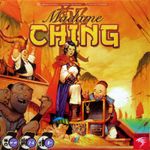
you'd buy them and then you'd never need to go back to that spot so it felt like the whole part of the game was completely void once you were settled on what you had so i would have been i would have found it a lot more interesting if the tiles were constantly getting better meaning there's always that pressure of selling gold to upgrade it you know when's the best time to do it and this game just completely had you know no no um i didn't explore that part of the game at all which i thought was a bit of a wasted opportunity but i'd love to see this game like re-implemented in a second edition or something because there is promise here um but ultimately this this is just not good enough i'm afraid so that is pay dirt okay so next up we have madame ching by bruno cathala and ludovic mob blanc this one is a card driven board game um 30 to 45 minutes two to four players a gorgeous artwork as you can see here by vincent detroit um the hand management in this game is quite interesting i suppose as you have a small hand of cards and each card has a number assigned to it and what you're essentially trying to do is you are um kind of pioneering this ship across the sea and you're gonna be playing these cards in sequential order so going from low to high um and some cards will basically make you go completely um horizontal across the board and some will make you go kind of downwards and diagonally and you're basically trying to get as far as you can on your voyage in order to collect these points tokens and they're going to give you you know your points essentially you're also trying to match up these symbols because if you do you can get these bonuses um
here but the kind of twist in this game was that if you started to run out of cards from your hand you wanted to make sure that you would start to think forward and start to build up your hand for your next voyage so you can start on a nice and no low number meaning you you'll probably go further on your next trip so it was a pretty natty idea i suppose but as with most bruno nicotine games they just do not resonate with me and i ended up leaving the game feeling a bit just kind of numb really i just get nothing from his games and uh yeah this was another example of that i also thought that the almost like the crescendo or the tempo of the game was a little bit off because there wasn't really much um kind of things you build up for and really early in the game you can take quite a big voyage and it wasn't like a game where you'd keep getting better and better and better as you went on to feel more satisfying and in fact it was almost the other way around because quite early on in the game all the high value points tiles will get taken by the players um meaning that later in the game only the smaller ones were left so it kind of felt like an anti-climax and again you weren't getting better you kind of almost felt like you know it was less satisfying as the game went on which felt a bit strange for me but yeah this game really didn't leave an impression on me i'm not going to say it's bad but it was just like a it was just like a meh for me you know 5 out of 10 and nothing to write home about next up we have mining colony by doctor steve finn so this is like a poorly amino puzzly style game and one to four players takes around 40 minutes to play um lovely production here
but basically this is a lot like a lot of other you know a lot of other polyamino style games but in this one you almost have to like build this foundation on your player board by drafting these tiles and you've got all these other little components here which want to be placed in certain ways on your player ball to score you points and they're right they are finite so you need to get there before the other players i suppose the twist on this game is the way you acquire things in the first place because it is done through this draft based on simultaneous card play so everyone's going to have a hand of cards you reveal things at the same time the higher number will get the first pick now i did like that concept and that's generally a mechanism that i tend to enjoy anyway but the problem with this one was that when you draft things you had to draft them in bulk so you'd have like one of these tiles or one of these pieces in one of these pieces and you can't have one without the other and what that often meant was that if somebody um or say you played your really high card because there's one that you one piece of one lot that you really wanted and somebody trumped you to get that you would often be left with a bunch of pieces that were no use for you at all and then you've wasted your best card and yeah i get it that's normally um you know that's part of the tension but it felt that was consistently happening and you know normally i think if you play a high card and you still get trump you should have a a good backup plan rather than just you know having the dregs what's left so it felt a little bit like that for me it felt like oh it just it just didn't plan out the way i would have wanted it to and on top of that this is like a rather simple game you know again we've seen this kind of thing again and again but i think the production was a little
bit off with this game as i'm trying to open the box here where there was a ton of pieces in this box and it felt like a little bit bloated for what it was like you literally have so many tokens and you know when you want to get a little filler game on the board you don't want this amount of stuff just crowding your table and it just was a little bit of a yeah a little bit of a i don't know a jarring thing for me so yeah it didn't quite fit right for me and um you know recently i've played some better polyamino style games um such as alice's garden um that one's completely blown this one out the water and i've just basically just rendered it useless so um yeah therefore i wouldn't really recommend picking up mining colony there's just too much competition and there's just it's just too busy um on the table okay so next up we have trails of tucana one to eight players takes around 15 minutes to play and this is a simple flip and right style game that will take place on a sheet that looks like this and what you're essentially trying to do or what you do each round is you reveal two cards from the top of the deck here which will show the different terrain types and what you need to do is you need to draw a line in between those two um terrain so as in a water and a sound so what you'd normally do you draw a line between the water and the sand like i've done here and the idea of the game is you're trying to connect all these different symbols back to one of these towns on the border and represented by these letters and each time you do that you're going to tick off one of these things so the first time it's going to get you a point at the end of the round and the second time you do it's going to get you more points but it's also going to give you a bonus road to draw
so it's kind of this game where you are building up it more and more as the game goes on trying to connect these roots together to try and get as much done as possible you also get points based on connecting letter to letter so you can see here that i've connected the e to the e here and therefore i've gotten these points here these extra 10 points there's also going to be some public objective cards available like the first person to get the e to the e connected that kind of thing or even these bonus rules we can try and get shape to shape connected like so um and i suppose one of the things i do like about this game is the scoring system because you don't actually score your points immediately um at the end of the round you see what you've got and then you score your points and then at the end of the second round you score those points again so it does have this kind of forward momentum there um that's pretty much everything the gamer has to offer there's two different modes of the game you can play the basic one like this uh on the aisle eiler petite map which you play two rounds or you can play on the larger map here the uh isla garand map which you'll play over three rounds so i actually do think that the um the two round game is much better because too much the third round doesn't add anything it just adds you know just extends the game by a third and it doesn't really feel like it again it adds any anything to the experience but this one you can actually get played in about 15 minutes which is quite nice um but i can i do really like the game and um it was one i've had you know i've been on the fence with you know i'm gonna keep it because it is so easy to get the table it is quite breezy but ultimately i think um you know i played
this one more time recently just to solidify my thoughts i thought you know what it's good but i don't get a tremendous amount of fun from it it's just fine and there's some other just as quick games really that i'd rather play such as get on board which leave a you know have a similar vibe to them you know 20 minutes simple flip and right style game um but yeah this one's nice um but i think you can get a bit too much done on your turns and it's just not really that much to explore because you know you only get two maps the small one and the big one um yeah i know the variability is based on the flip of the cards um but yeah that's that's it really there is some scope for cool combos as you start to build or connect all your routes together and then all of a sudden you get a bunch of these bonus things but you know when when you're finishing a game you've got all the different um objectives done and a couple of town paths done as well um as well as a couple of bonuses if it was like you know what more can you really do with this one so a nice filler but ultimately not one that's going to kind of stay around forever in my opinion so that is the trails of tucana i rate this one probably about six maybe a six and a half out of ten okay so penultimately we have celtics by doctor ryan kinicia this is a two to four player game takes around 30 minutes to play at least according to the box and this game is essentially a board game variant of lost cities which is the classic canuckier card game for two players now this game uses the same card system as you have a hand of cards of the different coloured suits and you're basically trying to play them in numerical order from either from low
to high or high to low you can play with them with gaps in between the sequence but you can never go back on yourself so if i go one two three maybe seven eight i can never go back and fill in the six um but i suppose the twist in this game is that everybody is sharing from the same pool of cards so of course there's inevitably going to be competition over the same suits and um if you commit to one of these tracks by you know starting one of these runs then you're initially going to start with negative points but eventually you'll start breaking into the positive points the more you get and normally you know i'm being lazy here there'll be there'll be tokens scattered all over the board and when you reach certain checkpoints you'll collect gems and the gems will give you kind of a set collection bonus here or you'll reach these little kind of clover um symbols where if you hit reach one point you can move up another one of your tokens or you can even move the same one again so you can get these kind of chain reactions and i really do like that part of the game um ultimately i think some of the tension is lost from this when you are playing multiplayer you know my main incentive for this game was to have a game of lost cities book that could cater up to four players um which yeah this does that but ultimately i think it was a little bit too slow and plodding when you are playing with three or four players you know in contradiction to the two player game which does feel much more punchy much more snappy and also i think again the tension of holding cards back into your hand to prevent your opponent having them does come through stronger in a two-player game now there is a variant on this board as well where you can play with this expansion map which i thought was quite
interesting um as you know you could dip in and out of the different colors you know you can start on yellows and then you can divert off into these ones and so on and have the different kind of pathways and a slightly different scoring method as well relating to the gems but i thought this version of the game although it was more interesting i thought that it was a bit too slow and plodding and you know i said the board game or the box says the game takes 30 minutes um this one you're looking more of an hour you know 45 minutes to an hour to play which does start to um drag on and it does feel like it out stays as welcome when it comes to the you know the last third of the game it's a shame because i do love the concept of it but yeah not quite gonna be strong enough to stay around and another one i've been on the fence with because i've probably had this in my collection for about a year now um but the last play i had of it was just too long and um therefore it has to go so that is celtus again another one you're looking at a six to a six and a half out of ten for and the final game i'm talking about is okanagan valley of the lakes so this is a tile placement air majority and also set collection game two to four players takes around 45 minutes to play and this game has a hell of a lot of upside um so mechanically this game is smoother silk i love the way it flows um as you are drafting a towel and placing them on the communal boards well first of all i love the way that you are sharing the map here and whenever you place a tile you are forced to put one of your pieces down and these pieces are going to be in three different types you've got these like cylinders you've got these longer buildings and you also have these just standard houses
and they all work in different ways and the fact that you have to place one adds a bit more kind of meaning to each of your turns now the single cylinders here they go right in the middle of the tile but they will have they will give you one influence in every different terrain type on that tile the long ones go in between two different types of terrain but they'll give you two influence in each of those two regions and the houses only go on one type of terrain but they give you three influence so i love the way that the more concentrated you are the more influence you have but the more vague you are and you're leaving your options open you have fewer influence so that balancing is so well done now what you're trying to do essentially is that when you close these regions off as in you know you have a completely uncaptured uh area of water here then if you have influence in that you are going to be collecting these tokens that are within it and then you're going to have these cards distributed at the start of the game where the more tokens you collect of a certain type it means you're going to get the points um to the nth degree you know you can collect it as many times as you like but another twist on the game was that if you had the lowest influence in a region then you would actually get the bonus on the reverse side of the stack of towels and that could be things such as getting new objective cards it could be taking tokens that you might want and that kind of thing so i love the fact that sometimes you might want to actually deliberately lose these regions so that you get one of these bonuses so this had like layer upon layer of mechanism that actually did come together really well so you want the type placement then you want to have the a majority in order to get the set collection to score points so yeah that level of um
that level of synergy between the mechanisms worked really well so everything about it i pretty much like now there's one big issue i had with the game and that is in relation to the um the objective cards so at the start of the game you are given them pretty much randomly which means that you're gonna you know try and tailor yourself towards certain strategies now there are i think halfway through the game when you take a new kind of replenishment of player pieces you can draw more cards and potentially replace the ones that you started with and that actually does play a huge part in the game um because you can actually end up drawing tiles or drawing new cards which will perfectly synergize with things you've already collected and that is purely based on the luck of the draw so for example i played a game of this one i was collecting i believe it was fish and something else i ended up acquiring a ton of them my other two cars were going really badly i didn't get anything towards them at all and then halfway through the game i drew a card which meant that that card also needed fish and something else which i have just happened to have pure luck and that pretty much doubled my points based purely on the luck of the card drawer so that did leave a little bit of a sour taste in my mouth and i'm not sure if i'm willing to overcome that swinginess of the card draw which is such a shame because everything else in this game is pretty much phenomenal you know but that has dragged it down at least you know a point a point and a half for me to the point that i can't really wholeheartedly recommend it um but if you are willing to forgive that and
bypass that or maybe even household it somewhat then i'm sure you can get a lot of enjoyment from the game because you know initially i was so impressed with this one that when i did see that little in the armor um it was just hard for me to overcome and it's not hit the table since yeah because of those faults it's going to drag it down to about a six and a half out of ten so that's it really that's all um that's all the rapid reviews i'm going through on this episode hopefully you've enjoyed it um sorry if you wanted a full review on these games i just got too much to go through at the moment so i'm trying to catch up through my back catalogue but if you have enjoyed the review please hit like and subscribe my channel and check out check out my other content too and for everybody else i'll see you next time on chairman or for the board bye bye