Colonialism - The Board Game Struggle
Games in This Video
4 games are featured in this video — they unlock as you watch.


Transcript
foreign after more than a century of war with the crusades following a brief period of stability and peace in july 1569 during the union of lublin the kingdom of poland and the grand duchy of lithuania formed a single commonwealth the zhech bospolita at its height it was the largest european state four times the size of the united kingdom as it is right now and it lasted for slightly more than two centuries zech pospolita was a monarchy but in reality it was ruled by the power of veto where any nobleman had the right to say no to any law rendering it impossible to govern through corruption and bribery a status quo was maintained by foreign interests until on the 5th of august 1772 those foreign interests being the kingdom of prussia the habsburg monarchy and the russian empire started parceling the land for themselves in what was known as the partitions of poland there were a total of three partitions the second happening on the 23rd of january 1793 and then finally on the 24th of october 1795 judge pospolita and consequentially lithuania was no more
but what was lithuania had it not stopped being lithuania for two centuries already what in that instance defines lithuania is it the rulers the borders the people the language well my answer is some or all of these unified by the concept of cultural identity if i asked you to sum up america in one sentence you could say right okay the land of the free and the home of the brave well not now obviously but you get the idea or for a better example take cornwall unlike scotland northern ireland or wales cornwall does not count as a distinct part of the united kingdom it does not have a parliament it doesn't have any borders and for all intents and purposes it's just another county in england but ask any cornish person and they will tell you that they are cornish before they are english unless they tell you that they're not english at all they count as their own ethnic group and they have their own language and cornish identity is officially recognized by the census there is a cornish cultural identity just like in 1795 there was a lithuanian cultural identity most of the territory that i and the world has come to identify as lithuania now fell
under the control of the russian empire but how do you convince a nation that has seen itself as lithuania for nearly a millennium to now see themselves as russian one option is to suppress or destroy cultural identity printed lithuanian word was prohibited under the punishment of death and spoken lithuanian word was highly discouraged was mocked and painted as something only to be used by the lowest classes which obviously massively misfired russia had not done its research there's one thing lithuanians are incredibly proud of and incredibly possessive of is our language lithuanian belongs to the baltic language group which has three languages lithuanian latvian and prussian oddly enough that's not the same pressure as one of the three partitioners the kingdom of prussia it was rather what are now known as old prussians a cultural group known for their rejection of excess incredible hospitality and massive drinking i mean if you wanted to get down in medieval europe prussia was the place to be of course that was too much fun for the crusades so they had to go and wipe them off the face of the planet funny how all these stories end in colonialism lithuania responded with multiple revolts and fierce efforts to maintain and preserve our language foreign presses were commissioned to print books textbooks pamphlets and periodicals
the publisher of one such periodical varpas which translates to the bell vinces kudirka became not only the writer of our anthem but also a national hero and i mentioned this to emphasize that this wasn't just something people did as a hobby this was the stuff of secret societies and the underground ridiculously dangerous yet operated on a national scale book smuggling was a profession where every journey could have been your last because the borders were under constant russian patrol and anyone found with lithuanian literature was killed no questions asked and thus lithuanian cultural identity survived on the one thing we shared our words the next bit is incredibly convoluted so historians forgive me for the gross oversimplification in 1915 in the waves of world war one germany takes control of lithuania from russia on the 16th of february the date we are recording this video 1918 lithuania declares independence from all previous states three wars followed two with russia one with poland and on the 12th of july 1920 soviet forces officially recognized lithuania as an independent state we are born again once we were this now and forever we are this but sometimes
forever only lasts 20 years a lot of weird things happen to a country that regains its independence absence of control creates power vacuums and power vacuums create opportunities and opportunities by their nature will be exploited we as gamers know this very well shortly after regaining independence lithuania became an authoritarian state president antanas madonna had such a cult of personality that even when i learned about him in school he was portrayed as this benevolent leader in 1939 germany and the soviet union signed the ribbon-trop molotov pact where foreign nations once again agreed to just have us without anyone asking whether we'd like that or not so that's how we became part of the soviet union oh my no in 1941 german forces invade lithuania people are sent to concentration camps and the country is torn to shreds in 1944 germany is weakened and soviet forces march in and lithuania changes hands one more time like a people-filled hacky sack being kicked about by imperial forces gorbachev spirit strucker eventually led to the crumbling of the soviet union and i remember being five years old and watching on the telly the people of lithuania
latvia and estonia form a single uninterrupted line holding hands in unity all the way across three countries on 11th of march 1990 lithuania declares the re-establishment of independence 11 months later iceland is the first country to recognize us as an independent state thanks iceland finally freedom finally yet another power vacuum if you're here for the board game content thank you for persevering for this unusually long intro today we'll be talking about colonialism in board games a subject so heady that some people immediately dive for the bushes when they hear it for your convenience we provided a bush at the corner of this video when you start feeling like it's just a little bit too much feel free to uh plunk yourself right over here i don't think i need to list my credentials as a board gamesman but some of you might not know that during my academic years i studied creative writing and when i got a degree in that i moved on to a master's by research in postcolonial literature so in some ways for me this video is like two worlds colliding i wanted to talk about this for so long and yet i didn't colonialism isn't just a difficult subject it's
pervasive so much of our history and therefore who we are is shaped by it it has affected literally everything almost anywhere you are in the world apart from iceland maybe has colonial roots either your country was annexed pillaged or destroyed or it was doing the annexing pillaging or destroying or both when i say the word colonialism predominantly western audiences probably imagine england or france traipsing over places where they don't belong but that's not very useful what i want you to imagine instead is something more nebulous something all-encompassing something inexorable because for a lot of people colonialism is personal after the soviet union occupied lithuania for the final time a lot of regular people took up arms and went into the woods they were the rebellion the partisans my grandmother's brother was one of those people he too went into the woods and one day he just never returned we don't actually know what happened to him but we can assume that it's the same thing that happened to every other partisan he was captured mercilessly tortured for information and then shot and my mom never even got to meet her uncle and that's just one story in a melting pot of horror i wanted to share this with you not just
because it frames the entire conversation but also because that's the only way i can speak on this subject authoritatively as a lithuanian i get to own this my family lived this pain my country lived this pain and others shared their pain much greater when i was planning this script out here is where i thought i would put in some numbers some statistics to really hammer in the effects of colonialism but the more research i did the more i realized that any number i put in here is meaningless for example according to an article in 15 minutes which is a popular lithuanian periodical 131 600 lithuanians have been sent to siberian gulags between the years of 1940 and 1953.
another 156 000 have been sent to various other internment camps across the soviet union one in 10 of these were children at least 5 000 children died just on the way to the gulags themselves it's obviously monstrous but that's just a tiny sliver of my country's colonial history and my country's colonial history is just a tiny sliver in colonial history instead of numbers and statistics i'd rather you consider this colonialism is the opportunity denied it is the history that was instead of the history that could have been it is a dream crushed whenever conversations about colonialism in board games spring up we immediately treat it as lindsey ellis would put it thing bad and don't get me wrong this isn't some weird colonialist apologist video it absolutely is a bad thing but just knowing the adjective for it doesn't help us understand it and to understand it first we need stats let's ask the question is colonialism a pervasive subject in board games well according to board game geek as of writing there are 99 597 board games in existence and only 130 of them have the tag of theme colonial
well that's 0.13 percent i guess that's the problem solved and the end of the video goodbye everybody wait a minute just looked into the exploration tag the very second entry here is a game called age of discovery but it doesn't really have the tag of theme colonialism so this is probably fine let's just see what the description says in age of discovery the players supply famous expeditions of well-known explorers like columbus i started to realize that some board game geek users might not have the same definition of colonialism as the rest of the world does all the information is user added and edited so a game like imperial struggle here features tags like age of reason or war game but not theme colonialism and it's so obviously about colonialism finding an actual statistical representation of how pervasive this theme is is probably impossible but what we can do is infer if we go by the definition of colonialism which according to oxford languages is the policy or practice of acquiring full or partial political control over another country occupying it with settlers and exploiting it economically and then apply that definition to the top 100 ranked games on board game geek we get about 15 games that either match or closely relate to that description via the settings
they adopt if we also include games that don't feature a real historical element or a fictionalized setting like space then we get about 23. this obviously isn't a scientific measure especially because as we go down in rankings the setting of colonialism becomes less prominent but with so many people's favorite games having colonialist undertones i think it's pretty fair to say that the answer to the question is colonialism a pervasive subject in board games is yes very so then the next question we should ask is why i think there's a lot of misunderstanding around this subject by general audiences because we have been conditioned to think that settings of games don't matter after stepping down as chairman of spiel desires the most prestigious award in the hobby board game sphere tom felber later wrote an article on his blog called 10 not necessarily nice things i want to say at the end in one tangent he bemoans how the focus of making games has shifted from endless iteration and perfecting mechanisms to gussied up productions i mentioned this not to knock tom although honestly not a fan of that article but to give an understanding how the german board game scene which is foundational to our hobby has developed there is an elephant in this room and the
elephant is that instead of saying theme in this video i've been saying setting we have adopted theme as a catch-all phrase but most of the time it doesn't really mean what we want it to mean what we mean when we say theme is setting and if we're lucky those two might overlap for example the setting of a game like splendor is trading jewels in the renaissance period whereas the theme of the game splendor is something that the gameplay might evoke which i guess in this case is investing into a collection portfolio in some ways tom is right the german board game scene catapulted by the success of games like modern art and settlers of catan was hyper focused on creating systems but obviously systems alone are not enough to sell them or to explain them you need setting to ground them the problem is that designing a good board game and telling a good story are two entirely different skill sets that don't necessarily complement each other i remember reviewing maracaibo last year a game with the english french and dutch sail about the caribbean having adventures with hundreds of characters and cards and only two of those characters the trapper and the native being not white alexander fister the designer of maracaibo chimed in in the comments section and meaning that all he wanted to do was just make like a pirates of the caribbean style adventure which is fair but what we learned today is that
historical settings come with their own baggage it was painful for me personally to review this game just after the height of the windrush scandal in the united kingdom it looks and it acts historically grounded but it absolutely does not understand the subject that is trading with tolkien is slightly poisonous because it's this world this great world of kings and queens you know which is a golden age which has been lost and we're getting back the golden age isn't everything going to be wonderful again but it never was no i mean tolkien did try and absolve himself by saying that he hates allegory in all its forms this man is keith jeb keith is an experimental poet and a creative writing lecturer at the university of bedfordshire he also happens to have been my creative writing lecturer and the person who introduced me to postcolonial theory when i was doing my degree my interests largely revolved around the genre of magical realism and writers like borges or gabriel garcia marquez or haruki murakami don't judge me i was very young i learned that this and other genres were examples of post-colonial work and then my background as a creator was
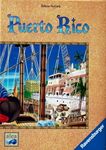
also postcolonial i always knew my country's history and i understood what it went through but what i didn't understand was that so many places in our world were united in this arrested development before we delve deeper into what it is i want to go over some examples of colonialism in board games for some this might be old hat and for others a revelation puerto rico is an economic game where workers are depicted via brown cubes the cold colonialists but within the fiction of the game they're brought in via ships from other places to do work mombasa is a game where you go to africa mine diamonds cook books establish outposts and i don't really know if i need to say anything else endeavor age of sale has a slavery deck it acknowledges in the book that obviously the slavery deck is problematic but at least they remain respectful by not writing out history more on that later imperial struggle is a game about two colonial superpowers england and france jockeying for positions in various territories depicting a not at all fictional conflict with fictional what if historical propositions twilight struggle is a game about two colonial superpowers usa and the ussr jockeying for positions in various territories depicting a not at all fictional conflict with fictional what if historical propositions i can
predict with absolute certainty that even despite me saying this there'll be comments like games are not political it's just set dressing ever leave board games alone but what i want you to learn today is that they're not these things games depict don't exist in a vacuum for us to deploy like a rickety seat at a cultural ferris wheel games are growing they are telling more stories and in turn those stories become more complicated take the trajectory of video games for example it's easy to think that when we played space invaders games were just mechanisms but look at games like mass effect or the last of us board games are becoming more and more elaborate and it's time we take some ownership over what we as an art form want to say to the world if we want to be relevant i don't want us as an industry to blunder into the cultural scene with egg on our face do we and the stories we tell want to be taken seriously or do we want to be a footnote in a rulebook i'll start by taking ownership myself i too fell for the theme doesn't matter argument and it was so easy because that's how the entire industry treats it heck we can't even get the term right i've reviewed games thinking this it was a long while ago but i did it and i knew better i've spent years learning this i'll never fall for
this trivialization trap again so what can we do i suggest we learn and adapt from mistakes others have made music film literature theater and video games have all dealt with this they've all grown from mechanical exercises to a global shared characteristic of the anthropocene the most immediate and obvious answer is that we must diversify our talent pool the perspective of different voices can only enrich our discourse there is everything to gain and nothing to lose and i have some good news the zenobia award is a grant and mentorship program designed to empower disadvantaged minority voices in the historical war game scene which is the prime field in board games that most frequently deals with the subject of colonialism whilst the zenobia award is not set up to receive public donations one thing we can do is watch and amplify the voices that benefit from it i've left the relevant links in the description the other thing publishers can do to understand the topics they are dealing with is higher sensitivity readers people who have expertise in the subject matter and help you untangle the messy side of culture and history a practice some publishers started employing is hiring writers great but make sure that your writers are actually knowledgeable about the subject they are
dealing with and this is the crux of the matter and my ultimate verdict to anyone who publishes a game with exploitation you have no business touching something if a you don't understand it or b you have nothing to add to the conversation i i think it it is that the the separation of issues like colonialism issues like race issues like capitalism and exploitation you know most of the the modern fantasy writers are always left-wing as hell you know how can i take on that on board that there is no kind of innocent fun here uh but you can still have fun but you have to crunch it a little bit more carefully and i think that's where where the games are gonna end up having to go i've purposely inserted imperial struggle as an example even though it and its twilight cousin deals with colonialism in a very different way it does have something to say it's a historical exploration a what if that puts you in the driver's seat i guess i'd liken it to a documentary in vr when imperial struggle came out a phrase was thrown around depiction is not endorsement and i very much agree with that except imperial struggle does not depict it simulates which is a tool magnitudes more powerful
and the danger here is that when simulations make arguments they hold a lot more gravitas so the question with games like that always is what arguments is it making and whose vision is it simulating even positive examples of colonialist settings in board games to me lack something pax premier's second edition lets you play from the perspective of the local population taking charge of an invading situation yet famously the first edition includes an essay called in defense of colonialism written by a covet denier hi mum you know how you never met your uncle well it's fine because a man named phil eklund said that it gave us banking a board game designer a board game designer yeah no i have no idea what banking has to do with the soviet union but apparently it's a good thing spirit island is a fantasy game where you play as spirits fighting the onslaught of white men and buildings these are immensely powerful and i love that these viewpoints exist what i want you to take away from this isn't that one of these is the right way of doing things and others aren't i enjoy games like twilight imperium even though they are undeniably colonialist in setting and theme they are also absolutely simulations that put me in the driver's seat but because the setting is so on the nose nonsense that's enough
for me to distinguish it from reality but another person might find that horrible and would much prefer a real-life historical setting where at least there's nuance the objective here isn't to dismantle the imperialist yoke it's to give you tools to tackle these subjects and also i would like to make a suggestion none of these games i mentioned are examples of post-colonial work and frankly i struggle to think of an example of postcolonial work in cardboard i'm slowly coming to the realization that i've spent more than 20 minutes talking without actually explaining what postcolonialism is and that's because it's the hardest thing i don't know how to do it okay think of it as a genre or better yet a voice a voice that speaks in the vacuum that is left by the absence of colonialism the invaders leave but life goes on and people start filling that vacuum and post colonialism is stories about those people they can be macro dealing with sociological geographical or political issues or they could be micro dealing with psychology relationships and verse similitude that's what i want to see more of in board games i'm not sure that helped i'd like to echo keith's words here again
if you don't show yourself in your work then why are you doing it okay let me flip that on his head i was monumentally scared talking about the subject there are nations whose history and culture were affected much worse than mine but i do it anyway because i feel like what i have to say is important and most importantly my words are personal this video is sponsored by skillshare but we decided to donate all the sponsorship money that we make from this video to the black trans foundation therapy fund the fund is set up to provide black trans people and black non-binary people with free counseling and therapy sessions skillshare is the online learning community that offers thousands of classes on various subjects from interior design to photography to even board game design skillshare is an invaluable resource for anyone curious and adventurous for anyone who wants to explore something new i myself have taken multiple courses about learning lighting and one of the ones i'd recommend is of course by zach mulligan called cinematography basics introduction to lighting techniques lighting is definitely not one of my great passions but i was surprised by how easy and entertaining it was to learn new tips and tricks and the results speak for themselves this is how our videos looked two years ago last year and today you can find many more classes
for less than ten dollars a month with an annual subscription and the first 1000 of you to click the link in the description will get a free trial of skillshare premium membership