Skip or Buy? Corps of Discovery, Twilight Inscription, Jungo, Dice Pool Party, Qwixx, Crazy Fishing
Games in This Video
5 games are featured in this video — they unlock as you watch.


Transcript
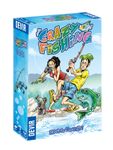
Hey everybody. Today I'm taking a look at six board and card games just to share my overall thoughts on these games and to let you know if I recommend them or not. Now I'll be going through them in order of favoritism. So I'll start with my least favorite and work [clears throat] my way up to the best of them. Now before I get started on these reviews, I want to give a shout out to the show sponsor kienda.co.uk who are my go-to online retailer. And if you use the link in the show notes or the QR code, then you can get 5% off your first order. Let's start with the first game, which is Crazy Fishing. Uh, big shame this one came at the bottom because I think this game actually does have a lot of potential and with a few tweaks, it could have been much, much better. Definitely a good framework of a good game here. So, this is an initiative based card game where of course you're trying to catch fish.
You're going to be managing this hands of cards and you have two types of cards. You've got these rod cards which will determine the initiative in which you take your turn as well as these bait cards which will dictate the strength of the fish you can pick up. So at the start of the game you're going to mix up this um pile of circular fish cards and on the back of these fish cards there'll be a kind of a number bracket. It might say well the fish on the other side of this card is anywhere between a strength three and a strength six. So you know is it going to be a three, four, five or six? Who knows? Um, and then what you're going to do is you are going to um simultaneously select a um a rod card or and a bait card, reveal them at the same time as the other players. Whoever's played the highest valued rod card will go first. And initiative is a huge factor in this game because you can only pick up cards that are not covered by other cards. So, as I said, you're going to mix up all those fish cards, meaning that there's quite a few cards covered by other ones, and those are not accessible until the cards above it are taken, meaning that sometimes you might want to go lower in initiative order.
So, those upper cards are removed, and then you can go in. Um, and of course, the bait cards will show which cards you can actually pick up. So, there's this good little trade-off. You know, do I want to waste my pretty strong strength five bait card, but this card could be between a three or a six? If I draw a six, then I'm not going to capture it. It's going to go back in the pool and then the next person might be able to capture it. Um, or likewise, you know, am I going to, you know, play it completely safe, but maybe waste the higher strength cards because I could have played a lower one. That's pretty much the premise um of the game. The cards themselves are just worth a varying amount of points. Of course, the higher the strength of the fish, the more points they are worth. And there are other little tricks as well you can do, such as like, you know, mixing the fish back up and and so on. Now, the reason why I say this game was a little bit of a a missed opportunity is because you are drawing your cards from a communal pile. I think this game would have been much much better if each player had an identical set of cards, meaning that you had to be a bit more calculated in when you use your higher strength cards. Um, meaning that, you know, waste is going to cost you more heavily. Because in this one, you could like use a really high valued card and draw another one back into your hand, meaning that you've not really suffered the consequences of not playing that card efficiently. Where as I said, if everyone has the same set of cards, then it's all about getting the most from those cards. So, I think with a very again a very small change, you know, reflecting that, this game would have been elevated at le you know, at least a point, maybe a point or two um higher.
So, I thought for a fishing game and, you know, it's a difficult um sport to simulate, this does a fantastic job, but the game play just kind of um kind of hurts itself because you are top decking those baits and rod cards. Um so, yeah, a lot of potential here. Just sadly didn't quite stick the landing. Um but still, it was enjoyable and way better than I thought it would be. I had to give it a five out of 10. You know, six out of 10 are kind of like soft recommendations for me. Um I can't quite do that for that reason. I think it's just a little bit too um too dependent on those card draws. Moving on to an older Roll and Wright game with quicks. This going to be a pretty quick review. Um so this is one of the like OG roll and write games as as bare bones as it gets. You're rolling a cluster of dice.
Um everybody can kind of select these white dice and tick off things on their sheet. And the active player can choose a color. And what you're trying to do is you're trying to um tick off like the sum of the value of these dice either going from low to high or high to low. But once you go f to the right, you can't go back on yourself and tick off anything else. Basically, the more numbers you tick off of a color, the more points you're going to get. And as soon as you tick off the last one on that particular line, as in the the twelves or the ones, sorry, twelves or the twos, um nobody else can lock in that number anymore. So, you know, it's a little bit of a trade-off on do you want to be a little bit spiteful and lock players out? Um, do you want to keep pushing your luck and ticking off as more and more um and score those points based on a sliding scale? Um, that's it. It's again very luck dependent. You know, switch your brain off, take things off on your sheet kind of gameplay, but it's enjoyable. It's pleasant. You know, I do like the the sister games of this games like Quinto.
I think maybe Quinto is a little bit better than this one. Um, but I'm always up for playing games like this. I'm very chilled out. I just like little dice rolling and um simple roll and write games. So quicks get nothing to write home about. I think maybe it's been lost to the animals of time. Um much better roll and write games out there, but for a mass market style game that pretty much anybody could play. You could play this with elderly relatives or you know even younger children and you probably still get some enjoyment out of this. So you're not going to have to maybe sacrifice fun yourself if you play it with those audiences. [clears throat] So that is Quicks. Again, I'd give that a five. Um maybe the enjoyment factor is slightly higher than that. Um next up we have another Roland and Wright game but on the polar opposite um end of the scale with Twilight Inscription.
So as the name suggests this is the Roll and Wright version of the the classic Twilight Imperium uh series. Um of course Twilight Imperium is this huge you know trashy exploration space epic. Uh this is just a roll and right game, but it is definitely broad broader in scope than you know 99% of other roll and right style games. So this one you have kind of four separate dry erase boards that you're trying to manage. They all do kind of loosely tie in with each other and you know in their own right they're pretty manageable but as a whole I can certainly see what initially looking at this or teaching this could be a little bit daunting because there is quite a lot going on but as you break down those segmented pieces it's fairly straightforward. So, you've got this kind of exploration sheet where you're going from kind of planet to planet, circling things off, getting bonuses, and unlocking new locations on your next board, which again will score you resources based on little rows and columns you complete. Uh, you've got this kind of military board, which works in this kind of like a like an area control thing going on where you are plotting these little spaceships on this grid. If you have more spaces filled in almost like Tetris shapes um on these different um locations, then you will win depending on how strong your neighboring opponents are. So, you know, if I have say eight things ticked off and my opponents have, you know, six or seven, then I would win the stronger bonus from that particular round. But
this this actual part of the game is probably my favorite where you can actually pre-plan for the next round and bleed into the next round's um majorities competition. So I like that idea of you know am I quite satisfied with what I have here and am I ready to start investing even in the round or two in the future to make sure that I keep those majorities. And the final kind of um board is more of a simple resource collection. Um circling things and getting income at the end of the rounds and even getting these votes which is kind of like the the hallmark of a Twilight Imperium game is where these events will come up and you and your opponents can vote or cast votes to sway these gamechanging rules either way which I think is a great touch and was my favorite thing about the original Twilight Imperium. So this game um certainly well polished, welldesigned, everything connects well. Um you know I am scratching the surface of what I'm what I'm telling you about the game here because there are like further dice you can unlock and other bonuses and ongoing powers you can do. Um but the premise itself is boiled down to those simple mini games which I must admit we have seen time and time again in different role rights. This one just seems to cobble them together. Um although all be it very smoothly and to a very high standard. So, I can't really complain about the gameplay here. My my only issue is the the time investment side of things. Um because this is like a 1 and a half to twohour games. You know, more 2 hours if you're teaching it. Um and
you know, time investment when it comes to board games is becoming more and more of a factor for me. and you know, am I really going to want to play or opt to play this, you know, a 2hour rolling right game rather than say, you know, more of a traditional Euro game that you can play in the same time frame and probably get a much more crunchy and more rich gaming experience. So, this kind of struggles to find its niche for me or its own little place. But that being said, people I've played this with have really enjoyed it. I really enjoyed it. I thought it was very good. And admittedly, the despite it being a longer game, it doesn't feel like a long game. It actually does um feel pretty it moves along at a good pace and it feels like you're achieving a lot and it doesn't feel like it drags its heels. And it's one of those games that when you finish, you look at the clock and think, "How has that been 2 hours?"
Because, you know, you you do get invested in your playerboard and try to achieve all these different objectives that you're going for. So, a really strong example of the genre. Um, of course, for more um people who enjoy more involved games, especially when of the of the rolling rights style, you know, if you're thinking games like um you know, Hrien's Wall or even even more involved games like, you know, Fleet the Dice game, this is more on that side of the spectrum. Um, personally, I think I'd rather opt for more mini roll and write games that you can get played in 20 minutes or so. Um, I just think that kind of fits the feel of it better. Um, but that being said, this is a really solid game and I would play it again happily. Um, also really well designed in terms of its visuals and components and so on. So I would give that give that a 6 out of 10 and mostly hindered again by how long it takes. Um, moving on then to uh the core of discovery. So this is a really interesting cooperative deduction game. Um, and you know, I do play a lot of deduction games. And to this one's merit, this one is very different to a lot of the other ones that I've played. So, this one you are, of course, working together with your teammates to try and overcome these uh these missions. Um, and you do that by exploring on this board. Now, this board is this a grid with all these tokens flipped face down uh on them. And as you venture through this board, you're going to flip them over, reveal different resources and little events and things.
Um, but the trick is that each single icon on this board has its own kind of pattern that it adheres to. So, for example, every bit of water must be next to say one stick or every skull on the board has to have unique things around it. And of course, as you reveal more and more of these tokens, you can take pretty educated guesses on what the next tokens would be. And I like figuring out that puzzle and taking educated guesses, even sometimes concrete um selections to try and um work as optimally as you can because this game, not only are you trying to manage that deduction side of things, um you are constantly against the clock here and fighting off many many threats because um you know, you have to well it is in this base it's a survival game. So you need to make sure you have enough water to do things. you need to be making sure that you are trying to overcome these threats that are appearing on this sliding kind of conveyor belt system. Almost reminds me of a little bit like um like in the year of the dragon where you can kind of maybe sometimes take a hit or two when you know I've got no way of completing this objective therefore I'm going to take the hit and work towards the next one. You can do that in this game but I like that constant pressure and it feels to me just the right level of difficulty. So, you wouldn't want a game like this to be too easy, but at the same time, you don't want it to be too punishing. And I think this game does strike that balance just right. So, if you are familiar with games like um Tawanaku, this one feels very similar to me, but certainly um way more rich and
way more um thematic in the way that everything is put together because, you know, these threats make sense and, you know, the stories make sense. that the idea of survival really comes through using these items to break rules and things. It all comes together in a really nice narrative actually and that's what this company is all about. I think it's called off the page games. They base their games on um on on graphic novels and so on. And this really does come to life in a game like this. So, you know, full credit for them kind of making this pretty dry mechanical game, but really embedding theme into every single moving part. And, you know, no doubt a lot of people are going to love this, especially if you are a fan of the of the graphic novel. You know, I've not read it myself, but I do like that kind of manifest destiny um setting. Um and yeah, that that survival aspect really does shine through strongly. So, I would recommend this one. Um, I would say maybe if I'm going to choose my favorite style of deduction game, this wouldn't be it. I would probably want something a bit snappier and something a bit more um competitive and like, you know, I'm working towards what I'm doing rather than working more, you know, with the other players because this game does have a a bit of a quarterbacking issue.
You're not really in full control of your own Destiny. Um, because is more of a a group um effort. Um, and the only kind of main nitpick is that it does take a bit longer than most deduction games. Again, you are looking at around two hours with the teach here. Um, maybe you could shave some time off if you are playing really well or if you're really familiar with the game, you could probably get it down to an hour and a half, maybe even an hour if you're really efficient. Um, but if you're playing with those three, maybe four players, you are probably pushing towards an hour and a half, two hours, which is just a little bit long. Um, but the gameplay rewards it. It doesn't out say it doesn't outstate its welcome, but you don't feel like you've wasted that time because you are really working things out and it does feel like you're on a bit of a journey with this one. So again, I like it. Um I would give it a six out of 10. You know, maybe more objectively I would give it more of a seven. I'm saying six because there are other deduction games I'd rather play the net and it's a bit too long. Um but I think most people are going to rate this higher than what I would and objectively I couldn't really disagree.
Next up, I have Dice Pool Party. So, this is actually um kind of outrageously light really to do so well uh on um a video like this um beating some some really good games. But this is essentially a Yatsi variant style game that is so easy to play. Um but this game has this magical ingredient where it's just so addictive and you just want to keep playing it again and again and again. So, basically, you are going to be um chucking a bunch of these dice, all of which come in pairs um into this box. You're going to give it a shake and you're going to reveal that box for, you know, 3 seconds or so. So, everybody's looking at all these dice trying to figure out values and so on. The box is put back on or the lid of the box is put back on. Then, everybody must select a scoring category on their own personal sheet that they want to score. you know, do you want to score all of the ones, twos, and threes? Do you want to score all the sixes, all the fives, just the green dice, and so on. But once you've selected a particular category, then you can no longer take that one again. So, this game always lasts exactly 12 rounds, each one for each of the scoring categories. And of course, you want to strike when the iron is hot. You know, um maybe there's a bunch of fives out there, but maybe more fives will come out later. Do I want to go for something else? And you know, it's complete speculation.
Yes, you can play the probabilities, but the game is so rapid, so fun, so easy to play again and again. There's like no setup, and um that's that's it really. It's kind of speedy art yachtsy. Um so accessible. It takes around, you know, 5 to 10 minutes to play. And while the rules themselves are nothing to write home about, the fun factor is is off the charts if in my opinion. I think it's so enjoyable. And I know I will play this game dozens and dozens and dozens of time until all those sheets are used because um this is like the quintessential filler game that only takes you know 5 minutes. So um you know despite me being you know more involved or into more involved you know combo style games in euros and so on this game just really worked for me and I can't quite explain why. I just think it's a lot of fun. So that is Dice Pool Party.
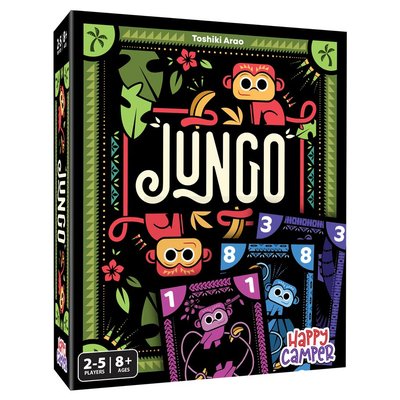
I don't feel like I can give it more than a six because it is just so so simple. Um, but the fun factor would be higher than that. And the final game I'm talking about today, uh, is Jungo. So, Jungo is a a card shedding game, and I've covered a lot of these on the channel over the last year or so because there seems to be a a bit of an uprising of these styles of games coming out. Jungo, I think, is certainly up there with the best of them. So, this one, as I said, is a shedding game. You're trying to get rid of your cards quicker than the other players. Um, and it comes with that kind of scout, you know, bonanza style gameplay where the cards in your hand stay fixed in your hand. You cannot just shuffle cards around and put things in order. They will stay fixed. And all you're trying to do to stay in the round is to play um cards of the same number um either higher than the previous played set or more or cards of more quantity. So I could play, you know, to beat say um you know uh three threes, I could play three fours or three fives or I could even play four ones because I'm playing higher quantity of cards. Now, the interesting twist on this game is that when you do beat the previously um played hand, you can choose to um discard them or you can choose to pick them up and add them to your hand, making future plays much stronger and more likely. And you can even divide them up so you can stop things exactly
where you want them. Again, building up and building up. So, it's all about this trade-off of adding cards into my hand to keep me going and to keep me playing stronger and stronger, but at the same time being a race game that you want to get rid of those cards. And it's all about striking that perfect balance and of course finishing before your opponents do. And there's this nice little twist as well where if you can't play, simply draw a card into your hand. You can discard it if you want to, but you can even do this kind of like scout and show mechanism where if you if that card you've just drawn contributes to a next stronger hand, you can do that. So, that's just a a nice way to keep the game moving along. So, uh this game doesn't get in its own way at all. You can play just one single round if you like, which will take about 5 minutes. You can play, you know, the best of three, whatever you want to do. Um but there just there's no convolution.
There's no filliness and it seems to pick all the best bits of a lot of different games. You It's got a bit of scout in there. It's got a bit of Linko in there. Lots of different things um going on and it all comes down into this really nice and you know well polished welldesigned little card game that's you know nice to look at as well. Very affordable going super fast and again a really strong example of his genre. So, if you want a barebones shedding game, you know, I've covered a lot more involved ones recently. Games like Panda Spin, games like Ruins, which are great, but they do have a little bit, you know, a few more layers added on. This one is back to the core moving parts, but probably as well refined as it can be. So, that is Jungo, and I'll give that one a seven out of 10. So, that concludes the video. Apologies for the the siren outside. Hopefully, you've enjoyed it. If you have, please be sure to hit like and subscribe to the channel. For everybody else, I'll see you next time on Chairman of the Board.