Top 10 Unique Games
Games in This Video
7 games are featured in this video — they unlock as you watch.




Transcript
Nick, for a unique intro, we're just gonna do a normal one. Here's a top 10 for you. That's unique for us.
What's up everybody? I'm Mike. I'm Nick. We are the brothers Murph. Yes, we're going to talk about games that we really feel are unique. They are unlike any other game. They do something different. They do something different. And sometimes this will be a theme, but this mostly is about a games that feel different. when you were play this, you're like, man, this doesn't feel like any other game. And again, that sometimes you might like that, sometimes you might not like that. But nonetheless, this is one of those things where it's like, gosh, we were playing a game the other day is what made us think about this list. It'll be on the list later, so I'm not going to spoil it, but we were like, yeah, this just doesn't feel like anything else I've ever played. And that's kind of what made us think about this. This will be our top 10 unique feeling games. Let's get into it.
Number 10 is going to be Pueblo. And they actually just made a new version of this game. It's also very pretty. But this is an interesting game where you do not want to score points. You are building up kind of like a village, a big PBLO. And uh there is the chieftain who's going to be going around the edge of the board because this little grid board and they're basically going to be looking kind of in a straight line for the most part. And if they can see some of your pieces, some of your building pieces, you will gain points. Again, you do not want points in this game. So, that is So, on your turn, you're going to be taking one of uh the colored blocks or one of the neutral blocks, and you're basically going to be placing it somewhere in the pueblo. You're going to be placing it on top of pieces and things like that. And then you can move the chieftain a I think one to three spaces or one to two spaces. And then basically, the chieftain will look down that line. And then any pieces of yours or your opponents that they can see, uh it will give them points. And on top of that, the higher that they can see them, the more points it will give you. And again, you don't want points. If the chieftain is ever on the corner, they're basically going to look straight down at the top and then basically anything they can see, you will gain a point for. So, it's this really interesting 3D puzzle where you are trying to build up stuff so that you can place it out but not score points, but you're also trying to think for the future because as the chieftain moves around the board, you're like, "Oh, I'm solid right here." But then once it moves here, they can see nothing but my pieces. It's really, really interesting. This kind of tactical back and forth where you're kind of trying to put stuff out and not get points. It's really, really
interesting. I like Pueblo a lot. I got to play for the first time earlier this year and I was like, man, this is a very interesting puzzle to kind of solve that really just doesn't really feel like anything else. All right, so we have FAM here, which is a Freeman Freeze game. Freeman Freeze makes all sorts of games, and there's a lot of them that really have some cool, unique stuff to them. With FAM, one thing that we really enjoy is that this is kind of a shared infrastructure game where we are playing cards to kind of uh clean out the land, get it ready, start to build up settlements and cities and things like that. But none of us own anything that's on the board. They are all in service of the pharaoh. We are just doing everything in service of them. So, we don't own anything uh any workers, any uh buildings can be moved, modified, changed and stuff by other players because we're all doing it, you know, to to to satisfy this person up here. The only things that we have are the money we make and the reputation we have, which are our victory points. I love that this game kind of starts off with a fairly blank map and there's a cadence to the cards coming out. They have sort of a um market system similar to power grid also by Freeman Freeze where there's certain cards that are in the market now to buy other ones that are going to be coming into the market later. And so the game has this cadence of things kind of like building up slowly and stuff. But that whole shared infrastructure where I'm building over here trying to build this certain building maybe with some idea in mind of where I want to go next. Someone else says, "Hey, thank you very much for
that. That's pretty cool. Let's make that now a city out of a settlement and we're going to do this over here and start to build roads this way." And I'm like, well, that's not what I wanted to do. But hey, it's not about me. It's about the big guy upstairs or up top at the top of here. What? The pharaoh. You get it. Uh, and I just think it's a really kind of cool thing that we are building this, but it is not any of ours.
Number eight is going to be Black Sonata. This is a solo only deduction kind of cat-and- mouse kind of game where you are um trying to find the inspiration for Shakespeare's sonnetss, his famous sonnetss. They're inspired by a woman and so you're trying to figure out who that woman is in kind of old Shakespearean um England. And so you are basically moving around London and you are trying to find this woman. And so basically the what really makes this game unique is that the character the kind of the mysterious lady the your mysterious muse is moving through a set pattern and that set pattern will be in cards in your hand and they're set up in a specific way that they will move around but you don't know what that pattern is. And so they're basically going to move and they're going to move to this kind of building. They're going to move to this kind of spot to this kind of spot. And so you are basically trying to be in the right spot at the right time because on your turn when it's your turn after they move you can either move or you can basically accuse if you're in the same spot as them you can accuse them of be like who are you and you'll find out a little bit information from them. But the thing is you can't do both of those things. So you need them to come to you. And so you're like okay so I'm pretty sure they're over here. And again you're not entirely always positive. And you're like okay that means they can either go here or here.
I'm going to go here and hopefully they'll come to me. If they do, you can accuse them and then you'll find out a little bit of information from them. Maybe that you'll see they have kids with them. That means you know that they have children. Maybe you see a wedding ring and that way you know that they're um that they're married. And then basically you're going to be getting uh these uh cards of these various women that it could be and they're all going to have traits again like plays an instrument, is married, has kids, things like that. And then as you find out these things, you're basically going to be able to deduce who this person is. And then you need to eventually find them and then make that final accusation. It's really, really interesting. Particularly the way that the cards work and the way that you have to finally accuse them and you find out whether or not they actually are there is very, very weird and interesting, but it's so cool. And I fundamentally do not understand how a brain thinks of a game like this.
It's just so cool. I really like Black Sonata. It's nice because the deduction part of the game. It seems like that's the main part, but I actually don't think it is. I actually think the main part of the game is the kind of cat-and- mouse part. You basically, a lot of times you kind of know where they are or know where they might be. It's usually like 50/50. There's never like, "Oh my gosh, I have no idea about anything." You know, stuff. And the deduction to find out who it is is not that difficult. The difficult part is is making those accusations and then also being in the right place at the right time. It's a mix of those things. It's really, really fun and I absolutely adore it.
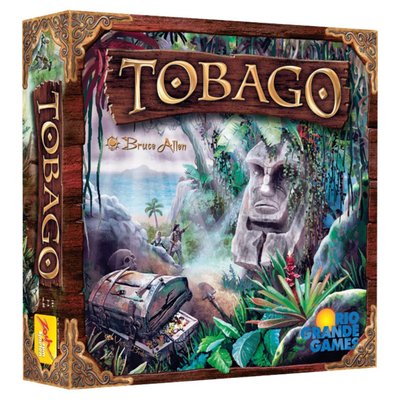
All right, next up is Tobago. This is a game where you're going to be looking for treasures on a map. Uh there could be potentially up to four that you're going for at a time, but none of us know where the treasures are. Uh, in fact, the game doesn't know where the treasures are. And as you go through the game, you're going to be kind of deciding where things actually appear on the map. You're on this island. There's going to be, you know, areas with beaches and jungles and water. Uh, there's going to be statues and different kind of uh, you know, icons and things to focus on and and uh, landmarks and things like that. Uh, and you're going to be playing cards that are going to give you the rules for where treasures can appear. So it might be that it is in the largest section of jungle. So when you kind of narrow down the possibilities of where a treasure could be, you can start to put cubes out that match the color of treasure. And it's saying that like, hey, any of these spaces with a cube are a potential spot for treasure to be. As you play further cards, it will narrow down the possible things that make sure they follow all of the rules. So it might be in the largest jungle, but it's next to a tree or something like that. So it's like, okay, well that really limits it to only two spaces. And if you ever get it down to one, basically that is now real. That is cannon. That is where the treasure is.
And then you are racing your vehicles over to kind of pick up the treasure and get the the biggest uh you know score possible and trying to avoid curses and stuff like that. I just really like the idea that I can strategically if I see someone kind of putting rules out for a certain treasure that means, you know, it's most likely going to be on this other side of the board. Well, I don't have my ATV over there, so I'm going to play this one card. That means, oh, it's on the biggest beach, actually, so it can only be over here where I am. And you can strategically kind of change reality, which is just really, really kind of cool and unique. And it's just something that I think the first time he played it, like it blew my mind.
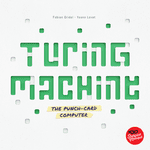
Number six is going to be another deduction game. This is Touring Machine. Touring Machine is I still don't know how they figured out how to make this work. This is a um based off of Alan Turing, who kind of cracked the Nazi codes in uh World War II. and uh you are building kind of this analog computer and you're basically trying to find out a sequence of three numbers. So the numbers can be one through five and they can be either blue, yellow or purple. So be one of each of those blue, yellows or purples and then it could be like a purple three, a blue five and then a yellow one. That could be the sequence you're trying to figure out what that sequence sequence is. And you do that by asking questions of this analog computer. And basically this analog computer what it does is it has all of these different kind of like um things that you can ask it. So basically if you go there and you ask it it might be like well you're asking is yellow greater than blue because each time each round you're basically making a sequence of three numbers. You're like I'm going to take the yellow five the blue three and then the one purple and then you make that little sequence. You put the three cards together and then you can go ask from these different like kind of um signifiers what they're called. So basically you're there and you're saying is yellow greater than blue? Um in your sequence yellow is greater than blue. So that's what you're asking of the signifier. And then you will take that signifier and then put it underneath your three cards that you put together. It's very weird to describe because whenever you put three cards together, there will always be a single solitary hole in those cards. There will always be one. I don't know how it
works, but there'll always be one. And so when you put the signifier um on that thing, it'll either have a check for yes, it is or an X for no, it isn't. So if we were asking, is yellow greater than purple or blue or whatever it was, and the has a check, that means that we know that yellow is indeed greater than purple. And so now you're like, okay, now I know that. So I know that purple can't be five because then yellow couldn't be greater than it. So you're asking around these different signifiers, narrowing down what is doing logical deduction. The deduction is really, really cool and interesting. But I just love that concept, that kind of tactile nature of choosing a sequence of cards, putting that together. There's a little hole in there, and then asking these different little signifiers questions and then seeing if it's right. I absolutely love it. It's so weird.
It's so different. I fundamentally don't understand how it works, but it works really, really well. And it's really, really cool. I love touring machine. It just is is very, very unique. Next up is Operation Barlay. This is a poker style game sort of where uh you are playing, you know, as the British versus the Germans and you are trying to code break uh if you're the Germans and kind of find out where uh you know where your enem is kind of stationed at on this board. Uh and you're doing this through card play. uh playing cards that have abilities and things like that. Uh and you're ultimately going to be forming a poker hand uh through the five cards you play. And within that, you are going to be, if you're the German player, uncovering certain tokens that are on the board, trying to see if they are the true or fake messages because you're trying to be, you know, faked out by your opponent. You're also betting on who you think is going to have the stronger hand, whether or not that's you. Uh, and then there's certain icons on cards outside of their ability that you can play that can also give you another win. And these different tokens that pertain to the different regions are in play and randomized from round to round uh as the British kind of just try to outlast uh the Germans and stuff.
This is one that like I first heard about this like you know World War II your hidden information uh you know card playability stuff and then they go with poker and I'm like what was that last part poker and you are playing these poker hands uh but but it's so much more than just making a hand with a couple of pairs in it or something because again the cards and the values and stuff have different abilities which are going to uh you know allow you to maybe uncover information earlier, swap tokens around from the different uh scoring kind of areas and stuff like that. So, you're doing all of these different things, uh trying to uncover information where you are, or if you're the British and you win a, you know, a hand or something, you're going to take away certain tokens. Those are things that cannot now be flipped by your opponent. So, you're trying to win, but if you know, I'm not going to win this hand, I can at least bid for my opponent to win and maybe try to lose on purpose. But there's also bluffing and things like that. There's just so much stuff and it's all set in this like different theaters of war, World War II setting that I think is just super fascinating.
Number four is Zulkan. Zulkin is kind of a typical Euro game in general, but it's got these really interesting mechanics because it's about the kind of Mayan calendar and on the board is a big turning Mayan calendar. And so there are three four different cogs. There's kind of the big center cog or maybe it's five. There's a big center cog and then smaller cogs that are attached to it. So as the big cog turns, all the other cogs will turn as well. And on your turn, the game is kind of very simple in terms of what you can do on your turn because you can either place a worker out onto one of the cogs or you can take a worker off of a cog and do the action where they are. Now, each one of these cogs has different stuff they do. One will give you supplies, one can have help you go up like temple tracks, one can get these cool like blue skulls and stuff like that. Um, but the longer you stay on a cog, the more powerful those um abilities will be. So basically, you want to put one on and where you put it is going to be pretty weak. But as that big cog turns, all those actions are going to start getting bigger and bigger and better. And so it's this kind of big battle of like how long can you wait to keep that on there before you can take it off? Because a lot of times you need those resources, you have to pay your people. You need these things. You need to bump these tracks. You need to buy these buildings. So when is it worth it for you to pull your workers off of these cogs and do those actions? It's just so cool. It's such a cool way to signify that kind of of waiting to make
actions go stronger. They could have just been on tracks and every round all your workers bump up a tracks, but they didn't. They put on this really cool thing that thematically makes sense within the world of the game and then just it's just really really cool. And I I really enjoy that. Like the longer you wait on a worker, the stronger it'll be. There's a lot of times games will be like the more workers you put down, the stronger it'll be. like an architect of the west kingdom or all these various different things, but this one is like it's actually just time and that time is the main part of the game and it's just really really good.
All right, next up is Captain Sonar. And this answers the question of like what if battleship was real time with a bunch of people and you know everyone had different roles and you really are kind of getting deeper into you know what it would be like to be on the submarine as you're hunting around and trying to blow up your opponents. So in this game in the kind of most full version there's been a few different versions. Uh in this game in the full version there's two teams of four players uh each with a different role. You're going to have your captain, you're going to have your radio operator, your engineer, and stuff like that. And you are all going to be carrying out certain tasks, uh, while also kind of paying attention to what your opponents are all doing all in real time with kind of a screen in between you. So, you can't, you know, cheat and look at what your opponents are up to and stuff like that as you try to find each other and blow each other up. The captain is going to be calling shots saying, "Hey, we're heading north, we're heading west, we're heading south, we're heading east." uh and going around. The radio uh operator is listening because you as the captain have to announce that out loud to your crew. The radio operator is listening in on their opponent's captain and what they're saying and making marks on a transparent sheet and then moving it around on the map to try to see like where could they legally be moving because there's movement restrictions and stuff. The engineer is trying to uh fix and prep stuff. There's all sorts of things going on and it's all happening at the same time. So you have people communicating, you have sound coming in from the other side. It's like the perfect convention game because it's rockus. It can get
wild. There's big moments where people are surfacing and they have to reveal their location, other people are gunning for them and stuff like that. There's just a lot of like really fun moments that gave me like such a great feeling of, you know, when you'd play 10's games of battleship as a kid, but now kind of leveled up in what you're doing, which satisfies like my adult brain and wanting to have strategy and stuff like that.
Number two is going to be fast sloths. I love this game. Fast loss is so good. Fast loss is really, really unique because it's a pick up and you pick up and deliver game, but it's a pick up and deliver me game because this is a game all about uh being a lazy sloth. All of us are lazy sloths and sloths don't like to move, but you need to go around the board to get your leaves and munch on those leaves, but you have to do that by having other animals pick you up and carry you. So, it's this really interesting concept. It's a freedom freeze game. And earlier, Mike talked about Fum and that also had this kind of big shared infrastructure. And this one also has kind of a shared infrastructure in terms of the animals. So, everyone has their individual sloth, but then there's different animals all around the board. There's like giraffes, there's like elephants, there's orangutans, there's crocodiles, lots of different kind of stuff. There's humans, the worst animals. Um, all this different kind of stuff. And each of these different animals can pick up sloths and move them. And they all do stuff in different ways. So like the giraffe has a very long neck. So it can pick up a sloth from two spots away. And then when they drop them off, they can drop them off two spots away because they have a very long neck. the um elephant doesn't move very fast, but once they're done moving you, they can throw you up to three spaces. And so all of these animals work in these different ways and it makes each kind of play a little bit different because you can kind of you only play with six of them. There's 12 in the box.
I believe it's 12 at least. And so you can really mix it up each time and they do honestly change the game a lot. You can also mix up the maps so that the map is always different. But it's just this really interesting, unique take on a pick up and deliver game where instead of like going around and picking stuff up and dropping it off, you are trying to manipulate and move around these kind of shared animals so that they're near you to pick you up and then move you around. It's very, very interesting. It's very unique and I absolutely love it. It's just it's just silly fun and I love it. All right. For our money, the most unique game out there is Millennium Blades. Mostly because it's a game that simulates a collectible card game, like tournament scene. So, collectible card games would be things like Magic, Yu-Gi-Oh, and stuff like that. And this game is about playing as players of those kinds of games where you are going to be uh starting off with a starter deck of cards. You're going to be going into tournaments and actually playing against people with your cards trying to win. Uh and then you're going to gain money in the game. You're going to go spend your money at the store. You'll go to a game store and you can buy booster packs and crack them open and see what kind of cards you get. you can buy certain uh specific cards and stuff and you're trying to level up your uh your deck through play uh and then go into kind of future tournaments and stuff.
So, you start off with, you know, it's like a beginning player and go to like regionals by the end of it. Uh and just like the idea that you have a game that it doesn't I wouldn't say parodies because not making fun of it, but you know, parodies or parrots, I suppose. uh the entire scene of gaining cards, building your deck, crafting your deck, competing, uh using your money, you know, uh for either like the chance at getting a a cool booster, uh how you focus and craft your deck and change it over time. It does all of these things uh in its own board game that has its own fake collectible card game that you play with different packs and stuff like that. So, you can kind of mix and change your game from game to game. It's like it's just so meta and awesome that every time I play it, like I don't personally have interest in like getting into playing Magic, but I like this game because I'm interested in the scene, uh, interested in that kind of community and everything. And so, it's fun to kind of cosplay as a collectible card game player, uh, but while keeping it still a board game at the end of the day. All right, so those are 10 games that we really, uh, find unique.
They provide an experience that you know, at least for our collection, our knowledge of board games. Uh there's no other game that does it quite like those games do it. So, we want to know for you in the comments, what are the games that like really feel unique? You're like, man, I've never played a game like this before. I've never really seen one since. Get all those in the comments uh below so we can make a big old list for people to maybe try out if they're looking for something a little bit different. Uh and these are ones that we think are pretty good different. Uh so, we'll see you all in the next top 10.