The Aspects of Your Game That Really Matter | The DICE model
Games in This Video
3 games are featured in this video — they unlock as you watch.


Transcript
Designers often spend months perfecting things that players barely notice. A rule gets rewritten 20 times. A scoring mechanism is endlessly refined. A moment of brilliance results in an elegant resolution to an irritating edge case. And then, the game gets played and nobody bats an eyelid at any of your hard work. Maybe the players obsess over the theme, the characters, the stories. Or they give loads of feedback about presentation and graphic design. They're not looking at the game as a designer. Why should they? They're players. They don't purchase a game because it's perfectly mathematically balanced or utilizes a clever mechanism to minimize downtime or has a unique new rule to prevent a runaway leader. Some parts of your game
matter far more to players than others. And the challenge is identifying which parts. And that's what the DICE model is designed to do. I'm Adam Poots. I've been creating games my whole life and over the last decade I've been fortunate to have multiple games published around the world. I enjoy sharing my experiences and lessons learnt and I particularly love developing tools and resources to assist designers in refining their craft. Tools like the Meta Hooks framework discussed in a recent video. Tools like the engagement ladder and idea execution matrix referred to in my product reviews. The DICE model is another such resource and I think you'll find it valuable. Designers love an elegant new mechanism. Players are drawn in by artwork and narrative. Publishers want a unique selling point and reviewers enjoy surprises. That sounds great, doesn't it? But all of those things probably describe only a fraction of your game.
Most of your design is invisible. Players don't notice it. Reviewers don't mention it. Publishers don't put it on the back of the box. And that's perfectly fine. A house needs foundations, even if nobody comes around to admire the concrete. The challenge is knowing which parts of your game are foundations, and which parts are the towering spires that attract attention from miles away. And that's where the DICE model comes in. It's a practical tool to help you to identify what players expect, what they ignore, what they enjoy, and what gets them hooked. I want you to isolate the following aspects of your prototype game. List the features which fit into the following categories. So, D is for default, the bare essentials. These aspects of your game are expected by players, and they're not going to thank you for including them, though they might be cross if you don't.
Examples include options to play at a range of player counts, a reasonable duration, affordable components, functional graphic design, a coherent rule set, perhaps a few player aids. Default features are very unlikely to be a selling point. They're not part of the hook of your game. I is for invisible features. So, these are the things that designers obsess over, and players barely notice. Balancing card effects, eliminating first player advantage, preventing runaway leaders, refining probability, solving awkward edge cases. These things matter enormously, but they're foundations, not the main attraction. Players rarely buy a game because it contains an elegant solution to a kingmaker problem. I can totally relate to designers taking great pride in the brilliant solutions they devised to resolve a design problem that they'd wrestled with for months. I could sit and discuss the minutiae of game design for hours, but don't fall in love with your invisible features too much, and don't tell everyone about them. Let the game speak for itself.
Publishers don't want to hear about why the game functions the way it does. They've got other things on their mind. Primarily, the final two categories, your game's core and its edge. So, C is for core. This includes the aspects of your game which players do actively notice, they enjoy, and even potentially comment on. These might be mechanisms that you've utilized, a narrative device, or a bit of thematic flair which really caught their attention, or even an interesting component or way of presenting information. The core might make up part of your game's hook. E is for edge, and this is where players really do start to get excited. Which part of your game delights players or surprises them? The key distinction between core and edge is that core elements might be familiar from other games, well-worn mechanisms which players do enjoy, but your edge is the parts of the game which feel different, innovative, or distinct. Your game's edge will undoubtedly form part of its commercial hook, and publishers will want to hear all about it. So, what problem am I actually trying to solve here?
Well, too often I see designers struggling to distinguish between what is merely present in a game and what actually creates value for players. They cannot communicate what is special about their game because they've never sat down and distilled it in this way. Or perhaps it's not a case of poor communication.
Perhaps their game actually has no edge. It's all core, a great game, but really hard to sell.
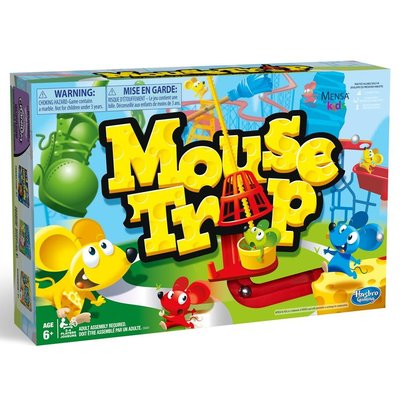
That said, the reverse isn't desirable either. A game with a strong edge isn't going to hold up for long if its core mechanisms are weak. The DICE model helps to identify this sort of imbalance. I should provide some examples. So, what's a game with a strong core but a weak edge? Well, how about one of the less celebrated Uwe Rosenberg games, perhaps Nusfjord? So, players might describe it as really solid or underrated. Those phrases are almost diagnostic of a strong core, weak edge game. The quality of the design is indisputable, but it's hard to identify a compelling hook. An example of a game with a strong edge, but a weak core, well, let's go a little bit more old school. Nobody bought Mouse Trap because they loved the gameplay. They wanted that giant plastic machine.
To show you how this works, let me break down one of my own games into dice categories. So, my 2017 party game Doodle Rush is one of my favorites from my back catalog. The default features were drawing and guessing, standard fare for many party games. High interaction, again, an expected feature of a party game. And a relatively large player count. It's not much of a party without a decent-sized group. The invisible features, those which were poured over for many hours by myself and the publishing team, include the vast selection of words we curated for players to draw to give the best possible experience. I also love the way the dry white boards are handed to a player who guesses a drawing correctly. The awarding of positive points for the boards you've collected and negative points for the boards you've failed to give away is an extremely clean system, but I've never heard a single player comment on the cleverness of that scoring. Alas, the plight of a game designer is to remain ever under-appreciated.
The core aspect of Doodle Rush is the simultaneous play. Unlike most games in the drawing genre, there are no turns. Everyone's drawing at the same time and guessing at the same time. And that gets noticed, and many players have fed back this was one of their favorite parts of the game. But, the true edge for Doodle Rush was the short duration. The game is over and done within 6 minutes. Three 2-minute rounds and you're done. It was sold as a fast and frantic party game. All the fun of Pictionary in a fraction of the time. Now, one lesson I've learned repeatedly as a designer is that effort does not directly translate into value. Designers often devote the majority of their time to invisible features. Yet, when players describe why they enjoy the game, they're almost always talking about the core and the edge. And so, that's why this exercise is so useful. It forces you to examine whether you're spending your energy in the right places. So, now it's time to try this exercise with your own prototype game. Take a sheet of paper and create four columns: default, invisible, core, edge. And then, force yourself to list at least two or three features under each heading. Did you identify a strong edge? If not, how are you going to motivate people to play? If you removed that edge feature, would the game still be fun?
And if not, is your core strong enough? Has this exercise changed the way you think about your game? Has it changed the way that you would communicate it to a publisher, a retailer, or a player? If you enjoyed this kind of product-focused approach to game design, then you're probably also going to enjoy my books. The Adam and Wales Board Game Design series, available worldwide on Amazon, covers topics ranging from playtesting and pitching to product design and personal development as a designer. And I'll put some links into the description below. If you'd like a little more help identifying a compelling hook for your game, follow this link.