Every Game Lost - Can Anything Survive Shelfageddon? #2



Transcript
Welcome to Shelfagad
to send them on to the person that bought them off me. And one, Origin Story, is on probation. The expansion is due late mid-2026, so it'll be getting one last chance to earn its place then, but right now it's teetering on the edge. Now keep in mind I am going through my collection from the games I rate the lowest up to the highest. That is quite important information for this episode in particular. And you can stay nice and safely in the justtheroad bunker by hitting subscribe for more board game videos like this one. Let's go to the first game of the episode. Cats, Japan, sushi, crime families, and a boss that needs a successor. This should be the most me game I've ever made, so it's going straight in the bunker, right? In Neko Syndicate, you're running a cat crime clan trying to impress the big boss by building a pyramid of cards and delivering sushi around your neighborhood. Over 15 rounds, you're placing cards, moving your cat down the pyramid, triggering actions as you go, and shifting sushi cubes around. Lose points for undelivered orders, missed pyramid pieces, and sushi left undelivered. It takes about 30 minutes if you know what you're doing and you will know what you're doing, just you won't know how to do it well at first. Cuz the puzzle is quite difficult, but it is really good.
Getting your pyramid to flow properly and getting all the sushi cubes to the different areas you want and getting it right feels really good. And those last few rounds where you're squeezing every point out of the game you can is really satisfying. The art is great with lovely cards and fun characters. The overall theme is thin-ish, but the actions themselves make sense thematically and it's cute enough that you don't even care. The problem is everyone's doing their own thing completely. There's nothing you can do to anyone else or nothing anyone else can do to you. You're just solving your own puzzle at the same table. And because it's a thinky puzzle, everybody's got their heads pointed down at the table and it's quiet time. No talking. Even the three randomly chosen gold cards, while great to add in variety, don't affect how you interact with your opponents. You'd still just do as well as you can. If you're okay with that, then this game could be for you. I personally want at least something that I can affect or be affected by other players. And the simultaneous nature of the game makes teaching the game even more awkward than it should be. The seven actions sound simple, but because everyone plays through their pyramid at the same time, you end up needing to help people mid-round while your own brain is trying to work out what to do. It's a lot to hold in your head at once, especially when you're learning to play well yourself. And this is the toughest decision in the series so far. It's genuinely a good game. Like I said, the puzzle is good and I enjoy it, but it is multiplayer solitaire. And as I don't play games solo, that is literally off the table. Unless, of course, I play it solo for my series where I do play games solo. Check that out. Getting Neko Syndicate to the table means teaching for 30 minutes. It's not really a group experience. You're doing a puzzle while being people adjacent. It's just not one
I'm going to play solo or take to play with others. I wish I could say officially, "Welcome to the bunker." But it's locked out.
We're moving on to another game and because it's my channel, yes, it is another game set in Japan. I know you're shocked. Well, let everyone recover. Okay. General Orders: Sengoku Jidai is a two-player action selection and area control game set on a small battlefield. You place an order token on a space to take an action and also block your opponent from taking that action this round. And because the board is small, it also blocks your line of sight to whatever's on the other side of your action token. I don't think what that's what they mean by fog of war. These actions that you recruit land or sea units, move units around, and attack adjacent areas using dice. Combat is simple. You roll one die for each unit in the attacking region, letting you remove that many units from the region you're attacking. If you're moving in foot, the defender rolls a die and has a chance to remove some of the attackers before they move in. But, the defender only rolls one die, so it's like they give you a little kick in the shins before you can move in and take their territory. And yes, it is die rolls for combat. Now, I love a bit of randomness in combat, but with only 20 turns in the game, if you roll badly on some of your rolls, it really punishes you. You can also draw cards for powerful abilities, and it does seem like you can't skip around without drawing these. They enhance your limited number of actions or give you extra ones, which is really important. The goal is to capture and hold key positions on the map while denying the other player options. You win by controlling more of the board when the war ends. Some areas are worth points, so most points after four rounds wins. Otherwise, you can instant win by taking all the units from your opponent's HQ and taking it over.
Teaching is also a tad fiddlier than the way suggests. The rules themselves are simple enough, but the board layout and some of the icons need a bit of deciphering before everybody's clear on what they need to do. A few of the symbols and actions, especially those for attacks, look very similar, and it doesn't help when they're really small on the board. Another problem is the last time I played this, we played Neuroshima Hex straight after, and it's the same idea. Two players, area control, combat focused, and it was more fun. General Orders: Sengoku Jidai is not a bad game at all, and if it was the only combat game for two out there, it might have a case. But, it isn't, and that's the whole point of Shelf Again. It's locked out. Three games in, three games set in Japan, and two of those have cats. I would say I don't have a type, but I clearly have a type. In Kyoto no Neko, you're playing as a kitten exploring a neighborhood, flipping over tiles, leveling up your skills, and completing objectives to earn medals. The first kitten to earn five medals wins. Each turn, you move around the board flipping face-down paw tokens as you go. Some of those tokens trigger reactions, such as a dog chasing you or a butterfly to befriend, and you roll dice to resolve them using whichever skill is relevant.
Fail your check and your turn ends, succeed and you carry on. You've got five skills: stamina, agility, friendship, fighting, and hunting, and they level up as you learn to use them by failing a check throughout the game. The goal is to complete mission cards by being in the right place with the right skill level at the right time. There is a lot to like in this game. It's cute and the art is really nice. And the theme of exploring as a little kitten and growing into a full-size cat works really well. The player interaction is good because you need to fight other cats to gain a medal. And crossing the road moves the bikes every time someone steps on it, which affects everyone at the table silly enough to leave their kitten on the road. But don't worry, they run away in time every time. The scenarios add a lot as well. Different mission cards are different components, change the goals, and drop new elements into the game, which means the game plays differently. The problem is the rules are a little bit more fiddly than they need to be, especially around retreating from threats or some of the movement aspects. This is definitely a family game, and for that audience those little rule issues can matter. And sadly, as cute as it is for me, there isn't enough actual gameplay there for a lot of the groups that I play with. It's light, very light. Kyoto no Neko is a genuinely lovely game, and I can see a lot of groups enjoying this. It's something mildly competitive that kids and adults can play together. But that's just not my groups, and in an alternate reality where I'm a family man, it's in the bunker. But sadly, it's locked out.
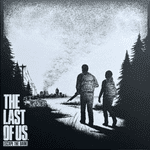
From the land of the rising sun to the land of the PlayStation. The Last of Us is my favorite video game of all time and one of my favorite TV shows of all time. So let's run through this one, put it in the bunker, and get on with our day. The Last of Us: Escape the Dark is a co-op survival game for up to five players powered by the Escape the Dark system. You are a group of survivors trying to escape a post-apocalyptic world overrun by the infected. Moving between locations, exploring chapter cards, managing resources, and fighting your way to Jackson. Each day you travel between locations, flip chapter cards, and face whatever's on them, which are stories, challenges, combat encounters, or scavenging opportunities. Combat uses custom dice tied to each survivor's stats with a pre-combat phase where you can try and listen or sneak before the fighting starts to gain an advantage. And every decision is important because if one character dies, the game ends. I love that Joel, Ellie, and the clickers are in the form. The art is great, the atmosphere is there, and you can feel the source material in every chapter. For a fan of this world like me, seeing it all laid out in front of you is really exciting. And then you start playing. With so much to think about and the difficulty being quite hard, it's really intense. And that's fine in itself. That is thematic, after all. But the bigger problem is it's hard without being fun. The tension doesn't feel earned. You're just punished for progressing. When you can't progress, you're not just rechecking the rulebook over and over. There's a difference between a game that's challenging and a game that's exhausting. This one tips into exhausting, and it's hard to think to say about something built around a world I love. If it wasn't my favorite video game of all time, I wouldn't even look at it twice. So, it's locked out.
Regulars would have probably seen this coming as the massive box that was in this cube up here has been missing for the last couple of videos I've done. But in the theme of The Last of Us, it will survive a little bit longer. It'll get one more run in my solo series, so watch this space. Just like The Last of Us, Dead by Daylight is a video game I genuinely enjoy. Dead by Daylight the board game puts one player in control of the killer while up to four others play survivors. The survivors need to repair four generators, power the exit gates, and escape before the killer hunts them down and sacrifices them. Everyone plans their movements simultaneously, then reveals and resolves in turn order. Survivors first, killer second. And that planning phase is great. You're committing to a movement card without exactly knowing what the other players are going to do, which mirrors the cat-and-mouse gameplay from the video game almost perfectly. The dice rolls for skill checks add a layer of risk that keeps every interaction tense. And there's a genuine push and pull between the two sides that feels very true to the video game. The components are really good, too. And there's loads of survivors and killers to choose from, and plenty of expansions if you want more content. And the deluxe version of the generators and hooks in particular look great on the table. The board gets a lot of stick, but it's very functional rather than pretty and does a really good job of keeping the play area easy to understand. The problem is, like a lot of one versus many games, it needs an experienced one in order for the game to work. An inexperienced killer doesn't create enough pressure and the whole game collapses around it, which means most games I end up as a killer because if I'm not or at least someone good at these games in general is the killer, the game isn't fun for anyone. And that steps the game down from being something I enjoy playing to something I'm basically DMing. And just
like the video game, you need to have four survivors in every game, which means occasionally some people need to play more than one, which isn't great. And it's fiddly. There are enough unintuitive rules that new players struggle to get into it, which makes the killer problem even worse because the pool of people who can run the survivor side also has to be fairly competent. Now, that's no shade on my groups, of course, but this game requires five players who know exactly what they're doing from game one. It captures Dead by Daylight better than I expected a board game to and for the right group with the right killer player, I think this will be one you'll play weekly, but I'm not in that group, so it's locked out. Rolling Realms, a roll and write from Stonemaier Games, the people behind Wingspan, Scythe, and Viticulture and a few others you might have heard of. And that is in fact basically the pitch for this game. Rolling Realms is a competitive roll and write for one to six players. Each round three realm cards are randomly drawn out of a set of 11 and every player uses the same three realms. One player rolls two dice, everyone uses those results to activate their realms, generate resources, and earn stars. Three rounds and nine rounds later, the most stars wins. The 11 realms each work differently, each pulling from a different Stonemaier game. Viticulture has you building upgrades to fill wine orders, Wingspan has you filling in birds left to right, Scythe has you spending resources to unlock scoring rows. They feel very distinct and the variety between them all keeps the game feeling fresh. Even though I did feel it was a bit self-indulgent naming all the realms after games that you made yourselves, but they you know, the game's good enough that eventually I got over it.
Resources carry across realms within a turn, so there's satisfying puzzle in working out how to chain your two dice through three different mini games to squeeze out as many stars as possible. The components are fine, the cards are nice, the markers are in the game, and you also get some nice little wipe pads, simple and functional. Although my markers are starting to fade after barely any use in a couple of years, which for a game we need to write stuff is quite difficult. There are over 50 expansions, each adding new realm cards, and the variety they bring is great. The issue is the cost, which can add up even if you just got the ones you want. Then there is the decision playing the realms based on the games I enjoy, like Terra Mystica, and playing with three randomly, the way the game intended. The solo version is a lot of fun, worth it if you play games on your own. And yes, that's another hint about my recent video reviewing this solo experience. But Rolling Realms rewards familiarity.
The more you play it, the better you get at the realms and chaining those resources in order to get the most out of the three realms you're given. To get the most out of it, you really need to play this a lot, and I'm just not going to do that. It's a good game, it's just not one I play enough for it to be worth keeping. It's locked out. So there you go, six games played and six games removed from the shelves. I have 75 games in the collection, I've confronted 15, so that's exactly 20%. Going forward, I only have seven games I rated less than three, so next episode shouldn't be such a bloodbath. But what do you think? What are your thoughts on these six games in the video? Let me know in the comments below. And be sure to subscribe for up to one board game video a week. Other than the shelf getting, currently I'm doing how to play videos, top 10s, and reviewing the solo experience of the games that I own. So there you go, I've been Rob from justtheroad.com. Thanks for watching, and I'll see you soon.