Grimcoven VS DANTE Inferno VS Blood - BUY THIS, NOT THAT (surprising...)
Games in This Video
3 games are featured in this video — they unlock as you watch.

Transcript
We've spent the last month absolutely drowning in boss battlers playing Grim Coven, Dante Inferno, and Blood backto back. And I'm just going to say it, there's a clear winner here.
Oh, absolutely. It wasn't even a close fight in the end. Let's break down exactly why this was such a blowout.
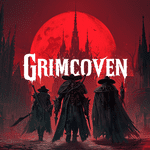
So, context for everyone listening. We have been deep in the trenches with the crowdfunding prototypes for three massive boss battlers. Grim Coven from Awakened Realms, Dante Inferno from Creative Game Studio, and Blood from Ludus Magnus Studio. We didn't just look at the campaigns, we got these to the table, played through the scenarios, and really hammered on the mechanics to see if the gameplay matched the hype. It's a fascinating comparison because on the surface, they all promise the same thing: giant minis, dark gothic themes, and tactical boss fights. But man, when you actually sit down and play them, they could not be more different experiences. Grim Coven is giving us that Victorian Bloodborne style hunting vibe with a focus on modular sessions.
Dante is trying to adapt the actual divine comedy into a 40hour narrative campaign with a grid-based tactical combat system attached to it. And then Blood is going for this vampire hunter castle crawl with a dayight cycle and deck building.
Right. And what's wild is that going into this, I thought the decision would be harder. I mean, Dante has that massive literary ambition, and Blood looks absolutely stunning on the table with that black and red aesthetic, but after we played them back to back, the differences in actual fun factor became glaringly obvious. We've been playing these prototypes extensively over the last few weeks, trying different player counts, different bosses, and really trying to break the systems. And I think the biggest takeaway for me was just how much friction the other two games have compared to Grim Coven. Like remember our first session of Dante? We were so hyped to fight Minos and then we hit that gameplay loop and just looked at each other like, "Wait, is this really how it works?" Versus our Grim Coven sessions where we were high-fiving over combos within 30 minutes. It really highlighted how different designers approach difficulty. Is the difficulty in the puzzle or is it in the user interface? Oh, the friction is the perfect word for it. Let's dive right into the mechanics because that's where the rubber meets the road. In our sessions, Grim Coven's core loop felt like a breath of fresh air because of how clean the action economy is. You're rolling the pool of dice, drafting them to your dashboard, and then slotting them into abilities. It's so tactile and immediate. When we played that two-player game against the convergence, I remember staring at the dice pool and seeing exactly one red dye left. I knew you needed it for your attack to finish off that elite, but I also needed it to trigger my sprint
movement to get out of the boss's range. That hate drafting tension, taking the die you needed, created this incredible cooperative puzzle where we had to talk it out. Okay, if I take this red die, can you use your assist ability to move me instead? It was fluid. We were solving the game, not fighting the rules.
Compare that to Blood, where we were wrestling with that card row and the threat system. I wanted to love it because the concept sounds cool on paper. You play cards, generate thread, and push your luck, but in practice, it was a nightmare for Flo. Remember that session where I was playing auto? I had this perfect turn lined up. I was going to play shoulder strike to buff you, then executioner's axe to kill the witch. I play the first card and boom, I cross a threat threshold. The game just stops. We have to shuffle the boss deck, flip a card, resolve a send to assault instant effect, spawn a minion, and then roll four separate bite tests for every character. By the time we finished resolving all that administration, I had completely lost the threat of my turn. It shattered the immersion every single time. It felt choppy, like the game was actively punishing me for trying to play the game. And it wasn't just the interruption, it was the randomness of it. Sometimes the card we flipped was just a cute action, which was fine, but other times it was an instant catastrophe. We couldn't plan. And then you compare that to Dante where the friction wasn't interruptions. It was literal homework. The sturdiness math. I still have nightmares about that Minos fight. It sounds like a joke, but it killed the mood so fast. In Dante, every time you attack, you have to take your total hits, divide by the boss's sturdiness value, and round down. I remember one specific turn where I rolled this massive handful of eight dice. I was so excited. I got eight
hits. I felt like a god. And then you reminded me, Minos has sturdiness six. So I grabbed my calculator. 8 / 6 is 1.33. Rounded down. That's one wound. One. I did all that work, rolled all those dice for one damage. It was the most deflating feeling.
It really was. And it happened constantly. We'd be plotting this epic turn and then someone would say, "Wait, let me do the math." And the table would go silent for 45 seconds while we calculated efficiency. It turned a cinematic battle into a spreadsheet. In sure, the game gives you setup actions to lower sturdiness, but even that felt bureaucratic. I spend my turn so your turn works. In Grim Coven, the assist actions felt like genuine teamwork, tossing you a dieice so you can shoot. But in Dante, lowering sturdiness just felt like paying attacks so we could play the game. Grim Coven has math, sure, but it's I have three damage, he has six health, I need three more. It's addition and subtraction. Dante is division and rounding. It slows the pacing to a crawl. I want to circle back to the strategic depth because despite the math, Dante does have some cool ideas with the maneuvering. We did enjoy how facing matters. Getting behind Binos to do extra damage felt tactical. It felt a bit like an MMO raid where positioning is everything. But when you compare that to the transparency of Grim Coven's AI, it just feels archaic. In Grim Coven, seeing the boss's this turn and next turn cards face up changed everything for us. Remember that moment with the Technommancer? We saw the boss was going to do Cyclonic Spear next turn, which deals massive damage, unless we chipped two health off the card itself. Yes, that was the highlight of the week for me because we had perfect information. We could pull off this 4D
chess move. I realized I could use my sprint ability to move towards the boss, which seemed suicidal, but it baited the boss's AI to target me because I had higher corruption. Then I used my Tesla staff to ping the boss card for exactly two damage, which canceled the focus effect and saved the whole team from getting wiped next turn. It made me feel so smart. We weren't reacting to random chaos. We were solving a puzzle. In Blood, we never got that feeling because half the time we were just reacting to hidden instant cards. We'd try to plan, but then I'd flip a card that said, "Surprise! Everyone take a bite test." And our plan was garbage. It felt arbitrary compared to Grim Coven's tactical precision.
That's a great point about the puzzle versus chaos. And it feeds into the complexity and learning curve, too. We taught ourselves all three of these from the prototype rule books. And Grim Coven was by far the easiest to gro. The iconography is just sword, shield, gear. You see a sword, you know it's an attack. In Blood, I felt like I was learning a new language. There were easily 30 different icons on the cards. Target furthest, target lowest health, test physical, test mental. And because the text on the cards is so dense, you can't just glance at your hand. I remember staring at my hand of six cards in blood and having to physically read every single line of text again to remember what they did. It slowed the game down so much. Grim Coven has complexity, sure, that corruption mechanic where you risk bad events for power is tricky, but the UI doesn't fight you.
Speaking of fighting the game, let's talk about the solo and scalability experience because this was a huge differentiator for us. We tried playing Dante solo and honestly it was exhausting. The game mandates you use four champions. No scaling, no lone wolf mode. You simply have to control four dashboards. When we played that solo session, I looked over at you managing four vigor tracks, four hands of cards, four smuck maneuver slots, and tracking facing for four minis. You looked miserable. It was a logistical nightmare. I barely had brain space to think about strategy because I was just trying to remember whose turn it was. It felt less like playing a game and more like operating a control panel.
Yeah, my brain was melting. It was pure overhead. Compare that to Grim Coven. We played that at two players and it sang. It was the perfect sweet spot. We each controlled one hunter. We had enough dice to do cool stuff, but the turns whipped back and forth. Even when we tried Grim Coven solo, you have to play two-handed, but it was manageable because you resolve one hunter fully before touching the other. It didn't feel like juggling chainsaws. And blood. Blood was okay at two players, but we noticed that at higher player counts, the downtime would be brutal because of those interrupts. If I'm player four and player one triggers a boss interrupt, we all have to stop and resolve it. I can see a four-player game of Blood taking 4 hours easily, whereas our Grim Coven sessions were wrapping up in 90 minutes clean.
And it's not just the downtime in Blood, it's the contagion mechanic. Remember that if the boss gets 10 contagion tokens, you just instantly lose. In a four-player game with more cards being played and more bite tests failing, that track fills up so fast. It felt like the scaling was punishing larger groups. Grim Coven just adds a few more minions and elite health, but the core loop stays the same. The sign Grim Coven mechanic, where I can give you a die, becomes even more important at four players because the draft is tighter. It scales the interaction rather than just the difficulty. Oh, one thing we haven't touched on enough is the fun factor of the progression systems within a single session. In Grim Coven, that lament system where you level up mid session, that is genius. In our game, you killed that minion, grabbed the last lament you needed, and immediately flipped your board to the corrupted side. You unlocked your ultimate ability right there in the middle of the boss fight.
It felt like a moa power spike. You went from struggling to suddenly blasting the boss with orange dice. It was such a rush. In Dante, the progression is all locked behind the campaign. You finish a three-hour session, and maybe you get a slightly better card for next time. It's a slow burn.
That's true. In Dante, we spent so much time in the chronicle phase, that narrative choose your own adventure part, hoping for a cool upgrade. And sure, it was neat when our choice to threaten the fairerryyman gave us the oppressor trait, but that was after 45 minutes of reading text. In Grim Coven, I killed a werewolf absorbed its soul, and 5 minutes later, I was throwing lightning. It respects your time so much more. And regarding blood, the dayphase marketplace seemed cool in theory, allowing for deck construction, but because the night phase was so stop start, I never felt like my build got to shine. I'd build a combo engine and the game would just interrupt it before I could execute.
Exactly. Grim coven respects your time. It gives you that full arc, weak hunter to god-killing monster in a single 90minute session. Dante demands 40 hours of your life before you see the full picture. And honestly, looking at the component quality and table presence, that respect for the player carries over, too. We have to talk about the graphic design and blood. I know everyone raves about the art, and yes, the minis are gorgeous. Rosin's cape is incredible, but the graphic design is actively hostile. The threat track is dark red numbers on a black background. We were playing in a well-lit room, and I still had to lean across the table and squint to see if the threat was at 14 or 15. It's style over substance.
100%. And in Dante, the terrain situation was almost funny. They have these massive, beautiful 100 millimeter boss minis like Minos, who's a centerpiece, but then the pillars you have to climb are cardboard standees. We spent half the game trying to balance our metal tokens in minis on top of these flat cardboard edges. Every time someone bumped the table, the champions would fall off the pillars. It was so fiddly. Grim Coven's dual layer playerboards and the prototype though, chef's kiss. Everything had a slot. Dice didn't slide around. It felt premium and functional. Sure, the hex tile shifted a bit, but compared to balancing ax and Dante or squinting and blood, it was heaven.
Okay, let's get real about who these games are actually for. Because I don't want to say Dante and Blood are garbage. If you are a diehard solo player who loves massive management puzzles and you have a permanent table where you can leave a game set up for months, Dante might work for you. The narrative integration is cool. Remember when our choice in the chronicle phase actually changed the boss's starting health? That was neat, but you have to be willing to suffer through the math. And for Blood, if you just love the Castlevania theme and you don't mind a beer and pretzels vibe where things are chaotic and messy, maybe it lands. But for us, for a tactical experience, it's not even close.
Yeah, I think that's fair. If you have a dedicated group of four players who are all committed to a year-long campaign and love crunching numbers, Dante offers something epic. It tries to be Divinity: Original Sin on the tabletop. But who has that group? Most of us are fighting to get a game to the table once a month. Grim Coven fits that reality so much better. You can pull it off the shelf, set it up in 10 minutes, fight a boss, have a complete experience, and put it away. It doesn't demand your soul, but it gives you a soulful experience. Plus, the replayability in Grim Coven is infinite. We saw how swapping the elite enemy from a vampire to a ghost completely changed the tactical puzzle of the werewolf boss fight. In Dante, once you beat the campaign, you're kind of done.
So, let's bring this to the final verdict, the buy this, not that moment. After playing all of these, my recommendation is definitive by Grim Coven. It's the only one that feels like a polished modern game design that learns from the past instead of repeating mistakes. The deterministic AI is a revelation. The dice allocation is crunchy and satisfying, and it plays beautifully at the player counts people actually play. One and two.
I'm right there with you. Buy Grim Coven if you want a boss battler that makes you feel smart. Buy it if you want high tension without high overhead. Do not buy blood if you value flow and pacing. The interrupt system is a deal breakaker. It takes what should be a cinematic fight and turns it into a series of bureaucratic pauses. It's the difference between watching an action movie and reading a legal transcript of an action movie. And do not buy Dante unless you specifically want a lifestyle game and you absolutely love doing division in your head. The math tax is real and it drags the whole experience down.
It really comes down to this. In Grim Coven, when we lost, I felt like I made a mistake. I positioned wrong or I drafted the wrong die or I got greedy with my corruption. In Blood, when we lost, I felt like the deck just decided to screw us with backto-back instance that we couldn't predict. And in Dante, well, mostly we just lost patience with the bookkeeping. Grim Coven captures that hunter fantasy perfectly. You prepare, you hunt, you adapt. It's the clear winner.
There you have it. We went in expecting a three-way brawl and it ended up being a firstround knockout. Grim Coven takes the crown.