Endeavor, Operation Barclay, Monolith Arena, Things in Rings, Troll Hunt - Ranked & Reviewed
Games in This Video
4 games are featured in this video — they unlock as you watch.

Transcript
Hey everybody and welcome to another Chairman of the Board ranking video. This is where I take a look at the last five new to me board games that I've played and I rank and review them in order of preference. But before I get into these five games, I want to give a shout out to the show sponsor kienda.co.uk who are my go-to online retailer. And if you use the link in the show notes or the QR code, then you can get 5% off your first order. At number five, I have Troll Hunt. So, this is a pretty obscure game that I think was a Kickstarter project some years ago, and I actually managed to pick this one up at the UK Games Expo this year for a very meager £1. So, I had to try it at that price.
This is a a fairly abstract game where you have this large hex grid that you and the other players are sharing. That grid is going to be seeded with the troll tokens, which is your objective that you're trying to kind of petrify them, claim them, and once you've got to a certain amount, depending on the player count, then you will win the game. So, it has a a slight race aspect to it as well. And the way that you actually catch these trials is through this kind of geometry system where at the beginning of the game, you're going to be placing your kind of torches on the edge of the board. And then during the game as actions, you will either place or move these mirrors. And these mirrors will basically reflect the beam coming from your torches um and hopefully you can get them into the eyes of the trolls. So, as I said, you can either put a um a new mirror down, providing you have any left in your supply, or you can move an existing one um going from hex to hex. And you can even flip them over, which will kind of widen or kind of narrow the arc of the beam going from these mirrors to mirrors. And as you can imagine, you can start kind of um tying these mirrors together so that you know the light will go into this mirror, which would reflecting onto this mirror and then into this mirror and then into the troll's eyes, which is obviously very satisfying when that happens. And you can even use your opponent's mirrors to increase the range or the angle of your beam. So, I actually really do like the concept of this game. It actually reminds me a lot of my own game um called Thanomus. It uses a very similar system. Um this one, however, was
although again, although I really like the concept, I thought there was a few clunky um mechanisms in the game. Number one, the way that the trolls were seated on the board was a little bit, I don't know, a little bit rough around the edges because often you, you know, you'd roll these um a dieice and then use a card to see which mountain it's spawning on, but often you couldn't place them where you wanted to, so you just put them kind of nearer. Um, and you could also have some situations that really did kind of block you and you couldn't really do much with it. Um, for example, if a troll spawned in a certain place, it could render a one of your torches completely useless um because the beam can't go beyond that troll and it's not even going into the eyes of the troll. So, sometimes you could be a little bit kind of spiteful if you are a player um and block another player's torch, kind of making half of their um kind of um well, their kind of power source in the game completely useless, which was a bit frustrating. Um, but I did like the puzzle of trying to, you know, move these mirrors around, deflect things, go around mountains, and so on. That was a really cool concept. I just thought it could have done a little bit more refining. Um, and also the artwork is as bland as you can get. You know, this is a very drab looking game, just browns and greens, almost like a definitely kind of a homemade project, which I know I'm not criticizing, but I think it's going to kind of shoot itself in the foot if it's looking for wider appeal.
So, for £1 it was an excellent deal. Um, but in the grander scheme of things, I don't think I'm really going to pull this one off the shelf much more. Um, because it's kind of like you've played it once and you've seen everything. There isn't really much reason to go back and play it. And just those few rough edges um could have, you know, you could have done without them. So that is Troll Hunt at number five. At number four, I have Operation Barkley. So this is a two-player only kind of a poker adjacent deduction style game based on Operation Barkley of course and Operation Minsmme. So basically during World War II um one's one player is going to represent the um the Axis, one's going to be the Allies and it's going to be for the Axis to try and work out where they could land safely um in Europe. Um and where the if you are the um the allies player, you're trying to prevent the Axis player from getting that information. And the way you do that mechanically is through playing poker h cards and building poker hands.
Um so you're going to simply have a a hand of four cards. You're going to be playing them out trying to build your standard fair of poker hands. You know, building pairs, you know, three of a kind, full houses, um and the like. Um but there are a few additional twists here. For example, the cards do have some special abilities that let you kind of tinker with the cards you have or swap these tokens around um which will determine which locations you have access to. Um and also after you've played the first three cards in player order, then you will actually have the opportunity to wager on who you think will have the strongest poker hand. So even if you're doing quite poorly, you might bet on your opponent doing better than you can and still do well that way instead. And once you've played your first three cards and you've bet on who you think's got the strongest hand, then you'll play two more cards face down to muddy the muddy the waters that little bit more. Um, after you've played all your cards, both car both sets of cards will be revealed. Whoever's built the strongest poker hand will gain access to certain um tile locations, which will mean that if you are the again the attacking player, you can flip some tiles over and try and work out where you can su successfully land. Um, then you'll go on to who wagered correctly on who had the strongest hand. And again, if you bet uniquely correctly, you'll get access to all of those tokens. If you both bet correctly, then um you'll have one each. And the final um token you can get a hold of is based on these little boat and plane symbols that you're collecting when you are playing these cards. So, you're kind of working out three things to get access to these
um deduction tokens to work out where you can actually um you know successfully land if you are the axis player or of course all you're trying to do as the allies player is prevent your opponent from getting those tokens and working out where those um where those hit locations are going to be. So, you know, it's pretty standard fair mechanically at least in terms of the card play. Um, but I do like that additional twist of, you know, wagering on who you think is going to do better. I tend to like that and it seems to be a nice way to iron out the luck of the card draw because, you know, even if you're doing badly, you can bet that your opponent is doing better and do well that way uh instead. So, you do always have kind of a plan B to get around here. Um, and I think the game is actually really well um done in terms of its tempo and game arc because it seems to be perfectly balanced off. you know, if you're fighting on level footing, probably by the last turn, you know, after six rounds, that is going to be where you're going to really have to try and win and get those final few tokens flipped over. So, you know, the game is fine. Again, I really like the theme and the setting. It's a a really interesting time in in history and a a particular kind of point in the war that I'm particularly fascinated with. Um, but I think the game play was a little bit flat, maybe a little bit repetitive. Um, and you know, despite me again liking the concept, I think there are other games that did this better and I'd rather play some other games where you're building poker hands, you know, games like the gang or um, you know, several other cut games like shedding games, etc. So, this one I thought was
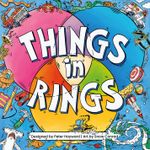
slightly too long and get a little bit too bland in the mechanisms despite being wrapped up in a really nice theme. So, can't really recommend it for that reason. That is Operation Barkley at number four. At number three, I have Things in Rings. So, this is a party game that uses the kind of ven diagram system as its core game mechanism. So, basically, you're going to have three rings. Um, each of which depict a kind of different facet of a word. So, one might be based on the spelling, one might be based on the kind of physical characteristics, and I think the other one is based on the the kind of use and the setting of the object. You know, for example, is it are you going to find it in the home, etc. And the way that you this game works is there's going to be a kind of a somebody as the the games master I suppose who will decide where these different items go and the other players are trying to race to get rid of items in their hand by placing them in the correct location on this ven diagram. So is it just going to fit in one box? Is it going to fix fit in or two rings? Or is it going to fit in all three of those rings? And I must I do like it when that happens. And of course, as you're placing more and more of these items down, the information is starting to be bled out of the game and you're going to have more concrete information to place your next items.
And I like this idea that if you guess correctly by placing an item, then you get to place another one. So, it does have this nice um kind of cascading effect where you want to keep smashing items down if you think you're doing well and then all of a sudden you play one and it's a no and you're thinking, "Oh, maybe I was wrong on what this particular ring was based on." So, it's a really nice game. has a nice flow to it. You know, it scales well. It's interesting and you do have to use some, you know, logical deduction and reasoning on what these possible things could be. You know, sometimes you're just so close, but that one little bit of information will skew you, you know, wrong and make you put your items down incorrectly. And the game also scales quite well in terms of its difficulty um because there are easy kind of medium or difficult cards that you can play with based on the different um categories on those rings. So, you know, this is my kind of game. I really like these styles of party games where you can just relax and just try and, you know, use a bit of um, you know, a bit of intelligence to try and work out what these clues could be. It can be frustrating, especially if your opponents have caughten onto those clues really quickly and you can't quite figure it out. You know, I've certainly been in that situation. Um, but hey, all in all, the game is very fun. It's very pleasant and it's an excellent party game. So, that is Things in Rings at number three. At number two, I have Monolith Arena. So, this is a reworking of Niroshima Hex, which was quite a successful kind of skirmish game. This one does play two or four players. I've only played it at two, and I must admit,
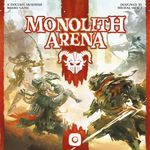
I've not really got an interest in playing it at four because you do want to control or have complete control over everything in this game because it's quite meticulous and quite particular. So despite being kind of a skirmish almost war style game, it's much more abstract in its nature and you do have to be very specific on where you want to deploy your units on this kind of a hex map. And so what you're doing on your turn is that you are placing these tiles out onto the board which will be your your military units um which will have a bunch of different information on these um units based on kind of what their attack is, what their defense is, what directions they attack, can they move, do they have defenses on certain sides to prevent them from ranged attacks, uh and so on. And you've also got these kind of um bolstering tokens which will kind of increase the initiative of your units or increase the strength um if they are positioned next to those particular boon tokens. So positioning is everything in this game. Um particularly because when it comes to the combat um you are very systematically going through uh this procedure to work out who is attacking first, who is attacking who uh and so on. and the kind of domino effect of each attack is drastic in this game, which is definitely the the kind of unique selling point and the the thing that really gets you kind of invested in this game. So, the combat doesn't actually trigger automatically. It's not like if you venture into a certain hex
or adjacent to an opponent, you'll start attacking each other. No, the actual players have to either trigger a battle or it'll happen as soon as the entire map is populated and you kind of just sit back and watch the battle uh play out. And so what will happen is that you'll start from the highest level of initiative, resolve those attacks, obviously remove any um defeated enemies, and then you'll fall down to the next initiative and go from there. But as you can imagine, um, each kind of link in the chain is so important because if you manage to kind of jump your opponent's initiative and maybe kill one of their best units before they can attack you, that can completely derail their plan and strategy and, you know, mess with everything that they intended to do. So, it's really is a game of oneupsmanship all the time. Just trying to tinker the board to suit you. And the game is really kind of on this knife edge because you only want to trigger the battles when you know of course that you are going to be in the strongest position. So it's all about kind of this cold war thing going up where you're slowly populating the board, building up your strength, building up your units, positioning things perfectly, and all of a sudden someone pulls the trigger and then just carnage just breaks out. So, the actual cadence of this game, the tempo is super interesting, and it feels so unlike any other game that I've played, which definitely has me interested. You know, I I'm at a point now where when I see anything unique or something I've not seen before, um that gets massive kind of um credit from me
because there's so many rinse and repeat mechanisms out there. a game like Monolith Arena, of course, Neiroshima Hex. Um, they they really do stand on their own and feel unlike anything else, which not many games can say um that they do. I also like the fact that this game comes with a number of these different kind of factions you can play with, all with their own strengths and weaknesses. For example, you've got these kind of um your standard knights that can actually charge and do charge attacks, which no other units can do. So, you kind of break the normal kind of battle procedure. or you've got these kind of chaos demons that can teleport places or you've got the um the kind of elves that are really mobile and have lots of ranged attacks and so on. So you all your kind of standard fantasy tropes, but when it's embedded in this completely unique battle system and those differences feel super powerful and they feel like distinct from one another despite being, you know, subtly different in their essence. Lots of other little tricks you can do here as well because you can position things so you can just out of your opponent's fighting arcs or you can net them by trapping them with these nets so they can't do anything. Um, so your opponent might be trying to focus on removing that net so they can then start their own strategy that way. So loads of little wrinkles here. Definitely a very cerebral thinky game and where I think the best players generally going to win.
Um, and it's just a real kind of um, yeah, real military feeling game which I I think I find quite quite fascinating and I'm quite invested in it when I play it. So again, if you like these kind of heads ahead, my you know, my troops against yours, my brain against yours style games, just but not feeling like a traditional abstract game, it's although it has similarities to games like, you know, War Chest and so on. This one feels different enough um to separate it from that, but I think if you like one, you'll probably like the other. Um so right now I'm super interested. My only concern is that uh the game is maybe a little bit too clever for its own good and it feels a little bit intense at times. So, I'm not sure how often I'll want to pull it off the shelf, but I'm certainly going to play it some more. Um kind of try and unravel some of those layers to see how these factions really work and how they gel together. Um but yeah, two thumbs up for me in terms of innovativeness and creativity. Um, and the gameplay is is rock solid, but it's not going to be for everybody if you don't like those super confrontational, very thinky, meticulous, strategydriven games, but still fascinating design. That is Monolith Arena at number two. And finally, at number one, I have Endeavor Deep Sea. So, this is a reworking of the classic Euro Endeavor Age of Sale. Um, which I have played and I remember
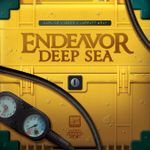
really liking it, but I haven't played it in such a long time and that my my memory of the details of the game are certainly foggy to to say the least. But I think this game has a lot of similarities to the original, but it certainly has differences, too. Um, number one being that this game is completely modular. Instead of playing on a fixed board, you're playing on these different location tiles and building the board as you go, which I must admit is quite a welcome difference because it adds a bit more variety and intrigue into the game. But the idea of this game is that you are going to be moving your submarine around these boards, getting bonuses as you do so, not only going from side to side, but as the game progresses, you are diving deeper and deeper as well, getting access to much better and richer rewards. You're completing contracts.
You're climbing tracks to get points that way, as well as increasing engine building benefits. Um, and the game is mostly based around this worker placement system where you don't actually place your workers on a communal board. You are building up a kind of a little arsenal of these character tiles that will give you access to certain actions which will let you do the things that I've mentioned. Um, but this game probably is or the feel of the game for me is kind of more of a balancing act as you need to very carefully manage your workers. Um, because your workers are not only used to actually activate the actions, you are using your workers to deploy onto the main map as well. So, you want to be making sure that you're not deploying too quickly, so you don't have more workers to play with. Uh, and of course, vice versa, uh, as well. And the way that you have to very meticulously balance things is based on this track climbing system on your own playerboard.
And I have to say um component-wise and iconography wise, this game is spoton. I don't think there's anything very am, you know, ambiguous at all here. It's all very clear. Everything's very formulaic and well laid out. So, your four tracks are basically going to be um one that will give you access to these better character tiles which you which you'll get at the start of each round. So, climbing quicker earlier is is great because it means you're going to get access to better characters and earlier, you know, doing more actions and giving you more flexibility. One of which uh is going to be um to get more workers um which of course you need because you're always deploying new uh more workers onto the main board. Um, the next one is to actually collect your workers from the worker placement spots, which is so important because if you don't increase that one enough, then your worker placement spots are going to be clogged up, meaning that you cannot use them for a round or two, which is not good at all. And the final one is going to be based on how deep you can dive with your submarine, okay? Getting access to those better tiles. And the actions wise, they're very simple. just normally putting discs onto the main board in a variety of different ways, getting bonuses to help you climb your tracks, again, completing contracts. I'm putting um little tokens down on this other board as well that will give you kind of points as you go um and so on.
So, it really is a a kind of a smorggas board of euro mechanisms, but I have to say all of the creases, all of the rough edges are really kind of sanded off here. It's such a wellexecuted game. Um, and I do love that idea of having to climb everything. You want to get up every track as soon as you can because everything is inviting. You know, you need the better characters, you need the workers, you need to take your workers back. And also, of course, you need to dive deeper to get access to the better stuff. So, um, again, everything is inviting here. You being pulled in lots of different directions. There's a sense of urgency to get these public contracts done. um there's a sense of urgency to be the first to discover certain locations because you get rewards that way too. And it really is again this fine balancing act between doing everything.
So, um it's hard to really pinpoint one thing that I really think this game is outstanding um about because it's kind of super high quality across the board. Everything is uh kind of juicy. Everything's kind of uh you know, fun to play with. All the little levers and switches you can pull are enjoyable. um and kind of lining up a few moves. You know, I need to go here with my submarine to get this and then that will mean I'll have this for this contract which will give me this and so on. So, it has all those kind of euro tropes that you like long-term thinking as well as some kind of quick little grabs you can do tactically as well. Everything is well laid out. That sense of or that little dopamine hit of discovering the next location you can go to is always fun. Um and definitely a welcome addition for me. And all in all, I think this is a uh super high quality Euro.
It's obviously doing well. You know, this just won the the Kennespiel, which is a huge achievement in itself, especially for an older game, you know, a reworking of an older game. And it's a tad heavy heavier as well than a lot of the other Keneshil winners. And I think that's a real testament to the quality of this game and how well they've done when it comes to relaying the game mechanisms and making it easy to jump into and easy easy to explain because I think if this game did a slight wrong step when it came to um iconography, I think it would have disqualified itself from that kenish bill. But it does such a great job with the graphic design. I don't think that can really go um I don't think I can understate it or overstate it, I should say. So um a great game. I I think the only slight nitpick I have with it is that I think it can not go too long in terms of the game length, but it feels maybe a little bit loose at times that you can get too much done. Like for example, by the end of the most games, you're going to be right at the top of all four of those tracks, which is normally a bit of a red flag for me. I like, you know, maybe being able to max out one or two of them. This one, you can do pretty well on all four. Um, so it's a little bit generous that way. And also when it comes to this other board, which I said when you're placing um your little tokens down, you can max that one out quite quickly as well. And it seemed like you can get a lot of points from that, which was they seemed like easier points to get than some of the other stuff, but it was very rich or kind of a points rich area as well. So maybe more players will iron that out and maybe I
got, you know, a skewed perception of the game. Um but there was just a few things that just didn't quite sit right. And again, that's probably more on me. And obviously, this is such a highly touted and wellrespected game that it probably is going to be maybe a false uh representation of what the game actually is. So, and maybe take that with a pinch of salt, but I'd love to play this one more. And I love that idea of very carefully managing your workers. What can I afford to miss out for a turn because I can't take them all back? Which order am I going to activate these characters in? Will it even let me remove another token from my worker so I can use it again? So again, lots of juicy mechanisms here to sink your teeth into if you do like those euro mechanisms without being bogged down with fussiness, messy um you know, messy rules, rules, exceptions. This game does away with all of that. It's a very smooth experience, which is what I look for in my Euros. So that is Endeavor: Age of Sale, a welldeserved number one.
So there we have it. That concludes another video. Hopefully you have enjoyed it. If you have, please be sure to hit like and subscribe to the channel, too. And for everybody else, I'll see you next time on Chairman of the Board.