Lakshadweep, Royal Visit, Pinata, Shanghaien Reviews
Games in This Video
3 games are featured in this video — they unlock as you watch.


Transcript
Hey everybody, today I am going to be taking a look at four two-player only games. The games I'm looking at are Luck Shard Weep, we have Shang Hai Ian, we have Piñata, and we also have Royal Visit, which is a reprint of Time Square. Before I get started on these four reviews, I want to give a shout out to the show's sponsor, keyenda.co.uk, who are my go-to online retailer. And if you use the link in my show notes or the QR code, then you can get 5% off your first order. Okay, so let's start with my least favorite of the bunch and work my way up. Unsurprisingly, my least favorite is a game by Reiner Knizia. Now, this is Royal Visit. Again, two players only, takes around 20 minutes to play on average. Now, this is a pure tug-of-war style game, and the objective of this one is you are trying to get the king piece to your side of the track.
Alternatively, you have this kind of crown token, which can passively, as the game goes on, move towards your side or your enemies enemy's side. And if that reaches your um piece at the end here, then you will win automatically as well. So, there's two um victory conditions that you need to juggle as the players. Now, this is a card-driven game as you are managing this hand of cards. You're playing them to influence the five different characters on the map. So, you have the king piece, which is kind of the master piece that you need to, of course, get to your side to win. You have the guards on either side of the king, and there's a kind of a golden rule where the king can never go outside the boundaries of those guards. You have the wizard, and you also have the jester, which throws some little tricks into the game. Now, what you're going to do on your turn is you're going to play as many type of cards of the same type as you want on your turn, and And is going to, again, manipulate those pieces. And before I go any further, I just wanted to talk about the components here because I love production of this game. The cards look fantastic. And there are kind of variables of the same type of cards here. So, you can see that sometimes the guard cards you can do two movements on them. Sometimes you'll get like a single movement and so on.
So, I just wanted to show you the cards there and the amazing wooden pieces as here that stand on this cloth track. So, yeah, a very attractive and well put together game. Um the game play itself is kind of um what I'd expect already from a tug-of-war style game. Now, I've said kind of ad nauseam on the channel that tug-of-war style games in the literal sense don't really do it for me. But I was willing to give this one a go because I like trying as many um Kemet games as possible. And sadly, this one didn't really land for me either despite me thinking the game certainly has some qualities. And out of all of the literal tug-of-war style games, um this one's probably one of my favorite ones despite me still not loving it. Um but yeah, there are some tricks you can do such as using the wizard to you can sacrifice your turn and teleport a character right to you.
Um you can kind of um use the jester cards as wild cards um as long as the king is kind of between your side and your opponent. So, it's got a kind of passive um catch-up mechanism through the use of that jester. And I do like the fact that not only are you counteracting your opponent, the state of the board can passively influence the game as I said. So, for every character in your kind of final zone each round, um you are going to shift that crown piece um towards you and get it to your side. So, you cannot completely just ignore a character because it's going to come back and bite you on the ass um because it's going to keep on dragging that crown towards you. Um and alternatively, if you have the whole cast of characters on your side, then that's also going to drag that crown piece further. and they can even stack together to make it even more um more important and more strong. But, um but yeah, ultimately this game did have that tedious style um gameplay, which I think is probably more psychological than anything, where you do something, your opponent undoes it, you do something, then your opponent undoes it, and vice versa. You keep going, keep going, until ultimately you'll probably fall into a bit of a death trap and not be able to dig this yourself out of the hole you create for yourself. Um almost entirely based on the um on the cards that you've drawn into your hand. So, I think luck does play quite a strong factor in this, which I'm not against. Um but, it can be frustrating when you know that things are starting to go against you, and it's quite difficult to dig yourself out of that
hole. Um but, I can see why people like this one. Um again, I can certainly see its qualities. Get out all the um tug-of-war style games, this one did have a trick or two up its sleeve extra to make me appreciate it that much more. But, ultimately, it's not my cup cup of tea, um despite me loving the good doctor so much. So, I can't really recommend this one, at least if your tastes align with mine, cuz I think you'll find it quite stagnant and almost quite boring um quite rapidly. So, that is Royal Visit. Next up, I have Alakshai Weep. Now, this is a lesser-known game. I believe this is from a a very small publisher, maybe even just a a one-time publisher and first-time designers. But, this is a tile-placement game, where you are building, of course, these series of islands communally with your opponent.
So, you both both don't have your own tableau here. You are both contributing to the map, and you're competing in a number of different fields based on the information on those tiles that you place. Of course, you have the standard tile-placement rules, you know, edges to edges, terrain to terrain, and so on. But, there are multiple different things um that you're competing for. Um and the twist on this game is that these tiles are double-sided. And the reverse side of the tile is the complete opposite of what's on the other side. So, you can see here that there's always going to be a purple player and an orange player. And on this particular tile, you have a kind of a purple dock and an orange house. But if you play it the other way, you have a purple house and an orange dock. So, that's kind of the unique selling points um of this game. You're going to keep on playing until all the tiles have been played. Now, the things you're competing for are the number of houses on the island, which I think are squared in terms of points. Um, the docks are going to score you points based on the unique features on the island. There's hotels that will score you points based on these kind of um visitors on the island. And you have these fisheries, which will give you randomly generated tokens depending on how many fisheries are in the area. So, I did quite like that thematic twist where if you've got open water, then there's going to be more fish um attracted to you. There's also coral and trees, which will give you points in different ways.
Now, I do like the simplicity of this one. It has a very nice flow to it. You can draft from a communal um bunch of tiles here. So, you're not always dependent on that lucky or the luck of the draw entirely. And there's also a bit of plate spinning because obviously you want to build up your points to um you know, to give you as much as possible. But you are rewarded for completing islands. Um, and you get these kind of um diminishing returns in terms of these island completion bonuses. So, it can be a very viable tactic to just finish the islands even if you're not doing well on them um so that you get those extra points that your opponent isn't going to be getting. Now, there's nothing really negative I can say about this game apart from that it's somewhat forgettable. And the decisions weren't particularly taxing. Um, I think some of the different scoring categories are stronger than others. Now, I do think that's not deliberate. Um, but it seems like maybe if you've got a hotel, you're just going to keep on adding the people to your um you know, to your uh islands.
And you're probably um, not too worried about some of the categories such as the coral because the scoring is relatively weaker compared to the rest. Um, so I think this is one of those games where if I played it in say the my first year into the hobby, this would probably really hit a be a home run for me, but I feel like I've seen everything here um, despite being wrapped up in a nice two-player package. Certainly very pleasant to play. Um, again, I can't think of anything overly negative to say about it because I think a lot of people would like this, but it's not ultimately what I'm looking for in my collection right now um, because I feel like I've played dozens of games very similar to this one um, despite this one being right up there in that pecking order. So um, yeah, I mean for a a lovely game for 20 minutes or so. The box says 30 minutes. Um, some good tile placements, but again, these decisions weren't particularly paralyzing and it almost plays itself at times, but still a pleasant game. I'll give it say a six out of 10. That is luck, Shadow Weep. Next up, we have Shanghaien. Now, this is a Michael Schacht um, co-design with a a Roman Pelc.
Again, you're looking at around um, 20 minutes to play this one as well. Now, this is probably the simplest of the games that I have here. Um, not to say the other ones are complicated at all, but this one is ultra um, simple. It's a dice allocation game as you are trying to collect these pirates um, by allocating the dice, of course. You're going to roll a pair, you're going to choose one of those um, dice and you are going to allocate it to the matching pip value in that row of cards. So, each time you're drawing six cards out, each one allocated to a particular um, side of the die. And then, after you've deployed all your dice or even called it early by declaring Shanghaien, um, you are going to allocate the cards out depending on who has the most dice allocated to each particular card. However, for ties, the neighboring dice are going to bolster and support your claim to grab those cards. That's as simple as the game is in terms of the gameplay mechanisms, but the twist on this one is the scoring. So, I think this is a really nice twist where you are rewarded based on how much competition you have for these characters because say I had, I don't know, eight value of the yellow pirate and my opponent had five value, obviously I won by having the eight, but I get five points because that's how much my opponent challenged me. Um and my actual the points I've got myself are discarded. Now, that's not the case if you are the only player to collect a certain type of card. So, sometimes it's worth collecting a card or two even if
you are um you know, destined to lose that type of pirate just so that you're not giving your opponent too many points, but of course, sometimes it's going to be neck and neck for a certain suit of cards. It's going to come down to the wire and that's probably what's going to swing um the victor. That's all the game entails. It's a very charming game. Again, it's only 20 minutes. Um luck obviously a very strong factor here. Although, there are some mitigation cards that you can use to um change the the faces of the dice and give you some wild cards um for example to add to the suit of your choice, but it's a nice one, you know, if you want um a very simple, almost family-friendly, child-friendly um dice allocation game with some set collection with a twist or two on top. Um Shanghai is one to catch your eye over. So, again, I'll probably give this one about a six out of 10, but um I do prefer it to Black
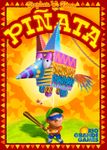
Sheep White because I think this one's a bit, I don't know, it's a bit quirkier And the final game I'm talking about today is Piñata. This one is by Steven W. Glenn and takes around 45 minutes to play, at least according to the box. Now, this is another card driven game as you're competing over these candies, which are randomly allocated to these tiles based on the number on them. So, there's one candy put on the one tile, two candies put on the two tile, three on the three, and four on the four. Now, you are competing for the pet candies to try and get these scoring objectives. So, say it's the the first to get, I don't know, four yellow candies will score that particular card, and it's a race to get to three uh cards. But, the candies are also relevant because that determines the colors in which they can be played in those particular zones or or columns.
So, if there's a a blue, blue, and yellow, and a red, that means you need to play a blue, blue, yellow, and a red card. But, there are some wild cards as well to throw a spanner uh in the works. Now, the twist on this one is that once you've declared your cards to the particular zones, you can start playing on your opponent's side. And basically, you can see that these scoring tiles are double-sided where they flip from blue uh to red like so. And these are going to keep on switching each time they score. So, when it's red, it means that the lowest total value in that column will be the winner. And when it's blue, it'll be the highest. So, that's quite cool. Um it's always a constant back and forth, and you need to manage your hand of cards to um obviously not only have high cards cuz they're just as powerful as the low cards are. So, I do like the fact that there's not one um stronger than the other. You know, you do have to keep a well-balanced hand of cards.
Quite competitive. Um definitely quite a nasty streak to this one because again, you can um sabotage your opponent's efforts. But, they add a good tension to the game um and there's a good um you know, a real good competition to get to those scoring objectives, and it's normally right down uh to the wire. So, I actually do really like the pure gameplay of this one. Just play cards, draw cards, as simple as that, and score when need be. Now, I do have a couple of issues with this one. Number one is that um the cards do quickly um clog up your hand when a particular scoring objective has been scored. So, say the blue objective has been scored, therefore all the blue um candies are almost void. Um I think there should be a kind of a cleaning system to make those cards still relevant. Maybe do a two-for-one wild mechanism or something like that because again, they can can completely clog up your hand through no fault of your own.
Um and that can become quite um frustrating at times. And there is a rule where if you cannot physically play a card, then you can discard them. But, that's that's only in a kind of a must-do scenario, which is a bit of a shame. You should have an option uh to change them. I also think that the game is a little bit too long. You know, I did mention it's 45 minutes. This game should be 25 minutes, I think. So, it can outstay its welcome out a little bit. Now, I don't think I've ever had a game that goes 45 minutes, but it definitely does have the potential to do that. And as much as I really enjoy the game play, I do feel like the game goes on a little bit too long. You could house rule it by maybe um reducing those objective cards just a little bit to um to bring the game to an end a bit quicker. So, it's a small nitpick there and an easy fix, but it's a shame that you couldn't have even an optional version to play with um you know, you need to get a fewer points to win the game. Um but of course, the balancing of the candies in the game um you know, relate or correspond to those objectives. So, it's well balanced in that respect, but it's too um but it is definitely too long. Um but I still like the game a lot. I think that twist of being able to play on your opponent's side is um very strong, and I do love that part of the game.
And it's just a it's just a nice game in general, and it has gone straight into my collection. Um I do enjoy playing this one. Um the artwork is not particularly great. I mean, the piñatas look okay, but these character cards with this kind of I don't know, this weird 3D um child artwork looks weird and it just looks cheap to me. So, I would have liked a fresh lick of paint on this one as well, but again, the gameplay is strong and um it's kind of one of those games that's faded into obscurity in a way because I remember when I first got into the hobby, about six or seven years ago, this game was on a lot of people's kind of two-player games um hierarchy and it was quite up there in people's um ratings. Well, nowadays, I don't really hear anybody talking about this one or even mentioning it. Um well, I think they should be because there's definitely a lot of qualities here and I think a a new edition would really do it a favor just by addressing those few things that I mentioned, but on its own, a very nice game and um you know, I get definitely give it a a recommendation.
So, that is Piñata. So, there we have it. That concludes uh the video for very different uh two-player games here. A mixed bag. As I said, Black Sheep & White decent, but forgettable. Um Shanghaien very simple um but has its charms. Uh Piñata, a few issues, but a very strong engaging game. And Royal uh Visit, um a a game with qualities, but one's uh a game ultimately not quite for me. Um now, if you have enjoyed the video, please be sure to hit like and subscribe to my channel and check out my other content, too. But, for everybody else, I'll see you next time on Chairman of the Board. Bye-bye.