Time to Say Goodbye to Ticket to Ride
Games in This Video
3 games are featured in this video — they unlock as you watch.

Transcript
Hey everybody! It's Ticket to Ride's 20th anniversary, and here at No Pun Included we decided to partake in this corporate celebration organised by Asmodee's marketing department by recommending you some games that aren't Ticket to Ride! Love you Asmodee, love you Ticket to Ride... You're 20 years old, and you don't look a day over 20(!) Listen, nothing wrong with Ticket to Ride, very good 'your first board game'. But maybe you want to broaden your horizons, maybe you're looking for alternatives, or maybe you have one of those annoying friends that you introduced to board games with Ticket to Ride and they loved it. And you thought "Oh great, another person to share the world of board games with!"
But they never moved on to other board games, they just kept playing Ticket to Ride. And you said to them, "Listen Rick, how about tonight we play Castles of Bur...?" And before you could finish that sentence, Rick's already pulling out his battered copy of TTR Nordic countries - the worst one because it only goes up to three, and Ticket to Ride is not really good with three, and by that point the little fire that lives inside your heart has gone out and you resigned yourself to an evening of "Choo choo mother[ ]!" Pretending to laugh at Rick's train jokes while your soul shrivels into a rancid coconut. Not that that's ever happened to me. Anyway, this video goes out to all the Ricks in the world, or the people who have a Rick in their lives.
Know someone who suffers from Rick syndrome? Send them this video. If Ticket to Ride lives ticket free in their head, they will want to evict it after playing our recommendations. And what better place to start than the new edition of Ethnos? [Calming music] I won't blame you if you ever passed on Ethnos, we did too because it's an ugly ugly baby. Not one of those cute, wrinkly ones with dopey faces, just a bad looking baby. With a start in life like that, it's just downhill from here, innit?! Wrong! Because Ethnos is now a hot... baby?
No, a hot... Listen, it looks good, okay? Also it's just a tremendously enjoyable game. And whilst it has no trains - I know, I know, all the train sickos are not going to be happy with this video - it makes up for it with agonisingly good gameplay. First up, the game just has two actions - take a card or play some cards. On paper, this is the thing that makes Ticket to Ride the superstar sensation that it is. Because unlike the board games that the average person is used to, you can explain 90% of the rules with just five sentences. But actually, tell you what let me take you to my train corner where I can explain my issues with Ticket to Ride in depth. Okay, I have to be real with you, I hate this card mechanism in Ticket to Ride.
It does one thing well - it's simple. But it also makes a very breezy game much longer than it needs to be, because so much of it is spent drawing cards. The gist is that there's always five cards on the table, and when it's your turn you can take two of them. You can also draw a random card off the top of the deck without knowing what it is if you don't like what's on offer. Because you will often be hunting for specific cards, the game sometimes just gets into this rut where nobody likes what's on the menu so people keep drawing and drawing and drawing and drawing and drawing and drawing and drawing and drawing... And if you think it is getting tedious to listen to me repeat the same word over and over again, think about how it feels in this game where it goes on for like 5 minutes.
In these moments Ticket to Ride is the annoying kind of anticlimactic - an arbitrary experience where someone will just keep top decking the exact answers to their problems, and you're twiddling your steam whistle waiting to get off at the next station. But here's the thing - where TTR survives, Ethnos thrives because every one of its beats is rimmed to the top of the lid with tension, agonising decisions, and meanness. What a good game. Your objective is to place pagodas in various regions of Ethnos' board. Have more pagodas in a region at the end of each of the game's three rounds than other players, and you will score points. But placing more pagodas in the same region becomes a progressively harder task, forcing you to diversify into regions less profitable whilst your opponents sneak up from behind and take the throne away from you.
To place pagodas you have to play cards, and they have to either all be the same animal or the same colour. This already gives you a nice bit of flexibility because you're no longer just collecting all blue cards or all green cards. If some tigers appear in the card supply, you can quickly pivot from being the king of blue to being the king of tigers. A tiger king! Something we can all aspire to. But also, each different animal has a special ability. Each time you play cards, select one of those cards to be a leader. If you played all tigers it doesn't matter, you get the tiger ability. But if you played all blue, you could do any one of these special abilities. Maybe a delectable raven that lets me draw an extra card at the end of the turn, or a wisdomous owl that lets me immediately play a second set of cards.
And obviously, the colour of the leader you chose determines where you can place the pagoda. Here how you play cards matters, but is inverted. If you played all blue, well, it's blue. But if you played all tigers, the pagoda is placed in the region that matches the colour of the *leader* you chose. Which is all a very convoluted way of saying play sets of cards. They either have to all be the same colour, or all be the same type of animal. And the card you place on top determines where the pagoda goes, and what special ability you trigger. That's all very cool, very board games. But this next rule is what makes Ethnos genius. Each time you play cards, you lose all of the cards you don't play.
The cards you lost, they go to the shared market where the other players can pick on them like nasty little vultures feasting on the carcass of your mistakes. Mmm... carcass. You can just have one card in your hand and then play it, but that's a little bit like ordering one taco in a restaurant - you're wasting your own time, and the other people at the table will think you're sad. Each set of cards you play will score you points at the end of the round, and the more cards in a set, the more points. One card? That's zero points, I wouldn't get out of bed for zero points. Play four cards, however, and that's six points. Not only am I out of bed, I'm already walking the dogs.
But also, playing a set of cards will only place a pagoda in the region if your played set has more cards than you already have pagodas in that region. Meaning that, as the game escalates, you need to play larger and larger sets. This puts such great emphasis on this card area. You need more and more cards, and every card that doesn't match whatever set you want to play is a waste of a turn because when you do play the set, the card's just going to go back to this area because you didn't play it. So everyone is watching these cards like my dogs watch me eat a boiled egg. And in case you don't own a dog, that means with great intensity. And the thing is, unlike in Ticket to Ride, the card tableau doesn't refresh by itself -someone needs to play a set and discard their leftovers.
And that is just a free-for-all. You are mostly playing the same game as Ticket to Ride, but card plays are more exciting for you because you get to do a cool special ability. And also card plays are more exciting for your opponents because they get to feast on your droppings. Ah! It's just so tense, riveting, exciting - all the good adjectives that you want a board game to be. Another little genius change to the TTR formula is that each area isn't just scored at the end of the game and whoever has the most pagodas wins the points. Instead, there's three scoring phases. Three act structure, nice. And every area is worth a different amount of points based on which phase you are on. And also more players become eligible to score points in every area.
So, this cloudy white space might give you only a measly four points in eras one and two, but a whopper of a 12 points in era three. It's era one, no one wants to get just four points right now, so I'm just going to keep building pagodas, and at the end of the game - 12 points! Do I win? I do! Because I played a very good board game. I lost otherwise though. Before we move on to the next feature, there's just a few things you need to know about which edition of Ethnos is the best one, which is... none of them. Ethnos was first published by CMON in 2017 and it's uuuuuuuugly!
And even if you're one of those eccentric types who likes the art in old Ethnos, it doesn't matter - It's long out of print. And whilst you can maybe find a copy on eBay, it ain't cheap. Ethnos was also republished as Archeos Society, and instead of the gentle theme of fantasy species eliminating each other in a game called Ethnos, I don't even know what that's about, You now have the much more palatable theme of plundering(!) Sometimes I just don't get it with board games. Anyway, I also wouldn't recommend Archeos Society because it wasn't just the name and the art, they changed the rules too significantly and they made it much less toothy. And I don't want my board games to bite as hard as an old man who lost his dentures. Please take your tracks away, they are not welcome.
Which leaves us with this version which is one, cheap and two, available. Very good. Except CMON, which is a company that's likely closing shop so get it anyway while stocks last, completely messed up the iconography. Ethnos has multiple card sets and each game you only use six. But for some reason, some sets now share a colour, which makes it very confusing. On top of that, the colour stripe on the side of the card is mismatched with the board. Even more confusing. Finally, this is maybe the worst card tray design that I've ever seen. Why do this?! Why not just create normal card dividers?! The thing doesn't function.
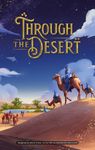
Even with all of that, this is still the version to get. And at least CMON allowed me to grump them one final time. They are the gift that kept on giving. If you don't rise from the ashes, I'll miss you CMON, thanks for ruining crowdfunding. You are simultaneously the worst and the best. Talking of the best, here's a game by Dr Reiner Knizia. In case you're not familiar, Reiner Knizia *allegedly* designed over 800 board games. We've covered all of them in the past, but if there's one thing most fans and reviewers agree on, it's that Through the Desert is one of his best. Which is no small thing considering he already has an Argos-sized catalogue of beloved classics. Through the Desert is so sharp, so mean, so satisfying, so moreish, and so Ticket to Ride.
Gone are the cards, but once again this is a simple system. On your turn, you don't do one of two things, you do one thing - place a camel. And then you place another camel. And that's it. Much like in the train game, you're trying to complete routes. But unlike in the train game, you're not just chugging along on pre-printed pathways - you are the chef John of your camel direc-shee-on. The map is littered with scoring opportunities. First, there's watering holes. Whoever places a camel on top of one picks it up, scores whatever points it's worth. Second, there are oases. Each oasis is an opportunity for each of your caravans to score five points, which is easier said than done and I'll explain why in just a little bit.
Finally, if your camels ever carve out a completely surrounded territory then you'll score points for each empty hex in that territory, and also pick up whatever watering hole tokens were in that territory. And also, if there were any oases in that territory you would have scored the oasis as well. But here is a neat trick. You are not building one route, you are building five different ones. Each player gets five sets of different coloured caravan leaders in their player colour. They correspond to the five colours of camels you can take and place from a central pile. This caravan leader is the starting piece from where each of your roots will begin. In fact, the very first thing you will do in the game is start dotting these leaders across the map one by one from player to player.
And I think one of my favourite things about this game, is that even at this early stage, the petty aggression begins. Here's a fun rule - caravans that share a colour but belong to different players can never join up. Which is logical - you wouldn't be able to tell them apart if they did. But as a consequence, you can use that rule to block other players. For example, if someone at the start of the game places their red leader here it's obvious they want to get to this oasis. But, what's that? I hear that my red leader is standing by(!) A little Star Wars reference for you to enjoy. I don't know why, I guess I'm a filthy Millennial.
If I place him here, there is no longer any valid pathway for the other player to reach this oasis for the rest of the game. Hoisted by their very first move. If you enjoyed this microaggression, you might be delighted to find out that this is just the beginning. Turn by turn, camel by camel, you will constantly get in the way of everyone and everyone will get in the way of you. By design. Which means that, unlike in Ticket to Ride, you're never at the whims of anything. There's no cards to tell you what you can or can't do, no randomiser to gum up your locomotion, no conductor to issue a fine. Every turn is shaped by your choice.
Which camel will you take, and where will you place it? The only actual restriction of the game is that you must always logically extend each caravan. If I've got teal camels over here, I can't just randomly place them on the other side of the map, which makes potential plays your opponents might make just evident enough so that you can always plan around them. Do I really need to extend yellow towards this oasis right now, or can I wait a little bit and block Gertrude's purple conga line? Ohh, that Gertrude, she's scoring too many points, better cut her off! Many more astute reviewers have noted that the game that Through the Desert is most similar to is Go, but I think that that comparison does Through the Desert a disservice because Go is the game that gives people the fear.
It is worldwide known as 'that game that requires you to read manuals for 5 years before you're even allowed to touch the board'. I don't want to do that, so let me assure you that reading TTD's rule book will take you 10 minutes, and once you do it you'll just remember the rules forever. And for our final point, I will once again require the assistance of the train corner. The thing that's undeniably great about Ticket to Ride is that the eponymous tickets are secret information. This is important because if your opponents knew where you were trying to place trains, this would quickly turn into a blood bath. But the hidden benefit is that you get to do this fun bit of revelation at the end of the game. 'And I scored this route! And this one!' 'But not that one.'
Technically, no one should know how well everyone is doing, so until that moment everyone feels like they still have a chance. But in reality, it's so obvious who's doing well and who's doing badly. And the last third of Ticket to Ride is just you watching Rick having fun claiming all the routes. Riveting. Through the Desert has no secret information, but rather than being a disadvantage, it turns players scores into a gamified mechanism. Reading the board state is the fun part of wrestling for victory. Let's say two opponents are equally close to an oasis. I can block one of them or the other. Should I block Gertrude, or should I block Sophie? Oh my god it's Sophie's choice...
or is it my choice? Anyway, the answer is simple - whichever one is doing best. And the answer to that is laid bare on the table, I just have to untangle it. Another advantage it has over Ticket to Ride is that it is fantastic at all player counts, including two. In fact, I think it is secretly best at two players because as one of our Discord members recently noted, this is when that Go comparison of mini micro wars breaking out all over the map is the most apt. Ticket to Ride, you can technically play it at two and three but I just wouldn't. Why bother? Ticket to Ride at three players is less like riding a train and more like pulling a plow with your bare hands.
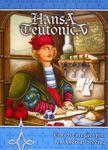
Our last entry is for those real board game dirt bags amongst you who want to get their grubby little mitts onto some dank cardboard, who don't mind getting into the mud pit with the beige wonders. I'm not going to lie, I'm one of you. And this is my favourite game on the entire list. If you're a board game dirt bag, board game dirt bag t-shirts are now available. Art is by our friend Luke Ridge, he did a great job. The link is down below. And uh anyway, here's Hansa Teutonica. They say the future looks bleak, but have you ever looked at the past? This is Hansa Teutonica, and I'm not going to mince words about its cover. It looks like it smells like my grandmother's house. It looks like if Cujo went drinking all night long.
And the inside is only worse. But let me tell you a little secret about board games. When they look like a mud pit, that's where the real gems are hiding. In Hansa Teutonica, you're playing as merchants of the Hansiatic League - a very normal organisation that never did anything bad. Don't look it up, they were very nice people. Which makes sense because at the table you'll be behaving very nicely as well. So nicely, it's going to make all your friends livid. Again, like in Ticket to Ride, you'll be building routes. Not out of trains, not out of pagodas, not out of camels... you're gonna get dirty with cubes. Hansa Teutonica is definitely a next step game from Ticket to Ride, and there's a tad more rules to go through, but first, one last dip into the train corner.
Ticket to Ride's final bane comes from its greatest strength. Yes, having just two things you can do is approachable game design, but after a game or two it just gets so samey. I'm not one of those people that needs their games to be complexity snarles, but sometimes I just want a bit more spice, a bit more mechanical excitement, a nifty little quirk to make the proceedings take an eccentric turn. Did I just call Ticket to Ride boring? No! No no no no no no no. Not at all, no. Pssst, don't tell anyone at Asmodee, but Ticket to Ride, it's boring. It's just dull. There's not much more to say about it. It's not a critical observation, it's... Look, it's 20 years old and it hasn't aged well. It's played out to death.
Just put it out to pasture. Everyone's moved on. Okay dirt bags I've got some light rules explaining to do. There are five different actions, and on your turn you can perform any two. But in principle, you'll mostly be either placing cubes from general stock into your personal supply, or placing them from your personal supply onto the board. Each cube you place gets you closer towards completing one of the many trade routes dotted across the landscape of medieval Germany, which in this depiction does look very brown, but that's because in the past they hadn't invented colours yet. As soon as a route is filled entirely with your cubes, you get to claim a spot on either side of the road. Plop one of these cubes onto an adjacent city, now you've got a trading post. The more trading posts you have at the end of the game in an interconnected network in cities, the more points you will score.
There are many other ways to score points, but for the purposes of this short segment that's the one that explains why you want to do the things that you do. So, take actions to place cubes, score routes, have network, win. Sounds pretty mild, but... I'm so excited right now... If you've never played Hansa Teutonica, you are in for a treat because this might be - no exaggerating - maybe my favourite mechanism in all of board games. And predictably it is, once again, genius because of how simple it is - you can push other people's cubes out. Simply place a cube of your own where their cube was sitting. Then spend another cube from your supply for the privilege. Okay so it's more expensive, Is that it?
No. The cube you pushed out also gets doubled up, and the cube's owner gets to place both those cubes for free on an adjacent route. Which means that if you manage to block someone, you will: one, punish them and two, reward yourself. And just like that, the entire game of Hansa Teutonica is flipped on its head from 'Oh, I'm having a nice time building routes just like in Ticket to Ride', to 'Ha-ha suckers! Try and build anything and I will be there with my cubes getting in your way because I'm a...' I was going to say dirt bag but I feel like the sales pitch is getting too obvious now.
[Annoyingly jaunty music] 'Oh it's my turn? What shall I do?' 'Hmmm, I don't know. Block you here, block you here and you... we've been friends, we've been getting along. Just kidding! Block you here as well' It's so aggro and so good because everyone is aggro all of the time. Real board games are the enemies we made along the way. But also Hansa Teutonica is filled with crunchy decisions that tug at your strings to distract you. For example, finishing certain routes means you can forego placing a cube on adjacent cities to instead get an upgrade.
Two actions not enough for you? What about three? Four? What about five?! There, that sounds good. Refreshing your cube supply means giving up one of your actions to grab three of them. But that's so slow to do nothing. Fill this route, pop it, and then you can refresh five cubes. Do it one more time, seven cubes! One more time, just all of the cubes! No more numbers! Just give me all the cubes! Nom nom nom nom nom. And then this is the real genius moment. Sure filling routes seems great, and getting special abilities seems like a no-brainer, which means that this area here that gives you extra actions - much like the pub down the end of my road - is designated as the place to go if you want a punchup.
But if you don't get a special ability, and instead do place your cube in one of these cities to make a trading post, you'll get points every time someone else completes the route. So sure, someone's getting extra actions or ability to resupply more cubes, and every time they do? Profit, profit, profit. Wait is this game commentary? No, no. There's just no way. Board games aren't political. There's a lot more tasty rules I could go over, like the ability to move your cubes, but we only have so much time. So ignore me, ignore this ugly cover, and just treat yourself to this beauty of a game. One thing I do want to note - the current edition of Hansa Teutonica is this Big Box version,which is an absolute bargain because first of all it's cheaper than Ticket to Ride.
In fact all the games we're covering in this video are cheaper than Ticket to Ride, and it comes with two expansions. Once you have one or two games under your belt with the standard map I really suggest moving on to the Hamburg, or better yet, Britain map as I don't think the original map aged well. The other maps are more complex and are not great to introduce players to the game but become a necessity with seasoned players. [Editor Efka] Editor Efka with a minor correction here. I say the Hamburg map but there is no Hamburg map. There is the Hansiatic League map, and the Eastern Hansiatic League map, with the the Hansiatic League map being the standard map and the Eastern Hansiatic League map being the expansion one that I recommend playing with once you have a few games under your belt.
Uh apologies to everyone in Germany, and especially in Hamburg. I don't know why I said that, I just did. Uh I guess if you see me, I owe you a hamburger. That's three Ticket to Ride alternatives. The show is over now. Please go home. You're not leaving. This is awkward. I can see some train sickos amongst you are still not happy. Also there's some bean bozos getting restless. Listen bean bozos, you've got Bohnanza. It's nothing like Ticket to Ride, but like literally all of the beans in the world are in one convenient very good board game.
As for the train sickos, here's some bonus recs that didn't make the cut into a full segment. First up, Irish Gauge is maybe the meanest game to ever beset the bucolic topography of Ireland. Absolutely mean trains fighting for prestigious spaces, and also an infuriating auction. We've already covered Irish Gauge in a video, link in the description. Next, oh this is a favourite, and I can't overstate how much I love Railroad Ink Challenge. This little cutie is one of the progenitors of the roll and write genre, and it is still somehow one of the best in it. You roll some dice, you draw some roads and or railroads, and you score some points. It is also the antithesis to all these cutthroat games we've been talking about. Just a nice, chilled time drawing fun maps.
Worth noting, there's a whole sea of different editions. Get this lovely green one, it is the best. And the other ones are good too. The game that is actually absurdly close to Ticket to Ride but cuts down the play time and elevates the fun is Let's Make a Bus Route, from avant-garde publisher Saashi and Saashi. And the name kind of speaks for itself - make bus routes drawing on a shared map trying not to back yourself into a corner. Silly game, silly fun good time. I think one thing that's worth noting is that there is another edition called Get on Board. I think both these editions are fine, rule books are not great in either. Get whichever one is cheaper or more available. And that's it, the end.
Which means we can finally say goodbye to Ticket to Ride. [ - ] [thudding sounds] We've done Ticket to Ride, Catan, air hockey... What's next in the 'It's time to say goodbye' series? Honestly, I have no idea. I will now go into the tank and finish writing the longest review I have ever written, and will not reemerge for another review until it is done. Why is it going to take me so long? Well there's a lot to cover from A to Z. You might say there is an arc to it. Anywho, who see you when it's done. Oh, and don't forget we don't take any sponsorships from board game publishers, nor do we accept review copies.
We are entirely independent and there's just the two of us, uh and we wouldn't be able to do this without your support. So the link to our Patreon is in the description down below [Annoyingly jaunty, repetitive music]