How to design a DRAFTING board game or card game *Top 10 Mechanisms*
Games in This Video
3 games are featured in this video — they unlock as you watch.

Transcript
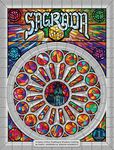
hi I'm Adam in Wales and this is my board gaming vlog and today I wanted to talk about card drafting and resource drafting in general and with recent massive success of games like as rule and Sagrada and splendour and going back a bit further sushi go and these games all have one thing in common and that's that they contain drafting so in Azul we're drafting tiles we're selecting them from a central pool and then building up sets and that's how you win the game same thing in sagrada but here it's dice and sushi go it's cards and so it's very clear that this is an accessible exciting engaging mechanism both for newcomers to the hobby but it's also got enough sort of subtle strategies that it keeps your more your gamers your more experienced gamers still engaged with these sort of games so I wanted to look at drafting mechanisms in games and explore them a little bit further so to start with let's have a look at what drafting means in general let me take you back to your school days you're standing awkwardly on the school sports fields in short shorts odorous vest na Bellini's exposed and the PE teacher has asked you to line up at the edge of the pitch team captains are dictated typically the most handsome athletic bastards in the class and one by one they select players for their team reducing the pool of available players as they do so and you wait
nervously hoping that once just once you're not going to be the last to be picked and so that's a basic draft sequential selection from a diminishing pool of resources in this video I'm going to exclude action drafting games because these have been covered a lot in my recent video on on action selection but really they are a drafting system as well so here we're going to be talking about card drafting and tile drafting and actually when you look at a lot of the designers Bruno qatal has done a lot of this stuff over Rosenberg has done masses of drafting games in fact most of his sort of harvest trilogy of games uses drafting in some clever way is tire lane games like cottage garden has an interesting system and and the Bonanza variants they often have interesting drafts at the gates of law Yang and bonanza that you will both have quite clunky but really interesting systems of drafting so let's have a look at ten different types of card drafting that are used in modern board games when a board gamer talks about a card drafting game they usually mean that pick and pass draft that you see in games at seven wonders and sushi go here a player has a hand of cards they select one which they're going to keep and then they pass the rest round to the left and
the cards go round in a circle around the table the players build a set of cards and then they score them in fact so familiar is the game sushi go that I often refer to this as a sushi go draft when I described such games to my friends in Warsaw city of ruins players are building their own personal district in the Polish capital each player holds a hand of four tiles and then they simultaneously select one of these to add into their city and then they pass them on to the next player once all the tiles have been placed the districts are awarded victory points currency and monuments based on the positioning of like colored tiles and special powers printed on the selected tiles as well the whole process is repeated six times so your district develops over many decades wrecked by two world wars after rounds three and four and then rebuilt in rounds five and six pick and pass drafting games are usually not very satisfying for just two players sushi Go is an example of a game which doesn't work particularly well with two players the reason for this is because after only two turns the players have both seen all of the pool of available resources so there's no new information being fed in after that point and the whole thing becomes rather mechanical but some games have managed to make drafting suitable for two players a case in point is the game tides of map in tights of madness players have a hand of five cards which are passed back and forth with players selecting one card to add to their display each time and after
all five are drafted players then score their cards most cards score points when their parts of specific sets which are indicated on the cards and after the first round the five cards are taken back into your hand one card is played facedown immediately reserved for the next round one card is discarded and two new cards are drawn from the deck bringing a player's hand back up to five cards this process is repeated over three rounds however some cards award players madness tokens at the end of a round the player with the most madness scores victory points but if a player has nine or more madness tokens at the end of a round they lose the game immediately this creates a great pushy luck feature in the game
a traditional draft is closer to the school sports field scenario that I described to you earlier here an entire pool of resources is laid out for all the players and then one by one they select something from that pool and so that pool is diminished as there as the round goes on in dream-home players place rooms into an empty house attempting to combine the rooms in the most pleasing way to achieve the most victory points and win the game on a player's turn they can select any pair of cards from the central display the lower card will always be a room and the top card will be a special ability or a bonus feature or a roof card if the player chooses to take a card from the furthest left space they don't get to take a second card but instead they become the starting player for the next turn which is a massive bonus in any drafting system
many games feature a pool of resources a row of cards perhaps and those cards then replenish as they're taken as I selected from the row a new card is laid out from the deck ticket ride is a game where players place trains of their color in Chains across the board in an attempt to connect distant cities and score points the placement of these trains is dependent on the player collecting and then discarding sets of matching colored cards on their turn a player can take two cards these cards may be selected from the face-up pool or taken blind from the top of the deck when as cards are taken the pool is refilled so that there are the same number of cards available at the start of any player's turn a replenishing pool of cards can also be used in a pick and pass drafting game although this is less common this is something that you see in the two-player variant of bunny Kingdom in bunny Kingdom players play cards to place bunnies onto a grid claiming spaces to build large connected territories and to fulfill personal objectives cards are drafted using a pick and pass system and in the two-player variant each player is given their own personal deck of cards in addition to their hand of cards on a player's turn they first draw a card from the deck they play one card they discard one card and then they pass their hand to their opponent hence new cards are constantly introduced into the draft throughout the round now the
two-player drafting system in bunny Kingdom is a bit awkward often you forget have I discarded a card have I played a card have i drawn a card and and so things can get a little bit out of sync which is a problem in a lot of those pick-and-place drawing drafting games but in this one particularly things can get a little bit out of sync that said I've played the two-player version of bunny Kingdom more than any other game over the last couple of months my girlfriend absolutely loves it and so we played this game a lot despite that draft and it hasn't proved a problem to her although I can see some some gamers might find it a little bit of a clunky system but it's nice that we have new cards introduced throughout that draft so the whole thing doesn't become mechanical in the way I've previously described in many games the the cards have incremental costs associated with with with taking cards that are sort of further away from the player or further away from the deck so you might play one coin in order to take the first card a two coins take the second card and so on I'm a game which uses this system is if wishes were fishes if wishes were fishes is an economic game where players are attempting to sell fish on stalls in a central board the value of the fish in each stool is dependent on the playing of cards by the players and cards are drafted from a central pool which replenishes as those cards are selected on a player's turn they may take the
card furthest from the deck for free but if they wish to take a card closer to the deck they're going to have to pay for it and currency in this game is in the form of these rubbery worms to take the second card in the row a player would have to place a worm onto the first card and to take the third card a player would have to place worms onto both the first and second cards and the neat mechanism here is that these worms are then collected by any player who later takes one of the cards so cars which sit in a row for a while become more valuable for future turns in if wishes were fishes the the cards there's there's limited availability to these cards it depends on which ones are accessible to the individual players so the second card you'd have to pay a worm so that's only accessible to somebody if they've got a worm the the third card along you'd have to pay two worms and and then three worms and so on so some cards are accessible to some players and not to others
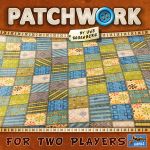
some games make this positional aspect central to the drafting mechanism so patchwork is a game where players attempt to fill in a grid with irregular shaped tiles which they purchased using buttons and the buttons are generated by the tiles which have been placed onto their grid in previous turns on a player's turn they can select any of the three tiles by rectly ahead of the wooden token and add it to their grid and when the tile is taken the token is moved into the vacant space created by removal of the tile and so the token moves around the circle of available tiles giving a player some control over which tiles will be available to their opponent in the next turn seven wonders is one of the most popular pick and pass drafting games but like sushi go it doesn't work particularly well with two players and so Antoine Bowser worked with Bruno guitarla to bring out a two-player version called seven wonders the duel now Seven Wonders duel this version uses a positional draught to replace the pick and pass version of the the bigger game and seven wonders dual players are constructing buildings and wonders by collecting sets of cards twenty cards are placed at the start of the round in a predetermined pattern some face up some face down and on a player's turn they can take any accessible card and then play it in doing so players make new cards accessible and any which are currently facedown are immediately turned face up this is a really similar system to a
less well-known game by runic adorned called foul pelts foul pelts is a game where players attempt to build sets of matching animal tiles a grid of tiles is placed onto the table and each player has their own deck of cards on a player's turn they play a card from their hand and they take a matching tile the tile can only be taken if it is accessible ie it has a free edge and it's not contained by the cardboard border the player may then take a second tile adjacent to the first and this tile could be any animal it doesn't have to match the card players attempt to come full sets of animals the number of tiles symbols required for a full set is shown at the top of the tile and only completed sets score at the end of the game another example of positional drafting would be Bruno Cote Allah's hand of the king in hand of the king a 6x6 grid is formed representing characters from Game of Thrones on a player's turn they move varus in a straight line left right up or down and collect the card that they land on plus any others that belong to the same family as that card as soon as the player has more members of a family than anyone else or indeed if they tie for the most then they claim that families banner and the player with the most banners of game end wins a common system in some drafting games is one whereby a player has a choice on their turn they can either take a card or cards or they
can manipulate that central pool of cards in some way this is the way the very simple game Colorado works in Colorado players are attempting to form sets of matching colored cards and at the end of the game they're going to choose three of the colors in the game and score victory points four sets of those colors but sets of the remaining four colors will score negative victory points on a player's turn they may either draw a card and place it into one of the rows or take an entire row of cards and add them to their collection when the last round card is drawn then the sets are scored and the highest score wins Kanagawa has a similar sort of system at its core but this is a more complex set collection sort of scoring mechanism at the end of the game in Kanagawa players represent artists in 19th century Tokyo on a player's turn they can place cards onto a central board then they can either take a column of one two or three cards from the board or pass and wait to take a fuller column in a later round of course this might mean missing a valuable card if another player snaps it up on their turn then cards are added to your own personal tableau and they have two uses a player can either use the card as a painting or as an ability allowing the player to take more productive turns in the future and at the end of the game players score points for sets of matching cards in their painting I split u2's is another
mechanism whereby a player has a choice they can either divide the pool into smaller groups or they can take one of those groups and use it in their sort of set collecting for a point scoring at the end of the game often these groups will have a combination of cards that are desirable and cards that you don't want so much in kimono several cards are laid out in a row at the start of each round and one player is the master and that player splits the row into two groups breaking it at any point in the row the master then places an apprentice card into one of the rows in any position the player with the apprentice card at the end of the round will become the master for the next round each player now simultaneously indicates which group they would like to take and if a group is wanted by nobody then all those cards are discarded if a group is wanted by only one player and that player takes all the cards and if a group is wanted by multiple players then the master is going to split the group again and the process is repeated until all groups have been taken or discarded after five rounds the game ends and players score their collections of cards some cards give positive points some score and combined into sets some give negative points and a few have special immediate effects when they're taken I value you choose is a similar sort of
system but it tends to be a small part of a more complex game is something that you see in the game at the castles of Mad King Ludwig and also in the game I love sky in Isle of Skye each player is chieftain ruling over a small area of territory on the Scottish Island throughout the game players face tiles into their own personal interconnected grid and score points by fulfilling objectives the scoring criteria are variable so in one game you might score for the shape of your grid of tiles or in another game you might be gathering sheep or ships we're trying to enclose areas of mountain or water or fields in any single game there are four scoring criteria in play the first phase of each round sees players gather income based on the number of whiskey barrels on their landscape the second phase involves each player drawing three tiles from a bag and assigning prices to two of the tiles and discarding the third they need to be careful when the sign Enterprise is because if other players don't buy the tile then they're gonna have to buy it themself the next phase sees players select a tile to purchase from one of their opponents and then they add it to their own landscape finally the tiles are scored at the end of each round according to the variable scoring criteria and after a set number of rounds the player with the most points wins the typical system in an AI value you choose game is that the players set the prices and if they set them really high then those things might not be sold and if that happens then they're usually forced to buy the things themself and spend that much money but if they set the price is too low then
yeah they're likely to sell but they're not getting much income for them so there's a bit of a push your luck aspect to it another economically driven system for drafting cars is just to have an auction it could be a straight up sort of open bidding sort of auction a free-form auction or it could be once around the table each player makes a bid or it could be blind bidding in a round of for sale a series of property cards are placed onto the table with differing values and players bid to purchase these cards in a turn-based auction if they don't wish to bid then they take the lowest valued card and they pay half their current bid hence each player will purchase a card in each round of the game and what's all properties have been purchased then the second half of the game begins and in this after the game a number of checks are placed on the table in each round players play one of their property cards onto the table face down and they all reveal simultaneously the highest value property gets the highest check the second highest gets a second highest check and so on until everyone has taken a check and once all the checks have been distributed then the player with the highest value from all their checks combined wins the game some games choose to forego all the rules and stipulations of a drafting system or an auction system and instead just leave it to the players to barter
with each other to to distribute these cards or resources a classic example is the game Catan where players can swap cards with each other but over rosenberg used this to great effect in his game bonanza bonanza is a game where players plant and trade and harvest beings need to pay as a hand of cards and the most important rule is that the order of the cards in your hand can never be changed the impact of this is that the first card in your hand must be planted at the start of your turn whether you want to or not so often it's desirable to get rid of this card before your next turn comes around and after planting one or two beans on a player's turn they turn over two cards from the deck they then enter into a round of open trading whereby they can give other players the face-up cards from the table or cards from their hands in return for any number of other cards from the other player's hands and after all trading is completed players must immediately plant any new cards they've received in the trades at any point in the game players may harvest beans from their two bean fields this means discarding of a set of matching beans and scoring points accordingly at the end of the game to play with the most points wins there are quite a lot of games which don't use drafting within the game but they use it before the game and it's usually to balance the card draw so if you play a game like Agricola or seasons you could just play it with a
hand of cards that's dealt you at the beginning but there's a chance there that someone gets a really good hand of cards and someone gets a really poor hand so what players often do and it's recommended in the rule books is that you would do a pick and pass draft in order to balance out those hands of cards and this works great but of course it does rely on the players being fairly familiar with the game in order to understand what constitutes a good hand and what constitutes a bad hand in the game some games of course collectible card games here players build decks of cards before they play the game which they're going to use when they compete with other players so they can only use cards which they own and these are usually purchased from blind booster packs so players who have spent more money to build up their collections learn more options to available to them than players with smaller collections to make the game fair sometimes players use a drafting system whereby they open a series of booster packs together with another player or players and then they draft the cards through a pick and pass system and then build their decks limiting themselves to only the cards that they've newly acquired and in order to facilitate this system games like Star Wars destiny offer up drafting sets providing basic cards which means it's always going to be possible to produce a functional deck by combining that drafting set with cards from a small number of booster packs even if the boosters are missing some key elements so I mean that's not an exhaustive list of all the different drafting mechanisms
that you see in games there's there's no way as it's such a rich area to explore you can find so many different versions of drafting but I think those are the main ones that I've seen there and hopefully that gives you some inspiration if you're designing a drafting game or just some games that you might want to look at if you're looking to buy a new game or play something with your mates so I hope you found this video interesting if you did please watch some of my others on my youtube channel Adams board game Wales and please subscribe you can follow me on Twitter at board game whales on BoardGameGeek I'm Adam 70 I'm 78 thank you very much for watching and all the best