Toy Battle, Jokkmokk, Rattus, Basilica, Martian Chess - Ranked & Reviewed
Games in This Video
4 games are featured in this video — they unlock as you watch.



Transcript
Hey everybody and welcome to another Chairman of the Board ranking video. This is where I take a look at the last five new to me board games and I rank and review them in order of preference. So before I get started on today's five games, I want to give a shout out to the show sponsor key.co.uk who are my go-to online retailer. And if you use the link in the show notes or the QR code, then you can get 5% off your first order. At number five, I have Ratus, which is an older somewhat dues on a map style game. Um, that's somehow stayed relevant because, you know, this one has recently had a a reprint with a big box. Um, and I have previously played the card game version of Ratus, Ratus Cartis, um, which I absolutely hated, but I'd always heard that the board game was the better version of the two. So, you know, I was willing to give it another chance in the board game form. And um I'm sadly I hated this one, too. So, you know, spoiler alert, I'm going to come straight in and say, um I clashed with this game quite heavily. Um and I think a big part of that is because of the the chaotic and random nature of the game. And don't get me wrong, I'm not always against chaotic games or games with a lot of randomness, but I think this one is kind of wrapped up in this veneer that it's kind of portrayed to you as having strategy. And I don't really think that is uh the case. Essentially, what you're doing is you are populating this map um of Europe
essentially with your cubes. You're trying to have as many cubes on the board at the end of the game as possible. And essentially each round there's going to be this little plague doctor that runs around spreading disease cubes and then certain zones will be triggered and flip these little disease tiles over and if certain thresholds are met then cubes will be removed from the board based on things that people have collected. So maybe it'll be the player with the majority of cubes in that region or the player with in control of this particular player power. And this game actually does have some concepts that I do like and particularly when it comes to these uh roles that players can draft. So each game there's going to be a number of these player characters. Um and you can take them and they'll give you kind of gamebreaking rules. So maybe you can deploy CH um cubes quicker or maybe you can save them so that they cannot be contaminated by the disease cubes. Maybe you can shift these disease tokens around and so on. And I also love this idea that as long as you hold this power round after round, the abilities will charge up and get more powerful. But of course, you can start taking them from other people, reverting them back to their most basic kind of um base power level. So, I actually do really like that. And I also like the fact that you can have several of these powers at once, which comes as a double double cutged sword because not only do you have more powers available to you, you sadly are more prone to being diseased because again those symbols on these cards are going to correlate to these diseased tokens, meaning you're more
likely to get hit by uh the plague. So again, I like the concept of the game. I actually like the theme of the game. I think is a really interesting period um of history, but again it was too chaotic uh too random. I thought some of the player powers were objectively better than the others, which is a bit of a nitpick because you can have more than one at any time. Um I felt like a lot of the time you were almost encouraged or rewarded to spam the same action and I won the game by doing that. And I generally don't like games where you can bypass or not engage with certain moving parts and play more optimally. I think the best games force you to engage with the mechanisms. This one you can ignore all the bells and whistles and just focus on spamming cubes and you'll probably do quite well, which is again what happened in in this most recent game. So, um yeah, sadly, um I didn't like it at all. I know some people do really like it, you know, enough to get a big box reprinting. Um, but I thought the the clash and that rubbing heads of just the chaotic, random, and somewhat tedious nature and repetitive nature of the game kind of portrayed as this strategy game just didn't work for me.
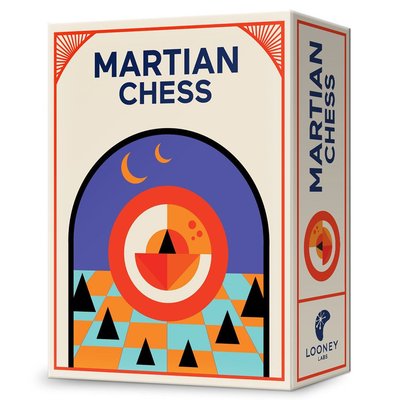
So, cannot recommend this one at all. Uh, that is Ratus at number five. At number four, I have Martian Chess. Now, this might be one of the weirdest games I've played in some time. It's a twoplayer abstract strategy game. Um, calling it chess is a bit of a reach or it does have that abstract nature to it. Uh, you don't score or win the game by checkmating your opponent. You are scoring points in this one by capturing pieces. The twist on this game is that the player pieces do not belong to any individual player. they belong to a player as long as they are on that side or that player's side of the board, which I think is a a really creative concept and I have to applaud it for that reason. So, you've got three different pieces. You've got like the small, medium, and large. The small ones can move, I believe, one space diagonally at a time. The medium ones, I can think, can jump one or two spaces forward. And you've got the the big pieces, which can go as far as they want in any direction. So, they are the really strong pieces. But as after I've explained that rule, you can probably tell that if you are to capture your opponent's piece, um then you have to give that piece to your opponent because it's now on your opponent's side of the table. So, I actually started playing this game and thinking, you know what, this is actually really interesting. I'm liking the the sacrifice and the, you know, giving pieces to your opponent idea. um you know, somewhat reminded me of um like on a tama, you know, having
to use an ability and then give it to your opponent. I thought that was really cool. Um but sadly, the game seemed to draw to a bit of a kind of a grinding halt really because there comes a point in the game where there aren't that many moves to be made, meaning that people just play this game of kind of avoiding each other and staying each out of each each other's way. And it kind of becomes a bit of a stalemate really. And I thought that really ruined the experience. And you know, even the board or the rule book itself said something like if if it's a stalemate, then players can just agree to stop playing, which I thought was a bit of a copout. And I think the game should pressure you to uh to finish basically and force you to make moves that you don't want to make. This game sadly didn't do that. Um and I thought it was quite lackluster for that reason. But still some cool concepts. You know, I love the idea as a piece is yours as long as it's on your side of the board. That's super creative and I loved it. Um, but the gameplay itself, I just thought there was some missed opportunities to kind of give the player a bit of encouragement and a bit of a nudge to be more aggressive. So, that was Martian Chess at number four. At number three, I have Basilica. This is a twoplayeronly tile placement and area control game that is pretty abstract in its nature. You and your opponent will be building up this grid of these colored tiles trying to control them by placing your workers on them and the majority of workers when it comes to a
scoring phase will score points equal to the surface area of that particular color. A very straightforward stuff. But the tile placement system here is actually pretty novel as you have this kind of conveyor belt system where initially these tiles will be face placed face down which will give an action or a special action ability that you can trigger. Um or the next row of tiles or the column of tiles will be the actual tiles you're placing onto the map. But the twist is that once you place a tile onto the map, then that next action tile will flip over and replace the one you've just placed, making it now a vault tile, you know, one of the colored tiles. So, I like this idea of, you know, maybe people getting rid of the ability that you wanted by placing the adjacent vault tile. That was quite a cool little system. Um, and I like the way they smoothly transitioned um, you know, from action to tile to being placed in the actual cathedral. Now, the actions on these tiles are are pretty straightforward, but they are certainly useful. Like, you can place these stained windows down, which will increase the the yield of points that you'll get by controlling particular regions that those windows are in. Uh, you can kind of double up on your workers to make them twice as strong.
You can maybe make the zone twice as powerful and as in um when it comes to scoring that particular zone. So, there's only a few of them, but they're all really powerful and very useful. And you also have to be quite careful about how you use your workers because you do have a very strict capacity of them. Um, and you don't want to be wasting their placements. Now, the actual scoring system in this game is, you know, the way you score the points themselves is very easy. But I like the little twists on how the scoring works because whenever there is a scoring phase, which just passively happens when you place these crown symbols onto the uh onto the scoring zone, not only will you score all the zones, the I think it's the first two rows that you place will be removed from the board, which can drastically change the orientation of these shapes and, you know, areas that you're controlling. So, I like the way this game has a a real dynamic presence to it. Um, and is always changing and you can't just sit on and rest on your laurels from your previous efforts. You always have to be finding new uh opportunities uh on the map. So, I think gameplaywise it's actually um pretty pretty sound. It's very smooth and well kind of well realized. Um yes, it's extremely dry. Um I think people who like a bit of flavor in their games aren't going to get too much out of this one. It is very rigid. Um, and although it's probably the best part of the game is the tile system, actually replenishing it after every placement is is quite tedious because not only do you have to place a vault tile, you'll have to flip the action tile and then place a new action tile out. And that's every
single time. So, it does get a bit repetitive and it feels like a bit of a chore uh doing that. Um, something I also want to briefly mention is this coin system, which reminded me of Caper Europe, actually, where there's only a there's only two coins in the game in this one. But once people take a certain action, you can play a coin to piggyback off that action and do like a a weaker version, but then you'll give that coin to your opponent, meaning that they now might have the two coins in the game, and you don't have any ability to do that again until your opponent spends their coin and gives it back to you. So sometimes you can kind of keep those coins hostage and prevent your opponent from doing anything, which I thought was a really nice touch. So, um, all in all, objectively, I can't really complain much about this game. It does exactly what it's supposed to do. Um, but I thought it lacked a certain spark. It could have done with a little bit more flavor. Um, and I actually did find that flipping the tiles pretty annoying after a while. Um, but still, the game itself is very solid. That is a Basilica at number three. At number two, I have Yokmock. So, this is a simple set collection card game that's definitely similar to a game like Sushi Go where you are collecting cards that all score points in different ways. Um, kind of tons of different set collection methods here. Some are worth pure points at face value. Some are based on majorities, some are worth points based on pairing together. Um, you know, tons of different things. even things like patchworks where you're trying to line
up certain colors with these cards and build up this big display and so on. So, almost every single scoring mechanism you can think of um comes in this game. So, the sheer amount of variety is really impressive and you only play with a fixed amount of those sets each game, meaning that you, you know, each game is going to feel different based on the cards that you play with. Now, the way you draft these cards in this game is um probably the coolest thing in the game, and it's a mechanism I tend to enjoy, and that is the time track mechanism where you have this really long board uh with tons of cards spread around the edges, and when it's your turn, you can move your mele as far as you want to get the exact card that you want um and add it to your scoring pile. But you won't get another go until you are at the back of that queue again. So, you know, how many cards do you want to sacrifice to get the exact card you want? And then is your opponent going to mop up all the cards behind you which and are they going to get the net gain basically. Now scalability. I think this game is definitely better with the higher player counts because it makes that time trap system much more interesting. The game works fine at two, but I would recommend ignoring the the two-player variant in the rule book and just use a dummy player with a dice roll instead to see how many spaces it moves. I think that works really well. Um, but I would still say maybe stick to three or four players to get the most out of this one and maybe even higher than that. I think the player go might even go up to five. But definitely a really nice introductory um card drafting game. I think if you like Sushi Go, you're going to like this. If
you are maybe a bit tired of the closed drafting mechanism in Sushi Go and you prefer the time track mechanism, which I personally do, um I would definitely say pick up Yokmock uh instead. Really nice and appealing art style, you know, bright, vibrant cards, clear symbology, and again the sheer variety is really impressive. And something I always make a point of when I am talking about games with the time track mechanism is that I want that lure, that bait to make me want to jump really far ahead to get the card I want rather than just trickling along picking up the cards as I go, which kind of defeats the object of that mechanism. And Yokmok does a good job of wanting you to push far ahead to get the card that you want before your opponent does. And I really like that. And you know, so many games again don't do that well. And I think um I think Yokmark did manage to pull that off well. Of course, even Amplify based on the different sets that you um play with. So you can kind of tailor the game to how you want it.
Do you want it do you want it to be super basic and play with a younger audience um but still have that tension of getting the cards you want or do you want to start adding into those slightly more complex and involved scoring mechanisms uh instead? And there's even some quite punishing ones in there, too. So, all in all, I think this game is a really nice gateway one, one that's flown under the radar really and should be I think it should be in a lot more people's collection, especially if you do play with more introductory gamers. Uh, this is a really good option. So, that is Yokmock at number two. And finally, at number one, I have Toy Battle by Paulo Mory and Aleandro Zucchini. Um, and this is a two-player only kind of area control kind of lane battler style game. And I have to say I think Paulo myandro Zukini have really hit their stride recently. I'm enjoying pretty much everything they're putting out. Um, and especially when it comes to Paulo my two-player games. I think he's on a complete different level than anyone else in the business right now.
You know, you think of games like Match of the Century, you know, Caesar sees Rome. Um, of course, Blitz Creek again, he is putting out phenomenal stuff. Now, Toy Battle is a step down in terms of the complexity if I'm to compare it to those other games. Um, but there is certainly some hidden depth and some hidden layers here that you will start to discover the more you play this game. And you know, when I first read the rules and even when I first played this game, I thought, is that all there is? because there is pretty much, you know, the rule ceiling is so low and it's easy to understand because all you're doing is you're either drawing tiles or you're placing tiles uh onto the map. Now, what you're trying to do in this game is you are trying to reach your opponent's base to win instantly or you are trying to collect a certain amount of stars to win instantly. So, it does have two kind of sudden death mechanisms and normally if you're going for one, you'll be weaker in the other kind of realm of of victory.
Now, when you are placing these tiles onto the map, each of these tiles depicts a very cute toy, and they'll have their own strength value as well as their own special ability. And as you can imagine, normally the weaker tiles will come with slightly more useful special abilities. So, for example, you've got these like toy soldiers that will give you backto-back turns or the unicorn that will let you draw tiles passively rather than spending your whole turn doing it. You've got like the um I think it's a little monkey that can parachute anywhere on the map because normally you can only ever expand off if you can chain back to your base. Um and you've got things that can kind of get rid of your tiles from your opponent's rack or remove players pieces from the board. Um even this little rubber ducky that can go on top of any piece regardless of the strength because the the kind of main combat rule in this game, if you want to call it that, is that if you've got a higher valued piece, you can place it on top of your opponent's lower valued piece. Um, so that's all there is really in terms of controlling these different spots uh onto the map. So the game is lightning quick. You know, you're only talking around, you know, maybe 10 to 15 minutes per game. Um, but the game does give you lots of variety in terms of different maps to play with because I think there's eight maps in the B in the base game alone and they all do have their own different flavor. you know, some zones or some certain areas you can claim will give you an instant special ability. Or, of course, the simple route building is different based on the the roads and paths that you can uh you can take and you can follow to try and reach
your opponent's base. I like the way that this game kind of creates little little bottlenecks and so on. Just and you know, if there's loads of focus going on over here in terms of conflict, you might want to be a bit crafty and sneak around the edges. maybe use that soldier to do a backto-back turn and catch your opponent off guard. Um, but what I really like about this game, and I think maybe it's going to fly under the radar, is the uh kind of the tempo because, you know, because it only has that kind of two action system, either draw tiles or place a tile, you need to be making sure that you have your coffers filled up with with pieces to play with. Um, but the more you fill up means you're neglecting the board state that your opponent might capitalize on. meaning that those again those pieces that will um let you draw tiles are are super useful and it's normally comes down to a little bit of a game of attrition where you know you've mistimed things which is when your opponent will just sneak in and grab the victory and now you know I suppose when you look at this game it is actually pretty cutthroat but what I love about it is that it is so disarming because not only does the the visual appeal is certainly very charming it has this kind of you know child-friendly toy battle of Um, and the speed itself also is disarming because, you know, although you are of course butting heads with your opponent, the game's over so quick that if you do make a mistake, you don't really punish yourself too much and you can just rerack and just go again, maybe try a different map, uh, and so on. So,
the more I play this game, the more I like it, the more I'm starting to find little meta rules that will start to develop or little wrinkles that I didn't quite consider before. And again, I think if you don't give this game a chance, I think you are going to miss something as if you maybe if you play it once or twice and you think it's too light, I think you could maybe yeah, not not grasp the full experience of Toy Battle. But I think if you give it a fair shot, maybe try a couple of those maps, play around with some of the different units, then I think that penny will drop and you'll see there's actually something quite special about this game. And it's super clever. And I love the way it's just kept so simple. That does actually feel very different to any other two-player game out there that I've played. It doesn't follow the, you know, the the tug of war system. It doesn't follow the the Lost City system.
It kind of carves out its own little niche in the twoplayer sector of the hobby. So, really recommend this one. If you want a unique two-player game in your collection, I definitely say give Toy Battle a look. Great value in terms of the replayability. And I'm really excited to see if they will just release little expansion packs to add new toys into the game which will give you different rule breaking powers or of course they can forever make new maps for this game as well to keep injecting life into this very pure system. So two thumbs up from me. Highly recommend it. That is toy battle at number one. So there we have it. That concludes another video. Hopefully you have enjoyed it. If you have, please be sure to hit like and subscribe to the channel. But for everybody else, I'll see you next time on Chairman of the Board.