Seven Short Game Reviews - with Tom Vasel


Transcript
Hey everybody, I'm Tom Vassel and today we're taking a look at a pile of seven games. All fairly decentsized games. Some pretty big things here and I'm telling you what I think about each of them. So, let's get started. Cross the Line is a party game. Some lines are meant to be crossed, which sounds like it's a game about you going to are you going to cross that line or cross that line. Anyhow, that's not what this game is. This game is basically I am saying how good of a dancer I am or how much I like cookies and milk and you are guessing how much I like something. You might have seen party games like this before. You have for sure, but this one might play a little differently. Let me show you. In this game, players going to take turns being the person who are crossing the line. And you are going to take one of these cards. And so each card comes with two sides. I can pick what is your cooking style. Or I can pick how good are you at singing. So maybe I'll pick how good are you at singing. You won't hear a peep from me.
I hum from time to time. My shower concerts aren't h bad. Karaoke night. I'm already holding the mic. Honestly, I sound better than the original. And so what I'm going to do is I'm going to put this card in here. And then secretly, without showing the other players, I'm going to move this line to where I think I might be. And then I close this and put it in front of everybody. Each player has three of these. And so they are going to place them on where they might think the line is. Like this person might be really confident that I am in the middle. So they'll put their piece here. This person puts their piece here less confident, but it's fewer points. The large pieces are one point, small pieces, the medium pieces are two points, and the small pieces are three points. So each player is going to put their pieces where they think it is.
Then you're going to reveal and anyone who's touching the line is going to get that many points. So 1, three, two, and one. And these people get none. You'll move them over here. And the first person to get to 12 points is the winner. Let me show you a couple more questions so you know what's kind of in here. How likely are you to leave dishes in the sink overnight? What's your cereal to milk ratio? How long can you hold your breath? How good are you at fishing? Etc. I've always said that party games come down to the writing on the cards. That really does in this case. And in this case, they hired a couple people, a couple comedians actually, to write funny things on the cards. And there is a bunch of that in the game. Um, and you know, you might laugh at the the way the cards are written. So, for example, how many streaming services do you have? Still stuck with cable. Just one, but I borrow six passwords. Whichever ones offer a free trial this week. Enough to forget what I'm paying for. All of them. I basically fund Hollywood. The problem with that is those words mess up the game. They really do. Because the game is all about where on the spectrum you think you are. Are you at zero or are you at 100? And you're moving up and down on this line. That's what it is.
It's cross the line. But because you say whichever one's offer free trial this week and enough to forget what I'm paying for, the swath in between those is really large and it it's it's it kind of takes away from the point of so you think you're 20% on the scale. Instead, it's you know, where do you fall on the political spectrum here? And reading these names, it doesn't even really help at all. Or how techsavvy are you? I get I fix my Wi-Fi by yelling at it. I follow the just click things until it works method. I can Google my way through most tech problems. I'm my family's IT department. I control the oven from my phone, but I can control the oven from my phone and not be in incredibly techsavvy. I just I think that hurts this game. Also, what hurts this game are these pieces when you put them in, they slide very easily.
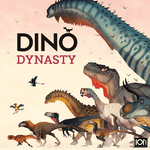
And so you have to be very cautious when picking it up and moving that thing that these markers will slide a little bit. Here's the deal. I like the actual game. I like the putting the one, two, and three in there. The three is a wider swath. But there are other games that do this exact same thing better. Wavelength is a good a good comparison point, I think. And while I appreciate the funny things that people wrote, I think they actually detract from the game and people get caught up in saying which of these funny phrases I fit in rather than what the game would work better at from zero to 100. So yeah, it's it's it's okay across the line. The little again, this thing sliding and the cards being written keep me from recommending it. I'd give it a 6 out of 10. Dino Dynasty. Oh man, do I love dinosaur games. And in this one, you get to customize and evolve your dinosaur. And I really like that, too. Let's take a look. In this game, players are going to be one of many different dinosaurs. Some that you've heard of, like the T-Rex you just saw, and some that you may not have heard of, like however you pronounce this dinosaur. And so, you're going to have one of these. And what happens is each of these dinosaurs has an evolved these little paths here and it's going to change the intersection of these tokens is going to change what that dinosaur can do. So for example, this line here is the dinosaur size. So as dinosaur size go up, so their power goes up. But also if I move this over here
for example, their power might go down. but they also have more biomes where they are compatible with. And so all these different sliders are going to move around um which is going to affect your movement, how much that you lay eggs, your size, your power, and the biomes you get to go to. So whenever you evolve, you'll be able to move these sliders, and it will change where these different tiles are. Players will also have special abilities, like you can see, this one starts with sharp teeth and insulating feathers, and you'll be able to get more than that. Players are playing on a map board here, and this is a complete one. It won't be done at the beginning. You'll have a few tiles, and you're moving around. You're often fighting each other, laying eggs to produce more dinosaurs. When you fight, you'll be rolling dice and adding your numbers against each other, trying to clear each other out. Some tiles might come out and cause an ice age or some other major event. There's some permanent events that will show up. And then there's just different general biomes that dinosaurs can move around and fight in between. And so when the board is completely filled up, then then you're going to trigger the end of the game. And we're going to go through some challenge cards.
You will get the uh tokens. Like for example, here you collect a hatch token each time your nest hatches or collect a stomp token each time you stomp an a nest or have the most dions in event biomes or have the most dinos in rival biomes or have the highest number of added morph tokens. And whoever wins the most of these cards, there's also a tiebreaker card, is going to win the game. There's a lot more, but that's kind of a real quick overview of how it works. This game has a lot of science in it. It's iron game design, so I applaud that part of it, but too much. And by too much, I mean there's a lot of things in this game that sound interesting, and I don't really care. They're like, start with one of 60 scenarios. That means the starting tiles. That doesn't really change much at all because the other stuff can be kind of random and where it is. You have a dynasty of dinosaurs.
They even have a campaign in here. But each of the dinosaurs, they're different, but the idea of moving those tokens on a side and where that cross pattern is, that's amazing, but it's not that interesting in theory. Usually, you want to move it to the top on one of these scales and then leave it there. There's not enough crossover with how good it is at the bottom compared to how good it is at the top or to the extremes. having them to the extremes is usually better than not. So when you evolve, you usually evolve out. There are some reasons to come in, but I wish the choices were harder there. The dinosaurs also very, very different. Battles between big and small dinosaurs are not particularly interesting, and in fact, battles aren't interesting at all. I think the board is really boring looking. Um, I think the dinosaur art is great. And I think the game, the whole game, this whole thing just sounds so much more interesting than it is. And in reality, it just feels very random and just moving around and h you're next to me. I'll attack you. Ah, I'll go over here. I'm going to pull an upgrade from the bag. This upgrade. What does it do again? I have to look it up. The rules aren't particularly well written.
Everything kind of is a little hazy. It feels like I'm playing almost a war game. And again, I feel like the potential for these dinosaurs to run around and attack each other is really high, but I just wasn't really on board with this one. And it just felt long, over wrought, random, not that interesting. Having to look up rules. I just flipped an ice tile. What does that mean? Oh, it's a it it there was just a lot about it I didn't like, unfortunately. So, a four out of 10. Dino Dynasty and not the art though, man. The art's fantastic and a different dinosaurs, but not enough to bring me on board. Big Apple here. First released in 1923. Now, we all know that does not bode well, but hey, that was updated and changed. So, let's take a look at Big Apple. It has a spinner. In this game, the goal is to build an apple out of puzzle pieces that you're going to be pulling from a bag. On your turn, you have three actions. One of your actions can be to spin the spinner. Oo, what will I get?
50 coins. So, we have a pile of coins and I get 50 coins. And you can see they come in denominations of 25,50 and 175. And you can spend 100 tokens to draw a token from the bag. Oo, what will I get? Let's pull one out and see. Yay, an apple piece. You have to be careful though because in the bag are some rotten apple pieces. And if you build a whole rotten apple, then everyone loses. You can also spend 50 tokens to force a trade with someone else to trade a piece of yours for a piece of theirs or spend a 25 tokens to swap a piece from the bank. You can also spend an auction that if you have two of the same piece, a duplicate piece, you can freely change one of those with someone else who also has a duplicate piece. You also know on the spinner, you can get an apple piece, spin again and get a free swap with someone else, spin again and get rid of one of the rotten pieces, or this really fun one where just simply ends your turn, even if it's your first action.
You can also play a cooperative version where you're just trying to build a certain number of apples before the rotten apple comes out. It plays pretty much the same way. Oh man, this game is so bad. I know you say, "Well, what did you expect?" Here's the thing. I'm not playing a game from 1923. I'm playing a game released in 2026. A game where you spin a spinner, which is okay. You can spin it a lot. I'll spin it. I'll spin it. I'll spin it. And the problem with this game is what is the point of the game? The point is to get an apple, right? And not get that rotten apple, whatever. It's just all random pulling from a bag. But when I spin a spinner and I get a 100 coins, should my next action be buy a piece or should I spin multiple times and then my next two actions be buy a piece? It What's the point of hoarding money? Why is there so much money in a box? What does it matter? It seems like it would make sense to just hoard a lot of money and then buy a whole bunch of pieces and try to build an apple before anyone stops you. There's zero strategy in this game.
You spin it. It has that thing that says end your turn, which is super unfun. That's just luck. You pull things from a bag. It's kind of a cool spinner, so I don't give it a zero. It's a three out of 10. Uh, this game released almost a hundred years ago or more than 100 years ago. Definitely feels like it by a modern game, like for one from the 80s. Dragonarium is a game about building a nice spot for these little cutesy dragons. And it has like a little rondelle where you're moving a piece around the outside. Here's how it plays. This is the board for each that each player is going to get. There are very unique asymmetrical boards that players could have. But what you're going to be doing is you're going to be moving a piece around the outside of the board. So each player is going to have their own specialized piece. And the first thing you'll do in your turn is you're going to be placing a tile on the board.
So maybe I place this tile here. I then will pick a color. So let's say for example, I pick blue. I'll pick my largest group of blue, which is two. And I'll move this person two clockwise. One. In each space, I can put a blue gem anywhere where one goes. one doesn't go in this spot. Two, I could put a blue gem on this spot here because that needs a blue and a green gem. Or this one just needs two of the same. So you can see that if I was able, let's say later on I build a group of four and I'm here. I would go one, two, dropping a blue maybe on this one, three dropping a blue on this one, four dropping a blue on this one. So that's kind of how that works. If you put a tile, you can also put it on top of other tiles. If you cover up uh any tile that shows symbols like these squares here, you will get these squares. And you can use these, these are called pillars. When I put out a tile, I can do this, for example, and put my tile on top if I want to. When you have the colors of the gems here, that is going to hatch and that's going to make a dragon of that color, which means you're not ever going to be able to put anything onto that space for the rest of the game. but it's also going to score you points.
Now, it's possible that I wouldn't put the dragon there. I could put the dragon wherever I want. I can put it here if I wanted to. I could put it somewhere. But that dragon just means that that space now counts as blue. And this matters because at the end of the game, I'm going to count the number of spaces in each group. So, this is five times the level. So, I want it to be higher and I'm going to get that many points. And then royal dragons, these yellow ones, which need two of the same color, they're worth three points each. And that's pretty much it. Each player is going to have a certain number of turns. Uh you probably take 12 turns each. You'll count up those points and whoever has the most is the winner. This is a cool tile laying game in many ways. I like the aspect of laying the tiles and building these groups and you're trying to build a group where the height matters and then you're, you know, you move your drag, you move your guy around the odds to that many spots, dropping gems off. You have to be careful you drop gems because you want to try to get the best bang for your buck, but you also want to finish them. And even if you get a lot of greens, you can't just keep moving green every turn because you want to drop other colors so that you can finish them. Get these dragons.
Where do you put those dragons? Putting the dragon gets can get you more points at the end of the game. It's just that at the end of the day, at the end of playing this, I was like, it's okay. There's just not a lot of excitement in this game. The the asymmetrical boards are much more interesting, although they don't feel particularly balanced. Although again, that's just, you know, I I didn't design the game, so I I can't tell you that they are balanced or not, but they didn't feel particularly balanced. Um, and moving around and getting the stones, you're sitting there waiting for people to take their turn, and they'll go, I want to move two spaces. No, I'm going to put this piece there. And it lends itself to a little bit of analysis browses, and you can't really plan your turn ahead of time because you don't know what tiles will be available for you when it comes back to you. So, it's there's some, like I said, some really interesting concepts.
I won't say that it's bad, but it's just an okay game for me. Dragonarium a 6 out of 10. Havocville. Look at these people. They're lighting this village on fire. Power is good. Too much power though can be boring and bored. Powerful gods meddled with human affairs. The city of Havocville will find THAT OUT FIRSTHAND. WOW. WELL, THAT'S AN interesting theme. Don't get too caught up in that theme. This is really, really, really, really abstract. Here's a little, very little on how it plays. There's a lot going on in this game. I'm going to give a very very overview of the game. You're going to have these territory tiles down here and you'll be building and adding to them. It doesn't have to be next to the same group if you don't want to. You're also going to have lines in front of you. This is for example the crown line and you can add population to it. It can be the same type or it can be different types. Players are going to be on their turn picking a creation um action here which is going to let them put the same type in a row, population row or a different type. the same type next to ones or different types. They'll also get the bonus of the diet that's above it and then reroll that die which sometimes gives you a chaos card which will let you do random things. Um then there's a transformation action where you can move stuff. You pick one of these actions. But every action you pick, somebody else can challenge you and then you'll be playing some cards against these people with uh power tokens on them and there's a whole thing and tiles can get flipped over. Uh this action can be challenged. You can even just draw a chaos card, although that action can also be challenged. At
the end of errors, players are going to be scoring these people rows according to these scoring cards here. So, this dominance goes to the faction with the most people tiles. It doesn't matter what kind they are, the most people tiles, but this domination goes to the faction with the most people tiles that match its row. So, and then there's the same thing here. The territory, the faction with the largest connected area of land tiles or the faction of with the highest number of tiles that are out there, period. doesn't matter where they are. Players will be collecting dominance cards throughout the game and trying to match those to these thing to score points. Again, I I completely understand that this sounds very uh vague from what I'm doing, but essentially what players are doing is you're deciding to add these population tiles to the different rows, matching or not matching. That's crown. This is craft. We got valor, etc. being careful not to have them turned over due to matches that between players and also building the city. And so you're either trying to put the same stuff together or you're trying to just have the most out there in general or trying to have different ones together because you're going to be over the course of game drawing these dominance cards and trying to match what they have. I might have a dominance card for supremacy. So I want to have the most blue land tiles out there because I'll score points depending on what round it is. And so that's kind of a general aspect. most points is the winner.
I realize that me explaining that game there is a tough one and honestly the rule book is not particularly well written and the game itself is just a little heady to figure out how to play. Havocville sounds a little interesting like oh there's these four lines of populace and I'm adding people to populace and there's also areas on the board and I'm building those up and trying to collect cards that score things for you. That sounds interesting till you actually play it but it has two humongous flaws. One is luck. Ooh, the big group of red. I hope I draw a red card and I never do. Oh, there's these dice on top that give you bonuses. Well, a lot of the sites don't give you bonuses and I never get one. But then you get one which gives you a card which gives you a little bit of a head up. There's just too much luck in the game. But also that when you take that one action, the transform action and every round someone can challenge you. Do you know how dreary that gets? I like to do this action. I challenge.
Okay, let's play some cards. Let's figure out who wins this challenge. Okay, you going to challenge. You do this. Okay, it's your turn, Bob. Okay, I'll take this action. I do this. I challenge. Okay, here we go again. And then you mix that with rules, symbols that you have to look up consistently. And then the very, very, very abstract nature of what looks to be a really kind of cool theme to this. Yeah, I really kind of dislike this one. Not didn't enjoy it at all. A four out of 10. You can pass on Havocville. Cozy Cat Cafe. Hey, this is a real thing where you go to go to a cafe, you put furniture, you have cats walking around and people come in and drink coffee. I've not been to one of these and I think I I wouldn't hate it. Why would I not want to go to a cafe where there's cats slinking around? As long as they're not in my food, I'm okay with this. And so that's the the object of this is a polyamno game. You're going to put cats in your cafe and align them along with furniture. Here's how it plays. In this game, players are building their own cafe. And they're going to be doing so by moving this token along a track at the bottom of their board. And sometimes they'll give you a coin or a cat cookie.
And when it gets to the end, that kind of ends the round. Some things will change. Some cards will be redone. And you'll play through three rounds. And on your turn, you can simply take a coin. You can take a cookie and pay coins for more cookies. Or you can adopt the cat. adopting a cat. You're just going to take one of these cats and put it in your cat cafe. The number of cookies is on the back. This one costs two. This one costs three. This one here costs one. And so, you're going to place them in different spots in your cat cafe. Now, you're doing all this because you are trying to get these customers. You also can buy furniture and put it in a spot. So, let's say this furniture piece is here. I have now I can take this customer. This customer is going to be worth four points at the end of the game. They're going to be four coins when I take them. I need to have this particular cat and they need to be next to the couch. Now, they don't need to be on the side of it. They can be above it.
But if they are next to it in this specific spot, that brings ambience to the couch and you will turn this over. Um, and so when you do that, you're going to you're going to get those points and you're going to keep this for the end of the game. And so all different customers. This one just wants three balls of yarn, but you also have to have this cat. This wants this cat. And it needs to be next to a ball of yarn. Instead of taking an action, you can replenish your handful of cat trick cards. And you'll draw a number of these equal to the number of cats that you have in your cat cafe. Now, each of these cards has a color at the top. And you can only play that card if that particular cat is in your cafe. So, the blue card can be played. If I have this blue cat in my my cafe, these cards can be played any time. Get a cookie. Take one coin from my opponent. Get two cookies. Your opponents all get one.
Look at your opponent's hand. Steal two from an opponent. Steal cat trick card from an opponent's hand. Move any cat in your cafe. Discard a cat trick card in exchange for two money. And those are the cards that you will play. There's also today's specials which will give extra points, have the most different furniture, the most water fountains, the most coins. So, that is basically what you're going to do. And after three rounds, whoever has the most points is the winner. Cozy Cat Cafe is pretty pretty bad. I really want to like this game, but it is so overwhelmed with luck. And those cards, what a terrible thing those cards are. You need to have the right cats to play the cards. So, you draw a bunch of cards. You're like, "I have a green and blue cat. I just drew three pink cards." Well, that's not fun. But the cards themselves are so boring. Steal two coins from someone else. And that person's like, "Great. I just spent my last two turns taking a coin each turn so that I could buy this piece of furniture. Guess I'll wait some more to take that." And that's the way the game is. It just I'll take some coins. I take some cookies. I'll use some cookies to get a cat. I'll use some coins to get a piece of furniture. I'll put them together to take that car. Oh, you just took it. All right, I'll start building up for the next card. And that is how the game goes. Once you've built up your cafe and have a few pieces of furniture and a few cats, you're just hoping that those cards that come out in the middle are good for you. None of these match my thing. Oh well, I could start building up to take those, but why when you're already halfway to that spot? I really dislike this. I I felt
like this whole idea and those cards, the playing to take that cards, this felt like like people who the people who designed it haven't played many of these kind of games before cuz it the production is really nice. The cats look good. My only problem with the production is the number of cookies a cat costs on the back of them and it's usually the number of tiles, but one is just one. You have to keep the cats facing the right direction when you put them out. And there's a little bit of setup with all these pieces of furniture, but this idea of making the furniture sparkle to get points. You have to put the cat in the right spot really drags the game down as people kind of look at those and then they're constantly filling their hand up with cards and be like, I'm going to play some of these cards and other people and I'm going to do negative things to you for no reason at all. And that just really brings the game down. So, I didn't like this one at all. A four out of 10. Cozy Cat Cafe.
Temple Twist. In temple twist, you are taking a temple. Let me show you this temple. You build it at the beginning when you first play it. It fits in a box. And you're going to be rotating this temple to get a cube to fall out of it at a certain spot. Sounds like a puzzle. It is. In this game, you have this threedimensional temple here. Some things are going to fall out cuz I'm moving it in ways it should not be moved. Once this temple is is built, it's only going to be rotating like this over the course of the game. There's some permanent walls that are in it. You can see they have these little skulls on them. But at the beginning of a game, you're going to put in five random walls in here that can slide in and out. And it matters that they can come in and out. And what you're going to be doing in this game is you're going to be manipulating this die, moving it through the temple. At the beginning of the game, you'll draw two room cards. The here I drew the spider cavern and the golden hall. More importantly, orange square, blue circle. That means at some point my this die needs to stop here and it also needs to stop in the blue circle. And then I draw a door card and it needs to finish in the vine door which is down here at the bottom. Now when players are playing this game, they are going to put the die in.
These doors keep falling out. But you're going to put the die in like this and you're going to deal this handful of cards out to everybody. And on a turn, players will play the card. Uh many of the cards simply say rotate. You're going to take this and rotate it one space in either direction. If at the end of a move like that, it's in one of these, congratulations. You can check that card off. You have to get to both these cards and end there. Sometimes they'll let you move two times in one of the directions. Sometimes they let you add or remove more of these temporary walls and then sometimes it has let you keep moving in the same in a thing as long as it's in the same direction. Now you have these cards. You have some ways to communicate. Once per round, you can swap cards and you can also put this communication tile in front of you that says I only have turning cards and I only have wall cards. So people know what you have as we're playing through.
But you can play that's fairly easy to do. You'll you'll probably win that way. You can play with more room cards you got to go to. You can play with secret missions. You can play with all sorts of different expeditions that you go through. Like for example, you see this little globular one. If you play with him, he's in there. And if he ever touches the die, you lose. But when you play with these missions, they'll also bring more cards into the game. So you'll be drawing randomly off this pile of cards and adding to your blue cards that you hand out. But that's essentially the game together without communicating exactly what you're doing. You'll be rotating this, moving that die, trying to get it to the right space by bouncing it off walls. So this is a cooperative game that's definitely geared towards kids. Um, and the very the base game of this is pretty easy.
Now, it does have this weirdness of communication like next person should rotate it clockwise. Oh, they're not. And you can't really communicate. And it's again, it's really at the end of the day, it's a solo game that they somehow stretched to fit multiple people. Imagine if you had a Rubik's cube and then I said, "All right, I turn one. Now I pass it to you. Now you turn it." There are some funky things. When you turn it, the cube can fall in some weird ways. Sometimes you're like, "It's going to fall straight down here." No, it didn't. Or it just fell, bounced over, then and went to the door. Wow. The base game's too easy. It really is very simple. But once you add in these things that you can spice it up, I particularly like that little slime piece I mentioned. That's my favorite thing to add where if it runs into your guy, so you're moving it, trying not to make the one piece fall into the other piece. I find that to be interesting.
But the fact that your cards are either going to be rotating the thing or they're going to be adding and subtracting doors, it it's it's like this enforced randomness for no reason. Uh so that keeps me from loving the game. I think it's more of a gimmick. You pull this out, you move in, I was like, "Well, that was really and interesting. Anyone want to play it again?" No. No, we played it. We're good. And I don't know that I can recommend a game where we played it where good is. So this is a six out of 10. It's something that if it was at someone else's house, I'd be like, "Yeah, sure. Why not?" don't love the limited communication aspect of it, but there's some interesting things and it's fun to try to figure out how to get the cube to these rooms and then to that door using these cards and with whatever weird thing we have. That part's interesting and then I'm done. And I think that's where a lot of people are going to be. I don't see this game being a game like, oh, play Temple Twist again tonight. No, you played it once, you've seen it. At least that is what it is for me. So, 6 out of 10. Like I said, Temple Twist. And there you go, folks. I guess none of these games I really was like overly enthusiastic about and I actually really despise a couple of them. But you might have very different opinions. So tell people in the comments where am I wrong? Which ones did you like or maybe you agree with me. I don't mind hearing that every once in a while also. But some some different games. Check them out. I'm Tom Vassel and you've been watching the Dice Tower.
Hey everybody, thanks for watching another video from the Dice Tower. Hey, do you want to learn more about us, communicate with us, we have a Facebook group, we have a Discord channel, lots of different ways to get involved with the Dice Tower and you can find that in our linkree link below. So just click that. It will take you and you can communicate with us on Facebook, join our Facebook groups. There's lots of cool things that you can find and become part of the Dice Tower. Thanks so much for watching. I'm Tom Vassel.