Hidden Gem Board Games









Transcript
Welcome to the sixth episode of Spotlighting Good and Gems and Board Games, a series dedicated to fun and lesserk known family games that deserve more attention. To begin, let's start out with our first hidden gem. A classic cycling game that still holds up. This title won the prestigious Spiel back in 1992, and decades later, it's still turning heads. It's all about cycling, racing, and managing your team as they battle it out across the track. Emerbrite is a racing game featuring roll and move and hand management mechanics. In this game, players take on the role of cycling team managers, each controlling a team of four cyclists, competing in a race. The goal is not simply to cross the finish line first, but to have your entire team finish in strong positions to achieve the highest combined score. Players begin by selecting a game mode and a track. The game includes basic, advanced, and professional rules. with each mode adding new layers of strategy. During the race, players roll two dice and may also use energy cards to move their riders across the course. If a player rolls a total of seven, they must draw a chance card, which can introduce unexpected events like crashes, penalties, or other race incidents that may affect the flow of the game. Riders can draft behind one another, conserve energy, launch breakaways, and navigate different terrain types such as mountains, descents, and cobblestone
roads. Players may also cheat, switch the lead, and compete for sprint points and the yellow jersey depending on the course selected. The game ends once all riders cross the finish line, and the player with the highest combined score wins. I absolutely love Ruffenbrite. This is one of those games that just always delivers every time it hits the table. Something memorial happens. What really makes it stand out for me is the team management. You're not just controlling one racer. You've got four. And figuring out when to push, when to hold back, and how to position each rider feels incredibly satisfying. It's simple on the surface, but there's a lot going on under the hood. The energy cards are another big highlight. You don't have many, so every decision matters. Do you burn one now to get ahead or save it for later? That constant tension runs through the whole race and keeps you engaged the entire time. I also love how customizable the game is. Whether you're playing with the basic, advanced, or professional rules, you can really tailor the game to your preferences. You can keep it light and fun, or add in more strategy if everyone's up for it.
And then there are the chance cards, which are just chaos in the best way. Crashes are easily some of the funniest moments in the game. Unless your riders are the ones going down. It's brutal, but in a way that makes everyone at the table react. The sprint points and the yellow jersey add even more to chase during the race. So, it's not just about who crosses the finish line first. There's always something to compete for. And I have to mention the cheating rule because it's honestly one of the most unique parts of the game. You can take risks during the race, but at the end photo cards are drawn and if your rider gets caught cheating, they're disqualified and you lose all those points. It can completely flip the final results which makes the ending so tense.
Even though the game came out decades ago and won the Spiel dish back in 1992, it still holds up incredibly well. Honestly, I'm kind of surprised we haven't seen more modern editions because this is still such a fun, exciting game and one I'm always happy to come back to. A hidden auction classic still waiting for a reprint. In the lively streets of Morash, every tourist's money in motion, and every decision redirects the flow. Welcome to Marakash. Marakash is a strategy and economic game with auction and bidding mechanics. In this game, the players take on the role of shop owners in Morac's lively marketplace. Shops are acquired through auctions with players bidding against one another to secure locations across the board. As tourists enter the city through the gates, players take turns managing their movement and expanding their influence.
On each turn, a player must choose one of three possible action combinations. Move two groups of tourists, move a group, and then auction a shop, or auction two shops. When moving visitors, an entire group is shifted from one fountain to an adjacent one, potentially directing tourists into shops of the same color. If a tourist enters a matching shop, it becomes a customer and generates income for the owner, while the player who moved the group may receive a portion of those earnings. Auctions continue throughout the game as long as unowned shops remain, and players must balance when to acquire new locations versus when to influence the movement of tourists. If an entrance fountain is left empty at the end of a turn, new visitors are brought into the city. The game ends once all tourists have entered the board and the player with the most money wins. Moroc is my favorite game by Stefan Dora and easily one of my favorite auction and economic games overall. The game play is just super fun. It's fast, interactive, and full of moments where players are constantly affecting each other's plans and unexpected ways. What really stands out is how much interaction is baked into everything. There are plenty of opportunities for negotiation and shared incentives. And even when you're not directly targeting someone, you're still influencing what they can profit from.
Being able to control the flow of customers through the marketplace adds a really subtle but important layer of decision making. You're not just buying shops, you're shaping where the money ends up going. There are also a lot of tricky decisions throughout. Auctions can be tense because it's easy to overpay if you're not careful, and the movement system constantly forces you to weigh up whether you're helping yourself or accidentally helping someone else even more. It ends up feeling quite mathy in a good way where you're always loosely tracking value and potential profit. Even with all of that going on, the rules are actually quite simple and the game itself feels very elegant. Overall, Marraash is a true hidden gem.
It's been one of my favorite games for a really long time. It's also one I'd love to see reprinted because it really deserves more attention than it gets. A cafe full of quiet decisions. Cafe International is one of those games that looks relaxed until you realize every move matters more than it seems. Cafe International is a family and abstract strategy game featuring tile placement, hand management, and pattern building mechanics. This game also won the prestigious Buildest Jarus back in 1989. In this content, I'll be taking a look at several versions of Cafe International, including the board game, the card game, and its digital app counterpart. In Cafe International, players take on the role of hosts, seating guests from around the world.
Each player manages a hand of five guest tiles, carefully placing them at tables that match their nationality while navigating the game's unique seating and scoring rules. Gameplay in Cafe International revolves around placing guest tiles onto tables while following a specific set of seating rules. Each table is assigned to a particular nationality and guests must generally be seated at a matching table. However, some chairs are positioned between two tables, allowing players to choose which nationality the seat will count toward when placing a guest. In addition to nationality, seating must also respect gender balance. Tables must maintain a valid combination of men and women with a maximum of four guests per table. Certain arrangements are permitted, such as one man and one woman, or two of each, while others are not allowed. This requirement limits placement options and requires players to consider both the current state of the table and future possibilities.
On a turn, a player may place one or two guests at the tables, providing all seating conditions are met. In some situations, placing a guest may require immediately seating a second guest at the same table to form a valid scoring combination. Alternatively, a player may place a single guest at the bar. If no suitable table placement is available, scoring occurs immediately when guests are seated. Points are awarded based on the number of guests at a table and whether they share the same nationality. Tables consisting of a single nationality provide higher point values, while mixed nationality tables score less. If a guest is placed on a chair between two tables, both tables are evaluated separately and points are awarded for each. The bar serves as an alternative placement area when table seating is not possible. Guests placed at the bar follow a fixed sequence of spaces with early placements, granting points, and later ones resulting in point deductions.
Only one guest may be placed at the bar per turn, and jokers cannot be used there. Jokers act as flexible guest dolls that can represent any nationality when placed. Once seated, their chosen nationality remains fixed, though they can later be exchanged by a player who has a matching tile. This exchange replaces the joker and returns it to the player's hand, but does not generate any points. At the end of each turn, players draw new guest tiles to maintain their hand. If a player places the final guests needed to complete a table made up entirely of guests of the same nationality, they may draw one fewer tile during that turn, effectively reducing their hand size. Managing the number of tiles becomes important as any unplayed guests at the end of the game result in negative points with jokers carrying a higher penalty. The game ends once one of the following conditions is met. A player seats a guest at the last empty chair. A guest is placed on the final bar stool. A player has no guest tiles remaining in their supply or the last guest tile is drawn from the bag.
Once the game ends, players total their points and subtract any penalties from unseated guest tiles. The winner of the game is the player with the most points at the end of the game. I absolutely adore Cafe International. It's one of those games that just clicks for me every time I play. I especially enjoy the board game and the app, while the card game honestly feels a bit tedious in comparison. The app version is easily my favorite way to play the game, even though it's unfortunately no longer available. From what I understand, it was removed due to licensing issues when the publisher discontinued the physical line, which meant the digital rights couldn't be renewed. It's a shame because it really is the smoothest version of the game. What I love most about Cafe International is how open everything is. You can see all the guest tiles, so you're constantly reading what other players are setting up and adjusting your own plans. It turns every placement into a small tactical decision with his own weight. Sometimes you're not just thinking about what scores well for you, but also about what might accidentally help someone else. The scoring is also just really satisfying.
Sliding a guess between two tables and getting points from both sides feels great, especially when it lines up just right. And then there's the push towards building single nationality tables, which can be really lucrative if you manage to commit to them. It constantly forces you to choose between staying flexible or committing to a plan. Hand management also plays an important role throughout the game. You can't just dump tiles wherever feels convenient. You have to think ahead because holding on to too many guests, especially jokers, can really hurt you at the end. That pressure builds up over the game in a nice way without ever feeling too harsh. I also really like the bar system early on. It feels like a decent backup option that even gives you points, but it quickly turns into something you want to avoid. That shift from safe fall back to painful last resort is really well done and it can absolutely swing games if people get forced into it at the wrong time. The card game version though doesn't quite land for me. It tends to drag with a lot of repeated drawing and not enough interesting decisions. The table feels limited and when nobody can really contribute to certain setups, turns just become draw after draw. Once your hand gets big, it also becomes stressful in a not so fun way because of the penalties, which just slows everything down even more. The app, on the other hand, is the version I keep
coming back to. It's fast, clean, and just more fun to play. It also adds some extra scoring ideas, like rewarding you for clearing multiple tables at once, which makes big turns feel even more satisfying. The two-player mode especially works really well with a larger set of starting tables compared to the card game and a smoother flow as the board evolves. It keeps the core ideas, jokers, bar seating, all of that, but removes a lot of the friction. And at around 15 minutes per game, it never overstays its welcome. Being able to play solo is also a nice bonus. Overall, I still really love Cafe International. There's something really clever about how simple it looks yet how much you end up thinking each turn. It's just a shame the app isn't available for purchase anymore because it really felt like the best version of the game. If something like that ever came back as a physical edition, I honestly think it would be the definitive version for me.
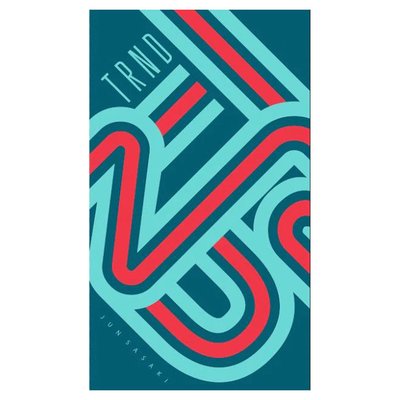
Snappy, fun, and full of fashion chaos. Konichiwa Tokyo. In this game, everyone is trying to look their best in the latest fashion, but only the most stylish player will come out on top. Welcome to Trendy. Trendy is a card game featuring set collection mechanics. In Trendy, players compete to score points by capitalizing on the latest fashion trends. Each turn is simple. Play one card in front of you, then draw a new one. Every card represents a model tied to a specific fashion trend, similar to suits. And there are five different trends in total, each defined by a number and a color. As cards are played, trends begin to build. Once the total number of icons for a specific trend across all players matches or exceeds that trends number, it becomes trendy.
All players who contributed to that trend, then scores all those cards, placing them face down in front of them, while all other cards currently in play are discarded. Some cards add a twist. Double number cards count as two cards of a trend, helping trigger it faster, while out cards remove all cards of a specific trend currently in play. Play continues until the draw pile is empty. Players then continue without drawing until the next trend is triggered, which ends the round. Players score the face value of all collected cards and the game continues across rounds until a player reaches at least 100 points or a set number of rounds is completed. The player who reaches 100 points first or has the highest total score at the end wins.
I absolutely love Trendy. The gameplay is super fun and snappy, and it's the kind of game you just want to keep playing over and over again. What I really like is a shared incentive system. You kind of work together with other players to push a trend over the edge, or you can time things just right and take advantage of what everyone else is doing. There's even a bit of room for sabotage and backstabbing, which makes the timing really exciting. Trying to build up a specific trend on your own can feel slow, but the moment other players start contributing too, everything speeds up really quickly because at the end of the day, everyone wants to score. I also really like the double number cards and the out cards. They add a really fun twist to the game and can completely change how a round plays out, especially when a trend suddenly spikes or gets wiped out.
Across all versions of the game, the Japanese edition is definitely my favorite, mainly because of the artwork. It just looks really good on the table. Overall, Trendy ranks high among my favorite filler games by RhEitia. So, if you're looking for a quick, snappy card game with a bit of interaction and some clever timing, Trendy is always a blast. Welcome to Moving Day Chaos. What if moving day turned into a frantic race where every second cost you points? Welcome to Pack and Stack. Pack and Stack is a family puzzle game with a dose of real-time chaos. The addition I'm showcasing today is the 2024 Chinese release from Gameland and Yaoish Games. In Pack and Stack, players take on the role of moving company workers, racing to load trucks as efficiently as possible. Each round begins with a random assortment of differently sized goods determined by dice rolls. Players then quickly choose a truck, often by grabbing one from another player, and attempt to fit their cargo within its limited space and height restrictions.
The only realtime pressure comes when choosing a truck. After that, it's all about packing everything as efficiently as possible. Choose a truck that's too large and you'll lose points for wasted space. Too small and you'll be penalized for the goods you can't fit. The player who minimizes their losses each round earns a bonus and the game continues until someone runs out of points. In the end, the player with the most points wins. I really enjoy Pack and Stack. The game play is wild, fun, and chaotic in the best way. Players are constantly racing to grab truck cards as quickly as possible to avoid taking heavy point losses during the loading phase. One of the aspects I really appreciate is a subtle math behind the decision-m. I like estimating which truck might fit my current goods by thinking in terms of space and volume. Essentially multiplying the value of a single green cube by the number of space ads and the truck's height. It gives me a rough sense of what size truck I should aim for each round. Of course, things rarely go perfectly. Sometimes the ideal truck simply is unavailable and you have to settle for the least damaging option or take a risk and draw from the top of the deck. That push your luck moment adds a lot of tension, especially since losing points each round can be brutal. Despite the chaos, the game remains incredibly fun and easy to teach. It's quick to explain, quick to set up, and consistently entertaining. The real-time
truck grabbing phase creates just enough pressure without overwhelming the rest of the gameplay and works well at all player counts. From my many playthroughs, Pack and Stack has consistently delivered a fun time, even with players who don't usually enjoy real-time mechanics. Everyone stays engaged from start to finish, and the game maintains a light-hearted, energetic feel throughout. This title was actually my first experience with a game designed by Burnt Eisenstein back when it was first brought over and curated by Mayfair Games for a western release. The game still holds up today and remains a lot of fun to play. I'm really glad it has been picked up again by Gameland and Yaoish Games. Honestly, I'd love to see this game get a wider international release. Even the truck shaped box is fantastic. It's such a fun and fitting design choice. Overall, Pack and Stack is just pure chaos in the best possible way, and it's a game I genuinely enjoy coming back to.
Before we move on to the next game, if you've been enjoying these game selections so far, feel free to like and subscribe for more board and card games just like these. A simple but tense baseball mind game. This title turns baseball into a fast two-player guessing duel with no balls or strikes, just hits and outs and mind games. Hits and Outs is a quick two-player light deduction game with a bit of bluffing inspired by baseball. In this game, players take on the role of ball players competing in a duel of hits and outs. Instead of tracking every pitch, the game focuses on the back and forth between the pitcher and the batter. There are no balls or strikes, just hits and outs. Each inning, one player hides the ball while the other tries to find it, creating a simple guessing game with a bit of strategy.
When you're batting, you're trying to guess where the ball is hidden to get on base and score runs. When you're pitching, you're trying to trick your opponent into making wrong guesses and getting outs. After three innings, the player with the most runs wins. Hits and Outs was one of my favorite games of 2025. If I had initially reviewed it last year, it would have easily made my top games list for that year. It's a light fuller game, but it's backed with mind games, tension, and a surprising amount of excitement for its size. What I love most is how intense the simple guessing can feel. As the batter, trying to figure out where the hit token is hidden is genuinely stressful in the best way. As the pitcher, you get to be sneaky and unpredictable, which adds a fun layer of deception to every turn.
This constant back and forth is where the game really shines. That said, there is a noticeable luck element. Sometimes it feels like smart deduction, and other times it comes down to guesswork. Because of this, players who don't enjoy guessing games or light randomness might not connect with it as much. However, if you enjoy light deduction games with quick mind games, tension, and reading your opponent, hits and outs is an easy recommendation. A battle for film industry control, lights, camera, manipulation. Welcome to the world of Top Order Flop. Top order flop is a card game featuring hand management, card play, conflict resolution, and stockholding mechanics.
In Top O Flop, players step into the role of film industry tycoons, investing their influence not only in the success of the next blockbuster, but also in the failure of their rivals. Fire films sit at the center of the table with players adding cards to either their top side to increase their value or their flop side to reduce it. Sometimes pushing a film into negative territory and turning it into a complete dumpster fire. On their turn, players can choose to play influence cards into their own personal display to build their share in a film or play them into the central film displays to directly affect a film's value. With only a limited number of slots available on each side, stronger influence cards can replace weaker ones, allowing players to reclaim them for their own growing portfolio. Meanwhile, exchange cards and markers introduce additional ways to manipulate the films, such as shifting cards between sides, locking a film in place, or doubling its value at key moments through bluffing, calculated plays, and shifting alliances. Players build their influence across multiple films. The game ends once all five films are complete or immediately ends once any player doesn't have any influence cards and markers left. After which scoring is based on who holds the greatest share of each film, regardless of whether that film succeeded or failed. The player with the most points at the end wins the game.
Top order flop is filled with tension from start to finish. The gameplay feels tactile, dynamic, and highly strategic with just enough luck of the draw and the chaos of exchange cards to keep things unpredictable. At its core, it plays like a lane battler mixed with a stock game, where players are constantly weighing whether to build up a film's success or quietly sabotage it. What really stands out is how naturally alliances form and dissolve. Players often find themselves working toward the same goal, pushing a film to the top or dragging it down, only for those shared incentives to shift moments later. It creates a constant push and pull that keeps everyone engaged. The hidden information adds another layer of tension. While each player's initial influence in a film is visible, additional investments are tucked away face down, making it difficult to judge who truly holds the advantage. It's a simple system, but it works incredibly well, creating uncertainty without slowing the game down. The finale is where everything comes together.
Watching the film's resolve, especially when one becomes a runaway success or a complete disaster, is consistently exciting. The distribution of points can swing dramatically, rewarding players who position themselves well, sometimes in unexpected ways. On top of that, the film theme is a perfect fit, and the artwork is generally eye-catching, helping to bring the whole experience to life. Overall, Top OFP is packed with tension, clever interactions, and memorialable moments from beginning to end. It's truly a hidden gem, and an excellent family weight game that's tons of fun. Lies, Raids, and Corruption. Trust is expensive when everyone at the table is lying. In Contraband Insider, every decision feels like a gamble, and every player might be hiding exactly what you're trying to uncover. What seems like a simple raid quickly turns into a psychological battle of reading intentions, second-guessing moves, and hoping you guessed right before it's too late. Contraband Insider is a deduction and bluffing game featuring mechanics such as deduction, hidden roles, memory and score and reset game. In this game, players take on the role of corrupted cops trying to get their contraband sold before police raids infiltrate and confiscate their goods. Players choose a color and take matching components, then secretly place contraband and decoy
cards across their home base and shared locations. On each turn, they either trigger a police raid on a public spot or another player's base, or play a special assistance card. Raids remove contraband and collect decoy cards, which hurts scoring with extra risk and rewards when targeting another player's base. Rounds end when most locations are cleared, and players score points, earning stars across three rounds. After the final round, total points plus accumulated stars determine the winner. I really enjoy playing Contraband Insider. The game is filled with mind games and is super entertaining. There's deduction, a bit of bluffing, memory, and even hidden roles if you play with the double agent variant, which is really cool. I also really enjoy how manipulative the game can be, often leading to some fun and salty moments between players. The game takes around an hour, possibly a bit longer with a full group. It's very easy to learn and teach and overall an excellent game that I highly recommend.
Let them eat cake, but choose wisely. After all, how hard can dividing a cake really be? In Piece of Cake, it turns out to be anything but simple. Piece of cake is a family game that focuses on the eye cut you choose mechanic mixed with set collection and area majority. In this content, I'll be featuring the 2016 Chinese edition and the 2018 Japanese edition. In the game, players take turns serving and dividing five different cakes, each made up of a variety of slices. After a cake is divided, players choose a piece in turn. Whenever you take a piece, you decide what to do with each slice. Eat it for immediate points or keep it for later. There's also a small twist. If you don't like what's on offer, you can skip taking a piece entirely and instead cash in one type of slices you've already collected for points. Eating slices gives you points based on the number of dollops of whipped cream on them. While collecting slices sets up a majority battle at the end of the game. Once all five cakes have been served, players compare who has the most of each variety to score points with the winner or winners gaining points equal to that variety's value. They then add any points from slices they've already eaten, and the player with the most points at the end wins.
Piece of cake is a super fun filler and family game that I absolutely love. It's easily one of my favorite takes on the eye cut you choose mechanic. The gameplay is quick and snappy, but packed with surprisingly thinky decisions, especially when you're the one dividing the cake. You constantly have to pay attention to what other players are collecting. How many slices of each variety are still in play and what they're likely to go for next. When you're cutting, you're not just splitting pieces. You're tailoring them to tempt your opponents while still trying to leave yourself something worthwhile. That tension is what makes the game shine. Do you go after the high value cake varieties and aim for the majority bonus or play it safe by eating slices for guaranteed points? Sometimes those three dollop slices are just too good to pass up, especially if you don't think you'll win the majority. But of course, things rarely go exactly as planned when everyone else is competing for the same sets. Despite its simple rules, Peace Oake offers a ton of interesting decisions, and that's what I enjoy most about it. I also really enjoy the theme. It's light, fun, and honestly just looks delicious on the table.
Between the additions, I prefer the artwork in the newer Japanese version, and I love how compact the box is. That said, the original does have its charm, and I do appreciate the thicker slices in that version. Overall, Piso Cake is a snappy, thinky, and highly enjoyable family filler that I'd happily recommend. Step right up, insert your coin, and try your luck. In Gotcha Trick, every pull matters, but so does every card you play. Gotcha Trick is a card game that features trick taking and set collection mechanics. In this game, the players hit the Gotcha Parlor, spending Yen to collect a variety of toy figures. Each player is dealt a hand of toy cards depending on the player count while the remaining cards are placed face down to form the Gotcha deck. Every player starts with 5,000 yen and the game is played over three rounds with the highest total score winning. The game follows a trick- taking structure with a few twists. Players must follow suit if they can, and the winner of a trick is determined by the highest ranked card within the most frequently played suit.
If a player cannot follow suit, they may play any card, which can influence which suit becomes a majority. After each trick, the winner must purchase at least one card from that trick, paying its cost, and may choose to buy more. They also have the option to spend 500 yen to draw the top card from the gutapon deck. The winner then leaves the next trick. Managing money is an important part of the game. If a player's total drops to zero or 100 yen, they are eliminated from the round and discard the rest of their hand. They remain in the game for scoring, but can no longer participate in that round. At the end of the round, players score points by collecting matching sets of toys. The value of each set increases based on how many of the same toy are collected, calculated as that number squared. Players also gain one point for every 200 yen they have remaining. And those who spend nothing during the round earn a fivepoint bonus.
If a player obtained the refund card from the gotchaon deck, they may return one purchased toy at the end of the round to recover its cost. If unused, the refund card has no value. After three rounds, the player with the highest score wins. Gotcha on Trick was easily one of my favorite games that I played in 2025. If I had covered it earlier, it would have made its way onto my top games list for the year without a doubt. The gameplay is incredibly fun and exciting. This trick taker feels wild in the best way, and I absolutely love the twists where the winner of each trick gets to purchase cards from it. That single idea adds so much tension and strategy. Every card you play matters, not just for winning the trick, but for shaping what ends up available to buy. It makes decision-m consistently engaging and at times delightfully tricky. This game is all about getting the most bang out of your yen. You want to avoid handing your opponents cheap, desirable cards while at the same time trying to set yourself up to buy those kinds of cards instead.
Of course, this is easier said than done. The initial deal introduces a fair bit of uncertainty, and controlling the majority suit, especially early in the trick, is not always in your hands. But when things line up and your plan works, it feels incredibly satisfying. Set collection plays a big role in scoring, and focusing on one or two types of toys is far more rewarding than spreading yourself too thin. On the flip side, if your hand isn't strong enough to win tricks, there's a clever alternative path. Spend nothing, collect the five point bonus, and rely on your saved money for points. It almost feels like a reverse shoot the moon moment, and it works surprisingly well. All of this creates a constant push and pull between spending and saving, winning and holding back. You're always weighing your options while also trying not to set up your opponents for a huge score.
The attention keeps the game engaging from start to finish. The theme and the presentation tie everything together nicely. The gotchaon concept feels fresh and it's not something you see often in games. The artwork by Sai Bebu and Wanjing Gil is charming and full of personality making the game even more delightful. Overall, Gutch Upon Trick stands out as one of my favorite games from 2025. It's snappy, thinky, and packed with clever decisions. If you enjoy trick- taking games with unique twists, this is absolutely one to check out. Lost in a city of dreams. You wake up in a familiar city, but something isn't quite right. This is Ho Min City, just not as you remember it. Dream Adventures, the second edition of their earlier game, Dream Diary and Dookie.
This version features an updated look, adds a two-player mode, replaces cards with tiles, and includes exclusive promotional artwork. Players are drawn into a parallel version of the city where they take on the form of spirits trying to find their way back home. To do this, the group must identify the correct locations by interpreting dreambased clues while avoiding nightmares that can lead them astray. The game centers on limited communication. Clues can only be given as adjectives, while responses are made through gestures requiring careful interpretation and coordination. Over several rounds, the group either escapes together or becomes trapped in the dream world. Dream Diary is a solid cooperative deduction game with a party style feel that is a lot of fun to play.
I really enjoy my time with it. The gameplay works well and offers a nice mix of discussion, guessing, and teamwork, especially in groups that enjoy light deduction games. One of its strongest aspects is the artwork. The illustrations are simply stunning, and the locations in Vietnam are presented in a way that really stands out. At times, it honestly feels like you're on a small vacation while playing, just exploring different places through the cards. It's also worth noting a potential language dependency regarding the gameplay. The system of using adjectives as clues works very well in English and many other languages, but it may not translate as smoothly into languages where adjectives function differently or are more freely formed such as German. This could affect how challenging or balanced clue giving feels depending on the language used.
Even so, in the right group and language setting, it's an enjoyable game that I always look forward to playing and one that can easily capture players attention, a serene landscape, and a gentle flow of water. But beneath its calm surface, Patty hides a competitive puzzle full of clever decisions. Patty is an abstract strategy and territory building game that features various mechanics such as tile placement, layering, hand management, and area majority. In Patty, players shape a landscape by building cascading rice terraces across the mountains of Southeast Asia. The game is played over four cycles, each divided into three phases: sewing, growing, and harvesting. During the sewing phase, players prepare for the round by drawing patty cards and day/night cards, which determine the types of tiles they can place and where they may be positioned.
Turn order is also established during this phase. In the growing phase, players take turns playing a patty card in combination with a day/night card. Based on this combination, they place a tile onto the corresponding side of the board, either day or night. Tiles may be placed on top of existing ones, forming layered terraces. After placing a tile, players may place any number of their animal pawns onto the plots of that terrain, with each animal occupying a single plot. Placement must follow specific rules, including restrictions on how animals share terraces and how majority is determined. In addition, players may place waterfall tokens along the edges of plots, influencing how water flows through the terraces and contributing to scoring during the harvesting phase. Players may also use event cards which provide one-time exceptions to the standard rules. In the harvesting phase, players score points based on their presence on the terrace ads. Points are determined by factors such as terrace height, number of plots, irrigation from waterfalls, and majority control. After four cycles, the player with the most points wins the game.
I've really been enjoying my playthroughs of Patty. It's a serene and delightful game on the surface, but there's a surprising level of depth underneath. Don't let the messmerizing artwork fool you. While it looks peaceful, the pace really picks up after the second cycle. And that's where the competitive edge starts to show. There are many paths to victory here, and it all comes down to how you manage your tile placements, position your animals, and prevent your opponents from scoring big. In many ways, Patty reminds me of games I enjoy, such as Talua, Miyabi, and Pueblo. With its focus on spatial play and thoughtful positioning, it especially shines at four players where the board becomes more contested and the decisions feel tighter. The event cards, while functional, add an extra layer of complexity and can introduce a level of unpredictability that may not appeal to everyone. They can disrupt carefully laid plans and increase player interaction in a more direct way. That said, they can easily be left out as a house rule, which is how I prefer to play. What stands out to me most is how tactile and forward thinking the gameplay feels. You're constantly planning ahead, considering not just where to place your tiles, but how your animals will occupy those spaces over time. With three different scoring categories at the end of each cycle, there is a strong sense of progression as the Tyruses grow and point potential
increases. This also creates room for comeback moments, allowing players who fall behind early to stay competitive in later cycles. There's plenty of opportunity for clever plays, particularly in how and where tiles are placed. You can set yourself up for strong scoring turns, but also interfere with your opponent's plans through well-timed placements. The interaction feels deliberate rather than chaotic. While the game generally moves at a good pace, some downtime can occur depending on the players, as the decision space can be quite thinky. The theme and the artwork are serene and peaceful and can be quite mesmerizing, giving the game a calm and inviting presence on the table. Overall, Patty is a wonderful familyweight abstract strategy game that will appeal to both casual players and more experienced gamers.
A collection of curiosities and clever combos. Welcome to a museum like no other, where every exhibit holds a secret and every choice shapes your masterpiece. The Wondrous Museum is an engine building card game featuring hand management, set collection, variable setup, and income mechanics. In the Wondrous Museum, players take on the role of curators, acquiring and showcasing other worldly exhibits to build the most impressive collection. Over a series of rounds, players spend admiration to acquire exhibit cards either from their hand or the central display, gradually expanding their museum tableau. Each exhibit comes with unique abilities triggered by activating runes, allowing players to generate admiration, manipulate resources, gain rating points, or interact with other players museums. The game continues until a player places their ninth exhibit or reaches 20 rating points through admiration tokens in their museum. Once triggered, the current round is completed, followed by one final round. At the end of the game, players tally their total rating from exhibit cards, admiration tokens placed on those cards, and any additional bonuses from special effects. The curator with the highest total rating is declared the winner.
The Wondrous Museum is comboastic. This engine builder is delightfully thinky and packed with satisfying decisions from start to finish. With a wide variety of exhibits available, the game offers excellent replay-ability, especially thanks to its modular setup. Players mix and match two out of six themed exhibit sets, each introducing a distinct play style and flavor. Whether that's increased player interaction or more intricate engine building opportunities throughout the game, players are constantly weighing their options, which exhibits to acquire, how to sequence them, and how to create the most efficient and rewarding combinations. There's a strong sense of puzzle solving here as you try to sync your cards together for maximum impact. Despite this depth, the gameplay remains fast-paced and snappy, often ending sooner than expected. In fact, it can leave you wanting just a bit more time to develop your museum. But this can easily be adjusted with a simple house rule if you prefer longer sessions.
While the gameplay itself is excellent, I do have a few notable gripes with the production. The cards are quite small with text and icons that can be difficult to read at a glance. This becomes especially noticeable in a game where keeping an eye on other players museums is important for planning your own moves. Larger cards perhaps 30 to 40% bigger would significantly improve accessibility and overall table presence. Additionally, the rule book leaves room for improvement, and the player aids could be clearer and more helpful. The iconography, while functional, isn't always intuitive and would benefit from better explanation or reference support. On the flip side, the artwork is absolutely superb, rich, enchanting, and full of personality.
It's easily one of the games highlights, and larger cards would only enhance its visual appeal even further. If a future printing addresses these production concerns, The Wonders Museum has the potential to shine even brighter. As it stands, it's a clever, engaging, and highly enjoyable engine builder with a lot to offer. Its combination of smart gameplay and stunning presentation makes it a game well worth exploring. Deception and motion. What if every move you made revealed more than you intended? In Shaquo and Disses, your opponent is always watching, trying to read every decision you make. Shuo or as it's more widely known today, Disses, meaning it's that one or there it is, is an abstract strategy game that focuses on bluffing, deduction, and subtle mind games. In this content, I'll be taking a closer look at both Shaquo and Disses.
While the presentation differs, the gameplay remains identical across both versions. In this game, players are locked in a tense battle of wits, racing to be the first player to collect four rings. At the start of each round, the colored pieces are placed randomly on the board, after which one player places a ring on an empty space that is not adjacent to any piece. Each player then secretly selects one of the seven cards in their hand corresponding to one of the shared pieces on the board. This chosen piece becomes their hidden objective, the one they are trying to move onto the ring. On a turn, any piece can be moved, but it must always end closer to the ring than before. Pieces may move one space in any direction or jump over adjacent pieces to cover more distance. A round can end in several ways. A player may successfully move their chosen piece onto the ring and reveal their card to claim it. However, if both players had secretly selected the same piece, the opponents instead claims the ring. Alternatively, a player may on their turn boldly declare Shikuo and point to the piece they believe their opponent has chosen. If correct, they immediately claim the ring. But if they are wrong, the ring goes to their opponent. Once a ring has been collected, a new round begins without resetting the board. The pieces remain where they are. The loser of the previous round places a new ring, again, not adjacent to any piece, and both players secretly choose a new card. The
winner of the previous round then takes the first turn. This cycle continues until one player collects four ranks and wins the game. I absolutely love the tension in both Shikuo and his. The game play is packed with mind games from start to finish, constantly keeping both players on edge. You can deliberately mislead your opponent into thinking you've selected a specific piece only to be bluffing the entire time and baiting them into calling Shuo. When that moment hits and they guess incorrectly, allowing you to collect the ring instead, it feels incredibly satisfying. Of course, this isn't always easy to pull off. Much of the game's brilliance comes from how dependent it is on your opponent. Experienced players will be far harder to deceive, making every decision feel even more meaningful. I especially enjoy how every movement on the board carries weight. Each action can either reveal your intentions or cleverly disguise them, creating a constant push and pull between deception and deduction. Another standout moment comes from the clever twist where if both players secretly select the same piece, the opponent claims the ring instead. It's a brilliant design choice that can turn what feels like a winning move into a sudden and costly mistake, adding yet another layer of tension and unpredictability.
The game is incredibly snappy yet consistently tense throughout as both players race to collect four rings. For a 15-minute game, it truly packs a punch and delivers a surprisingly deep and engaging head-to-head battle. Since both versions are identical in gameplay, your choice ultimately comes down to presentation. I personally enjoy the look of both. Though Darisses does feature a slightly larger board, which may appeal to some players. If you're looking for a fast, tense, abstract strategy game filled with mind games and clever interactions. Shakeo and are absolutely worth trying. I would love to see a modern reprint of this design as it remains a highly enjoyable and unique title to this day.
Drinks are around the house and so are the mind games. Every so often, a small card game flies under the radar only to surprise you once it hits the table. Shady Lady is one of those games. Shady Lady is a fast-paced light deduction game that's all about reading your opponents. It features mechanics such as bluffing, set collection, and hand management. Set in a stylish cocktail bar, players quietly build sets in their hands while keeping a close eye on everyone else. The goal is to form either three of a kind or a straight, then decide the right moment to act. Declare try to reveal a strong hand and score. The other players can jump in if they have something better. Alternatively, call jack to catch an opponent before they score themselves.
But if you're wrong, you hand them the point instead. Points are earned through successful try or jack calls or by benefiting from a fail accusation. And the first player to reach three points wins. Shady Lady was one of my favorite games of 2025. If I had reviewed it earlier, would have easily earned a spot on my top games of the year list. It may be a light filler, but it's packed with tension, mind games, and a surprising amount of excitement for such a small package. What really stands out is how much psychological play is packed into such a simple system. Players can bluff convincingly, acting as though they've completed a set, baiting others into calling Jack at the wrong moment. Those mind games create constant tension. And when someone falls for it, the payoff is incredibly satisfying. It's a game where reading people matters just as much, if not more, than the cards in your hand. I also enjoy the cocktail bar theme, which gives the game a stylish, slightly mischievous vibe, something that even brings to mind films like Cocktail, starring Tom Cruz. That said, the theme does feel somewhat pasted on.
Ironically, I think a lighter or more playful presentation, perhaps with cuter artwork, might have helped the game appeal to a wider audience. As it stands, the ages six and up label feels a bit mismatched with the theme. In terms of player count, Shady Lady really shines with three to six players where the table talk, bluffing, and secondguessing are at their best. I also find myself enjoying it far more than Nana and Trio, which is high praise given how well regarded those games are. Overall, Shady Lady is a fantastic filler that delivers far more tension and interaction than you might expect. I highly recommend it, and I'd love to see it receive a wider international release so more players can discover just how clever and exciting it is.
Well, that's it for today. I hope you enjoyed the video. Thank you so much for watching. If you've played any of these games, let me know in the comments which ones you enjoyed or which game you're planning to try next. Don't forget to like and subscribe for more content and see you next time.