Cozy games, what makes a game a good product (guest: Alex Cutler) | Ep 158
Games in This Video
3 games are featured in this video — they unlock as you watch.


Transcript
Hey everybody, welcome to the Glowing Analog podcast where we talk about games and a topic about games. So, I'm Christina, your host and today we have a wonderful guest, Alex Cutler. We went to Gen Con this past year and I swear we're going to stop talking about Gen Con, but uh I feel like every game was your game, Alex. No,
I had a busy show. Yeah, I had four things.
And so he was the former head of development of games at Panosaurus Games, now a full-time game designer, which is really awesome. Um, we talked a lot about my one of my favorite games from the con, which was Alex's design, which was a place for all my books, about collecting books and um getting enough social battery to go get more books. It was fantastic. Love it. And have been playing it a lot. So, welcome to our show.
Thank you for having me.
Yeah. So, you had you said wait, four or five games at the show.
Four games at the show.
Four games. Okay. What were the other games again?
So, we had a place for all my books, which was about collecting books. We had Critter Kitchen, which is has been out for a little while, but it was the first US show, so I wanted to count it. Um,
I had one called Widgets Workshop, which is a little uh game about building mechs and robots out of a junk pile kind of. Um, and then one called Solar Gardens, which was about building rooftop gardens and like a happy solar punk kind of future.
Yeah. You know, solar punk is much nicer than the cyber punk that Shu likes, my other co-host here. Hi, Shu.
Hello. Oh, hello.
Uh, why is it nicer?
You know, it's just brighter. Like your cyber punk stuff that you love is so dark and just like I don't know, whatever.
So dystopian.
So dystopian. So many drugs. It's fine. I don't know.
Um, so what is the topic you're you're bringing for us today?
Yeah. So, I wanted to talk about games ass products because this is something that uh I care a lot about from my time at Pandasaurus when I was thinking about how can we make this game into something that people want to buy and it's also something that's just forefront of my mind a lot when I'm looking at games and and thinking about do I want to buy a game because there are so many you guys know this there's so many good games out now right like yeah it's really hard to know what to pick up what to play and a lot of times as a designer a game being good enough isn't good enough Right? It's how can I make this stand out from other things on the market or you know what is something I can do componentwise or packaging wise.
So thinking about games not just as how do I make it a good game but how do I make it a good product that people want to buy and put on their shelf
and I think some people forget about that for sure. Yeah. What is our topic that we're going to talk about too?
So we're actually brought this topic from Alex. So just Alex
it's all Alex's topic for this. Yeah. So, because your two ideas for topics for the show, the other one was cozy games, which a place for all my books is
so cozy.
And then um we're like, oh wait, we wanted we wanted to talk about cozy games anyway. So, we're going to incorporate that. It's going to be our topic of pick today.
We stole it.
Yeah. So, stole it from Alex. So, the idea being like what makes for a cozy game? Like how do you define that? Because we even we have some recent examples. We'll get into this in the show of like, well, this is a cozy game, but this part's not cozy. So, is it a cozy game? So, we'll have that discussion and give some examples and talk about a few that we've enjoyed.
Awesome.
So, we'll dive into our game picks where we'd like to highlight a game we just want to talk about. So, let's have You want to go first?
You go first.
Oh, I'm going to go first. Yeah.
You like this game?
I do really like this game. So, this game, which uh you can't really tell what kind of game it is, but it's very pretty, is Black Forest by U. Rosenberg. And so, this came out last year, I believe. And uh when it first came out, I didn't even know about it. Wasn't on my radar, but our friend Brian um had a copy when we did a game weekend and I played it and I was like, "Oh, it's so Uve Rosenberg. It's so good." Um, essentially it's a a sort of reworking of one of his classic games called Glass Road. And in Glass Road, you are uh a glass person maker. Glass maker.
Glass person.
Glass person. Artist.
Uh-huh. Artisan. Yes. I like that. Okay. And so evidently when he designed uh glass road he actually had a much bigger design in mind and it was more closer to this black forest which involves like you know very euroy looking things some people are just listening to this they don't know if you see it on YouTube you I've just held up the back of the box which looks very different from the front of the box and uh you are instead a glass maker in the black forest in Germany and tradition Traditionally, there was like a really interesting sort of ecosystem that developed. So, you would go you would uh build your like glass factory in a part of the black forest where there's plenty of trees. Um around that glass factory, a village would start sprouting up. Um eventually, if you are running sparse on trees, then you sort of shift your uh your your whole glass factory to another part of the forest as the forest recovers. And so you continuously move around, villages develop, and you are trying to be efficient in how you are gathering your resources to make glass. The very cool, crunchy, fun, weird bit about this is this huge resource wheel that happens. So you have a resource wheel where you're using all these different ingredients to make glass. Ultimately, that's your goal cuz you're a glass maker. And on the other side, to travel from village to village, you need provisions. So, you have the sort of cooking wheel where you're taking these raw ingredients and cooking for provisions that allow you to move back and forth. Um, but the individual turn
is so simple. You are just going into a village, going into a spot between two different um crafts people, and you get two actions, up to two actions. So, you're doing this to gather resources, to convert resources, build buildings. Uh, there are animals. They don't breed though. So unlike a classic u game, there's no breeding, which made me a little sad.
You missed the animal sex.
Yeah, I missed the animal sex. Yeah.
Yeah.
Yeah. I I actually was not that crazy about this game the first time I played it. And then uh and Christina was like, I love it. I want to buy it and everything. And then uh so we got it. And then when we played it at home, actually I had to we relearned it. I think you taught it, right? I'm like
it was an excellent teach. So
it was a good teach. And I'm like I I do like this game a lot better now. So, I don't want to name the friend who taught it to me the first time around, but I think that uh affected how I cuz I'm like I don't quite understand how everything's working, but on my second play, I definitely grasped it better and I I enjoyed it a lot.
The resource wheel is very clever. So,
this looks really neat.
When when you were describing uh going to a forest, then once it's cut down, you move somewhere else. That's exactly how I play like Age of Empires 2, like other RTS.
It's just like, "Yep, just go in, wipe it out."
Gentler, but I see that. I see that. Uh, one other thing that I did miss in the rule book, you don't get the little Uve Rosenberg head popping up to tell you little facts, which is one of my favorite things. I was a little sad about that part.
Oh, yeah. Different publisher.
Yeah, different publisher.
Yeah.
Okay. And what game did you bring for us, Alex?
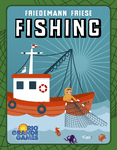
Uh, I brought uh Fishing by Freriedman Freeze. Um, this is a Trick Taker. I believe it came out earlier this year. I'm just going to confirm on the back. Does it have a
Yeah, we probably late. Yeah. Um, this is Germany. Really clever little trick taker. Um, trick- tick is obviously a genre that has gotten very popular lately and you know, I think some people are wondering if maybe it's sort of had its peak and now is on its way out, but a lot of the really good ones are doing something different enough that they're earning their keep, right? And what I really like about this is um it's got a I almost used the word legacy. It's not a legacy, but you're you're you're crafting sort of the deck that you're using for your trick taking. It's it's persistent from round to round. And the way it works is you've got these, you know, suits of sea creatures that you're fishing up and um if you lose a round of the game, so we've played, we've collected a few tricks and I came in in last place. I had the fewest tricks. I can actually replace some of my cards or add to my deck of cards from a a new stack deck,
OP deck,
that has things that are just flat out objectively better than the cards we started with. So, it's this really fun little catch-up mechanic of um I'm getting, you know, maybe this card is a trump suit or it's just a number that didn't even exist in the game until I drew it into my hand and so it's just a guaranteed win. And it it makes the players it makes you feel almost like a winner when you come in in last place.
Um but, you know, it's it's not there's still a lot of depth of strategy in terms of how you play the cards and how you want to um
sort your hand to collect the tricks, but it's got that nice little um feel-good moment. You don't just get totally skunked basically, which is great.
Yeah. The first few rounds of this game, if you're actually winning and you're getting a lot of points, you actually you actually start feeling bad. You're like, "Oh no, everyone's getting really good cards but me."
You kind of have to watch the timer for the total rounds so that you're like, "Okay, well, I I kind of want to throw one here so that I have the strength going into like the final."
Yeah. And that's so interesting because uh Eric Marker from BG showed it to us after board from Board Game Geek at BGCON last fall and then uh he was just like really really good at it because he played it enough to know like sort of like you know the tides of like when you should be going high, when you should be going low and it was really fascinating because you don't want to win everything. Um, and I think a good trick taker, um, yeah, isn't just about like, oh, I want to win every hand. You know, you have to bid to make things interesting, or in this case, know when to lose so that you can improve your hand or your deck essentially.
Eric, uh, so Eric from Board Game Geek showed it to me, and I've never seen him. We run into him all the time at conventions.
Uh, he's probably the guy we see the most out of any other content uh, channel.
That might be true for me, too. He might just be everywhere.
Yeah, I think he's just everywhere. Or there might be multiple cars. He's actually But I've never seen him
beam so much when he was like he was like, "Shoot, have you played this?" He's like he couldn't wait to show it to just more people, right? And then uh I was like I had another friend, our friend Tom who loves tricking games. I'm like Tom showed up. I'm like, "Tom, come here." And I asked Eric, "Can I show him fishing?" And he's like, "I'll show all of you fishing." And he was just so happy to do so. And we were just all really enjoying it.
Yeah. I have found that people who like trick taking really like this. If you don't like trick taking, I can't promise that this will be the one to sway you. But if you have someone in your life who likes trick taking, it's a great little compact gift.
Yeah, it's just so the wide swings are so great about that game.
Mhm.
So, let's dive into our first topic. I want to talk about cozy games. I wonder before tricktakers go down in in uh you know hotness, maybe there should be a cozy trick taker.
I wonder if there already is. Now I have to
Anyway, just thinking about that. Um what is a cozy game to to you two? What do you think?
Yeah. Well, it's funny when you just what you just said about a cozy trick taker. I think one of the biggest uh factors in whether a game could be considered cozy is what type of mechanics are in the game. So, um, visually a lot of cozy games present as the theme, but there's a lot of themes that could otherwise be considered cozy that don't necessarily feel like cozy games because it's this very nebulous kind of thing, right? It's almost, you know, when you see it.
Um, one of the games I mentioned earlier, Critter Kitchen that I worked on with Peter Hayward, um, has a very cozy theme. It's you've got these cute little animals, you're running a restaurant, it's very happy and upbeat, but that can be savage when you're stealing ingredients from people. So, I wouldn't consider that a cozy game just because of the mechanics and trick taking kind of inherent to it is sort of like this I'm winning and you're losing direct interaction that
I'm sure it could be done and it' be an interesting design challenge.
Maybe a co-op alla crew but cozy crew.
Well, you know what? That's great. That's a great point cuz it is a co-op, right? So, a crew with uh the game the crew which is about, you know, uh working together on a space mission, right? Or an undersea mission for the follow-up. If if you had a cozier theme, that idea of working together on a trick taker, that could be a good theme.
Where you don't die if you mess up.
What's cozy to you?
Well, a lot of it starts with a theme, right? It has to be a comforting, very low conflict or no conflict type theme where it just feels like this is nice. I can kind of go at my own pace. It has to have these vibes, right, of like going at my own pace. There's no pressure. There's no hardcore competition or direct conflict. Uh, so you kind of start there and then the mechanics somewhat have to reflect that. I think it's like why I think your example of making it co-op could work cuz in trick normal tricking games someone's winning, right? And you're beating everybody. But if you can turn it cooper, then maybe kind of remove that part of it and make it cozy. But it's also um I think mechanically the gameplay has to be friendly too and and like I said, no conflict. It has to be also uh I think a simple way to put is like you're never gonna get mad at anybody, right? Because
or the game
or because there no one's going to take something away from you. Uh so for example, I was thinking about this in your game, Alex. You're co-designed uh a place for all your books. Um the there's a lot of little things in there built into it to make it extra cozy. I think how I define it. So, as an example, uh, so Christine was describing it earlier. A lot of times you're you're building your book collection and arranging them in a puzzle-like manner inside your apartment, and what you do doesn't affect other players. Like, they can't interfere with it or mess up your puzzle. So, you can just spend your time trying to place all the books in different stacks the way you want them to to solve different objectives. But then, when you go into town uh, to get more books or get more projects or items, the town is a shared board and it's worker placement. But if you someone wants to take your space, they can and they bump you into a space called the park which just raises your energy. So it's it's really win-win.
You go look at the birds and the ducks.
Yeah. So you you literally like no one can block anyone from doing anything. They can take like say a project card or some books that you were eyeing before you can. So there's a little bit of that, but that's very minor. But everything else is like, hey, it's really friendly. Even when you go into town, you get to take an action right away. When you come back home, you take an action right away. So everything just felt like, hey, you can always pretty much do what you want. It's just up to you to solve the puzzles.
Yeah. And that situation you described where someone might take something you're going for. It's almost ne and I maybe never, but I'll say almost never just to caveat it. It's almost never a good idea to do something just to hurt another player, right? And I think that is something that's very inherent to a cozy game, right? So if they're taking those things, it's cuz they need them. And so I feel a little bit less bad about it, right? It's like, "Oh, I wanted that, but you needed it, too." And that's okay. Now, what if So, the game we talked about for uh on our Gen Con episode, Florest Street, uh it's a two-player game from Up Games uh about collecting bouquets of flowers. So, in this you're collecting like they're like domino pieces where each tile has two different flowers on it or it could be two of the same, but flowers on each end on these uh rectangular tiles and you place them onto your board and make uh larger and larger collections. But to get those tiles, so that to me is really cozy. And you have a little cat figure that goes around and scores for you.
There's a little mini cat expansion where uh just these lazy lounging cats could sit in your bouquet of flowers and they could score points as well. Everything about is about this is cozy except for how you get the tiles. So, uh how each round starts is uh you'll lay out four tiles between the two players and then you'll do a Dutch auction on their phone app. Uh so then you just like uh a countdown will start and everyone starts with 30 money each and then the countdown starts when both players are ready and then the price for that uh current draft will start at five then four then three and then whoever taps in first will get to take their picks of those tiles first. So, you're you're balancing like I have to beat my opponent, but I want the price low uh but I don't want to overpay for it and then and then lose too much of the money in my budget. And then but it's such a big reward because you take your first three tiles. You take three of the four of your choice and then the other player gets the one left over. So, uh that part doesn't feel too cozy to me. So, is it a cozy game there? There's definitely some subjectivity and some room for Yeah, I mean it's it's definitely more of a spectrum, right? So there's I think people have different tolerances for what's cozy. I I also think that something that like I would consider even a game like Carcassone to be cozy because it's almost like a comfort food to me because it's something that I've played so many times and it's familiar and
part of the familiar familiarity of it means that I don't mind if I win or lose. I just like the activity of it. And so so it's
the context is cozy, not necessarily the game itself.
Yeah, I agree. Yeah, I feel a little bit about that way with like Takaido, like like classic sort of game, very beautiful. You're like having a nice little travel through Japan and uh yes, you you are competing for points, but you are rewarded for taking your time and being last. So even when I don't win, it was just a very pleasant experience and I didn't feel like I was at somebody's throat trying to win. You know,
Tokaido has that wonderful mechanic where if someone goes for the thing they want, then you can just hit every little spot behind them on the road. And that's actually very similar to what you were describing in A Place for All My Books where um if somebody kicks you out of a spot, you get like a bonus. So, it's you're doing something good for you, but then it's also good for the other people. And so, it it it just feels good. It's like a good emotion. You don't feel like the other players hurting you. It's like, "Oh, we both got something."
Yeah.
Yeah. And not to mention like what you do in Tokyo. You're stopping by the hot springs. You're shopping. You're art. You're painting a scenic picture, you know,
eating great food. So, it's very chill and relaxing things.
Yeah. I think my classic classic cozy game is probably well, cuz it's you're playing it by yourself, a gentle rain um as like a solo game cuz you're literally just laying out flower tiles and the instructions are cozy. So, you just sit down and you learn to play it as you're reading the instructions for yourself. It's a solo game and it will say like get into something comfortable, go brew yourself a cup of tea, put on a blanket, you know, and then start playing this game and it's like very simple rules. Um, and you are just trying to make very satisfying designs that score points. And so it's great.
Do you want to tell them the story about how I made it not cozy for you?
Yes. So, so context is important for coziness. Um during CO I picked up a a gentle rain because we were in CO and I had not much else to do and so I was like yeah I want to play some solo games you know now that we don't have as many other things to do. Shu was playing Call of Duty of course and I was like we'll we'll do independent play. He'll play video games and I'm going to build my little gentle rain like nearby in the same room. But the whole time he's playing COD, he's just like shouting and cussing and it was just like a huge rain of curse words instead of not a gentle rain.
No, it was not a gentle rain.
It was a rain of curse words.
I was playing multiplayer, which doesn't help cuz then you can that is a the antithesis of a cozy game.
And whenever he plays that, he's like, "Oh, I need to play some COD to relax." Like you never sound relaxed when you play this game. I don't understand. Uh although video game cozy video games huge thing right now, too. So, you know,
I think it's even I I can't remember now, but even at Gen Con when we were walking around the convention hall, uh some games even label themselves as cozy. I think it's like now a selling point.
It's it's always been something that exists. Like you were saying, Takaido, that's been around for I don't know 10 15 years at this point, right? But as a label, that's used as a selling point. It's definitely been a newer kind of phenomena.
And um much like we were saying about Trick Takers, we'll see how long the cozy wave lasts. But I I think that whether or not the label cozy sticks around as a way to sell games, the activity of playing a game that's cozy will always be popular because some people just want their game to be relaxing and calming and, you know, the antithesis of Call of Duty.
Yeah.
Yeah. I don't mind my multiplayer solitaire, so it's okay. Did any other cozy games come to mind? You were talking about Florestry, which wasn't really cozy.
Parts of it are cozy.
Parts of it.
It's and thematically is very cozy. I don't know. Would you call I was thinking of like uh something like Nana. Uh would you call that a cozy game because it's like it's very cute. It's very low conflict. Uh so this is a card game where uh sort of like memory meets go fish. Um and much better than either of those two things. But there's everyone has a hand of cards that are all placed in numerical order and then there are cards on the table that are face down and you're hunting for matches. Three of a kind. So I might like Christina, what's your highest card? And then Alex, what's your highest card? If I could find the three twelves or whatever of I might have one of those, then I cashed them in. So, uh, but it's it feels very like it's it's not very confrontational. People don't get really mad about it.
It's funny you say that cuz I was just thinking of the times I've played it, there's almost always a moment where I
reveal information in my hand and then someone uses that to steal the card right out of my hand and that kind of direct removal feels a little bit non-coy to me. Maybe not. Yeah, I think I think people get sort of tense about the memory aspect, at least old people like us. Uh, kids love this game. So, so I think the art on the original Nana definitely cozy. Um, but I don't know about the gameplay.
There's a I believe I played it with you. Uh, Beacon Patrol. That was one of the games that I worked on at Pandasaurus. Did we play that together?
I've never played that. So, Beacon Patrol is a game uh where it's a cooperative game uh much in the kind of same vein as like a dwarf romantic or something like that where we're building this map together, but we're little we're little sailing ships on the North Sea exploring and um
you are swapping tiles with each other and building this nice little map. The art style is very cozy, right? It's this very like uh simple pallet line drawing type game. Um, but at the end you're it's one of those types of games where your score is, you know, uh, 40 to 50, you did good. 50 to 60, like great job. 70, you know, enough you're a hero, right? And I think, um, that makes it feel lower stakes. So, I think when games have that kind of you aren't really winning or losing, it's just how well did you do that feels cozy to me.
Yeah.
See that cozy? We'll see. Maybe there'll be more innovations in this cozy space cuz I'm down for it. And uh the topic that Alex brought to us, can you remind us a bit?
Yes. So this was uh thinking about board games as products, not just games, you know.
And so like in terms of like, you know, when you're head of game development at Penosaurus and stuff, like you know, you get, you know, pitched prototypes all the time, right? And you get like, okay, this is a pretty solid game, but obviously like you want to add stuff to it to make it that better product, right? So what are things you're thinking about?
Yeah. So in in game design and also in game publication, um the phrase hooks gets used a lot. So a hook is something that draws people in, right? So you can have a thematic hook. So it's maybe a theme that hasn't been done before. You can have a mechanical hook. It's here's a new spin on a mechanic that we haven't seen before. Or you can have a component hook. And when I think about games as products, those are all definitely part of it. But as specifically, the one that really became like a like a pet project of mine was the component hook. the idea of is there a unique piece that I can put into this game or a unique way to package it that is going to make it stand out because if you think about walking into a game store and just seeing hundreds of games on the wall what is it that makes you walk up to one instead of another right um a lot of times that is art right art and graphic design um but I think what you're seeing a lot now is games doing interesting things with packaging so I know one game that we have played together is chicken from key master games and that comes in like it's got a really great art style but it also it comes in a tube, right?
So, it's it's a dice game and it just it feels like something you just want to put in your backpack and take with you because of the shape it's in. Um, one of my designs that came out of Pandasaurus was called Don't Skip Leg Day.
I was going to bring that up.
Yeah. It's a it's a workout themed game with kind of Sushi Go sort of drafting mechanics and it came in a protein shaker bottle, right,
which you could not use to make a real protein shaker.
Well, legally speaking, we had to tell people not to do that, but yes. Uh, yeah. And so, you know, that was um it's funny cuz it's a double-edged sword, right? So that game definitely stands out on a shelf, but then maybe there's some stores that don't want to carry it cuz they're like, "Well, how do I stock a shelf with protein shaker bottles?"
Is it do you have to think through issues like that? Like retail shelf space, uh, warehouses and how they're even packed into containers like you have to take you is that the responsibility of the developer to figure that stuff out?
It depends on the scale of the company, right? At a larger company, I think there would have been someone else in charge of that. Pandasaurus. I was involved in all those conversations because we were a little bit of a smaller operation. But um even things just like how does this get packed into a case for shipping, right? So most board games come in square boxes so they can be stacked nicely, right? If I if I have these little protein shaker bottles, like how do I put them in a box in a way that's space efficient and doesn't get crushed or fall over or something like that? Um, but I think um, in addition to the packaging, then when you actually open the box up, um, one thing that I think we're seeing a lot of is component hooks in terms of, um, what's on the table. So, um, a place for all my books, just use an example of one of my own one, when you walk by and see that game on the table. Um, you've got physical little books, sort of like scrabble tile sized books that are stacked up in little piles on people's apartment boards, and it just, if you're walking by, it draws you in cuz you're like, "Oh, I I can immediately see what that is." that now what's the game about? Right? It leads to the next question. Well, I literally saw this last night
in in action
in action because uh I did take a place for all my books, our copy to a game store where there's a game night and I was teaching it to a group of three or a group of four and then we had multiple people stop by to take pictures and ask us what it's about and they were just curious about the books. They're just like something about the books.
Master manipulation.
Yeah. There's I'm curious at Gen Con, did you all have a chance to play 12 Rippers? I did. I did not get to play it yet, but I know that has a very unique component. Super eye catching.
Do you want to talk about the component hook for that?
Yeah. So, for 12 Rivers, it's a foam core um board and uh Cory Thompson on our last episode actually mentioned it too. But the thing that draws your eye is first of all, it's like elevated. It's big and then at the very top you load it with marbles. So, you're like marble game. So, everybody wants to touch marbles. It's a thing. It's a known fact. And so, but it's actually more strategic than just like a potion explosion where marbles are falling down. You are actually spending resources and cards to place your token higher and higher up to dam. Um, because the higher up you get, the more likely you are to get the color you want, and you can guarantee it if you go really far up, but you expend a lot of resources. Or you take your chances going farther down the mountain as the rivers flow into the lake. Um, so you're sort of like figuring out what does Alex want? I think he's going to cut me off. So maybe I do need to spend more over here because I really need this purple marble, whatever it is. Um, but everybody was talking about it the whole con because it's just so eye-catching. The gameplay is solid, but without the marbles, it would have been like sure, you know.
Yeah. It's interesting because the type of game that does well at a show might be different than the type of game that does well at a board game store or crowdfunding, right? So, I think a lot of times at a convention, it's those types of games that really become popular because you walk by it and you have to play it. And with crowdfunding, that's why you'll see like on someone's Kickstarter page, you know, if there's a nice visual flare kind of piece you can feature. Um, actually, I was talking to Joe Wiggins at All Play. He runs the board game division at All Play, and he says for every game he does, no matter the price point, he wants there to be like one component that's just like the standout component. So, even if most of the if it's a $20 game and most of it's just punch and cards, I want one really chunky wooden token or something. I think uh have we played RAW together?
Raw?
Raw?
Like the classic?
We played the re-release one.
The new version of that um has this just like absolutely chunk of a RAW statue. It's it's wood that's as thick as it is tall. It's like it's great hand feel. I think of hand feel all the time when I'm thinking about games as products. Like when I'm touching this, what does it feel like? And when you invoke RAW, when you when you trigger the auction and you pick that up and you slam it down on the table is so satisfying, you know,
I think that is a huge part because we like board games because it's an in-person thing. It's a tactile thing. I still remember Genties, this sort of Euro game from years back. And the second edition or the newer printing, they had um these deluxe tokens. Of course, it was like way back when TMG, I think it was TMG back in the day. Really large um sort of wooden mele things for to for to move along tracks. Completely unnecessary, but I was like, "Yeah, I want to play with those.
I just want to touch them and move them around." So yeah,
I that's what the differentiating factor is for board games compared to other, you know, forms of play, right? If if my board game could exist in the exact same form on a screen and just be a video game, like why why am I playing it in person? What what's compelling me to sit down at the table? So I I think about that all the time now.
Yeah.
Yeah. I remember when that edition came out though, like the purists who were there for like the first edition, they're like, "Who needs those? I just need cardboard. The game play's so good." I'm like, "Okay, yes, but more people will like it with the wooden parts, with the really big wooden parts."
Or let the people willing to spend more enjoy.
Exactly. Let them waste their money like us. So,
so there's also, this leads to an interesting uh tangent. Uh Arc Nova current, as we speak on this podcast, they're doing the Arc Nova 3 edition, which it sounds like 3D edition basically. Uh, so this is an upgrade for Arc Nova that instead of the flat cardboard tiles, you can either the first level upgrades is they can all be acrylic tiles. And so that's strictly for it just feels better, right? There's no other reason for this. It doesn't change gameplay. But then the next level up is all the enclosures and all the special buildings. So this is a game about building zoos. It's a it's a heavier game and it's like currently one of I is it the number one game on it? Could be.
Yeah. So like the crowdsource rating. the number one game in my heart.
Yeah, it's and Christina on our top 10 games of all time. It's Christina's number one of all time. So, but it's a heavier strategy game about building zoos and then on your little map you can build uh you there's these hex tiles and you have to place different size uh tiles onto to show this is an enclosure for my lions or whatever. But they actually now made 3D models for all of these and they have different uh specific buildings. So, like you might see a little penguin enclosure, or you might see a little uh I can't remember all the examples, but they're they're each built with a character to make it look like the realworld version of whatever this building might be. Like there's an arcade building that looks like a little arcade and you can see little people inside playing arcade games. Looks really awesome. But then I kept watching. I'm like, this is obviously. So, I actually did back I didn't tell you like even though it's Christina's favorite game. I'm like, I really like Ark Nova. I'm like, I'm just going to back her like and not tell her I'm backing it.
I backed one, too. Oh, no.
So, um, but the 3D buildings are so cool to look at and the up close like renders of the miniatures look really cool, but then I was like watching the videos and stuff. I'm like I feel like gets in the way.
I feel like you have to stand up and look straight down on your map to see around all these buildings. I'm like, it's not very practical. Uh, but it is kind of cool looking. It's like just it's really cute.
I think you know all the like I love fancy bits. We love fancy bits, but you do run the risk of going a little bit too far. Like the special edition of Castles of Burgundy, right? She went all all in on the super deluxe one. Fantastic game. Um original game was very much just like cardboard hex's and you just put them out, whatever, you know. Um but this deluxified one, you got the one with all fancy buildings and it was just too hard to play with.
Yeah.
You couldn't like figure out what it did and stuff. So like you ended up giving away the fancy buildings except for the castles themselves. So
yeah. Yeah. I think there's an important distinction point between like deluxification and overproduced versus having a good component hook. Like you can absolutely have a game that does both, but you can have a game that's just overproduced and doesn't sort of,
you know, it's not really a component hook if I'm spending $200 for,
you know, like a giant box full of plastic. I mean, it is, but it's it's, you know, you could have a much smaller, lighter game that just has one nice piece, and that could be ass or more effective of a sales tactic. If I'm like, "Oh my gosh, I can get that for 20 bucks." Like, I think about Azul a lot, right? Like that that's a game that if it didn't have those little clicky clackies, the little squares, it would not have done, you know, a tenth as well as it did. But it feels so good.
And it's not an expensive game, right? It's just that one deluxe piece that just feels so good in your hand. The one game I think of too when you were talking about that is um uh the Oink edition of Modern Art. Um so this is uh Oink is a publisher traditionally more Japanese games, but they made a German edition of this game called Modern Art that's been done by other publishers. It's an auctioning game where there's different styles of auctions to try to get different sets of art. Uh but in this specific edition, I'm not sure if the other ones have this, but there's
there's some very nice editions out there actually,
but this one, this is the one we have. We have the Oink edition. It has a little It's a tiny box, so it's a really compact, but you squeeze in there is a little wooden easel. Uh, completely unnecessary, but you just stand the current art that's up for auction. We just put it in there and show it to the table. It's like, that's the piece up for auction. It lifts it up. It elevates it and it just looks nice. It kind of gives the table some more dimension than just cards.
Super small game. I think I think I've seen some of the other fancy versions like there's a Korean version that's really really nice and we had Rener Kiton named dropping the designer on our podcast once and uh he was saying there was a museum exhibit of just all the different editions that have been published of modern art because it's it's been so popular published by so many different companies. I know an art exhibit of modern art. Um, and then like some of them come with gavvels and it's just like this this very fat unless that was just our editor might be wondering. Is it our friends upgrade?
Our editors upgrade but
but uh yeah so lots of fantastic additions of that. I was thinking also like one of the first components that really stood out like you know earlier on in my gaming career. It's not a career. Nobody's paying me for this. Um
my gaming journey
g my gaming journey was the squishy berries in Everddale.
Oh yeah. Yeah, because you know, Everell, solid game, you know, tableau building, you have all these little forest creatures. Andrew Bosi art is amazing. Um, but it had squishy berries and everybody just wanted to touch the squishy berries
and a giant tree in the middle
and the giant tree. No, squishy berries for me, but but yeah,
both, right? Yeah.
Yeah. Can you think of other good component examples of like this probably sold the game as much as anything else?
Sure. Oh my gosh. Um, I should have come in with more examples, prep. Okay, let me think about it. You You two keep talking about like
Yeah, it's I mean you're I think you're right in terms of like the looks components versus the show.
Yeah, that's why I thought of modern art cuz it was like over
what' you say?
Zok and then Ross coming up too. So, I don't know if you could hear that, but uh off uh in a distant, you might have heard a distant voice. That's uh Peter Hayward, game designer and co-designer of Critter Kitchen with Alex uh is sitting over there.
We have hidden game designers all over our house basically. Yeah.
Uh he's hanging out. But Zoken, uh yeah, actually Peter and I talked about this game before because it's one of our faves. Uh in this uh it's a euro game about uh you're it's worker placement. So, you're putting out workers to collect resources and you're turning these resources to build buildings or convert into points. Uh go up different tracks or different to show your worship level for different gods. But, uh if you go just look up a picture of this game, there's multiple wheels that are uh interlocking in this thing that shows the passage of time. So, after every round, uh the center wheel clicks once and it turns all the side wheels with it. and then be and then all the workers that are associated on those spots now advance. So if you leave your workers out and don't take them back right away, they're going to become slowly uh reach more and more powerful actions, but you don't you only have so much time and you only have so many workers, so you can't leave them on indefinitely. At some point, you have to take them back and trigger that action. Yeah. So, it's it's a really cool game about like balancing when you put them out your workers, how long do you leave them out and all of that, but the the wheel mechanism is just very clever and it's very eye-catching as well.
Mhm.
And so, you know, we just talked about this again from Gen Con, but you know, interlocking wheels, the the color scheme of Ross, um that's an upcoming game to crowdfunding.
The dance Ross Ross the dance of love. Uh amazing. like just stopped me in my tracks and so I had to find out more about it too. So I it can do a lot of that. So um yeah.
Yeah. I think I think you see a lot of um when games do well and they're looking to make a second edition, they'll try and do something really interest. I think Santorini did this, I believe, where like the there was the original game and then they came out with the one with the really nice stackable uh
buildings.
Oh, okay.
Oh, that was second edition.
I don't know. I don't there might have been an even nicer second edition, right? There's I've seen some citybuilding games that do like the basic edition is more like cardboard and tile and then the deluxe has like actual stacking pieces. I think um
the reverse was foundations of Rome.
Yes.
Where it started off like here gigantic buildings um but then the gameplay was so good we're like we want to offer to people.
Yeah, that's a really good that's an example of a game I think there it is a component hook but you're paying for it, right? Like it's that's kind of the whole thing is the component hook. Um, you know, like when Critter Kitchen was on Kickstarter, it had the basic edition and the deluxe edition, and a lot of the deluxe edition was really nice component hooks, but I don't really think that
um the base I don't think it I wouldn't consider it a game that has a singular component hook. Like it has deluxification, but it's not it's not built around
a lot of things going. I love the pepper the pepper pepper versus like round marker. It's my favorite thing anyway. I wish pepper would come out of it, but it's fine. You could probably only fit two peppercorns in that thing. That's all you need. You're getting a little animal.
Yeah. Yes, that's right. Mhm. Um, but yeah. So, that was component hooks and then you were talking about like, you know, as a product then are is there like any other game you think of like, oh, that was like an all-in-one fantastic packaging of this game.
So, there's a company CMYK that I think does a really good job of games as product. And a lot of it comes down to their graphic design chops and their packaging. So, like, you know, they had one that just came out. I think it was called uh Hot Hot Race Hot Streak. Hot streak, right? Where it's you're racing mascots. And the box has um one of those like cellophane windows where you can like see through to see the little 3D pieces inside. And it just it feels like more than a game almost. It feels like a it crosses that line into almost like a toyetic kind of product, right? Where it's like, oh, you know, it's like when you when you're seven years old and you like see the GI Joe through the window or the Barbie through the window, right? and you're like, "Oh, I want to touch it. I want to pull it out and play with it. It feels like something I just want to put my hands on." Right.
It's so funny because the last two podcasts we've wanted to use that as our highlighted game, but we lent it to our friend who Phil who took it to a bachelor party. So, I'm like, "It better come back perfectly in one piece."
This is Phil from One Minute Board Games. Uh the We were worried cuz like that cellophane could rip.
It's a bachelor party like a regular game.
That would be a good bachelor party game. Yeah.
But it would be That's the problem. We're like I see it. I see it. So,
well, there's a couple of wow moments in this game, though. It's not just a cell phone packaging, but the race board. Uh, so these are four mascots racing. Have you seen the full Oh, yeah. Yeah. So, it's like it actually there's a little roller tube inside this box. And so, you just lay the box at one end of the table and then pull this long track out and it literally will cover the table. And then when you're done with the game, there's a little wheel that you would rewind it and then uh and then uh roll that track back up. But it just lays out the track on top of which the uh mascots are running.
I feel like we just talked our way into another component hook.
I I do also really like what CMYK does just in their aesthetics. Like I I think I saw on the shelf behind me Wilmont's Warehouse and just the box of that game is just so like oh what is that? I want to touch it. You know chickens like that too. The art on chicken is is I just I want to touch it, you know. Yeah. Yeah. I like their stuff. They also have this line of like four of these pink really bright pink uh box games. like we have duels and um I forgot the other one but it's over there somewhere. Figment uh and there's a couple more but they look really nice. They're just like bright bright pink like crazy like neon pink that's like like day glow pink and then uh uh they just very simple minimalist design. Uh it was almost too minimalist. I was like these instructions are almost hard to read. It's like pink words on on white paper. Uh but anyways there's like very very slick designs from CMYK.
Yeah.
Yeah. I don't know like do you have a perfect game as a product? Does anything else come to mind you?
I don't that's a
Is there a game that you gifted frequently?
I I will I'll use my example while you're thinking which is I gift Shou very frequently. Shou is a game from Smirk and Dagger and it is this very classic looking abstract game. So it's like white and black stones across four boards and you're
very classic gift is it looks good on a coffee table, right? It's almost like giving a chest set. It's like here, I'm giving you a piece of art you can display, right? And I love the game. I love the gameplay, but it it just feels there's something next level about how it uh
presents itself where I feel like if I'm giving it to you as a gift, I'm giving you something that you will treasure and actually use as opposed to just another board game that might go on your shelf of shame or something. I like that.
Yeah, that's an interesting idea. Yeah, cuz when I when I when we give games, it's usually like it's like a lost city, something like, hey, this is a very accessible uh great introductory game that everyone could kind of get into. But that's a good example of like, yeah, this feels like something nicer, a product, as you say. Right.
I've given you something thoughtful. Yeah. Beyond just this is a good game. It's here's a
something special.
Yeah. That reminds me uh so this past weekend um Grant Lion is a content creator for G Grants Game Rex. He and I had a marathon 12-hour day of just playing straight back to backtoback two-player games. And then he hands me this box uh he brought a bunch of games over and he hands me this game for called Dwatch Du A T. And then when he gave me this box, it's a small uh square box. I immediately my hand sank. I was like, "What the heck? Why is this so heavy?" And then so he had me open it up. Inside it's a board that's only 4x4, like a little grid, 4x4 grid, but it's a heavy concrete block. Like it it's like not metal. It's not plastic. It's nothing. You see it's like it feels like
like you went to Home Depot. One of those like cement blocks.
Yeah. That you're going to pave your driveway with or a walkway with. So it's like it's like concrete and then the little pieces each player has three pieces. They're like these really I'm not sure the material but um
is it a concrete abstract?
Oh that's a good one. That is I have two kids so the dad jokes will fly. Yeah. So and yeah there's these shiny it's Egyptian themed and there's these shiny little pieces with I think there are scarabs on them. Uh and it's it's similar to we talked about show playing that game because it's the same kind of abstract can you have a few moves to push the other person off of the board sort of thing. Uh, but this game was like 95% component because it was just like this. I I said like while we were playing like this is something you would just leave out on your coffee table and maybe just like take a turn once in a while with your partner or something like that. Absolutely. It's just beautiful.
Yeah. So, just more to it than just like I think a really good design game will, you know, it's just so chancy whether it would catch on, right? A lot of of like games that become evergreen and stuff like that. Yes, there were good games, but also I think that product aspect is a huge part of it. Like it can get popular.
Absolutely. And and I did gloss over it a little bit, but art is really important. I mean, it's one of we all know it, right? It's the games that are coming out that are really landing tend to be games with better art. I think the last game that came out that maybe people were like, I don't know if the art's so great, it was like terraforming Mars or something, right? And and then they did another edition with like new art, right? And you'll see that with a lot of classic games like um Agricola just had the new version come out, right? with like new art and so
zombies in one edition
one expansion. Yes.
But like you know it's like okay we already know it's a good game. How can we elevate it? You know let's get a great artist to put their take on it. And um that's that goes into the conversation of what I was saying about when you walk into a game store what draws your eye and and that is an important part of product.
Well there's actually one game you handed us a game um at Gen Con uh Beasts that you worked on right designed by
Clarence Simpson. Yeah. So, uh, designed by CL Simpson. So, this is a game. We talked about it briefly in our Gen Con best of show.
Um, but it's a cooperative game where there's three digits. You have a bunch of cards in uh four different suits and each suit has a subsuit. Uh, you can see it on camera right here if you're watching on YouTube or Facebook.
But, um, anyways, the idea is you're you're collectively getting a three-digit number up as close as you can to 999 without going B get rid of all your cards to do so. Anyway, we talked about it before, but one thing I noticed like we were when we played it first, we were immediately kind of aruck by the art in this game. And then uh it's not just like the art's really fantastical. The creatures form the numbers. So like if you see the number seven, there's actually a creature that's kind of shaped in a number seven. Uh it's just every card is really fun to look at. But uh the suits, so you have your classic playing card suits, but there's also the subsuits like the whole and broken versions. And the broken versions have this gold foil on it. And it just looks like it's kind of almost like these gold veins running through the cards or something gold leaking on the kinugi. Is that correct? Like the broken pottery where you put uh so I was like we were just all in awe over how good the game looked and the game's fun. Uh, but this definitely had the the art did a lot of the work too because uh I showed it again to another group and they were just kept for like 20 minutes into the game. They're still like look at this art. Look at this art.
These cards are so cool and they almost wanted to buy uh like they like the game as well. It's a really solid great game. Uh but the art itself is like really pushed it to another level to where it was really memorable for everybody and it really made it stand out.
That's the big thing. Yeah.
Yeah. And it made it so like every moment you're really enjoying looking at the cards like like there's other like making numbers together games like the mind or the game uh but those are a little bit more straightforward in terms of their presentation and they don't look anything like beasts
right and I think that's a big thing now that just like you said there's so many games how will people remember your game right it could be a very good game play but still that's like you know you have to get through the game and be attracted to play the game in the first place but you know we play so any games if we forget the name of it it's like oh it's the one with this
yeah and and I think playing the game in the first place is the biggest part of what good product can do because you know board games are a smaller industry than a lot of other things outside of Kickstarters running ads most games don't really have advertising
so the advertising for a game is the game itself when you walk into a game store and you're looking hey what do I want to play you're looking at the box you're looking at the art you're looking at the product if you're walking around at a gaming convention and you see it out on a table that is the marketing for In a sense, the product has delivered beasts, even if I don't know anything about how to play the game, if I pick it up, I'm like, "What is this? I want to know more."
Yeah.
Which is so funny because my final thought on this is we we were talking to some illustrator once or somebody who was talking about a game art and I was like, "Why are some of these classic classic euros so ugly?" Right. And then like they've actually talked to some of the developers at that point and they were like for this type of game like a typical Uve Rosenberg game let's say as an example um they're like we use the same artist because people will know what to expect from it right it's like this weird sort of cartoony flat art but like but dry and then if somebody sees it they're like well I know what kind of game I'm in the in like I'm in store for me you know so that's that's an interesting point but I think as the industry changes and there's like more different kinds of games, that's obviously not not working as much anymore because Black Forest looks very very different. Um, at least on the cover.
Yeah. For the cover of Black Forest, you wouldn't couldn't tell it's a UA Rosenberg game. I I love that anecdote though because it's saying that it was still an intentional choice. It was still trying to signal to its audience at the time what you're getting if you open this box. And that's, you know, that's what all of what we've been talking about is. It's letting people know, hey, you want to play this and here's why.
Mhm. Yeah. Okay, so that's food for thought. Tell us what you think. And thanks so much to Alex for joining us today. Had a lot of fun talking to you. Uh we're going to play games after this, too, so it'll be great. And then thanks to our amazing editor, Mike Zipkin, for editing us and making us sound great. And now, uh,
wait, where can we find you? You're not really on social media too much, right?
Thanks so much. Um, yeah, I deleted my Twitter now X. Um, I'm on Instagram as I think a Cutler89. Okay.
Um, and then I'm on Facebook. You know, it's a small enough industry. Feel free to Facebook friend me.
Okay, cool. I mean, you can always Google Alice Cutler and Board Game Geek and see your
I have a BG page. So,
cool. Um, looking forward to more of your designs. I know a lot are in the works. Um, and then we will be at BGG Con Board GeekCon in November. So, uh, hit us up if you're going to be there, too. We're going to run our live event as usual. And now you can stop listening and go play a game. Bye
bye.