Board Games I've Been Playing - January 2019
Games in This Video
4 games are featured in this video — they unlock as you watch.


Transcript
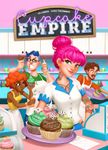
Hi, welcome to Actual. These are some of the board games I've been playing lately. In Cupcake Empire, you're trying to run the best cupcake empire. You're trying to sell cupcakes. You're trying to improve your production. And it really does feel like something of a business simulation because one of the core things of the game is that you're trying to keep your sales level in line with your production level. So, if you're producing too much and you're not selling it, well, that's not good. And if you're got loads of people want to buy it, but you're not producing enough, then that's not good either. And so every round you get income, which is points, uh equal to which of those tracks you're lowest on. So you're trying to move them up in tandem. The way you do things in the game is with these dice. And these dice are wonderful just to feel. They have this kind of brush plastic feel to them that almost make them feel and look like candy. And if I don't know if you can see, but the just the aesthetic of this whole game has these amazing bright colors. Um, it's got these meeples that uh are colored based on the uh ingredients that the customers want in their cakes. So, it says in the rule book that the people in this city have been told to wear clothes matching their favorite flavors of cupcakes, and that's what they're doing. Um, and just the board and then the artwork. I absolutely love the box art on this one. and it's got these little cup cakes that uh represent retail outlets and things like that. So, it just looks incredible, but it's actually much heavier and more involved
than you would imagine from the way it looks and the theme. Um, the way it works, the rules aren't uh I wouldn't say that complicated. It's just the depth of decisions and and how intense it can feel when you're trying to take your turn. So, what happens is that you will just pick a column on your turn to activate. Um, and how well that does depends on the number of dice in it. You have these dice are kind of like workers and you have a specialist for each color. So, you've got um you bake new bases for your cupcakes. So, this is a chocolate base. Um, and this would be this one here. Then, very similarly, you can do frosting. So, you've got four different types of frosting. mint, lemon, uh strawberry, um and chocolate. And if you if you get really good, you can do mixed frostings and that will appease two different types of customers because if you got lemon chocolate frosting, then you can please the lemon people and the chocolate people. Uh then you've got building a retail outlet that allows you to improve your sales. Uh then you've got actually serving to customers. So you can't just sell to customers unless you do the green one.
And then you've got this this final one does a few different things. It allows you to get new dice in and and it allows you to build a bakery which basically can produce things and sell things. Uh and then if you roll a six, you kind of can just put that dice anywhere. So there's just a lot going on in terms of what you can do on your turn because you also have uh these improvements which will give you extra actions. So, it can sometimes take a while for you to take your action because you're like, "Okay, so I'm doing this one. Which one do I pick and then I've got an improvement on there, so then I've got to do that?" There is a little bit of downtime in the game, I found, much like you would get with this kind of heavier Euro game. And like I said, it isn't complex in terms of rules. And I wouldn't even say that the game takes that long. It really sort of ramps up and can finish quite quickly.
It's just that feeling of overwhelmingness on your turn that had me feeling it was sort of as heavy as a griler in terms of that turn complexity. And that's what I was playing with other Eurogamers and they were feeling the same. So really that's the reason it isn't the kind of game for me because I don't want to be lost in my head trying to get to grips with it. I don't have the brain for that. it isn't something that I find that satisfying, but if you like that kind of thing, I think there's interesting mechanisms here. So, once you take an action, you roll those dice and they're going to then get placed into the columns uh of the numbers that you rolled. So, when it comes to your next turn, you can be thinking, uh, okay, there's always going to be like a place where you've got the most dice, but that's not really what you want to do right now. So, are there some tokens you can play or is there something you can do to maybe shift some dice to a different column that you because you really want to focus on that? There is a little bit of vying for the customers because once you serve a customer, they're now in your customer base and nobody else can get there. And there's a bit of control in terms of getting your retail outlets into the right neighborhoods and then being able to serve to those neighborhoods.
But I didn't find that I was really worrying too much about what the other players were doing. And it was the same for them. So I did find that there wasn't as much interaction as I would like from a strategy game. Um it was really just focusing on my own thing. So it definitely feels like a simulation of a cupcake empire and there's a lot to get your uh teeth stuck into. Isn't my kind of game, but it might be for you and it's got some incredible production and artwork. That's Cupcake Empire. I My favorite things is a party game from Japan that I picked up at Essen. And I'm probably going to frustrate you here because as far as I know, this is not available anywhere. Um, or it's going to be very hard to get hold of. But if you are a publisher that makes party games, you should absolutely try and license this game or publish this game because it needs to have a proper English version.
It's a very simple idea where you are listing things in a category of your favorite things. So, you will assign a category to the player to your left. So, for example, I might say, "What are your favorite TV chefs? What are your favorite uh towns in the UK? What are your favorite flavors of crisp?" Pick a category that you think you know about your friend. And that's what I love about this game is you're playing on your knowledge of your friend. So you will pass your cards to them and they will write on these cards. They're like whiteboard cards six different category. Let's say six different types of crisp and they will secretly assign a number to each of these things. So they will put a crisp on a card and then assign a number and they've got zero 1 2 3 4 5 where one is your favorite crisp ever.
Zero is a crisp that you actually don't like. It's not your favorite thing. And then two, three, four, five are crisps that you like. They don't have to be your your second and third and fourth and fifth favorite. Um, but they are ranked in that order. So, you like your second most flavor of crisp more than the fifth. and they are then handed back to you in these sleeves so that all you can see is the types of crisp and you don't know what the numbers are underneath but you do know your friend and you do know what crisp they like that's why you pick that category and now you're playing a simple little card game almost like a trick- taking game where you're trying to get points and so you basically just play a card everyone else will play a card in that round and they're of course all playing with you know their favorite Steven Spielberg film and your favorite Simpsons characters and your favorite board games and things like that. And so you're also having to look at them and understand, oh, okay, so if like I know that Phil really likes Jurassic Park, so if I've seen Jurassic Park come up, then maybe now's a bad time for me to play uh Thai Sweet Chili Walker Sensations because that's his favorite crisps. and then I I'm I'm going to get trumped. I'm going to I'm going to waste my number one card. Of course, you don't know. And so then when you you play your cards and then all reveal at the end of that round
and you see who won the round. And there's a cool little twist where basically one would be two and one would be all of the other numbers. But if there's a one out and there's a zero out, zero wins. So if you can see someone's got the one or you think that they they are playing their best their favorite card, you can play the zero to cancel it out and win that trick. And it's also interesting because you know you do know what one of the set of the cards is because it's your set. It's the the set that you wrote down when somebody asked you. So you do have that information. Uh I just love it. It's it I've played a lot of games where you try to understand about your friends and and they tend to be really good at creating discussion and I think that type of genre is great and I've almost like never found a game that was perfect. There's a lot of games I like but this one is the best that I've played in that type of game. I I think it's brilliant for creating discussion. You don't even have to play it with your friends. You can play it with people that you don't know very well, but just pick a more generic category. Pick something that you think uh you would know about them. The other challenge is in when you're writing those cards, try to fox them. Try don't go for the most obvious 1 2 3 4 5 your favorite Chris. Yeah, sure you go for the favorite one, but then put in some ones that they might not be sure about.
Ones you think they don't like, but actually you don't mind. And when you put in that zero, that thing that you don't like, try and make that sound appealing. And then of course, then they've got less information, you're more likely to win the game. So there is real thought to what you're doing. It is it is a game as well as like a a conversational party exercise thing. Um, it's brilliant. It's definitely one of my favorite party games of the year. I would recommend that everyone play it once. And I I'd be amazed if somebody doesn't pick this up. It unfortunately the one downside to it is that it's fiddly because you're using these card sleeves and and there has to be a much better way that a bigger company could do this with I don't know magnetic cards or something some flip thing something that just uh makes it easier to use because it's a bit fiddly. But this version for some reason comes with a metal uh letter box. That is the first player marker. So, why not? So, uh yeah, I absolutely love that game. It is brilliant. Tags is a very simple family type party game that I can totally imagine playing at Christmas with family. You're trying to get words or things that are in the right category and you're racing against the time.
You're playing on teams. Um and so you're trying to get these balls. So, there's these nice marbles, in fact, and you have this little plastic dog bowl to keep them in when you win them. And the way you're doing that is by saying something that fits the tags that are here. So, um, here you've got villains, things that are soft at the Olympic Games, trees and shrubs in a bathroom, and there's loads of different cards in in these stacks that you can get through. So, those are the categories. And then you've got letters K, B, M, E. So you're trying to match up these things. So if I had trees and shrubs, I could say birch and I would win this marble. And then I'm going for elm. Uh e. And I'm just trying to get as many marbles as I can in 15 seconds.
Then it's the other team, so they're thinking whilst it's my turn. So, I like that there's no real waiting for the other team because you can always be thinking about what you're going to do. Of course, then somebody gets it on their turn and you had one lined up. Um, and also just a couple of little tweaks that make it a bit more than just your average like party game for families from 20 years ago. For example, the marbles are worth different values. So, the white is worth one point, blues are worth two, blacks are worth three. So, you really want to focus on the things that are going to get you more points. But that's really interesting because you can waste time trying to think about a marble that you're just never going to get because it's just not coming to you.
Or you could just let yourself be a bit more free and easy and achieve something that's actually achievable and pick up a bunch of white marbles because you're they're able to come into your head these ideas. The other thing is that the tags uh the categories are worth points as well. They all have different star tokens on. So things at the Olympic Games, I guess, is considered a bit harder than things that are soft. So if you're able to win this tag, that's going to be four points for your team. The way you win a tag is by taking the last marble from that column. So you can really focus on columns or when it's the other team's turn, you can see, oh, there's only one marble left on that tag, so let's really try and get that. And you just go back and forth 15 seconds for each team uh until all of the marbles are gone or you maybe just get to a point where nobody can get one for the the remaining few anymore. It's by no means a modern classic that revolutionizes party games like some games that I cover, but it's accessible and it's just fun and there's loads of content in it. There's loads of different types of categories. is like I haven't even gone through all the different types of uh things and there's a bunch of different letters. If you want to make it harder, there are cards that um specifically ask for letters in certain places of the word, not at the start, I think, and and just really tricky letters like X and Zed and things like that that just make it that little bit harder. And these marbles are nice.
I like that it uses its own box. So yeah, I I would recommend Tags. If you looking for a family game that anyone can get into and you can have a bit of fun with maybe at Christmas, then uh give this one a try. That's Tags. Troll Fud is a game that I was excited about coming out at Essen and it's a family game with a twist, which is that it has a dexterity element where you get to hit this hammer against this cube tower and so that cubes come out. Yeah, I'm usually better at it than this. And uh so the theme of it is that you're trying to clear out troll caves. And how you do that is by sending your people to the different regions where these caves are. So this is a cave. And you have to start off with the number one caves and the number tws number threes. And depending on how many people you have at a location, that's how many times you will get to hit the tower.
What you're trying to do is get enough cubes out uh to match the points that are available here. So, this is 14 points. So, I would get to hit the tower five times. All the cubes go back in. So, I go one. Why is it not working?
So, I'd hit the tower five times. One, two, three, four, five. And then have I got out 14 cubes? I don't think I have. Maybe I have. 1 2 3 4. Oh, yeah, I have. But what you got to check for is whether you've gone bust and you you will check every time you hit the tower whether you've got too many cubes out of one color. Your allowance is again determined by the number of people you've got in that region. And so the more people you have, the more hits you get, but also the the less likely you are to go bust. So there's some interesting dexterity to hitting the tower. I found that you can definitely get better at it and that it isn't you can hit it softly to get one or two out.
So, there's a little bit of push or luck in terms of like, oh, I only I want a couple more cubes because maybe I want to push for this 22 points. I've got the 14. I could bow out now, but actually I want to hang in there and get the 22, but then I hit out too many cubes. I go bust. I really wanted to love this game, and I had fun with it, but I just I I can't I don't think it quite warrants the big box. and the dexterity element. I I don't think that there's enough added around it to make it an interesting enough game. I think that the hitting the cubes out the tower is fun, but is it fun five games into the future still?
And getting your workers into place, for example, you can also piggy back off of other other people's hitting. So if you get enough workers into the same RA region that they're about to hit the tower with, you can get involved. And that's a again there's some really cool ideas in there where if they hit the tower and nothing comes out, they have to give you the hammer and now you're in charge and if you go bust, they'll go bust as well and you'll get first dibs on the points. There's there's definitely fun stuff going on, but it's almost just too long and not enough of the good stuff and it just somehow it doesn't all come together to produce the kind of awesome experience I was hoping for. But of course, this is a bit of a long shot. Like it trying to get a some kind of family strategy game that involves a cube tower, I think, is a big ask. And I think they've probably come the closest that is maybe even possible with this kind of thing. So I certainly uh welcome the experiment. I think this is how we innovate in board games. This is how we come up with amazing new games. And I would rather be seeing games like this come out than another worker placement game with some generic theme that does absolutely nothing to iterate on what's already existed. I think this one's a near miss for me. Uh, it might be good to play with families of kids who are just
loving hitting the tower and I I think that's what it's aimed at. And I would certainly try something like this again. Uh, so yeah, I'm very excited that designers are trying stuff like this and that publishers are producing it. Just wasn't quite there for me this time. That's Troll Fueled. Woodlands is a realtime puzzle tile laying game where you are playing with these you've got these plastic uh sheets that you will ultimately be putting over the tiles that you lay down to see if you've created the perfect pathway actually comes with four different stories and then there are chapters with each and so the first one is like the beginner one that's Red Riding Hood. Then you got Robin Hood. There's a Dracula one and a King Arthur one. And uh what you're doing is you can see here it gives you some goals on the sheet of what you need to do. So this is a very basic one where you just need to get Red Riding Hood to uh the end point. Um and you also want to get her to pick up as many strawberries as possible. So you've got this uh acetate that you can see, but you can't overlay it on your thing.
And then against the timer, you will be taking these tiles. Everyone's got identical set of tiles and trying to um arrange them in such a way that you will uh that Red Riding Hood will be able to walk along this path perfectly and get to all the things that she needs to. And so this one's very simple. And let's see. I say that maybe I won't be able to achieve it whilst I'm trying to film. Uh, that isn't right. But anyway, so Red Riding Hood, oh no, she can't even get through. So, there's a spatial thing of trying to get the right tiles in the right place, but you're not you can't test your results until the thing is over. You can rotate them, and you got to find which ones are the right tiles for you to use and and where you should put them. And there's a real challenge to it. Now, this is the beginner level.
It gets way, way, way harder. This is even still within the beginner's chapter. It introduces lots more ideas such as um these wolves that are trying to uh eat the bunny rabbits. And if you allow the wolves to be uh have a path to the bunny rabbits, then you're going to lose minus points. Or if the bunny rabbits are in the forest and you allow the wolves a path through the forest, you're going to lose minus points. So often the levels use this interesting you've got the difference between the forest and the path and sometimes it's good to have things in the forest because it means that they're just blocked off from you. But sometimes if the forest then connects to the the the thing that it's not supposed to then that's bad as well. There are other scenarios where there are fires and if the fires in the forest then that's obviously bad because it's going to burn the forest down. Um, and it gets really intricate in the Robin Hood one. There's line of sight rules for these huntsmen that are trying to get you. So, you need to try and block them off by having forest bits in front of where they're pointing their bows. As the game uh goes on, it really gets challenging. And because you're playing against a timer, you don't have enough time to really think it through properly. So, you will have to cut corners or make mistakes.
And it's fun. It's It's challenging and you think that you'll have it and then you'll lay it over and you don't. If you've ever played the game Looney Quest, it feels very similar to that. And in that game, you are drawing with a whiteboard pen onto a plastic sheet and then overlaying the plastic sheet onto the map, which looks a lot like a video game. So, this is almost like a reverse of that. And this one I think is has a bit more puzzle to it because you have to you have to use these and you won't have the ones that you want when you need them. Whereas Looney Quest is a bit more of a dexterity challenge because and and a sort of a spatial awareness challenge because you're literally just having to draw a line and work out exactly where you should put it. I slightly prefer Looney Quest because it's a bit sillier and a bit just that that reveal and then thinking you've got it and not having it and that dexterity challenge I find just a bit more immediate fun than this. But if you like the sound of this real-time puzzle laying thing, it's great. It's a it's a it's a really good game. It's got nice like theme for kids and there's loads and loads of levels in here with loads of replayability. So, um, I wouldn't say you needed, uh, I wouldn't necess, you know, one person would probably like this over Looney Quest. I slightly prefer Luna Quest. You could totally own both. Um, because they are different
enough. Uh, but they they there is that similarity. I thought I'd mention it. So, that is Woodlands. Poetry slam is an interesting word game that also requires you to come up with rhyming couplets. So, uh, the round, the way it works is that you will have to come up with a word, um, and you're assigned a little challenge for this round. So, there's a prompt. This one says first letter is, and then you've got a letter. So, you need to come up with the word where the first letter is T. Or you might have the last letter is T. Things like that. And so, you're coming up with a word. Um, and you're doing it as fast as you can because there are these speed tiles that you can take. So, if you finish your word, then you will take a speed tile. You can take this five one. That would be five points. You finish the fastest, but that there's a reason why you might not want to take that, and I'll get to that.
You might want to take a lesser pointed one. Um, so you you're going to get points for the length of your word as well. So, you want to come up with one that's long as possible. So, that's going to struggle a little bit with with being fast in terms of coming up with this word. Um, and then the interesting twist of this game is that you've got to get the other players to guess that word. So you don't reveal it immediately and you're playing behind the shield. You've got to get them to guess that word by saying a rhyming couplet but not using that word. So for example, I in a previous game wrote the word jailbird. So then I would say a rhyming couplet and maybe I would say the first half of this is another word for prison. The second half of this is another word for women, which sort of rhymes. I got away with it at the time.
And then everyone then guesses what the word is. And somebody guessed jailbird and I get points for that. I actually don't want them to guess until the end of the poem. So that's interesting because I get I get one less point if they guess early on. So if the word is too obvious or maybe my poem is too obvious. So that's really interesting. I love creating poems in games. Uh there's a game called Serrano that I really love. And um there's Rhyme the Rap Game, which never actually came on to Kickstarter, but it was a game of writing raps. And that kind of thing just really I I just really love that kind of thing. And I really enjoyed that aspect of this game. Um and I like word games as well, trying to come up with um the longest word and having to meet certain criteria. This speed tile that you take will then remove a letter uh that you can then not use in future words. So if I had taken this one here, it would have removed a K. So then I've got a board in front of me where I place a token onto the K to show that I can no longer use K. It's actually quite tricky then in the future to remember that because you're just desperately trying to come up with a word quickly and then you're like, "Oh yeah, uh I uh I used a word with a K." in which case you get punished and you take these slam tokens and they are minus points at the end of the game. You also have these other tokens which are called snaps which are
kind of a reference to actual poetry slams where people snap at each other and that is where you're kind of giving someone a prize. So you would give them a prize for a good word or um or if if you like their poem. This I I I like this game. I had fun with this game, but it's it's not quite there for me. And I think it's just cuz there's a little bit too much going on. It works in tandem with each other. I like word games. And yes, there's something fun about trying to come up with this word, but I almost just want to do the poetry stuff, except the poetry stuff doesn't work without having come up with a word because your friends know that you wrote a a word with the last letter T. So they're not just guessing any words because then that will be quite hard. They're guessing specifically words that end with the letter T and based off of this poem. So they've got an idea about the type of word that you're you're going for and that that works. This I the speed thing of trying to finish quickly and getting points that works in word games. And then this idea about having not being able to use letters definitely makes the game challenging.
And of course, it makes sense to have tokens to punish you. I don't think the snaps are really necessary, but they're not the end of the world. There's just quite a lot going on. It isn't something you can just kind of jump into like your average party game. There's a bit to teach and actually goes quite long as well. Um because once you've sort of taken some time coming up the words, then everyone takes a while to come up with their rhyming couplet. You don't you don't have to take it in turns, but there will be one or two people that just really struggle with that aspect. And so, I'm not sure how many people I could viably play this game with. I like it. I respect it. I I would recommend it to you if you like the sound of it. It isn't going to stay in my collection, but I I don't think that means it's a bad game. I feel like I want it to be streamlined, but then as soon as I try to take parts off of it in my head, it somehow falls apart as an idea and and I'm not sure where you would streamline it. So, it's a it's a it's a weird um conclusion, but that that's where I'm at with it. That's poetry slam. Quantum is a roll and write game from NSV in the same line as Quicks and Quinto. And that was why I was excited about it cuz Quinto is one of my favorite roll and Wright games there is. And this is the third one in the trilogies actually from different designers to Quinto and from Quicks. They're all different designers.
Um but it has a similar feel to it in that you've got a small bit of paper. You are rolling dice, writing numbers down, and they want to go in sequential order. You've got four different colors. And the lines want to ascend in order until you hit this line after four numbers. And then it needs to come down in descending order. So on your turn, you will roll all of these dice and you will uh work out what you can write in. So this white dice here is always added to the number of the other colors. So if I was to write down purple, I would have uh 10 purple. I would have seven blue and I would have uh 10 red. And uh there's yellow actually isn't shown. So I can use the white dice and I would basically just have four yellow. So generally speaking, you want high numbers because the way you score points is by scoring the second highest number in a column. So here I've got 8 787. I scored eight points. So, it's actually really good to get the same numbers in a column if it's either the lowest number or well mostly if it's the lowest number because then if you've got like three sevens and then one of your rows has a 15 in it, you're going to score 15 points. So, that's great. So, higher numbers the better because you're getting points for them,
but you're really going to struggle if you go really high early on in the leftmost column. you're going to struggle to be able to get higher numbers because you're you can only put in what the dice give you. And whilst it's possible to get all of the die faces on purple and so and then this dice on six and so you got some massive number, it's it doesn't happen very often. So you are trying to play that balance of going as high as possible to get more points than the other players, but making sure that you can actually write something in because if you can't write something in, you're going to take a penalty and those are minus points. And but really the bigger penalty of of not writing something in is just that you won't get columns finished. If you don't get columns finished, you won't get any points for them. and then you you just won't come close. So, I've seen games where people go really high big with their numbers early on and then they're just not taking any numbers because you only have to take a number on your turn when you're rolling the dice. When other people are rolling the dice, you can just pass. But that does mean that the game can go a bit slow because if nobody's writing any numbers down on other people's turns, then these sheets aren't getting filled up and the game ends when somebody completes their sheet or if somebody uh takes all the punishments. What also happens in the
game is that you you draft your selection. So let's take I say I took yellow here. The other players would would not have access to what I picked as the first player. So they they get the option of what's left. You can roll uh any amount of the dice. So let's say you want really high numbers, uh reds. Well, you've got two reds there. So you might roll this cuz it only came up with a two and then roll the rest of these really hoping for reds. Or you could roll everything. You could that I I like that um aspect of getting to decide what to roll. I find that there's a fair bit of maths to it because you're not just having to add up like in quinto you have to add up three dice maximum. In this you got to sort of add up three here then you got to add up three here then another three and that's just a bit timeconuming. I'm not personally that great at mental arithmetic and you're having to do that every turn. Um so I don't love that. I also think that drafting the dice just in any roll and right game can slow things down a bit because you're not just all going off the same result. But at least in this game, there's only it's not like you're all picking separate things. There's basically just one person picks and then everyone else gets they can share the results of what's left. Um I I uh I like this one. I think that it's a worthy successor to Quinto, but I can't really see why I wouldn't always
just play Quinto instead. I think that there are decisions to be made and you don't want to get all your columns in the same place at the same time necessarily because then you're all you're aiming for big numbers in all of the colors. Uh the way it descends is interesting and the way that you score the second highest thing. There's clever ideas, but I'm not sure it makes for a game that I love and I love Quinto. So, um, if you if you're really into rolling right games, it might be worth one uh one worth trying out, but I'm probably just going to stick to playing Quinto and maybe other rolling right games that are just completely different to this type. Uh, that is Quantum. Clickbait is a party game designed by Rhina Canitzia, if you can believe it.
It's very simple. You uh roll these dice. They have letters on and then you have to come up with a clickbait title or slogan or just like a clickbait headline for the internet for a specific product. So they're always weird and wonderful things like you've got a beer fueled jetpack or sandwich shoes or board game themed funerals. So then you've got a bit of paper and you're writing down using these letters. You don't have to use all of them. So, if I was going to do board game themed funerals, I might go with Wow, what's a board game beginning with any letters? This is just a really quick one. Uh, I've got Gary's Sigrada in Afterlife seances, which kind of fits. And so, everyone's writing one down. You give them to the judge and the judge reads them all out and picks their favorite.
Generally the funniest and it's it's simple. It's it's that kind of little it's got a little bit of creativity for a party game. I tend to like stuff like that. And uh these cards have got nice they give you good inspiration for coming up with funny stuff. Generally when I've played it, it tends to get quite dark and quite adult in uh at least in my friendship group. I I I don't love it. And I think it's just because some people really struggle to come up with funny stuff that fits these letters. Or other people would rather not be hamstrung by what's on these dice, which I think is kind of fair, but also I think you you you do need some guidance maybe because if you just had a blank whiteboard, you'd be there forever. Uh, I also think that there's just not enough cards here. Like I think you play this three or four times and you would have seen all the products. Now, of course, you can play them again because that the dice gives you that replayability. You will be coming up with different slogans, but I I just think there should be at least double this um in a game of this type so that you're you're surprised or at least make them double-sided or something. So, I I definitely think it's fun for a few plays and if you want some a simple creative party game with a cool like modern theme, uh it can be as familyfriendly as you want it to be. I I think there's a fun game in here. Uh but
I'm just not like going, this is amazing. That is clickbait. Those are the board games that I've been playing lately. I'll put links to where you can buy them in the description below. I'm John Peris. Thanks for watching. Heat. Heat.