








5211 Deep Dive
What the Community Thinks About 5211
Community discussion of 5211 is thin, and the two reviews that cover it in any depth take quite different positions. Board Gaymes James mentions the game briefly in a convention haul from BGG Con and PAX, presenting it as a trick-taking style design in which players try to make the trick win without busting, and noting that it is published by Next Move Games, a publisher James counts among their favorites. The enthusiasm is directed at the concept rather than a full play report.
Luke Hector of The Broken Meeple offers the more detailed critique, placing 5211 in the small filler category and saying it does that job without becoming memorable. Hector's central objection is that the random draw carries too much of the outcome while offering few decisions to offset it, and that the game plays best with three or four players, since higher player counts add more luck.
The two reviewers agree that the color-based scoring is the heart of the design and that the game is light. They part ways on whether that scoring twist is enough to carry the experience. James treats the concept as the main draw, while Luke rates the game as okay at best.
Core Mechanics That Define 5211
Majority Color Scoring
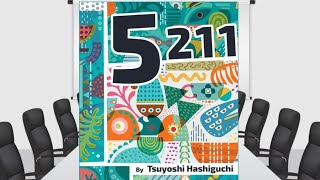
Each round ends with a count of the colors in play, and the scoring depends on which color holds the majority. Luke Hector explains that when too many cards of one color are out, that color does not score at all, and the points pass to the next most common color. If the top two colors are tied, neither scores and the check moves further down the list. The result is that players are steering the color balance of the whole table rather than simply building a strong hand. Luke also notes that 5211 reimplements Five Colors, which explains the first half of the title, and James credits Next Move Games with the release.
Hand-Limited Card Play
Players work from a small hand of cards and play out in stages, with two cards on the opening turn and a single card on each turn after that. Each play is followed by a refill, and the cycle repeats until the deck runs out. Luke Hector points out that the hand is the real constraint on what a player can do. If a player holds no cards in the colors that are building up, that hand is effectively wasted for the round. In Hector's account, the rulebook does not explain how the first player is chosen after setup, and the group simply rotated the starting seat, even though going last carries a clear advantage.
The 5211 Experience
Tense Majority Maneuvering
The table atmosphere centers on a constant calculation about the color balance. James describes the appeal in terms of trying to make the trick win without tipping into a bust, which suggests a push and pull between committing to a color and overcommitting to it. Luke describes checking the table each round to see whether a preferred color is about to score or is about to be knocked out by a rival. The tension comes from knowing that a single additional card can change which color counts, so every play has consequences beyond the cards already in front of you.
Wasted Hands and Luck Swings
The less pleasant side of the experience is the sense that a round can be decided by the cards you were dealt. Luke Hector describes rounds with cards that had no overlap with the colors on the table, leaving little meaningful to do. Hector also notes that a player holding mostly low-value cards can score less than someone who draws a single high-value card, which was hard to square with the scoring. The tone is more shrug than frustration, but the point recurs throughout the review.
What Makes 5211 Stand Out
A Scoring Twist That Rewards Reading the Table
Both reviewers single out the scoring system as the reason to play. Luke Hector likes its quirkiness, particularly the way players must anticipate whether a color will score or bust before committing cards to the table. James frames the design through a trick-taking lens, where the key skill is making the trick win without busting. The shared appeal is a rule that punishes overcommitting to one color, which is an unusual idea for a light card game.
A Quick Filler With Quirky Character
Luke Hector recognizes 5211 as a small filler and judges that it fits that role, observing that quirky card games of this kind occasionally produce standouts, and treating 5211 as a worthwhile curiosity even without being won over. James likewise presents it as a fun, approachable pick rather than a heavy investment. For groups who want something lightweight between larger games, the reviews suggest that is the game's most reliable strength.
Potential Drawbacks
Luck Without Enough Mitigation
The most repeated criticism is the role of luck. Luke Hector argues that the random draw can leave a player with a hand that cannot contribute to the round, finding the lack of mitigation hard to excuse even for a filler, and adding that the game becomes luckier as more players join, which is why Hector recommends three or four players. Players who want meaningful control over outcomes are likely to find this the primary concern.
A Thin Rulebook and Uneven Point Values
Luke Hector raises two smaller issues that compound one another. First, the rulebook does not explain how the first player is determined after setup, even though there is a clear advantage to playing last in a round. Second, card values run from one to six, but the higher values are scarce, so a player who does not draw the fives and sixes can have a capped score. Hector questions why the values were not spread more narrowly, such as two to four.
If You Enjoy 5211
Players who enjoy 5211's majority color scoring will find the same underlying engine in Five Colors, the game that 5211 reimplements. Players who want a quick card game with more personality may prefer Love Letter, which Luke Hector turned to straight after a session of 5211 and found to be more fun in the moment. The comparison is a useful one for players deciding between the two: 5211 offers a sharper scoring idea, while Love Letter offers a more immediately engaging table experience, according to Hector's own reaction.
What Reviewers Are Saying
"This is a really cool, I guess, a trick-taking game, where you're going to be going through all of these different decks of cards, and you're going to want to try and make the trick win but not bust."
— Board Gaymes James
"The game just kind of lacks a lot of decision making, and it lacks much in the way of fairness with, you know, luck mitigation or anything. So it does the job as a filler, and I don't hate it, I don't mind it, but it it just has very limited scope."
— Luke Hector, The Broken Meeple
"These point values range from one to six. Now, there's not that many cards that are priced at four, five, and six — most of them are one, two, and three. But if you don't draw any of the fives and sixes, then your score is capped because you just can't score a lot for your cards."
— Luke Hector, The Broken Meeple