















Abroad Deep Dive
What the Community Thinks About Abroad
Abroad has surprised and impressed reviewers with a design that balances thematic richness with elegant simplicity. Reviewers consistently praise the game for delivering meaningful strategic depth without overwhelming players with rules complexity. The overwhelming sentiment is that Abroad successfully captures the experience of traveling through Europe while maintaining tight, engaging gameplay that rewards careful planning and tactical thinking.
Core Mechanics That Define Abroad
Time as Resource and Action Currency
The most distinctive feature of Abroad is how time functions as the primary currency driving decision-making. Players have seven days per week (round) to spend, with each location card requiring a specific number of days to visit. This creates an elegant trading system where players must constantly evaluate priorities, deciding whether to rush through an action or invest more time for better returns. The designers succeeded in making the mechanic feel thematic; spending days on activities mirrors real travel planning, and the constraint of limited days each week forces meaningful choices that shape each player's journey.
Card-Driven Area Control Through Byproduct Engagement
While Abroad includes area control scoring, reviewers note that this mechanic emerges as a natural consequence of other gameplay rather than serving as the primary focus. As players travel and play location cards, they place tokens in regions on the map. At the end of each week, whoever controls the most tokens (with heart tokens breaking ties) scores points in each region. What makes this design elegant is that players typically ignore area majority scoring while deeply engaged in their own tableau and card combinations, yet the competition for regions happens organically. Some cards can flip tokens to their heart side, strengthening control, but this choice competes with many other pressing decisions about card synergies and timing.
The Abroad Experience
Always Having a Plan
Reviewers emphasize that Abroad delivers a deeply satisfying experience of forward-looking anticipation. A hand of seven cards creates a natural planning space; players can see paths unfolding before them and feel drawn to execute their strategies. This sense of purposeful agency drives engagement round to round. Even players who finish their week ahead of others spend the wait thinking about next week, already visualizing how fresh cards might fit into their developing itinerary. The game rarely leaves players feeling helpless or reactive, instead nurturing the experience of being a deliberate traveler with a growing sense of destination.
Growing Visual Beauty and Tableau Progression
The game begins with sparse, minimal setup but transforms over four weeks as players accumulate tokens on the map and build out their calendar board. Reviewers note that this visual progression is not essential to the game's success, yet it reinforces the narrative of a journey taking shape. The cards themselves feature photography of actual European locations, which creates resonance when players recognize places they have traveled or wish to visit. This aesthetic cohesion between mechanics and theme gives the game a sophisticated feel that justifies the time investment.
What Makes Abroad Stand Out
Thematic Integration Without Heavy Rules
Reviewers consistently note that Abroad achieves something difficult: a rulebook that stays short and light while the mechanics deliver surprising crunchiness and depth. The manual focuses on broad systems, leaving most complexity to the cards themselves. This design choice means teaching the game is straightforward, yet the card effects and day-bonus interactions create rich decision trees. Players encounter depth gradually as they read cards and discover interactions, which feels organic rather than overwhelming. The tight economy of resources (coins, energy, locals, excitement tokens) means every action trades against something else, but the multiple pathways to resources (trading cards for money, resting for energy) ensure players rarely find themselves stuck.
Photograph-Based Art Direction as Travel Authenticity
Rather than using illustration or abstraction, Abroad uses photography of real European landmarks and cities on its cards. This choice proved divisive in subtle ways; some reviewers love it for its authenticity and ability to spark stories and memories, while others noted it is functional rather than stunning. However, reviewers consistently acknowledged that for a travel-themed game where players are collecting postcards and reminiscing about locations, photography creates an immersive quality that illustration would struggle to match. The photographic approach also guarantees visual variety that no illustrator could sustain across 240+ unique location cards.
Potential Drawbacks
Late-Game Icon Scarcity and Deck Luck
Reviewers identified a minor tension in how the massive deck interacts with late-game strategy. The game includes 240+ unique cards, each with specific icons (tags for postcards, symbols that trigger bonuses). Some postcards reward collecting certain icons; reviewers noted that by the end of the game, chasing a particular icon can feel futile if the remaining deck simply does not contain enough copies. Drawing three cards to plan a single action can sometimes yield no cards that synergize with the current strategy. While players can still engage in backup actions (writing a book to convert cards to money, resting to recover energy), this randomness occasionally undermines the tight planning that defines the experience. Reviewers treated this as a minor friction rather than a serious flaw, noting that the 90-minute playtime keeps any single stretch of bad luck from derailing the whole game.
Player Count Impact on Experience
The game scales from one to five players, but reviewers emphasized that the experience varies significantly by count. Two to three players delivered the tightest, most engaging experience with minimal downtime. At four players, area control becomes more competitive and the game length stretches without adding mechanical depth. At five players, the experience deteriorates; turns take longer, downtime accumulates, and the area control competition becomes chaotic enough that early decisions feel less consequential. Reviewers suggested the five-player option exists primarily for marketing reasons rather than because the game shines at that count.
If You Enjoy Abroad
Reviewers compared Abroad to several other games. Those who loved its satisfying planning experience and tight economy found common ground with Terraforming Mars, though reviewers noted Abroad is more elegant and streamlined. Players drawn to the travel theme and location-collecting loop appreciated Let's Go to Japan but felt Abroad provided a more complete and engaging experience overall. For the card-driven mechanics and synergy-hunting, Earth and Ark Nova came up, though reviewers emphasized that Abroad's day-based action economy is fundamentally different from those games' production-chain systems. Those seeking the light tableau-building and resource-trading feel without commitment to a heavy engine-builder might enjoy Splendor. The area control layer appeals to players comfortable with games like Pursuit of Happiness, which also weave thematic narrative through area and collection mechanics. Finally, for solo players, the included bot mode (where players manipulate an AI opponent's available locations) offers genuine challenge and engagement, making the game appealing even outside multiplayer sessions.
What Reviewers Are Saying
You're going to draw that handful of cards and go, oh, I can't do as many of these cards as I want to. But hey, I can spend a day and draw four more cards. Or I can sell cards for the stuff that I need, because the game has a pretty tight economy. I find that stuff to be kind of fascinating, that the economy is tight, but it doesn't feel overwhelming. And if you put a lot of effort into getting locals, you then have local actions you can take all over the place, which will give you the resources you need to do everything else.
— The Dice Tower
It's passive. You're doing other things because it's just really about I I feel like I'm I'm playing cards, looking for little combos, combinations of things that work well together. The It feels like the area control is a byproduct of me playing that game.
— The Dice Tower
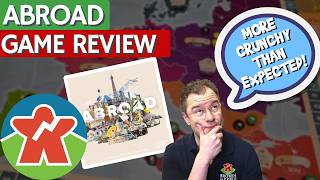
It is deceptively clever in how it takes a couple of mechanics, one of which I'm not even the biggest fan of, area control, and yet combines them to make a pretty fun, crunchy experience where people can reminisce about their holidays for a bit of a laugh. There's a lot that you're going to be doing that keeps players engaged. It's not the biggest looker in the world, although the photography on the cards is still pretty nice.
— The Broken Meeple