




Bardsung Deep Dive
What the Community Thinks About Bardsung
Bardsung draws a sharply divided response from the players who have covered it. Supporters see a dungeon crawler that gathers strong ideas from many earlier games into one long campaign, while critics focus on its physical footprint and on a rulebook that takes time to absorb. The most enthusiastic reactions tend to come from players who pushed past the early setup and reached the systems that make the game distinctive.
Core Mechanics That Define Bardsung
Boss Battles and Heating Up
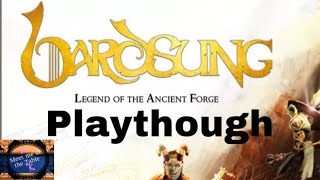
Bosses are one of the most praised parts of the design. Each boss has a reference card, and its own boss initiative cards are shuffled into the initiative deck. This lets a boss act more than once in a round instead of only once per turn. Bosses also heat up as a fight goes on, so the encounter changes shape as the damage piles up. Reviewers who played through a boss fight described this system as a clear highlight.
Combat, Fate, and Critical Hits
Combat rests on target numbers. The damage die is compared against the monster's toughness, and a strong roll can produce a critical hit. Characters can gain advantage or disadvantage on their rolls, and fate tokens fund special abilities. Fate tokens are restored when the bard's song symbol appears or when a natural 20 is rolled, which ties the combat system to the bard's storytelling role.
The Bardsung Experience
A Campaign That Feels Like a Storybook
Play is organized around a book-style campaign map divided into chapters. Players follow branching paths, so each chapter can feel like a new stretch of a larger tale. A companion app narrates the story and keeps the sessions moving between tactical decisions. The result feels closer to reading an adventure book with friends than to working through a rulebook.
Positioning and Enemy Behavior
Positioning matters. The marching order affects how the party is exposed to attacks, and abilities such as pinned and steadfast give players ways to shape the battlefield. Monster AI cards mark enemies as ferocious, cautious, or disciplined, which changes how each foe behaves. A familiar monster can therefore feel different from one fight to the next.
What Makes Bardsung Stand Out
Character Growth and Cross-Class Options
Experience is spent on new skills, and characters can cross into another class to gain a skill from that class. Crossing classes costs more experience than an ordinary skill purchase, but it opens unusual combinations that reward experimentation. Attribute increases give a separate route for growth, so characters can develop along different lines over a long campaign.
A Reputation System That Shapes the Story
A reputation track measures goodwill and corruption, so the choices a group makes change how the world responds to it. Wandering monsters and echo tokens add pressure between objectives, and a lost treasure deck adds another layer of discovery. The campfire serves as a save point where the party can rest, but it needs firewood to function. Together these systems make the campaign feel responsive to the group's decisions.
Potential Drawbacks
Table Space and Board Size
The most common complaint is the board. A reviewer described it as the largest board they had seen for a game, and it can be too big for a typical dining table. Board readability also came up, with the artwork described as hard to read in places. The same reviewer felt the game did not live up to early claims of easy setup and teardown, so players should plan extra time before a session.
Learning Curve and Mixed Reception
The game asks a lot of new players. Skills, reputation, fate, and boss behavior all take time to learn, and a session taught by someone who does not know the rules well can slow down considerably. Reactions are not universal. One session described in the community was judged not particularly good, and the reviewer said the game did not impress them. The mixed reception is a reminder that the strongest praise is far from unanimous.
If You Enjoy Bardsung
Players who enjoy Bardsung's mix of campaign play, tactical combat, and character growth may also like several other games. Kingdom Death: Monster offers a dark, deeply campaign-driven experience with striking monster design. Arkham Horror brings a cooperative investigation feel and a strong narrative thread. Talisman focuses on fantasy adventure, with exploration and shifting fortunes. Runebound offers a fantasy adventure with a branching world and steady character progression. Each one shares some of the sense of a long journey that Bardsung delivers.
What Reviewers Are Saying
"I like the way that these bosses all have their own initiative cards that are put into the deck that makes them be able to act more often than just once a turn."
— Meet Me At The Table
"The board that you play on actually will not even fit on my dining room table."
— Dungeon Dive
"But, I was not very impressed by it at all."
— The Dice Tower