


Horizon Zero Dawn: The Board Game Deep Dive
What the Community Thinks About Horizon Zero Dawn: The Board Game
Horizon Zero Dawn: The Board Game, published by Steamforged Games in 2020, is built for 1 to 4 players and runs about 75 minutes. Reception is clearly divided. Reviewers who approach the game as fans of the video game are the most excited about its ambitions, while critics focus on how those ambitions hold up once the pieces are on the table.
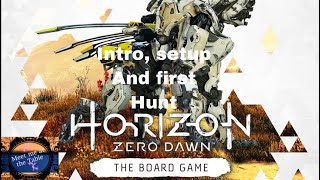
The most enthusiastic account comes from Barron, Meet Me at the Table, who recorded a full co-op playthrough with two hunters. Barron praises the way each hunter fights differently, the tactical positioning on the map, and the card-driven attacks. The session reads as a fan discovering a game they enjoy, not a critic dissecting its design.
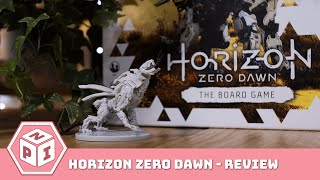
The critical view is considerably harsher. No Pun Included describes a box that promises far more than it delivers. The reviewer calls the package a gorgeous, lavish adaptation, then argues that the rulebook, the semi-cooperative structure, and the encounter design do not come together. The verdict is that the game is a pale shadow of other big-box miniature games, that it would not be recommended to anyone, and that its quick setup and teardown are one of the few things working in its favor.
The third perspective is the shortest. UndeadVikingVideos answered a question about the game during a broader conversation with a brief verdict that it was not good and was not for them. Because that opinion comes with little elaboration, it is best read as a personal dismissal rather than a detailed critique.
Core Mechanics That Define Horizon Zero Dawn: The Board Game
Deck-Based Combat Where Your Deck Is Your Health
The most distinctive system is the way each hunter's action deck doubles as hit points. At the start of each turn a hunter draws five cards, and the starting deck typically holds somewhere between 14 and 18 cards. Every time a monster damages a hunter, cards must be discarded from that deck. A hunter who cannot discard or draw faints, and in co-operative play the loss of either hunter ends the hunt. Barron points out that the same deck also supplies ammunition, since arrows, bombs, and traps must be drawn and slotted in before a ranged attack. Crafting, which returns cards from the discard pile to the draw deck, is the main way to recover.
Dice Pools, Pips, and Machine Parts
Combat is resolved with colored dice. Attack dice come from weapons and cards, and defense dice are rolled when a hunter is struck, with arrow pips and critical symbols determining how much damage is blocked. Barron notes that the more arrows a hunter rolls, the more damage is stopped. The mechanic No Pun Included singles out is the parts system. Before rolling, a player declares whether an attack targets the machine's body or one of its components. Body damage is reduced by armor, while a part is only damaged at half its tear value and destroyed at full value. A missed roll against a part is effectively a wasted turn that leaves the hunter exposed, which the reviewer describes as painting a target on your face.
The Horizon Zero Dawn: The Board Game Experience
A Post-Apocalyptic Sci-Fi Hunt
Reviewers frame the game around its setting. No Pun Included describes a collapsed world that has reverted to tribalism and is plagued by robots that behave like wildlife, and the reviewer treats the machines as creatures to be studied. Barron emphasizes the hunt itself. The session plays out on a board of tall grass, boulders, and marked patrol paths, with watchers and striders following routes that the hunters must read. The theme is not a veneer. Machines move along fixed paths, and the hunters' success depends on learning those patterns.
Triumphant Moments and Lavish Components
Barron gives the most celebratory account of the game's peaks. A lucky bow shot drops a watcher in a single attack, a silent strike from tall grass stabs a strider before it can react, and a run of salvage draws pays off the hunt. Barron describes the cards as really nice and says the bow is a huge favorite. No Pun Included also begins from production, calling the box a gorgeous, lavish adaptation, and sketches the intended payoff of heroic turns: jumping between enemies, swinging an axe, setting everything on fire, and shoving a monster into a trap. The reviewer argues that the execution falls short of the promise, but the aspiration toward triumphant combat is clear in both accounts.
What Makes Horizon Zero Dawn: The Board Game Stand Out
Hunters With Distinct Decks and Progression
Barron stresses that each hunter plays differently. Karja, the warrior, is nimble, and her nimble ability lets her roll an extra orange die on an evade roll that contains only orange dice. Nora, the marksman, can reroll any number of dice when a ranged attack targets a component. Each hunter has starting gear, an individual action deck, and an upgrade tree in which only connected branches can be taken, so choosing one ability closes off others. No Pun Included also finds this progression to be a strength, noting that each character has diverging paths of progression and a very different feel, and that visiting merchants between encounters to spend scrap on better weapons and armor is a satisfying loop.
Faithful Machine Behavior and Stealth Play
The stealth system is what Barron finds most engaging. A hunter can move one square silently or run two squares loudly, and a sprint or an adjacent move can alert a machine. Tall grass hides hunters from machines that are not already alert, and distraction actions can lure a non-alert monster toward a trap or into another hunter's square. No Pun Included calls the parts system the key selling point of the video game carried into the board game, and notes that machine behavior cards give each robot a distinct role. Watchers act as sentries that alert other machines, and rams charge at hunters as soon as they are seen.
Potential Drawbacks
Rule Complexity and Semi-Cooperative Scoring
No Pun Included makes the strongest case against the rulebook and the scoring model. The 50-page rulebook is praised as concise and readable, but the reviewer says it leaves out much of what players need once they start operating the machinery, and that no FAQ existed at the time of review. The central complaint concerns the semi-cooperative design. Glory points are scored individually during encounters, yet the reviewer argues that killing things is the only way to advance, so players fall into picking targets and rolling dice until they die. Scrap draws that cancel glory from a kill, and a character who earns a glory point each time they set fire to something, make the scoring feel unfair. The reviewer also finds the cooperative mode too easy, with enough monsters in each encounter for every player to earn a kill.
Repetitive Encounters and a Thin Late Game
The second critique targets encounter design. No Pun Included describes an endless trawl of uninteresting encounters that leads to a final fight that no longer feels like a challenge. By the end, the hunters' characters are so upgraded that the boss is just another monster with more hit points and armor. The reviewer compares this to Dark Souls: The Board Game, which drew criticism for minion encounters before its boss, but whose boss fights were the good part. In this game, the reviewer argues, the payoff never arrives. Monsters that exist mainly to be killed are easy to dismiss, and the repeated structure makes each fight feel the same.
If You Enjoy Horizon Zero Dawn: The Board Game
No Pun Included notes that the cooperative framework is lifted from Descent and Imperial Assault, which makes those games the most natural recommendation for players who want a shared-objective hunt with monsters that react to alerts and noise. Players who want the tense, challenging boss focus that the reviewer found missing should look at Dark Souls: The Board Game, which comes from the same publisher, Steamforged Games, though the reviewer notes its minion-heavy pacing. For players who want a quirky competitive game with an unusual feel, the reviewer describes Rising Sun as a title that did not work for them but is loaded with intriguing ideas and kooky competition.
What Reviewers Are Saying
"This game is really really cool. I'm really excited for the tactics of moving around on that board and having decided how to take out each enemy and when to take them out."
— Meet Me at the Table
"The best comparison that I can summon here is England's track and trace system. It has all the necessary components to make it work, but as soon as you press that launch button it implodes under the weight of its own incompetence."
— No Pun Included
"Bad? No, but not but not good. Not for me."
— UndeadVikingVideos