/pic2871265.jpg)
/pic4543702.jpg)


/pic2871265.jpg)































Imperial Settlers Deep Dive
What the Community Thinks About Imperial Settlers
Imperial Settlers stands as a divisive but respected civilization builder that rewards mastery and punishes inefficiency. Reviewers consistently praise its asymmetric factions and satisfying engine-building puzzle, while grappling with its tendency toward analysis paralysis and explosive midgame complexity. Designed by Ignacy Trzewiczek and published by Portal Games, the game appeals most to two-player groups and players who relish deep tactical optimization, though it struggles to retain casual players after initial plays.
Core Mechanics That Define Imperial Settlers
Multi-Use Cards and Resource Efficiency
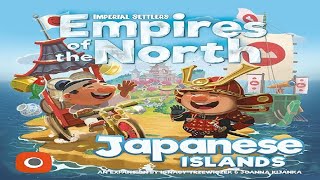
Players command one of four asymmetric civilizations (Romans, Barbarians, Egyptians, or Japanese), each with unique faction decks that shape development paths. The mechanical foundation revolves around resource efficiency: spending cards to generate resources, building production chains that immediately yield what they cost or better, and converting those resources into victory-point-generating structures. Each round cycles through drafting common cards, producing resources, taking a potentially explosive series of actions, then discarding almost everything you didn't use.
The Attack and Defense Dynamic
The standout interaction mechanic involves multi-use cards: you can raise common cards from your hand for resources, discard them for value, turn faction cards into permanent production deals, or attack opponents. Raising an opponent's building destroys it and damages their board, but they salvage one wood and the card flips into a reusable foundation. This creates tension between tearing down enemy engines and preserving your own, with shields providing fragile defense against costly attacks requiring multiple raid tokens.
The Imperial Settlers Experience
A Puzzle That Explodes in the Midgame
The first two rounds feel manageable with four or five actions per turn and enough resources to spend meaningfully. By round three and four, the game enters its explosive phase. Efficient players find themselves with 15 to 20 available actions each turn as production buildings cascade into more resources, triggering building bonuses, enabling attacks, and funding new structures. One reviewer noted taking 7 to 8 actions early but 23 actions by round four, turning a contemplative puzzle into an optimization marathon.
Asymmetric Faction Depth
The four civilizations feel genuinely different in practice. Romans excel at building synergies where each new structure triggers bonuses from earlier ones, creating point generation loops. Egyptians produce gold coins freely, using them as wild resources to bypass normal restrictions. Japanese construction can't be attacked but generates raw strength through their unique cards. Barbarians accumulate workers and can trade two workers for any resource, favoring action-heavy turns. Each faction plays like an entirely different engine. New players often feel each civilization is overpowered, until they play it and discover the traps hidden in their flavor.
What Makes Imperial Settlers Stand Out
Asymmetric Civilizations That Feel Truly Different
Despite drastic differences, balance emerges through point-scaling: an Egyptian pouring gold into a massive resource advantage can suddenly lose to a Roman who quietly built a tighter victory-point machine with fewer flashy goods. This keeps asymmetry interesting across multiple plays as players move from learning a faction to exploiting its synergies. The game rewards studying specific faction strategies and remembering card synergies, meaning repeat players with a single faction will destroy opponents still learning theirs.
Satisfying Engine Building Loops
Card draw becomes critical in deeper plays. Spending two workers to draw a card generates hand momentum that poor players never achieve, forcing them to manage what they drew at game start. This creates a skill cliff: veteran players draft aggressively for engines while new players chase immediate value, falling further behind. The cleanup phase, where you discard almost all unspent resources except your faction's stored good, punishes poor planning brutally and forces relentless decision-making.
Potential Drawbacks
Midgame Action Explosion and Downtime
The game's greatest weakness is pacing imbalance. Two-player games avoid the worst downtime, but three-player escalates significantly and four-player turns into a waiting game for non-active players. Once one player passes early, having fewer cards or resources, they sit helpless while others take 10 or more actions before their turn returns. A full five-round game easily stretches 2 to 3 hours with groups prone to analysis paralysis.
Card Balance Between Faction and Common Decks
A secondary issue emerges in card balance: common cards trade for faction cards so easily that players burn through the common side of their boards to fund faction-building. The board becomes a sea of faction structures worth two points each while common cards at one point remain rare. Faction cards snowball disproportionately, suggesting that the tension between upgrade and preservation could be better balanced.
If You Enjoy Imperial Settlers
Imperial Settlers excels for players who love engine building wrapped in civilization flavor. 51st State, the original design by the same creator Ignacy Trzewiczek, shares its mechanical DNA with a post-apocalyptic theme. Race for the Galaxy offers similar multi-use card mechanics in a faster package. 7 Wonders delivers comparable civilization asymmetry with simultaneous drafting. Robinson Crusoe, another Trzewiczek design, provides cooperative adventure with the same tight resource management. The game shines at 2 players and works well with experienced 3-player groups who keep turns snappy.
What Reviewers Are Saying
"There's so many different ways to evaluate your hand. You really need to think about which cards are gonna turn into buildings and how you're gonna get through each of the five turns having the least amount of wasted resources."
— Getting Games
"I love civilization building as a theme and engine building games. You have cards in that custom stack which kind of guide the civilization in a particular direction, and I just love asymmetric player abilities in games."
— Getting Games
"The solo adventure mode adds replayability with different puzzles. The extra action ramp helps in the early game by allowing more actions and resources, and access to resources earlier through ramp improves pacing significantly."
— Meeple University