




Run, Fight, or Die! Deep Dive
What the Community Thinks About Run, Fight, or Die!
Reviewers agree that Run, Fight, or Die! is a zombie dice game with a lot of miniatures and a quick setup. They split on whether the randomness and the competitive structure are acceptable. The most enthusiastic review comes from Felicia and John Carlo at Board to Death TV, who praise the artwork, the thick boards, and the detailed figures. They score the game 7.5 out of 10 and call the solo mode a huge plus for solitary players, while admitting that luck carries most of the outcome.
The skeptics are more direct. The host of Board Games UnLocked calls the game pure randomness, says they dislike competitive play where one player keeps drawing the bad cards, and gives it a five as an average game. They rank it above King of Tokyo because of the zombie theme, yet they say they would rather play King of Tokyo, which offers more decisions. Harry of When Harry Met Board Games says they are not a big fan of the zombie theme, yet they place the game at number 26 on their top 100 list. Meeple University describes it as easy to learn and good for parties and families, while warning that it leans heavily on dice luck.
Core Mechanics That Define Run, Fight, or Die!
Combat: Damage Based
Each player runs a separate board on which zombies advance toward the character card at the edge. Board to Death TV explains that the remaining zombies on the active player's board move forward one zone during the Advance phase, and that each zombie entering a character board places one wound token on it. A character dies when wounds equal or exceed health, and that death ends the game immediately for final scoring. The result is a war of attrition in which health, weapons, and healing matter as much as raw dice output.
Harry adds that some character cards can absorb damage for their owner, which makes them useful as shields. The game therefore asks players to decide when to fight, when to run, and when to let a character take the hit.
Yahtzee-Style Dice Combos
Board Games UnLocked describes the dice as a Yahtzee-style system in which each character has a dice combo bonus that unlocks a special effect. The reviewer also says the combo rarely justified the extra rolls needed to chase it, because the bonuses were not strong enough to make the risk worth taking. The same reviewer finds the dice themselves fair, noting that most faces help the player and that the event die is roughly even between good and bad outcomes. The tension comes from the chase for specific faces rather than from any single roll.
The Run, Fight, or Die! Experience
Push-Your-Luck
Board to Death TV says the game quickly reminded them of King of Tokyo with zombies, and the press-your-luck feeling shapes each turn. Players may reroll, but zombie icons are generally bad news, since fleeing cards mostly add zombies to the board. Players can still choose to press their luck on those dice anyway. The feeling is less about a single lucky roll and more about watching the zombie count climb while hoping the next roll will save a character.
Breezy
Speed is the feature that keeps the game easy to recommend. Board Games UnLocked says the game takes less than three minutes to set up and can be played almost immediately. Its solo games finish in about twenty minutes. Felicia and John Carlo note that turns pass fairly quickly even with four players, so the experience does not stall while waiting for others.
What Makes Run, Fight, or Die! Stand Out
Components and Artwork
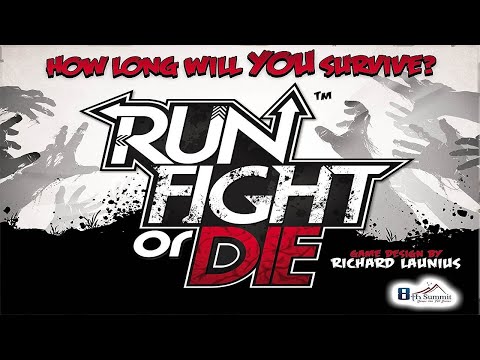
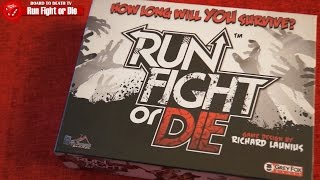
Board to Death TV singles out the production quality. The reviewers describe thick boards instead of flimsy ones, miniatures that are sturdy and detailed with real variety between male and female zombies, and a rulebook they call superb because it is full of artwork and categorized for easy reference. They also say the artwork fits the zombie theme closely.
A Real Solo Experience
Solo play is the second feature reviewers return to. Board to Death TV calls the solo mode a huge plus for solitary players, and Board Games UnLocked describes solo games as super fast. Harry says the game plays pretty well solo and works fine competitively, which is why they rank it so highly on their list. The solo format also sidesteps the host's main complaint about competitive play, in which one player keeps drawing the bad cards while the others enjoy the game.
Potential Drawbacks
Luck With Little Mitigation
The most consistent criticism is that luck dominates the outcome. Felicia and John Carlo say that many times a player simply does not roll what they need to avoid dying, and that player interaction depends entirely on what is drawn or rolled. The host of Board Games UnLocked goes further, saying the game is pure randomness with very little decision making.
Competitive Play and Abrupt Endings
The competitive structure draws the sharpest complaints. Board Games UnLocked notes that when one player is eliminated, the game ends for everyone, which can feel abrupt. The same reviewer objects that players can push zombies onto each other's boards, so a bad draw can feel personal. The host would prefer a cooperative version in which players help one another, and says that is how other games of this kind have handled the problem.
If You Enjoy Run, Fight, or Die!
Players who enjoy the press-your-luck rolls will recognize the same tension in King of Tokyo, which the Board Games UnLocked host says offers more decisions about whether to stay in the city or leave. Players who want a zombie game with a shared threat should look at Dead of Winter, since the same host wishes this game had cooperative moments like those in other games of its kind, and points to Dead of Winter when describing how a board runs out of standees.
For solo players, Board Games UnLocked describes Diminishing Realms as better than Last Stand, both from the same studio, Eighth Summit. That comparison is useful for anyone who enjoys the quick solo rhythm of Run, Fight, or Die! and wants more depth from a related design.
What Reviewers Are Saying
"Now sometimes with all good intentions the dice are just not with you or what you draw either, so luck does play a huge factor in this game and there is still little to mitigate it. Yes, you can roll, but many times you just don't roll what you need to save you from dying."
— Felicia and John Carlo, Board to Death TV
"There's really no decision making. It's just oh man look what I got and oh look what you don't get, like you drew."
— Board Games UnLocked
"I'm not the hugest fan of the zombie theme, but this right here is the number one game, even above Marvel Zombies, because first of all it plays pretty well solo."
— Harry, When Harry Met Board Games