










Schadenfreude Deep Dive
What the Community Thinks About Schadenfreude
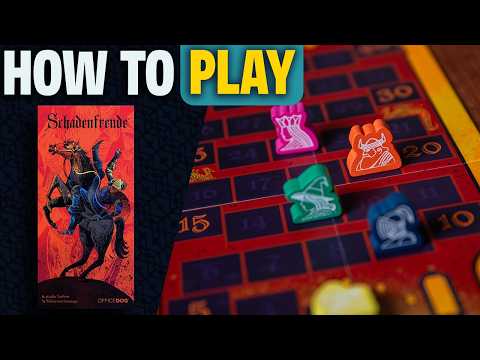
Reviewers who have sat down with Schadenfreude tend to describe a small card game that produces an outsized amount of table drama. John Gets Games calls it a bonkers trick-taking game, noting a second session at four players was far more fun than the first. Brettspielblog is the most enthusiastic voice, placing it above Nokosis and calling it the one trick-taker it could bring to almost any group. Board Stupid is shorter and more playful, summarizing the rules and calling it a really cool trick taker. Colory, whose teaching video was sponsored by publisher Office Dog, walks through the rules in a way that makes the twists easy to follow.
Core Mechanics That Define Schadenfreude
Second-Highest Card Wins
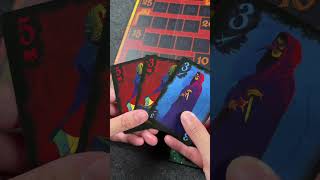
Every reviewer treats this as the game's defining twist. The lead card sets the lead suit, players must follow that suit when they can, and only cards of the lead suit compete for the trick. The second-highest of those cards takes it. Colory notes that a lone card of the lead suit wins automatically, and that off-suit cards are simply collected by the winner rather than deciding the result. John Gets Games argues that this inversion is what separates the game from almost every other trick-taker, since a blue five can beat a blue six played in the same trick. Colory's version also adds two jester cards that can be played at any time and always count as part of the lead suit, which can shift which card ends up second.
Limited Points and the Race to 40
Points come only from the cards a player has collected, and they are counted at the end of each round. Every collected card is worth its number, but a duplicate rank cancels the earlier copy, so two cards of the same number are both discarded regardless of suit. Colory explains the rule clearly, and John Gets Games describes the result as a game about forcing points onto opponents and trying to make them bust. Because the finish line is 40 on a shared track, every point a player takes also pushes them closer to busting, which keeps the leader under pressure from the rest of the table. Brettspielblog stresses that this scoring dynamic is what gives the game its character.
The Schadenfreude Experience
Table Talk and Shifting Alliances
Brettspielblog describes Schadenfreude as a social game at heart. A player sitting high on the track risks going over, and the player just behind can win if that happens. The reviewer found that this pushed players into temporary alliances, with some deliberately playing to hand points to rivals so they could stay in contention themselves. The reviewer contrasted this with Nokosis, saying Schadenfreude led to a much better atmosphere at the table and that the group communicated a great deal while playing.
Swingy Endgames and Hilarious Collapses
John Gets Games recounts a four-player game in which one player surged into the low 30s after only two hands while everyone else was in the teens. Instead of ending quickly, the leader stalled by taking no points while the others scored, and the final hand found the whole table bunched in the 30s. The reviewer won narrowly with 37 while everyone else had more than 41. Earlier busts had switched their goal to making sure nobody won, which John Gets Games described as hilarious. The reviewer also noted that the game could have ended with no winner at all, which makes the finish a source of both swings and laughter.
What Makes Schadenfreude Stand Out
Easy Rules, Surprising Depth
Brettspielblog praises how easy the game is to follow. The reviewer says it works even with people who generally dislike trick-taking games, because the rules are short while the scoring dynamic is rich. Colory's teaching video supports that impression: setup, the follow-suit rule, and scoring are covered quickly, and the twists such as the second-highest winner and duplicate cancellation are easy to grasp once they are spelled out. The depth comes from how a few rules interact at the table.
Memorable Moments at the Table
Reviewers keep returning to moments that stick, such as a leader who refuses to score, a table where everyone is squeezed toward the bust line, or a player who goes over and then becomes the table's most determined saboteur. Brettspielblog calls the scoring dynamic truly fantastic and names the game as the one it would happily bring back again and again. These are the stories players retell after a session, and they are a large part of why the game earns repeat plays.
Potential Drawbacks
Hard to Find and Hard to Say
John Gets Games describes the game as kind of hard to get and admits to only having played it online so far, while looking forward to a physical copy. Board Stupid jokes that the name is hard to pronounce and suggests the publisher should have changed it. Both issues sit right at the first encounter with the game, before a new player even gets to the table, which makes it a harder sell to recommend to a friend who has never heard of it.
Edge Cases Where Nobody Wins
John Gets Games points out that the end conditions can produce a game where nobody wins. Colory's rules explain why: a player who passes 40 is eliminated, and tied players at the top are also eliminated, so a table can end with no winner. The one exception is when every player goes over in the same round, in which case the highest score wins. For a group chasing a clean victory, an ending with no winner at all can feel like an anticlimax rather than a satisfying finish.
If You Enjoy Schadenfreude
- 99: John Gets Games compares the two directly. 99 is best with three players and offers the bigger highs, since players bid by shaping their hands and then reveal their calls to hit or miss. Schadenfreude, by comparison, offers the wider average enjoyment, so fans of tense bidding and bold reveals will likely find 99 a close cousin.
- Tichu: John Gets Games links the face-up bidding in 99 to Tichu, where a player declares a bold plan from their hand and it either pays off or backfires. Tichu fans who enjoy big declarations will recognize the same thrill in 99 before moving on to Schadenfreude's trick-taking tension.
- Nokosis: Brettspielblog compares it directly with Schadenfreude, calling Nokosis a clever brain burner and a cult grail game with a dice-based trick twist. The reviewer still names Schadenfreude as the top pick for most groups, but Nokosis is a strong next step for players who want a more demanding trick-taking puzzle.
- Lord of the Rings trick-taking games: Board Stupid notes that the publisher has been doing very good trick-taking work with Lord of the Rings titles recently. Fans of that line will find Schadenfreude a different take on the same genre, with a must-follow rule, no trump, and a second-highest winner.
What Reviewers Are Saying
"Schadenfreude is a bonkers game for a couple of reasons. The first is that, unlike just about every other trick taking game, it's the second strongest card that gets played that is going to win."
— John Gets Games
"Schadenfreude is the one game I could bring out in all kinds of different groups, even if people generally dislike trick-taking games, because I simply know it has such a lovely dynamic and the rules are super easy to follow."
— Brettspielblog
"The German word for taking sort of humor in someone's misfortune. And this is game. It's just a really cool trick taker."
— Board Stupid