



Scribbly Gum Deep Dive
What the Community Thinks About Scribbly Gum
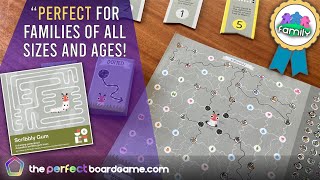
Across the board gaming community, reviewers from Board Game Dad, Meeple University, and Board Game Sanctuary consistently praise Scribbly Gum as a remarkably accessible yet engaging family game that achieves something rare: it scales seamlessly from two players to a classroom full of kids. The game hits a clear target market, resonating especially with families discovering board games and new players seeking something light yet strategically satisfying. One reviewer calls it a favorite among the year's new releases, while another notes its placement in their annual top 10 family board games list. What emerges across all discussions is genuine enthusiasm not just for the mechanics, but for the design philosophy behind the game, a commitment to environmental responsibility, educational enrichment, and genuine family fun.
Core Mechanics That Define Scribbly Gum
Simultaneous Action and Flip-and-Write Elegance
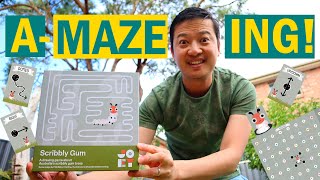
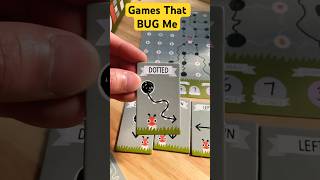
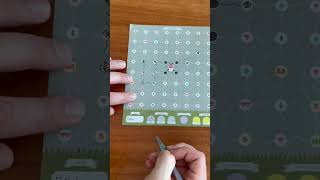
Scribbly Gum uses a deceptively simple flip-and-write framework: one player (the mother moth) reveals a direction tile each turn, and all players simultaneously draw a path on their personal tree diagram following that direction. This simultaneous action removes the tedious downtime that plagues many family games. Everyone plays at once, creating what reviewers describe as fluid gameplay where the rhythm never stops. The beauty lies in how this mechanic enables the game's unlimited player count, each new player simply receives a sheet and pencil, requiring no additional components or board space, making it genuinely classroom-scalable in ways few games can claim.
Set Collection with Spatial Planning
Beneath the simple drawing mechanic sits a satisfying set-collection engine. Players collect three types of food, gum nuts, leaves, and blossoms, by navigating their tree diagram. Completing a set of one of each food type scores points, with scoring happening at the end of each round and accumulating over three rounds. The twist: players must decide whether to specialize or diversify their collection. The outer edges of the tree diagram reward valuable bonuses for completing entire columns, but reaching them requires strategic positioning and patience. Water tiles act as wild resources, adding flexibility when plans change. Reviewers note this creates subtle but real decision-making, you can't simply chase the highest-value spaces; you must balance your resource gathering across the game's duration.
The Scribbly Gum Experience
The Satisfying Puzzle of Connection
Reviewers repeatedly highlight a quality that separates Scribbly Gum from other roll-and-writes: the joy of building connected paths. Drawing lines that branch and connect creates a tangible, visual satisfaction. One reviewer describes the key observation that connecting the pathways together gives the same satisfying feeling as creating a dot-to-dot picture. The game intentionally includes dotted-line shortcuts that reward foresight and clever routing, and when players chain bonus movements together, they unlock sequences of actions that feel genuinely clever. The puzzle aspect is light enough for a five-year-old to grasp but strategically rich enough to reward careful planning, finding the optimal path through the tree's bark becomes its own small reward with each turn.
A Mindful, Relaxing Rhythm
Beyond competition, what stands out in reviewer commentary is the meditative quality of play. Multiple reviewers describe Scribbly Gum as creating a mindfulness level to the game, a kind of cool, relaxing mindfulness experience. The game's short duration keeps it tight, and the simultaneous play creates a peaceful, non-confrontational rhythm. There's no player elimination, no downtime waiting for opponents, no tense bidding wars, just the quiet focus of players drawing paths and collecting food. Even when playing with objectives that introduce head-to-head competition, reviewers note the game maintains its zen quality. One school teacher appreciates that the game opens discussions around strategy, logistics, planning, and chance, making it pedagogically valuable without feeling like a lesson.
What Makes Scribbly Gum Stand Out
Australian Biology as Living Theme
The game is grounded in a real natural phenomenon: scribbly gum trees in Australia are marked by the winding patterns left by the larvae of longhorn beetles as they tunnel under the bark eating nutrients. Rather than creating an elaborate thematic fiction, the designers chose to present this authentic biological fact and build a game around it. Players become baby moth larvae creating those characteristic squiggly patterns. One reviewer, filmed beside actual scribbly gum trees, demonstrates the real patterns and explains the ecological process, grounding the game in living nature rather than fantasy. This decision to honor the genuine Australian ecosystem, and the game's design around it, gives the game educational weight without requiring players to learn lore. It's a game about real moths and real trees.
Unlimited Scale and Mission-Driven Production
Scribbly Gum plays with any number of players, not as marketing hyperbole but as genuine design. Every additional player adds only a sheet of paper and pencil. This creates unique utility: the same game works for a two-player evening, a family gathering of ten, or a classroom of thirty. The publisher's commitment to purpose extends to production: the packaging contains no plastic wrap, only paper sealed with stickers that players can remove to preserve the artwork. Reviewers note that purchases fund environmental donations and support for Aboriginal communities where the games are produced, and the rulebook includes genuine educational material about Australian plants and ecosystems. For reviewers who evaluate games holistically, this wasn't incidental, it was a core part of why Scribbly Gum earned recommendation and affection.
Potential Drawbacks
Light Theme for Those Seeking Narrative Depth
Reviewers are candid: Scribbly Gum's theme is abstract. Players are not exploring, not surviving, not building a civilization, they are drawing lines and collecting food tokens. The theme serves the mechanics but doesn't create an immersive story. If a player loves games for their narrative richness or strong thematic integration, Scribbly Gum won't deliver that. The Australian biological framing is clever and authentic, but it doesn't translate into complex flavor or narrative moments during play. This is a pure mechanics-forward game in the tradition of excellent family games like Welcome To.
Limited Strategic Depth for Experienced Gamers
Reviewers are clear about the ceiling: Scribbly Gum is not for heavy strategy players or dedicated hobbyists seeking complex decision trees. The mechanic is simple, draw lines when told to draw lines, and once a few rounds have been played, the strategic landscape becomes familiar. Reviewers note that as a solo experience, the challenge is consistent but not infinitely varied. For younger or newer players, the strategic element feels just right; for someone accustomed to lengthy euros with multiple paths to victory and hand management, Scribbly Gum will feel lightweight. The game is deliberately designed as an entry point, and experienced gamers should not expect it to offer the depth they're seeking.
If You Enjoy Scribbly Gum
If Scribbly Gum clicks for you, explore Explorers, the Phil Walker-Harding game that inspired it. Explorers plays similar simultaneous movement through grid navigation, but with added complexity and competitive tension, it's essentially Scribbly Gum for players ready to graduate to slightly deeper strategy. Alternatively, Welcome To offers a different flavor of flip-and-write, using cards instead of movement tiles but maintaining the same meditative, simultaneous-play structure and set-collection focus. Both serve as natural next steps: the quiet, non-confrontational rhythm and the satisfying feeling of building something on your sheet remain, with another layer of decision-making and player interaction added on top.
What Reviewers Are Saying
"And I think that's where the game really shines is when you can kind of connect the pathways together, and it gives you that same satisfying feeling as if you were creating a dot-to-dot picture."
— Board Game Sanctuary
"It's got this mindfulness level to the game, and that's what the game is trying to do is to create this kind of cool, relaxing mindfulness experience, and I think it does that very well."
— Board Game Sanctuary
"The fact that everyone is taking their turn at the same time, you've got the one person calling out the direction and everyone's making their move at the same time, leads to just really fluid gameplay."
— Board Game Dad