




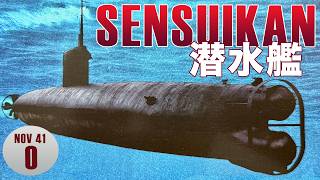
Sensuikan: Japanese Fleet Submarines in WW2 Deep Dive
What the Community Thinks About Sensuikan: Japanese Fleet Submarines in WW2
Sensuikan has won over at least one deeply engaged reviewer who committed to a multi-episode campaign series showcasing the game's narrative richness. Across a series of patrols spanning the Pacific War, from Pearl Harbor in 1941 through Guadalcanal in 1942, the playthrough reveals a game that excels at generating emergent, memorable stories within the confines of historical submarine warfare. The reviewer returned to Sensuikan repeatedly not because it was mechanically flashy, but because each patrol felt genuinely different, with genuine stakes: some missions ended in triumph (sinking multiple ships and completing reconnaissance objectives), others in disappointment (patrols yielding empty ocean), and occasionally in tragedy (the unexpected loss of a valued scout plane crew). This mix of outcomes, governed by dice and the fog of war, appears to be precisely what makes Sensuikan compelling to solitaire wargamers who crave both narrative and historical authenticity.
Core Mechanics That Define Sensuikan: Japanese Fleet Submarines in WW2
Patrol Structure and Major Events
Each patrol in Sensuikan, published by Compass Games, unfolds through a series of numbered movement boxes: first transit zones (the long journey to the patrol area), then on-station boxes where the real hunting happens. The game anchors this procedural rhythm with Major Event markers scattered across the map, which trigger special missions tied to historical moments in WW2. When a submarine arrives at a marked location, the player reveals that event: it might be a recon mission over Pearl Harbor, a picket line patrol defending against naval incursions, or an assignment to lay mines. These special missions count double toward crew advancement, rewarding careful positioning and luck. The patrol structure keeps sessions compact (5 to 20 minutes per patrol), yet chains together into a longer campaign where survival across multiple patrols defines the entire war experience.
Submarine Class Selection and Crew Advancement
Before the war begins, the player chooses from 17 historical submarine classes, each with distinct characteristics: patrol length, torpedo loadout capacity, armor, and speed. The Type B class, used in the series, balances decent endurance with six forward torpedo tubes and only one aircraft. Once underway, the crew advances through successful missions, earning experience points that unlock permanent skills and higher ranks. The captain can gain skills like torpedo gunnery (reroll a miss once per patrol) or the elite Shibumi trait, a one-time-per-patrol guarantee of success on any critical die roll, whether landing a torpedo hit or evading detection. Crew quality fluctuates; a string of failed patrols causes morale and training to degrade, increasing the risk of cascading failures. This system ensures that each submarine develops a personality over time, with crew names, earned medals, and a history recorded in the patrol log.
The Sensuikan: Japanese Fleet Submarines in WW2 Experience
Narrative Immersion in a Historical Campaign
Sensuikan is expressly designed to spin stories. The reviewer noted: "Every mission could be completely different. Every patrol tells a different story." Patrols are not grinding repetitions; they are narrative chapters. One patrol might involve a dramatic night-time surface attack on a destroyer, with torpedo after torpedo striking home. Another might be a tense reconnaissance flight over a harbor, dodging enemy fighters to photograph battleships. A third patrol might unfold as an eerie silence: days of searching empty ocean, no contacts, no action, drifting through the war with nothing to show. The game generates these stories through a mix of procedural event tables and historical scaffolding (Major Events tied to real operations), letting players construct a personal legend of their submarine commander's journey through WW2. The emotional weight of losing a scout plane crew, or finally sinking a capital ship after months of frustration, stems directly from this narrative coherence.
Tension of Diminishing Survival Odds
Sensuikan captures the darkening trajectory of the Japanese submarine fleet during WW2. Early in the war, the player has access to superior long-range oxygen torpedoes, multiple crew skills, and patrols that often yield success. But as the campaign progresses and the calendar advances, crew quality becomes harder to maintain, older torpedo types return to the loadout, and the waters grow more dangerous. The Major Events on the board shift to reflect the war's stages, introducing late-war technologies like Kaiten suicide torpedoes and submarines equipped with other submarines. This mechanical drift, combined with the knowledge that historical submarine fleets did indeed diminish over time, creates a pervading sense that time is running out. Whether a campaign ends in a glorious sinking or a quiet loss to depth charges, the player feels the weight of history pressing inward.
What Makes Sensuikan: Japanese Fleet Submarines in WW2 Stand Out
Japanese-Specific Equipment and Mechanics
Sensuikan diverges from its sibling games (The Hunters, Silent Victory, Raiders of the Deep) by centering on the Japanese perspective and integrating three unique subsystems. Scout planes, typically a small E14Y1 floatplane, can be launched to extend the submarine's search range and reconnaissance capability, adding a secondary tactical layer and the constant risk of aircraft loss in recovery. Kaiten suicide torpedoes, unlocked late in the war on certain submarines, represent a desperate historical gambit with their own special mission rules and roles. And the submarine-carrying submarine mechanic (some IJN subs could carry smaller midget submarines) offers niche tactical options. These additions do more than fill a roster; they fundamentally shape how Japanese submarine operations felt different from Western submarine warfare. The reviewer called out this distinction: "They've done a really good job of taking the series and morphing it to present the Japanese perspective of the war."
Quick Session Length Within a Longer Campaign Arc
Sensuikan achieves a rare balance: individual patrols play out in 20 minutes or less, making the game accessible for evening play or even airport sessions, yet the campaign structure invites sustained engagement. A player can commit to a mini-campaign of three patrols in a evening, or thread patrols across weeks, building a continuous narrative. The patrol lengths themselves vary by submarine class (the Type B requires two months per patrol) and by historical period, as the game reflects the lengthening scope and desperation of late-war operations. This modularity means Sensuikan fits into busy schedules while still offering the emotional payoff of a coherent war story.
Potential Drawbacks
Patrols Can Yield Nothing
Not every patrol produces action or meaning. The Guadalcanal patrol in the series exemplifies this: the submarine found no enemy contacts, only empty sea and blank dice rolls. A full on-station period passed with nothing to engage; the reviewer summed it up candidly: "A whole lot of empty ocean." For some players, procedural emptiness feels anticlimactic or like wasted time, especially if the patrol ends in tragedy (the loss of the scout plane crew) without any offsetting success. The randomness that generates some brilliant patrols can also conspire to make others feel hollow, particularly if the campaign concludes on such a patrol.
Procedural Complexity and Decision Overhead
The ruleset, while based on a proven lineage of wargames, demands careful sequencing: when to roll for flooding, when to check for detection, how hull damage interacts with exceeding test depth, the order of aircraft mishap checks. The reviewer acknowledged their own procedural errors during play, noting that even experienced play could involve mistakes that silently alter outcomes. Additionally, some patrols can feel decision-light, with the player essentially rolling dice and hoping for a good result rather than weighing tactical options. This is partly by design (solitaire wargames often favor narrative emergencism over deep agency), but players who crave meaningful choices on every turn may find stretches of passivity frustrating.
If You Enjoy Sensuikan: Japanese Fleet Submarines in WW2
Sensuikan sits squarely in the lineage of submarine solitaire wargames that emphasize narrative over economic optimization. Players who love The Hunters, Silent Victory, or Raiders of the Deep (all designed by Gregory Smith, Sensuikan's designer) will immediately recognize the patrol structure and crew advancement systems. All three focus on placing the player in command of a vehicle during wartime and charting its course through a multi-patrol campaign with emergent storytelling. What distinguishes Sensuikan is its Japanese focus: the game's design choices, special missions, and available equipment all reflect the realities and constraints of IJN submarine operations, making it a thematic evolution of the series rather than a mere reskin. If you enjoy generating personal legends in wargames, solitaire play with minimal bookkeeping overhead, or the specific allure of WW2 Pacific naval warfare, Sensuikan belongs on your shelf.
What Reviewers Are Saying
"Our scout plane has been an extremely powerful asset. Not only did it lead us to do a successful recon mission over Pearl Harbor, it spotted the Wallingbar there, the freighter, and the Monaghan destroyer, which led us to get two extra attacks in, racking up some kills here for the I-15."
— Zilla Blitz
"It just reminded me of why I love one of the reasons why I like games is the stories they generate. And I feel like these, although they can be decision light, they generate such fun stories. It's just an easy game to jump into and play, and it just it's a treat. Every mission could be completely different. Every patrol tells a different story."
— Zilla Blitz
"A whole lot of empty ocean and the sad loss of our scout plane pilot and gunner as well... That brings us actually I'm I mentioned the beginning I'm going to do three patrols. It's a rather It's a very anticlimactic finale to this, but I hope you've enjoyed the series."
— Zilla Blitz