
















Skulls of Sedlec Deep Dive
What the Community Thinks About Skulls of Sedlec
Skulls of Sedlec is a 2020 release from Button Shy, designed by Dustin Dobson, and reviewers place it among the most admired titles in the publisher's line of wallet games. The premise is macabre but light. Novice monks help the Bone Collector, a half-blind figure, exhume graves and arrange skulls inside the Sedlec Ossuary, and each finished stack is judged on how well it honors the deceased's final wishes. The whole game is an 18-card deck, and the reviewers who covered it treat that compactness as the point rather than a limitation.
The consensus is warm. Adam in Wales - Board Game Design described it as a simple dose of card drafting and set collection for two to three players, and found the rules as simple as the packaging. Where There's A Wilz, There's a Play covered it alongside other Button Shy titles, and Totally Tabled introduced its full solo playthrough as another quick, puzzly filler from the publisher. Disagreement is less about quality than about how much the game can carry. BoardGameCo ranks it among its favorite pocket games and recommends trying the expansions, while reviewers who approach it as a filler tend to value it for speed and tidiness.
Core Mechanics That Define Skulls of Sedlec
Card Drafting From Face-Down Piles
Drafting drives every turn. Players can take the face-up card, flip two face-down cards and keep one, or place a card from their hand into their display, with a hand limit of two. Totally Tabled walked through the solo version, where the cards are split into four piles and the only real choice is which of two flipped cards to take. Because the piles stay hidden until a card is flipped, each pick carries a small gamble, and that gamble is what makes a deck of 18 cards feel fresh from one session to the next.
Layer Building Through the Pyramid
Each card carries two skulls and works like a domino, so placing them builds a pyramid. Foster the Meeple explained the core rule: building always begins with the bottom row, and a card can only sit higher when it has two cards beneath it. Scoring then rewards position. Adam in Wales outlined how Royal skulls score for each Royal or peasant on any lower level, the first priest on each level scores two points, a pair of adjacent Romantics scores six, and criminals score only when placed next to priests. Grant Lyon highlighted this kind of scoring as the reason the game lands well, since the arrangement itself decides what each skull is worth.
The Skulls of Sedlec Experience
A Tight, Tense Puzzle
Play feels like a small puzzle with pressure built in. Every flip reveals options, and every pick narrows the next. The tension sharpens as the pyramid takes shape, because a single poorly timed card can leave a skull without the neighbor it needs. Reviewers describe the central decision as whether to chase a scoring pattern now or hold a card back for a later turn, and that balance keeps even a short game engaging from start to finish.
A Macabre, Seasonal Atmosphere
The theme sets the mood. Totally Tabled called the arrangement of skulls spooky enough for Halloween, and Where There's A Wilz, There's a Play pointed out how each skull is drawn with its own nose, eyes, and surroundings, so the cards feel individual rather than repeated. The solo monstrance mode adds a different flavor. Players still build the pyramid, but a separate deck of formation cards sets out additional shapes the skulls must match, and the player takes on the role of an artist trying to impress the royal family with the best sculpture.
What Makes Skulls of Sedlec Stand Out
A Full Game in a Wallet
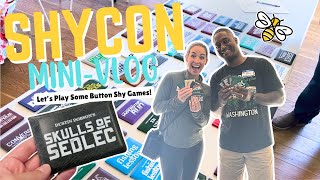
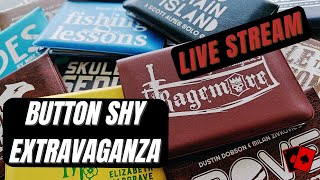
Button Shy's pocket format is central to how reviewers talk about the game. Grant Lyon described the publisher's titles as games that fit into your wallet, and singled out Skulls of Sedlec as a personal favorite and a representative of the whole line. Adam in Wales noted that the publisher releases a new hand-assembled wallet game every month, and that the rules take only a minute to teach, which makes the game easy to bring to a table of newcomers.
Scoring That Matches the Art
Reviewers also connect the mechanics to the presentation. Adam in Wales observed that the skull scoring criteria relate nicely to their titles and illustrations, and that the pyramids look great once complete. When the artwork and the scoring logic point in the same direction, the arrangement feels like it has a reason to exist beyond its points, which many games in this size range do not manage.
Potential Drawbacks
Restrained Interaction
Reviewers acknowledge that direct interaction is limited. Adam in Wales noted there is some minor potential for blocking, since drafting a card can deprive an opponent of a skull they need, but that this is not the central tension of play. Players who want a head-to-head struggle over a shared board may find the game lighter on confrontation than they expect.
Limited Narrative and Scope
The theme functions mostly as flavor. Adam in Wales stated plainly that there is no narrative, and that the scoring criteria carry more of the experience than the story does. Adam also cautioned against judging the game purely as a standalone product, because it began as an entry in a theme-first design challenge and the larger draw is the Button Shy line. Players looking for long-term campaign depth from a single 18-card deck may find the experience bounded, even with the expansions.
If You Enjoy Skulls of Sedlec
Players who enjoy the pyramid scoring will find similar satisfaction in Sushi Go!, which Adam in Wales compared directly, noting that it offers a comparable experience with a much smaller footprint. Fans of its compact puzzle feel will recognize the same spirit in Sprawlopolis and Rove, both of which Totally Tabled covered as quick, puzzly Button Shy games, and Rove shares its designer with this title. Players who appreciate the portable, card-driven format may also enjoy Aqua Ro, another Button Shy title that Where There's A Wilz, There's a Play reviewed in the same video.
What Reviewers Are Saying
"The rules of Skulls of Sedlec are as simple as the packaging, I explained them all to you earlier, it can't have taken me more than a minute, and yet the gameplay is super entertaining."
— Adam in Wales - Board Game Design
"You're going to be drafting cards and then building a pyramid of cards. And things will score points in different ways. And I always like when games do that and do it well."
— Grant Lyon
"It's basically Skulls of Sedlec, big box except it's still in a small wallet, but I love this game. All the expansions are amazing. It's incredible. Pick it up."
— BoardGameCo