
















Space Cadets Deep Dive
What the Community Thinks About Space Cadets
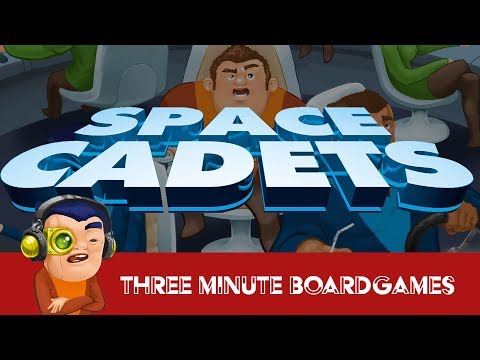
Reviewers describe Space Cadets as a cooperative starship game where a crew of up to six players runs the bridge under real-time pressure. 3 Minute Board Games frames it as a game with no solo mode that plays in one to two hours, and the consensus across the channels that covered it is that the chaos is part of the appeal. BoardGameBollocks goes furthest in its praise, calling the game pure chaos in a cardboard box while raising concerns about component quality early in its review. The disagreement is less about whether the game is fun than about who it suits. Some reviewers say it rewards players who can laugh at their own mistakes, while others warn that it is a poor fit for groups that take cooperative winning very seriously.
Core Mechanics That Define Space Cadets
Cooperative Game
Every player takes a bridge role, such as Helm, Engineering, Census, Shields, Tractor Beam, Weapons, Damage Control, or the Jump Drive, and the whole crew shares one win or lose outcome. 3 Minute Board Games explains that the captain leads a short planning discussion each turn and keeps a timer, and each station then receives 30 seconds in its time phase to complete its task. Victory requires collecting crystals, defeating enemies, and activating the jump drive, while the destruction of the ship ends the mission. The design asks players to coordinate specialized jobs rather than outwit one another. Reviewers stress that the team only succeeds when every specialist finishes their own job while the others cover theirs, which is why a single missed station can ripple through the whole ship. BoardGameBollocks credits the design to Jeff Engelstein, who also appears in the Board Game Design Lab coverage of game design.
Combat: Damage Based
Combat in Space Cadets works as a war of attrition against the ship's hull. Weapons Control requires loading torpedoes through a tile matching puzzle, then firing them with the track determining damage: the further along the track, the more damage, while going off the track means a miss. Shields are built from tokens placed in poker style formations, and their facing matters, so a shield pointed the wrong way can leave the ship exposed. When the ship takes damage, cards are flipped, and Damage Control must repair them on later turns because repairs cannot be attempted during the same turn. This layer of attrition gives the station play its stakes, since the crew has to balance offense, defense, and repair across several rounds rather than settling a fight in one step.
The Space Cadets Experience
Frantic
The defining feeling is the 30-second clock running on every station at once. 3 Minute Board Games describes the table as pure madness, with each player desperately trying to finish a station while the ship drifts in the wrong direction and the shields face backwards. The early sessions are full of mistakes, but that urgency is what makes the game compelling. Each player works through a memory task, a dexterity task, or a puzzle while the others do the same, which produces the sense of a bridge crew in full panic.
Comedic
Space Cadets generates laughter as a side effect of its own design. 3 Minute Board Games notes that the game can be very slapstick at times, and it singles out the reaction of a teammate as the best thing about the experience, the look someone gives you when they have completely balls something up. Because failure is so easy to reach, the funniest moments come when mistakes cascade, such as a shield pointed the wrong way while the torpedoes miss, and the whole table reacts at once. The comedy comes from the crew's own errors rather than from scripted jokes.
What Makes Space Cadets Stand Out
Real-Time Station Play
Reviewers consistently point to the way each station runs its own mini-game in real time. Engineering arranges tokens to build power for the rest of the crew, Helm draws and places cards that set speed, Census requires matching tokens from a black bag against sensor cards with only one chance per card, and Shields stacks poker-style token formations. Because these tasks differ so sharply, a player can usually find a station that suits them even when the rest of the crew is struggling. 3 Minute Board Games points out that finding the right station can take time for players who enjoy real-time panic.
Learning the Ship Over Time
The reward curve is one of the most praised features. 3 Minute Board Games describes the early games as a bunch of players randomly banging the controls, then notes that one session everything clicked and the crew went from incompetent to a finely tuned machine. Reviewers present this as the satisfaction that keeps players returning, because a well run session feels like earned mastery rather than luck. The same review notes that the experience feels totally different once the crew has learned how the stations interact, which gives the game a long tail for groups that stick with it.
Potential Drawbacks
Error-Driven Difficulty
3 Minute Board Games warns that it is far easier to get things wrong in Space Cadets than to get them perfect. Players who have difficulty handling other people's errors, or who take winning cooperative games very seriously, may find the game frustrating rather than funny. The same review adds that some stations can be very frustrating for particular players, so enjoyment depends heavily on finding a role that fits, and that can take time.
Component Quality
BoardGameBollocks names component quality as one of the things it does not like about the game and raises it early in its review. Because the game depends on tokens, cards, and a black bag, the physical presentation matters more than in many cooperative titles. Reviewers who care strongly about production values may find that a meaningful drawback, even though they often praise the gameplay that sits on top of it.
If You Enjoy Space Cadets
Players who enjoy the real-time station play of Space Cadets will find a similar pressure in Space Alert, which 3 Minute Board Games recommends for players who like real-time panic but want something more serious. Players who want the same urgency without the science fiction theme will find Kitchen Rush a better fit, as the same review suggests for those who do not enjoy the genre. Players who value coordinating a team against a system may also explore XCOM, which shares the feeling of a squad under pressure with shifting threats. Detective is another option for groups that enjoy a shared focus on solving a common problem together. Space Cadets: Dice Duel offers a different take on the franchise for players who want to revisit its core tension in another form.
What Reviewers Are Saying
"Space Cadets is pure madness, but each player trying desperately to complete the individual stations in the time phase and really succeeding as intended, the ship will go the wrong way, shields will be facing backwards and torpedoes will miss it."
— 3 Minute Board Games
"If you can get past the pretty steep learning curve for all the players, and you do need to play this with a full complement of players, by the way then I can't recommend this highly enough. It is pure chaos in a cardboard box."
— BoardGameBollocks
"The whole team's clustered around the jump drive officer that's doing it, there's 30 seconds on the clock, you're trying to figure out how to use these cards, everybody's yelling and screaming, and when you do it, it's very exciting."
— Board Game Design Lab