









Star Wars: Shatterpoint Deep Dive
What the Community Thinks About Star Wars: Shatterpoint
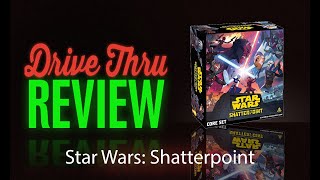
Reviewers generally agree that Star Wars: Shatterpoint is a polished two-player miniatures skirmish game with a strong Star Wars flavor. They disagree about how much the starter box is worth, how the game should grow, and how well Atomic Mass Games will support it. Drive Thru Review calls the game mostly positive, praising its character abilities and streamlined rules while holding back concerns about the single mission card in the core box. Adam Porter of Adam in Wales approaches the game from a design standpoint and singles out its combat as a clever example of how dice can be made interesting. Watch It Played introduced the game to its audience as a new miniatures skirmish title from Atomic Mass Games, which also publishes Star Wars Legion, Star Wars X-Wing, Star Wars Armada, and Marvel Crisis Protocol. Snarling Badger is far less enthusiastic about the scale and theme, while Tabletop Minions and BoardGameGeek discuss the uncertain development path after Atomic Mass shifted its priorities.
Core Mechanics That Define Star Wars: Shatterpoint
Initiative Deck Activation
Turns in Star Wars: Shatterpoint are not driven by a fixed turn order. Each player shuffles the character cards for their team into an initiative deck, flips the top card, and activates the matching character. Drive Thru Review explains that a player can spend a force point to place a character in reserve instead of activating them, but only one card can sit in reserve at a time. Each character also carries a Shatterpoint card, which lets the player activate any unit they choose when it appears. Because the same deck cycles repeatedly, the back-and-forth rhythm of flipping and activating keeps both players engaged until a struggle is won.
Struggle Tracker and Momentum
The match is decided over as many as three struggles, each tracked on a sliding struggle marker that sits off to the side of the table. Controlling objectives pushes the marker toward one player, while eliminating an enemy character or ending a turn with the marker in the center earns momentum tokens. When the marker is pushed fully to one side, that player wins the struggle, and the first player to win two struggles takes the game. Drive Thru Review called this an innovative approach, one the reviewer had not seen before in this kind of miniatures game. Mission cards and struggle cards reshape the objectives from one struggle to the next, so the same tracker can produce very different games.
The Star Wars: Shatterpoint Experience
Cinematic Choreography
Several reviewers describe the game as feeling like a sequence from a film. Drive Thru Review says the Jedi characters make the action feel very choreographic, with reactions, leap-frog jumps, and shifting that echo what viewers see in the movies and shows. Damage can push, pull, or force-jump a character after the damage has been resolved, which turns a simple exchange of hits into a scene. Adam Porter found the same quality on revisiting the game, arguing that the cinematic feel comes from the combinations and actions surrounding the dice rather than from the dice themselves.
Clean, Elegant Tactical Play
Beneath the spectacle, reviewers describe a tidy and streamlined tactical game. Drive Thru Review notes that movement is measured horizontally from the base of each model, so vertical models such as jetpack figures are easy to handle. Cover is a simple stacking modifier, and the Hunker Down action adds defense dice on top of it. Tokens can be kept on character cards instead of cluttering the battlefield, which keeps the play space neat. The reviewer describes the rules as elegant and easy to learn, even though the characters and combinations offer plenty of depth for players who want it.
What Makes Star Wars: Shatterpoint Stand Out
Squad Building Through Leaders and Stance Cards
Drive Thru Review highlights the way squads are assembled. Each squad leader brings subordinates with them, and players can swap those subordinates to create new combinations, which gives the army-building process a light deck-building flavor without any complicated shopping list. Many leaders carry double-sided stance cards that can be flipped once per turn at no action cost, shifting a character between more defensive and more offensive postures. The reviewer argues this is the game's most enjoyable element, because having those abilities at your fingertips feels very board gamey in the best way. The reviewer also notes that individual squad boxes sell for roughly $40 to $50, so players can add one squad at a time.
Lightsaber Dice Combat
Combat is the feature reviewers return to most often. Attack and defense dice produce hits, criticals that cannot be blocked, expertise symbols, and misses, and the outcome is then walked down a damage chart where each player chooses a path. Adam Porter, who argues against roll-for-combat in general, named Shatterpoint as a standout game worth revisiting because its dice combat was more interesting than the usual roll-for-combat design. Drive Thru Review adds that the cinematic payoff depends on what happens after the dice are rolled, when movement and force effects resolve. The result is a combat system that rewards planning as much as luck.
Potential Drawbacks
A Single Mission Deck and Questions About Support
Drive Thru Review points out that the core box includes only one mission card, and that the struggle cards are shuffled into it to define the battlefield. The reviewer is concerned that paid mission packs would add to an already expensive investment, and that out-of-print supplements could leave newer players with few options. The reviewer also wants narrative arcs and objectives that carry a story from game to game. Tabletop Minions reported that Atomic Mass described the game as being in maintenance mode, and that it is now a specialist game that will receive rules support without a regular release schedule. BoardGameGeek reviewers likewise said the publisher had scaled back development. These comments reflect the time of the videos and should be checked against current publisher announcements.
Brittle Lightsabers and Large-Scale Models
Drive Thru Review reports that the lightsaber pieces are brittle. The reviewer broke the Ahsoka lightsaber without really touching it and had to glue it back together, and warns players to stay careful near the thin pieces. Snarling Badger questions the 40 millimeter scale, arguing that the figures are too large for the terrain players already own, so they may need to buy the publisher's terrain. The same stream also disliked the prequel and Clone Wars focus of the starter, which may not suit players who prefer Rebels or original trilogy characters.
If You Enjoy Star Wars: Shatterpoint
Players who enjoy Shatterpoint's squad structure and initiative activations will find similar satisfaction in Kill Team, which also rewards building small teams around distinct characters and making tactical choices with each one. Players who want the same Star Wars theme with a more familiar miniatures framework should look at Star Wars: Legion, which Tabletop Minions recommends over Shatterpoint for players who want a Star Wars skirmish option. Imperial Assault suits players who value the tactical use of space and the cinematic tabletop presence that Drive Thru Review described, especially if they want a campaign-minded Star Wars experience. Marvel Crisis Protocol shares Shatterpoint's character-driven skirmish approach and scale, which Tabletop Minions noted when comparing the two games. For players who enjoy small-warband tactics with a different theme, Necromunda, Frostgrave, and War Cry offer similar rhythms of squad leadership, terrain-driven movement, and objective play.
What Reviewers Are Saying
"The abilities of the characters and the way that you can play with the squad makeups is really neat. The Army building side of it's very easy, you pick the squad leader and then you can swap in your subordinates. Everything's just right there on the cards, you can just mix and match super easy to get going."
— Drive Thru Review
"I remember playing Shatterpoint, which is a miniatures game, skirmish game, and really being impressed by the combat in that game. There is a lot of dice rolling involved, but it's everything around the dice that's really clever. The way that you can combo those dice and combine different actions in clever ways, it made a really cinematic sort of experience."
— Adam Porter, Adam in Wales
"The models are too big in my opinion, they're just, and now terrain's not gonna make any sense because terrain's gonna be weird, so you're gonna have to buy their terrain to some degree at least."
— Snarling Badger