



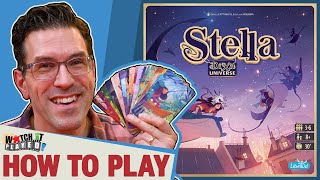




Stella: Dixit Universe Deep Dive
What the Community Thinks About Stella: Dixit Universe
Reviewers tend to describe Stella: Dixit Universe as the Dixit spin-off that plays by different rules. Rodney Smith of Watch It Played introduces it as a totally unique stand-alone game that uses the Dixit visual language but replaces storytelling with deduction. The consensus is that the game is clever and distinctive, though reviewers disagree about how well it holds up over repeated sessions and how much it depends on the group at the table.
Several channels describe the appeal in similar terms. The Rolls in the Family hosts, Ryan and Daniel, have ranked it highly and frame it as a game that gives Dixit fans something new without discarding what they already enjoy. TheGameBoyGeek of TheGameBoyGeek saw it differently at first. They kept it on their shelf long enough to appreciate its grid-based puzzle, but they eventually traded it away in favor of a newer party game, a decision they explained as a matter of table space and group preference rather than a verdict on the design.
Core Mechanics That Define Stella: Dixit Universe
Image Deciphering
Stella draws its identity from the illustrated cards that made Dixit famous, but the task is different. Each round, a word clue is revealed, and every player studies the same grid of cards on the table. Rodney Smith explains that players can interpret each picture in any way they like, whether through its atmosphere, colors, characters, or a small detail. The grid also introduces a sharper kind of reading than Dixit demands. Instead of hunting for the single best card for a clue, players ask which of the fifteen images could plausibly fit the word, and they are often guessing what their rivals will see too. Rolls in the Family describes the design as a shift from choosing the best match to making a case for why a card could work.
Paper-and-Pencil
Each player marks their choices on a personal erasable slate, and the secrecy of those marks is central to the experience. Players tick boxes on a slate that mirrors the grid, then pass their pen to signal they are finished. Reviewers focus on the scoring tension that follows. Each player announces only a count of their marks, and a lantern token on a shared track shows who has marked the most cards. The player furthest ahead is said to be in the dark, which changes how their score is calculated at the end of the round. Because the slate is the only place where a player's private reasoning exists, reviewers stress that the pen-and-paper element is what turns a simple matching puzzle into a game of reading other people.
The Stella: Dixit Universe Experience
Suspenseful: Waiting in the Dark
The feeling that reviewers return to most often is the tension of the dark position. Players who mark more cards than anyone else risk losing stars if even one of their picks fails to match, and they may be cut down to a fraction of their score. Rodney Smith calls this a risky choice. Rolls in the Family describes the pleasure of this moment as a shoot-the-moon gamble, where a player in the dark can still collect every point if enough of their marks land. The suspense comes less from waiting for a result and more from deciding how much to commit before anyone else reveals a card.
Surprising and Swingy: The Super Spark Moment
The reveal phase produces the most energetic moments. The scout points to one of their marked cards, and anyone who also marked that picture announces the match. When only one other player agrees, both players earn a super spark and fill in all three stars for that box. Rolls in the Family highlights how this creates a small celebration at the table, with players comparing their reasoning and laughing at surprising overlaps. Because a single unmatched pick can cost the scout the rest of the round, the swings in fortune can be dramatic, and reviewers describe rounds that turn on one unexpected pair of matching marks.
What Makes Stella: Dixit Universe Stand Out
The Super Spark Bonus
Reviewers consistently praise the super spark because it rewards agreement without requiring players to guess the exact same card as the whole table. A pair of matching marks is enough to score well, which lowers the pressure compared with a game that demands unanimity. Rolls in the Family notes that the bonus makes players feel as though they have found a kindred spirit at the table, and that the mechanic gives a social reward that many party games lack. The reward structure also means that a player's most confident pick is often the most valuable one to reveal, which keeps the reveal phase engaging from start to finish.
Dixit Compatibility and Expansion Value
Stella is designed so that its cards work with the Dixit line. Rodney Smith points out that the game includes ten blank word cards for custom clues and that its picture cards can be combined with Dixit or other Dixit-compatible sets. Rolls in the Family goes further, describing Stella as a game that expands the Dixit world rather than competing with it. Owners of Dixit can add Stella to their collection and gain both a new way to play and additional artwork for their existing games. Reviewers see this as a practical advantage that makes the purchase easier to justify.
Potential Drawbacks
Player Count and Table Limits
Reviewers note that Stella caps at six players, a limit that matters for groups that want to bring a larger crowd into a party game. Ryan of Rolls in the Family acknowledges the cap but argues that it suits the game's design, since the fifteen-card grid and the scoring rules work best with a small table of attentive players. Groups that regularly play with seven or more people will need a different option, and reviewers suggest that this limit is one reason the game sits in a more focused niche than some of its party-game neighbors.
Novelty Fades and Competition From Similar Games
Some reviewers report that the excitement of the first few plays does not always last. The Rolls in the Family hosts discussed how a game can seem to peak early and then cool as its patterns become familiar, and they described Stella as a game that rewards the first experience strongly. TheGameBoyGeek also observed that Jinxo, which uses a similar grid of player responses but relies on written words rather than artwork, went over better with the lighter party groups they host. For players who want a quick party game that does not require careful reading of pictures, Stella may feel more demanding than its competitors.
If You Enjoy Stella: Dixit Universe
Players who enjoy the visual puzzle of Stella's grid will find a natural next step in Dixit. Dixit is the original storytelling game built on the same illustration style, and it asks players to find the one card that best fits a clue while avoiding a clue that is too obvious. Stella reframes that same imagery into a matching contest, so the two games complement each other well for players who want to explore the Dixit universe further.
Players who enjoy Stella's guessing dynamic and the tension of trying to read a table will also find satisfaction in Jinxo. Jinxo asks players to write words into a shared grid and then tries to match the responses of other players, which creates a similar feeling of trying to predict what others will think. Reviewers who favor the lighter, more social side of Stella often point to Jinxo as the easier game to bring to a mixed group.
What Reviewers Are Saying
"The cards in this game might seem familiar, after all Dixit is right in Stella's title, but don't worry if you haven't played this game before, because Stella is a totally unique stand-alone game with its own twist on giving clues and making deductions."
— Rodney Smith, Watch It Played
"Stella Dixit Universe is part of the Dixit line, but it was a very different game from all the rest. I actually really liked it a lot, because you've got this clue and you're trying to see in this grid how many of those cards tie to that clue, and you're trying to match with other people, but in Dixit you'd like to match with just one of them."
— TheGameBoyGeek
"Stella adds a little bit of a layer of complexity on top of kind of this formula, but everything about what it adds I think facilitates a really cool experience. And so you have this grid of 15 cards, so instead of players having their own cards, there's just the same 15 that everybody's looking at."
— Ryan, Rolls in the Family