





The Lord of the Rings Adventure Book Game Deep Dive
What the Community Thinks About The Lord of the Rings Adventure Book Game
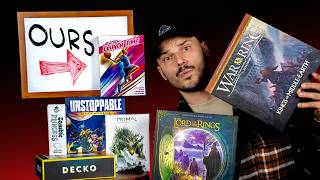
Reviewers describe The Lord of the Rings Adventure Book Game as a pleasant, approachable cooperative game with strong theming and better presentation than its price suggests. The consensus is that it works best as a family or gateway experience. Some reviewers find it light for experienced players, and those who discuss replay value doubt they would return to it after finishing the campaign. Fans of the films seem to get the most out of it, since the chapters are built around recognizable moments such as the Balrog's cave and Elrond's council.
Core Mechanics That Define The Lord of the Rings Adventure Book Game
Hand Management and Multi-Use Cards
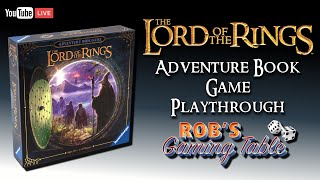
Each turn, players can move characters, trade a card with another player, discard cards to move a character one space per card, complete challenges by discarding matching story cards, and play special cards. Hand size is capped at six at the end of a turn, so every turn involves deciding which cards to spend and which to keep. The trade action is limited to once per turn, which pushes players to plan their hands around the challenges they can realistically finish. Story cards double as wild cards, and the One Ring cards are the most flexible of all. A One Ring card can stand in for any story card when completing a challenge, but each use moves the corruption track forward. Special cards from a separate deck carry chapter-specific powers and can be discarded to move a character. Rob's Gaming Table describes the One Ring cards as wilds whose short-term convenience comes at a long-term price, which is the trade-off most reviewers keep returning to.
Cooperative Play and the Corruption Track
All players work against the plot deck together. Nobody controls a single hero. Players can manipulate every character on the board, but each person keeps the cards they draw for themselves. Coordination matters more than individual skill, and reviewers note that talking through who should move where is a large part of the table experience. The plot deck can end a chapter by sending a hobbit into a bad position or by running out of cards, so the pressure stays on the whole group. The corruption track is the game's long-term clock. Playing or discarding a One Ring card moves the marker up one space, and the marker never resets between chapters. Losing a chapter sends players back to its start, but the corruption marker stays where it is. Reaching the end of the track ends the campaign. The Discriminating Gamer describes this as the central tension, since the track rewards efficient play in the short term while steadily limiting how much the group can afford to spend later.
The The Lord of the Rings Adventure Book Game Experience
A Quick Family Evening
Reviewers who play with families describe sessions that fit easily into an evening. Chapters are short, the rules are compact, and the adventure book format keeps everyone focused on the next page. Meeple University's panel called the game quick to play and quick to pick up, placing it in the lighter end of the cooperative puzzle genre. For players who want a clear theme and a low barrier to entry, the experience delivers what it promises.
A Tense Puzzle Run
Other players report a sharper experience once the scenarios become harder. Movement turns into a puzzle, hobbits must reach hiding spots without being caught, and a single poor plot card can force a restart. Meet Me At The Table called one chapter the hardest of the game, and the restart that followed was a memorable low point for the group. Players who enjoy tight planning under pressure tend to describe this side of the game as the more rewarding one.
What Makes The Lord of the Rings Adventure Book Game Stand Out
Scenario Design
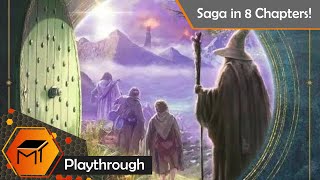
Reviewers repeatedly single out the chapter design. Each scenario adapts a moment from the films and adds its own rules, such as the Elrond chapter, where characters initially cannot share a space before the group eventually comes together. Meet Me At The Table praised how the rules reflect the story rather than sitting on top of it. The One Ring and the Eye of Sauron feel like thematic events rather than abstract tokens, which helps the game hold its identity across chapters.
Rewarding Planning
Because discards and special abilities interact, a well-planned turn can clear several challenges at once. Meeple University's panel noted that the game escalates as players draw stronger special cards that let them do more on a single turn. Players who learn to hold useful cards for later chapters often find the campaign rewards that patience, and the escalation gives the back half of the game a clear sense of momentum.
Potential Drawbacks
Limited Replay Value
The most common criticism concerns replay. The Discriminating Gamer enjoyed the game but doubted returning to it after finishing, and suggested that experienced gamers may tire of its structure. The campaign format means a full replay is a substantial commitment, and one reviewer described a lost chapter as simply unlucky with the cards drawn. Players who value deep, varied replay will likely find the experience limited once the story is known.
Components and Solo Play
Reviewers mention that the card stock feels thin and that the miniatures are hard to tell apart, since the characters lack printed names. Rob's Gaming Table noted that one miniature arrived bent and needed hot water to straighten. Solo play uses a dummy hand that lets a player swap cards in and out, and one reviewer disliked how easily that hand allows players to offload One Ring cards. Reviewers did praise the thick tokens and the sturdy book pages, so the physical quality is mixed rather than uniformly weak.
If You Enjoy The Lord of the Rings Adventure Book Game
Readers who enjoyed The Princess Bride Adventure Book Game will recognize the format, since The Discriminating Gamer described the two as very similar in structure and feel. Fans of Pandemic and Castle Panic will find the card trading and shared threat familiar, and Rob's Gaming Table drew that comparison directly. Players who like cooperative campaigns with a long-term clock may also look at Pandemic Legacy for a more ambitious take on carrying progress forward. Those who want deeper strategy may prefer heavier cooperative games, but this title suits a relaxed evening with fans of the films.
What Reviewers Are Saying
"I felt like by the time we reached the end of that one, I didn't necessarily want to go back and play it again."
— The Discriminating Gamer
"This is most certainly the hardest chapter of the game."
— Meet Me At The Table
"Okay, this game just got way better. Okay, just blew my mind."
— Rob's Gaming Table