



Trench Raid: Solitaire Patrol Command on the WW1 Western Front Deep Dive
What the Community Thinks About Trench Raid
Trench Raid has captivated solo wargaming reviewers with its remarkable ability to generate rich, personal narratives. Observers from Zilla Blitz and other channels have consistently praised the game as a standout entry in the solo wargaming landscape. The game occupies a unique position: it is thematically dark and historically grounded in WWI trench warfare, yet mechanically light enough to be genuinely fun to play. Reviewers have placed it in the same lineage as celebrated narrative-driven solo games like The Hunters, Silent Victory, Western Front Ace, and British Tank Ace, while maintaining its own distinct voice. The consensus emphasizes that Trench Raid appeals strongly to players who value emergent storytelling and are comfortable with significant randomness determining outcomes, but would frustrate players who see games primarily as tests of skill.
Core Mechanics That Define Trench Raid
Character Leveling and Soldier Progression
At its heart, Trench Raid from Compass Games incorporates a campaign-driven RPG layer that transforms it from a simple tactical raid into an evolving drama. Each of your ten soldiers arrives with baseline statistics: speed, strength, courage, command, shooting, fighting, throwing, and luck. As designed by Lisa Smedman, the game allows players to assign starting values from a limited pool of points, creating meaningful customization. Throughout a campaign of five missions, surviving soldiers steadily improve their skills through experience, while wounded soldiers track injuries that reduce their effectiveness. Those who fall in combat can be replaced by fresh recruits, but the loss carries weight. This mechanic creates genuine investment in individual soldiers; reviewers noted the satisfaction of seeing a character's luck score increase as they survive multiple patrols, making their eventual success or dramatic death feel personally earned rather than arbitrary. The system also integrates equipment loadouts: each soldier selects five items (gas masks, rifles, grenades, field dressings, wire cutters, etc.), and these choices directly influence success or failure when events occur.
Event-Driven Narrative Generation
The engine that generates Trench Raid's celebrated narratives is its event system. As your patrol moves through no man's land, you roll for random encounters using a d20 die; different terrain types have different event probabilities (open ground is riskier, craters and ruined buildings safer). When an event occurs, the rules describe the scenario in vivid narrative language: you might encounter artillery fire, poisonous gas, enemy patrols, wounded soldiers, sniper fire, or swarms of rats. Each event type branches further: does your patrol encounter chlorine gas or mustard gas? Are you outnumbered or outnumbering the enemy patrol? Each variation cascades into different consequences. Events are resolved through character skill checks, where soldiers roll dice attempting to score fives or sixes. This is where the campaign-tracked stats matter: a soldier with high courage or speed has more dice to roll and a better chance of surviving. The brilliance of this design is that the same event never plays identically twice; a gas encounter in your fifth mission unfolds differently than your second because different soldiers have different stats by then and the narrative context has shifted. Reviewers consistently emphasized that this mechanism excels at spinning stories, with one playthrough ending in a miraculous escape and another in a devastating ambush that leaves soldiers dead and the rest barely limping home.
The Trench Raid Experience
Narrative Immersion
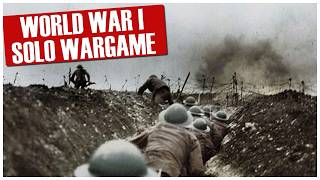
Trench Raid is a game that makes you see movies in your mind. Reviewers repeatedly described it as oozing narrative and spinning stories that read like chapters in a novel. The game does not present you with a sterile board and mechanical outcomes; instead, the event descriptions engage your imagination. When you roll and encounter a "missing man" event, the rules narrate that one of your soldiers has blundered off in the darkness and gotten lost. You then roll to determine which soldier, creating a tense moment of suspense. That soldier must roll to make their way back to friendly lines; failure might mean they are captured, wounded, or killed. This narrative framework transforms dice rolls into dramatic moments, and the combination of tactical positioning, soldier stories, and random events weaves together into stories that feel both organic and personal. Players find themselves emotionally attached to their soldiers not because the game imposes that on them, but because the mechanics naturally generate investment.
Tense Emotional Engagement
Beyond the narrative structure, reviewers highlighted the emotional rush Trench Raid delivers. Because events can be genuinely devastating, genuine tension emerges. A bad roll on an artillery barrage might wound multiple soldiers or kill outright. A mustard gas encounter where your soldiers fail their speed checks can incapacitate an entire patrol. This swinginess means that stakes feel real; you cannot simply out-skill your way to victory. But reviewers who embrace this uncertainty report that losing becomes as fun as winning if it generates a compelling story. One soldier might survive five missions, gaining points in every stat, only to die on a routine patrol when an unlucky event occurs. The unpredictability drives engagement; players report replaying the game many times because they want to see what stories emerge next. The rules are clean enough and the player aids comprehensive enough that you are never buried in procedure; you are always thinking about the next decision and the next narrative beat.
What Makes Trench Raid Stand Out
Exceptional Event Variety and Design
Compass Games has included approximately twenty different event types that can occur in no man's land, with another set of events for enemy trenches. But quantity alone would not impress reviewers; what stands out is the quality and variation within each event type. Gas events branch into two types with different consequences. Enemy patrol encounters vary based on whether you are outnumbered, evenly matched, or have advantage. Wounded soldiers events force you to decide: carry them back, leave them behind, or risk your patrol to search for them. This depth prevents the game from ever feeling like you are rolling the same event repeatedly. Reviewers noted that even after multiple campaigns, the event variety keeps the game fresh and surprising. The writing on each event card is evocative and flavorful, painting a picture of WWI trench warfare without ever becoming gratuitous. The designers at Compass Games have clearly researched the setting deeply and woven historical details into the event descriptions and mechanics.
Campaign Integration with Meaningful Progression
While many solo wargames offer campaign structures, Trench Raid's integration is seamless. The five-mission campaign is the recommended length, taking roughly five to six hours total including inter-mission bookkeeping. Each mission connects to the previous through character stat changes, trauma accumulation, and roster turnover. Soldiers who survive gain experience and become more capable, but defeat is not merely a score in a single scenario; it echoes across missions, and a catastrophic raid early on can leave a depleted roster for the missions that follow. This creates a strategic layer atop the tactical one: which soldiers do you risk on dangerous missions, and do you play conservatively or throw everyone at the objective? Reviewers loved the way the campaign structure transformed individual raids from isolated scenarios into an interconnected narrative arc.
Potential Drawbacks
High Randomness and Swingy Outcomes
Trench Raid is not a game where skill dominates outcomes. Reviewers were transparent that the game is heavily event-driven and luck-dependent. A healthy ten-person patrol can be reduced to three survivors in a single devastating event. You have meaningful choices (how to equip your soldiers, where to move, when to spend luck points), but the dice gods ultimately decide victory or defeat. Players who love narrative games and emergent stories see this as a feature; it keeps every decision tense and every outcome surprising. But players who primarily value games as tests of skill, or who take losing personally, will find Trench Raid frustrating, since the game generates stories and stories sometimes end in tragedy.
Solo-Only Design with No Opposed Play
Trench Raid is designed as a solo experience. While the rules technically allow for two or three players controlling soldiers together in a cooperative mode, there is no opposed two-player game; enemy actions are driven by random event rolls, not another player's decisions. Some reviewers noted this as a limitation for players who prefer competitive gaming, but for solo wargamers it is precisely the point: the design does not need to balance opposing players or provide hidden information beyond what the game itself generates. If you play wargames exclusively for head-to-head competition, Trench Raid will not meet that need, but if you are drawn to narrative-driven solo wargaming, the tight focus on that experience is a strength.
If You Enjoy Trench Raid
The community situates Trench Raid within a lineage of exceptional solo wargames. Reviewers consistently recommend The Hunters and Silent Victory for players who want similar narrative-driven solo experiences in other theaters (submarine and naval combat respectively). Western Front Ace, British Tank Ace, and other entries in the Ace series offer similar campaign mechanics where characters progress through missions and accumulate damage and experience. For players seeking a more tactical variant, Point Blank and Upfront offer squad-level card-driven wargaming with similar narrative potential, though with different mechanical substrates. At a larger strategic scale, Paths of Glory captures WWI as a whole and rewards deep historical understanding, though it sacrifices the intimate character focus that makes Trench Raid special. Players who find themselves captivated by Trench Raid's balance of accessibility and emergent storytelling will find rich territory to explore across these games, each offering its own flavor of historical wargaming.
What Reviewers Are Saying
"I'm a big fan of narrative games. Uh games that tell stories. This game oozes narrative. It does just a fantastic job with spinning the story of your patrol on pretty much every mission."
— Zilla Blitz
"There's such an emotional rush that I've gotten from playing this game. I'm a big fan of soliter games that spin narrative. This spins some of the most amazing narratives that I've experienced playing games so far."
— Zilla Blitz
"You can see the action in your mind's eye, the story of your soldiers. They're going to die. Some of them are going to survive. Some of them might have their skills advanced in the campaign game. It's just an enjoyable, fun, exciting game that when you're done, you say, 'That was just a remarkable experience.'"
— Zilla Blitz