









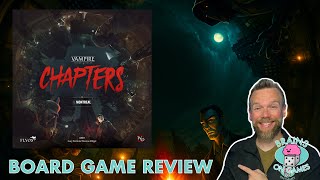





Vampire: The Masquerade – CHAPTERS Deep Dive
What the Community Thinks About Vampire: The Masquerade – CHAPTERS
Reviewers agree on one point above all others: Vampire: The Masquerade – CHAPTERS is a story-first game that asks players to read, decide, and investigate rather than simply fight. Published by FOS Games, a Montreal company, the title places players in the World of Darkness as Kindred trying to keep the Masquerade intact in a city shaped by the Second Inquisition and the fall of the Sabbat. Many of the reviewers grew up with the original tabletop line, and that history shapes how they judge the game. The shared appeal is the sense of stepping into a setting they already love and finding it still feels alive.
Quackalope, the channel that covers the game most extensively in this set, is its most enthusiastic advocate. The host calls the storybook design an innovative way to tell a story and argues that nothing else approaches the narrative dialogue, investigation, and discovery the game delivers. Dr. Brian McDonald of Brains On Games takes a more measured view. Dr. McDonald sees a campaign game that borrows from Gloomhaven but shifts its focus toward conversation and sneaking, and treats the physical product with some amusement. UndeadVikingVideos praises the writing without reservation but is the most skeptical about the box contents, arguing that much of the printed material could have lived in an app.
The disagreements are mostly about the physical package and the combat. Reviewers who value the story tend to accept the bulk as the cost of a rich campaign, while those who wanted a tactical battle system find the fights less satisfying. Where the reviewers converge is on the core promise: a game that uses its books, its branching choices, and its dark premise to make players feel like a vampire keeping secrets in a modern city.
Core Mechanics That Define Vampire: The Masquerade – CHAPTERS
Negotiation
Negotiation drives most of the play in Vampire: The Masquerade – CHAPTERS, though reviewers describe it as conversation with the characters in the story rather than bargaining with rivals over resources. Brains On Games explains that players sneak around, talk to people, and investigate, rolling for social interactions instead of resolving everything through combat. Quackalope points to the same engine when praising the narrative dialogue, noting that the hidden twists and loose ends come from how players handle each conversation. Because the agreements are made with the story's characters, the feel is closer to a roleplaying scene than to a trading table, and that distinction is central to how reviewers describe the game's identity.
Modular Board
The play area is built from thick map sections and detailed tiles, and the setup grows as the chapters unfold. Brains On Games notes that the box contains a large set of maps alongside miniatures, standees, and a library of story books. Quackalope highlights that the puzzles and adventure elements are unique to each chapter, which suggests the board serves as a container for narrative events more than a tactical arena. UndeadVikingVideos is the sharpest critic of this system. After a first mission built around a fight, the reviewer found that moving across the maps felt almost pointless, and questioned why a stack of maps two to three inches thick was needed when investigation carries the game.
The Vampire: The Masquerade – CHAPTERS Experience
The Feeling of a Game Master at the Table
Reviewers repeatedly describe a game that plays with the presence of a narrator even though no one takes that role. Quackalope says the game feels like playing an RPG board game without a game master, with branching paths that respond to the player's choices. That gives the table a focused atmosphere where players lean into the story, read their prologue sections aloud, and debate which decision their character would really make. The mood is more contemplative than competitive, and the reviewers who enjoy it tend to describe long stretches of quiet reading punctuated by sudden turns in the plot.
Dread, Hunger, and the Cost of Being a Vampire
The tension in Vampire: The Masquerade – CHAPTERS comes from the Kindred's constant need for blood. Quackalope describes disciplines that let a vampire transform into a wolf and tear apart an opponent, and also pressure luck and feed on a vulnerable enemy in the middle of a fight to restore blood. The host calls this the moment the game really lets players live the vampire experience. The reviewers treat hunger as a mechanical and emotional pressure that keeps every choice from feeling free of consequence.
What Makes Vampire: The Masquerade – CHAPTERS Stand Out
Branching Storytelling With Real Weight
The writing and branching structure are the features reviewers praise most consistently. Quackalope argues that the game holds more hidden twists, secrets, and loose ends than any other title in its experience, and that the storybook approach gives the narrative room to surprise. UndeadVikingVideos was stunned by the quality of the prose during the opening prologue, and the reviewer's group quickly became engaged in the material. Reviewers also note that each character receives a prologue of their own before a shared mission begins, and that different decisions in the books can open different routes, even if some players question whether replaying a book is worth the effort.
Solo and Group Play Without a Game Master
Vampire: The Masquerade – CHAPTERS can be played with up to four players or solo, and no game master is required. Quackalope recommends the game for two or three players, noting that a larger table can dilute the narrative choices that each player makes. Brains On Games describes a structure in which one player works through a solo mission while a more experienced player helps teach the rules, before the group moves into shared missions. That layered approach lets newcomers learn the system at their own pace while still giving the table a cooperative story to share.
Potential Drawbacks
Physical Size and Printed Volume
The physical footprint is the most frequent practical concern. Brains On Games reports that the box weighs around 30 pounds, is too large for a typical shelf, and includes many miniatures, standees, maps, and books. UndeadVikingVideos argues that the book volume is excessive and that a companion app would have reduced the clutter considerably. Brains On Games notes that a newer edition is smaller and adds a web app, which reviewers see as a response to these complaints. Quackalope acknowledges that the book-heavy design takes a long time to read, and still describes the reading as enjoyable. The reviewers agree that the bulk is a real commitment, even when they like what it delivers.
Combat Mechanics and Dice Mitigation
Combat draws the most mixed reactions. Quackalope describes the fighting as straightforward and clean, but not the main focus of the game, and acknowledges that combat can become convoluted when it comes to dice rolling and how players mitigate what happens on the table. UndeadVikingVideos is more critical, describing the reviewer's first fight as a turn-based exercise in going around the table with little real maneuvering. Reviewers who came for the story tend to accept this, but players who expected a tactical skirmish game may find the combat less rewarding than the narrative.
If You Enjoy Vampire: The Masquerade – CHAPTERS
Players who enjoy the branching investigation and consequence-driven storytelling will find similar satisfaction in Madara and Vagrant Song, both of which Quackalope describes as offering something unique for players seeking an immersive RPG experience. Players who value the social, campaign-driven feel of the interaction systems will find Gloomhaven a natural comparison, since Brains On Games frames Vampire as Gloomhaven combined with a Choose Your Own Adventure. Quackalope also places Kingdom Death: Monster and Oath in the same conversation about long, demanding campaign games, making them a logical next step for players who want a big commitment. Players drawn to the World of Darkness roots that many reviewers mention will find Werewolf: The Apocalypse a fitting companion, and Destinies from Lucky Duck Games suits players who enjoy the hidden twists and loose ends that Quackalope praises.
What Reviewers Are Saying
"It's not combat focused, it's much more interaction focused. They've taken Gloom Haven and almost combined it with a Choose Your Own Adventure where you're rolling social interactions."
— Dr. Brian McDonald, Brains On Games
"This game is written really well, very well. I was stunned how well it was written."
— UndeadVikingVideos
"The core idea is that you are well exploring the world of Darkness. You are a vampire trying to maintain the Masquerade, trying to maintain the civilized human societies from knowing that you exist, but you need blood. You need to feed."
— Quackalope