/pic4230177.jpg)
Game Info
Year
2018
Collection
Ratings
Creator Score
Mechanic profile
Not enough video data yet
Vibe profile
Not enough video data yet
Description
Kill Team is the game of skirmish combat in the 41st Millennium.
Set in the same universe and using the same miniatures ranges as Warhammer 40,000 but with a different rules set, it allows you to play a game of fast-paced tactical skirmish combat in games of 2-4 players, in less time and with a fraction of the models you’d need to play a full game of Warhammer 40,000.
—description from the publisher
Featured Videos
Ask a Rules Question
All mentions
Browse transcript mentions, sentiments, pros/cons, mechanics, topics, quotes, and references.
Total mentions: 47
This page: 47
Sentiment:
pos 14 ·
mix 10 ·
neu 7 ·
neg 8
Showing 1–47 of 47
Video 2xhoqlvgNxw
Rolling Dice & Taking Names Analysis at 36:31 sentiment: positive
video_pk 95061 · mention_pk 320489
Click to watch at 36:31 · YouTube ↗
Overall sentiment (raw)
positive
Pros
- Wonderful time
- Highlight of the trip
Cons
none
Thematic elements
- skirmish game
- Warhammer 40k universe
Comparison games
none
Mechanics (from transcript analysis)
- Skirmish — Described as a 'quick two-player skirmish game'.
- two-player — Explicitly mentioned as a 'quick two-player skirmish game'.
Video topics + discussion points
No key topics recorded for this video.
Quotes (from this video)
- Kill Team is like the quick two-player skirmish game in the Warhammer 40k universe
- we had all six of us playing on these really nice tables with a nice terrain it was a wonderful time maybe even the highlight of my trip
- the building is the hardest thing if you get through that the rest of the actions you can do are simple
- a good game is a good puzzle
- I will play this again but not above Lorenzo
- this one I don't think impressed us as much as Lorenzo
- the iconography was confusing
- it's a good puzzle
- I will play this game I will enjoy playing this game but like you I will put Lorenzo on the table first but I will not turn down a game of Newton
- it looks cool man a co-op worker placement that's kind of cess kind of itching to scratch I didn't know I had
- it's a hard co-op worker placement game
- Stan Lee the very famous American comic book writer died at the age of 95
- he's one of the greatest storytellers of all time
- every hero of his had a flaw and he made sure they did
- Excelsior!
References (from this video)
No references stored for this video.
Video 4SkX1z7pYdA
Rolling Dice & Taking Names Discussion at 1:21:27 sentiment: positive
video_pk 95063 · mention_pk 261018
Click to watch at 1:21:27 · YouTube ↗
Overall sentiment (raw)
positive
Pros
- Streamlined version of 40k
- Faster game time compared to 40k
- Lower model count and cost of entry
- Uses existing 40k models
- Supports all 40k factions
- Engaging back-and-forth gameplay
- RPG-like progression and customization
- Excellent terrain included in the starter box
- Simpler rules than Necromunda
Cons
- Model customization (weapon choices) can be intimidating for some
- Requires remembering specific weapon loadouts for models
Thematic elements
- 40k universe
Comparison games
- Warhammer 40,000
- Necromunda
- Age of Sigmar
Mechanics (from transcript analysis)
- alternating activations — Players take turns moving, then alternate shooting and fighting, rather than one player completing all phases.
- Campaign play — The rulebook includes rules for campaigns and scenarios, allowing for narrative play over several games where models can progress and gain XP.
- Command points and tactics — Players receive command points each round to spend on tactics that enhance individual models.
- skirmish combat — The game involves small-scale combat with fewer units on a smaller board.
- Specialist characters — Players can designate models as specialists (e.g., combat, demolition) which grants access to specific tactics.
Video topics + discussion points
No key topics recorded for this video.
Quotes (from this video)
- it is much smaller than 40k is and instead of sort of planning on a grand scale the board of smaller far less units you want to really like you know play small think small and really think on your feet for this one
- it has the feel of 40k but it's streamlined
- instead of spending three hours playing a game instead they want to play a low point game loped model count game and maybe about an hour or so but still get that same feel of 40k
- it has almost like of an RPG element where you can make your own characters you name your own characters and then you can make them specialists
- the rotation of cards which is I think the key mechanic in this game
- there is only one token in this entire game
- this game right out of the box you just need cards no tokens no bits no dice
- the timing is critical in this game
- it's a TCG and a lot of people will automatically be turned off
- the starter decks only gonna get you the taste
- the turn structure is really straightforward
References (from this video)
No references stored for this video.
Video Z1-oEqasj0c
Drive Thru Games Analysis at 28:23 sentiment: neutral
video_pk 90684 · mention_pk 323511
Click to watch at 28:23 · YouTube ↗
Overall sentiment (raw)
neutral
Pros
- useful for anything
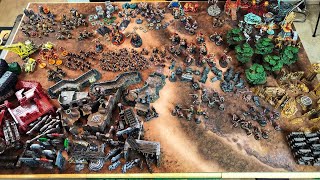
- quick and dirty painting
- good enough for a game with terrain
Cons
- least amount of time spent on this particular set
Thematic elements
Comparison games
none
Mechanics (from transcript analysis)
Mechanics unknown.
Video topics + discussion points
No key topics recorded for this video.
Quotes (from this video)
- i think at this point i sort of stopped using the bottled citadel sort of varnish because i've kind of bounced around the marshes that i use
- it's like a boiling blood hole in the ground and then you know this horrible magic comes out of it
- don't call it magic though
- i hate metal
- this is like a molten rock monster with this giant cannon
- the silliness it's great there
- this guy peeled off his own face and then stuck it on his belt buckle
- this guy's pure blades running around so yeah he's dedicated
- i don't really want to because you could really mire in and you could get super detailed with this stuff
- this is just all super dead quick you could go back in here and do some details i don't really have the inkling or desire to do that
- i'm not going to paint 20 doors worth of detail
- i really like this big sigmar statue there that's pretty cool
- he's like a little illithide or mind flare kind of guy
- this guy is this hilarious looking
- trust me there's a corn symbol on there somewhere
- i guess he sucks on the table i've never actually fielded him
References (from this video)
No references stored for this video.
Video BMqGBUqoR3s
Drive Thru Games Analysis at 0:08 sentiment: mixed
video_pk 90267 · mention_pk 240947
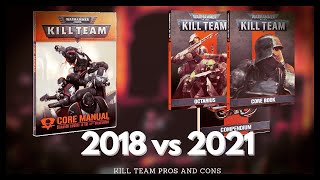
Click to watch at 0:08 · YouTube ↗
Overall sentiment (raw)
mixed
Pros
- Very simple kill team creation.
- Much more fleshed out narrative with full campaigns.
- Objective system offers a lot of variety.
- Match play is cleaner and smoother.
- Engaging tactical dynamics with new orders.
- No morale phase is good for match play.
Cons
- Limited kill team creation options for Space Marines.
- High buy-in cost if not purchasing the Octarius box set.
- Concern over the ecosystem and potential paywalling of rules.
Thematic elements
- Skirmish combat in the Warhammer 40,000 universe
Comparison games
- 40k
- Age of Sigmar
- Frostgrave
- Necromunda
- War Cry
Mechanics (from transcript analysis)
- campaigns — Full campaigns are available, allowing for individual quests and progression, borrowed from Age of Sigmar.
- Concealed and Engaged Orders — New orders that affect unit actions and visibility on the battlefield.
- Equipment System — In match play, customization is driven by equipment points rather than specialisms from the previous edition.
- No Morale Phase — The removal of the morale phase simplifies gameplay for match play.
- Objective System — Includes TacOps cards and various scenarios where action points may be spent to activate objectives, offering mission variety.
- Squad Creation — Players select a squad and then choose a leader and a few specialists from that squad, with 20 models available for match play from which fire teams are drawn.
Video topics + discussion points
No key topics recorded for this video.
Quotes (from this video)
- The buy-in is a hundred bucks because you're going to get the rule book and the compendium
- The ecosystem here is another thing that really worries me
- This is like the big anchoring con on the whole thing
References (from this video)
No references stored for this video.
Video 3PU3EUyhhpo
Drive Thru Games Analysis at 5:49 sentiment: neutral
video_pk 89950 · mention_pk 343761
Click to watch at 5:49 · YouTube ↗
Overall sentiment (raw)
neutral
Pros
none
Cons
none
Thematic elements
Comparison games
none
Mechanics (from transcript analysis)
- contrast paints — The host experimented with almost pure contrast paints on Deathwatch models.
Video topics + discussion points
No key topics recorded for this video.
Quotes (from this video)
- I paid in 494 miniatures in the year 2020
- this year I was kind of curious if I could try to beat 500 and I did I got to 580
- I don't really enjoy that game at all
- the miniatures are amazing
- I just don't think the game mechanics really lived up to it
- this is an experiment here because I actually did almost pure contrast on the death watch
- this is part of why I like the paint job on this so much as the bases
- Won the one of the monthly boardgamegeek.com painting contests with that model there
- I've played the game probably a dozen times now and really been enjoying it
- it's actually really good
References (from this video)
No references stored for this video.
Video 8IHu3-XvLVM
Tabletop Minions Discussion at 5:42 sentiment: mixed
video_pk 87970 · mention_pk 305599
Click to watch at 5:42 · YouTube ↗
Overall sentiment (raw)
mixed
Pros
- Potentially a good introduction to skirmish games
- New edition expected soon
Cons
- Restrictive list building
- Competitive focus can be off-putting
- Line of sight rules are confusing
- New editions every three years are seen as too frequent
Thematic elements
Comparison games
- War Cry
- 40K
- Necromunda
- Grim Dark Future Firefight
Mechanics (from transcript analysis)
- Army building — The discussion revolves around the limitations and restrictions of army building in the current edition of Kill Team, contrasting it with more open systems like Warcry.
- Line of Sight — The rules for line of sight in Kill Team are mentioned as being 'jank' and confusing, with the addition of new terrain pieces potentially muddying the rules further.
- List building — The host expresses a strong preference for more open list building systems, finding the current Kill Team system to be overly restrictive and less enjoyable.
Video topics + discussion points
No key topics recorded for this video.
Quotes (from this video)
- I think their current list building is trash in my opinion
- why is it war cry can be just fine and be a fine game when you can take whatever the heck you want as long as it comes up to a thousand points you need a leader and then everybody else but like you can't do that in Kill team
- The 2017 version is vastly superior
- when I was very disappointed when the original uh necrom 2017 came out because it did not have rules for three-dimensional play and it was just designed to be played on that board that came in the box
- I love the concept of necromunda I have no interest in playing it because it is so so super in-depth and also spread all over the place in multiple books
- Kill team is not an intro game to 40K it is only easier to get into because the model count
- people in general that struggle to wrap their head around the line of sight rules
- if you're a company that big cool Min is pretty big and if you're going to have a big huge giant game found Kickstarter whatever you're going to do and then you're going to be like yeah but if you want it in Australia it's going to cost as much as the game costs to get it shipped there
- The benefit to monopose is that you can make a more Dynamic sculpt you can make them doing something really cool but the problem is if you need six of them then it's six guys doing the exact same cool thing and then it becomes less cool
- The new version of kill team is based off of war cry so that doesn't make any sense either
- it's a cool game it's a very cool game
- It's better than anything else The Games Workshop puts out easily as far as any kind of on like their app or any kind of jazz like that
References (from this video)
No references stored for this video.
Video 8IHu3-XvLVM
Tabletop Minions Discussion at 1:30:14 sentiment: negative
video_pk 87970 · mention_pk 305602
Click to watch at 1:30:14 · YouTube ↗
Overall sentiment (raw)
Negative (regarding current list building)
Pros
none
Cons
- List building system is considered 'trash' by the host.
- New team releases are often bought up by 40K players, delaying availability for Kill Team players.
Thematic elements
Comparison games
- Warcry
- Grimdark Future Firefight
Mechanics (from transcript analysis)
- Line of Sight — Mentioned as a potential area for refinement in future editions, with the host noting that the rules have become muddied over time, especially with additions like the Gallowdark terrain.
- List building — Discussion about the game's list building system, with the host expressing a preference for simpler systems like Warcry's where players can choose any units up to a point limit, rather than Kill Team's current system.
Video topics + discussion points
No key topics recorded for this video.
Quotes (from this video)
- I think their current list building is trash in my opinion
- why is it war cry can be just fine and be a fine game when you can take whatever the heck you want as long as it comes up to a thousand points you need a leader and then everybody else but like you can't do that in Kill team
- The 2017 version is vastly superior
- when I was very disappointed when the original uh necrom 2017 came out because it did not have rules for three-dimensional play and it was just designed to be played on that board that came in the box
- I love the concept of necromunda I have no interest in playing it because it is so so super in-depth and also spread all over the place in multiple books
- Kill team is not an intro game to 40K it is only easier to get into because the model count
- people in general that struggle to wrap their head around the line of sight rules
- if you're a company that big cool Min is pretty big and if you're going to have a big huge giant game found Kickstarter whatever you're going to do and then you're going to be like yeah but if you want it in Australia it's going to cost as much as the game costs to get it shipped there
- The benefit to monopose is that you can make a more Dynamic sculpt you can make them doing something really cool but the problem is if you need six of them then it's six guys doing the exact same cool thing and then it becomes less cool
- The new version of kill team is based off of war cry so that doesn't make any sense either
- it's a cool game it's a very cool game
- It's better than anything else The Games Workshop puts out easily as far as any kind of on like their app or any kind of jazz like that
References (from this video)
No references stored for this video.
Video tzbdElDf-1o
Tabletop Minions Discussion at 195:58:00 sentiment: positive
video_pk 87772 · mention_pk 229963
Click to watch at 195:58:00 · YouTube ↗
Overall sentiment (raw)
Positive
Pros
- Tense gameplay
- Strategic positioning and abilities
- Customizable kill teams
Cons
none
Thematic elements
- skirmish combat
- sci-fi
Comparison games
none
Mechanics (from transcript analysis)
- Action Point System — Players activate operatives to perform actions.
- Dice Rolling — Used for combat resolution.
- skirmish wargame — A tabletop wargame focused on small unit combat.
- Unit customization — Players can customize their kill teams with different operatives and equipment.
Video topics + discussion points
No key topics recorded for this video.
Quotes (from this video)
- You can thin a paint but you can't thicken a paint
- Generative AI companies are their business model is based off of plagiarism and theft
- The games go a lot quicker and B you have to be a lot more uh paying a lot more attention to cover and things like that and everything
- It feels like it has a lot of moving parts but you can get through a round pretty quickly.
- It's not like it's a simple game but it feels like it's streamlined.
- It's satisfying to play.
- It's tactical how you're able to move your units and then position them to attack.
- It feels cinematic when you're playing.
- It's tense when your opponent is about to go and you're not sure what they're going to do.
- It's really strategic how you have to position your units and utilize their abilities.
- It feels like you can customize your kill team a lot.
- It feels epic to have these huge Star Wars ships duking it out.
- It's very strategic in how you fly your ships and manage your damage.
- It feels very cinematic when you're playing.
References (from this video)
No references stored for this video.
Video F7n1sdQEiBA
Tabletop Minions Discussion at 10:13 sentiment: neutral
video_pk 87707 · mention_pk 339154
Click to watch at 10:13 · YouTube ↗
Overall sentiment (raw)
neutral
Pros
- New Kill Team boxes with Brood Brothers (Imperial Guard infected by Genestealer Cult) and squats in leather jackets are models the reviewer wants to use in other games.
- Rules are different from Warhammer 40,000.
Cons
- The reviewer doesn't play Kill Team but wants the models from upcoming boxes.
Thematic elements
Comparison games
- Warhammer 40,000
- Combat Patrol
- Spearhead
- War Cry
Mechanics (from transcript analysis)
- Board size — Rumored to be played on a 22x30 board, similar to Warcry and Spearhead.
Video topics + discussion points
No key topics recorded for this video.
Quotes (from this video)
- two books there's Mech Borg which is a role playing game and then there's steel somm I think is what it's called which is like a miniature game based off of The Forbidden somm engine and so I was just like well I don't want the RPG but I'll I'll buy the other one so yeah I in in theory I'll see it some towards sometime towards the end of the year
- if you like eisenhorn I strongly suggest Bloodlines and the rest of the Warhammer crime line H um
- I built and painted my scaven blood bow Team this week they were a lot of fun but yeah the age shows
- the stormcast Eternal res sculpts are uninspired I mean I it's a lot more of the same really you know what I mean and the rules previewed of a weird board gamey vibe that doesn't really click
- do you think that the price hikes and the lack of availability of models by GW is hurting lgs's more than GW itself
- stores are going to have to eventually get to a point where if they just can't get too much GW stuff they're going to have to start thinking about diversifying and starting to do some uh games like you know start bringing in models from like War Games Atlantic start bringing in like Star grave models and frost grave models and things like that from Northstar
- the reason I don't like plastic cement is because sometimes I have to go back and remove an arm or take the thing off of the base or something like that and if it's plastic cement it's really almost hard to do that because it actually is melting the plastic to the plastic
- GW price hike hit the critical level for me players around here buying 3D printers even the very hardcore 40K players that frowned at me when I mentioned 3D printers are buying 3D printers
- basically the only big company out there is GW I mean everybody else is you know like they're they're sitting on I think and this is admittedly it's a lot of the retail people but they've got like five or six thousand employees but again half of those well maybe not half almost half of those I think are are are retail employees so there's that but still even if you take half of those people out you've still got 2,000 employees let's say
- GW is weird in that they are like I said before I was talking about how Distributors are like the kind of the middleman between the stores and the manufacturers and the Publishers GW is one of those companies that yeah you can buy it from Distributors and you'll pay normal distributor prices but if you buy it directly from GW then you get it for a slightly better price but you have to jump through a bunch of Hoops to become like approved to be able to buy it from their store
- you know at some point maybe down the road we'll work with like a sculptor that we like and do like maybe some stls or something like that do like a partnership but I don't see us ever really selling plastic models that's really expensive and also very very timec consuming
- the stormcast eternals had 40 just Heroes just individual heroes in that line so there were twice as many heroes in stormcast eternals than there were entire War Scrolls in the iron in the iron Jaws or whatever so yeah you know there there was way too many of those guys
- I think it's twofold I think it's partially there's been some change in not leadership per se but change in uh people working there that are some of those folks are a little bit more interested in t in in in in tournament stuff like you go back 10 years GW did not give a crap about tournaments
- when a company gets that big it's not good for the game company it may be good for the shareholders it may be good but it's not it's bad for the games and it's bad for the players just in general when the choices have to be made because somebody on a spreadsheet was able to point at it and go this will make the line go up that doesn't necessarily make a better game it makes a better product as far as bottom line it doesn't make a better game
- GW always tries to make it sound like they're doing you a favor by raising prices by the amount that they are and not a little bit more pray I do not I've I've altered the deal pray I do not alter it further indeed
- see the thing is the cards are produced separately from the it wouldn't matter if you were in Denmark or even here in the states the they're printed at two different facilities sadly uh that's one of the problems with the cards but there's nothing we can do about that
- see that's not supposed to happen we paid a lot of money to get those things shipped out and it sucks that some places that it got to then also there was another fee that's I apologize about that
References (from this video)
No references stored for this video.
Video v0SsPk875Ns
Tabletop Minions Discussion at 1:30:19 sentiment: mixed
video_pk 87585 · mention_pk 339329
Click to watch at 1:30:19 · YouTube ↗
Overall sentiment (raw)
mixed
Pros
- new termination box models are interesting
- models can be used for other games
- has potential for a new version
Cons
- production problems
- hard to find boxes at MSRP
- effectively a dead game due to availability issues
- new version might not have significant rule changes
- previous version's rules are preferred by some
- new version might not be desirable if rules aren't changed significantly
Thematic elements
Comparison games
none
Mechanics (from transcript analysis)
Mechanics unknown.
Video topics + discussion points
No key topics recorded for this video.
Quotes (from this video)
- Friends don't let friends Buy HP printers
- Wizards of the Coast would really rather that you just buy Magic by the case directly from them it seems
- They've been making a lot of really bad decisions in my opinion and if they go to business I will laugh and point
- I just don't understand why they don't want to do that
- I mean the machines that do the saddle stitching are a real pain to maintain they have a tendency to break down a lot
- The print books like the vast majority of people are buying the printed versions as opposed to just PDF only
- I don't know what the fourth dimension is
- I don't really pay attention to that stuff too much
- Most new Morheim players I talk to seem happy to download the PDFs for free from broheim these days and when I mention paper Printing and hard copies they think I'm crazy
- One odd thing about cyber punk red starter doesn't come with with gonks which I feel is like an essential mechanic
- Monac is a great game and the minis for the main monsters are beautiful and fun as heck to pain
- I attended a one-day charity Horus heresy event yesterday called Pride of the Legion a good day for a great cause but now I'm horse and this can be and need at least a day to recover
- If you want some great plastic modern soldiers look at the April issue of War Games Illustrated with the free sprew of warlord games special ops Troopers
- what's your favorite Warhammer mini does that mean which one that I own the most of because it's probably then going to be I don't know what they call them anymore they used to call them nurgle chaos Lord but nowadays he's that guy
- I think I have like six or seven of them it's great for kid bashing
- Does snarl not have a physical book to buy it doesn't
- the machines that do the saddle stitching are a real pain to maintain they have a tendency to break down a lot so some years ago they got rid of Saddle Stitch
- The newest Kill Team box set, 'Germination', is discussed.
- It's been a minute since I've liked both sets of models in a kill Team box.
- Kill team germination is coming this week can't wait
References (from this video)
No references stored for this video.
Video v0SsPk875Ns
Tabletop Minions Discussion at 1:54:42 sentiment: other
video_pk 87585 · mention_pk 339344
Click to watch at 1:54:42 · YouTube ↗
Overall sentiment (raw)
anticipatory
Pros
- New box set 'Germination' includes interesting models like Imperial Guard cultists and squats with long jackets.
- Both sets of models in the latest Kill Team box are liked, which hasn't happened frequently.
Cons
- Difficulty in obtaining previous Kill Team boxes without paying double MSRP.
- Concern that a new version might not significantly improve the user's experience if rules aren't substantially changed.
Thematic elements
none
Comparison games
- Warcry
Mechanics (from transcript analysis)
- Kill Team Germination — The newest Kill Team box set, 'Germination', is discussed.
- Rules Updates — Speculation on whether a new Kill Team version will significantly change rules, similar to Warcry, or make minor adjustments.
- Three-year schedule — Kill Team operates on a three-year release schedule, suggesting a new version might be due.
Video topics + discussion points
No key topics recorded for this video.
Quotes (from this video)
- Friends don't let friends Buy HP printers
- Wizards of the Coast would really rather that you just buy Magic by the case directly from them it seems
- They've been making a lot of really bad decisions in my opinion and if they go to business I will laugh and point
- I just don't understand why they don't want to do that
- I mean the machines that do the saddle stitching are a real pain to maintain they have a tendency to break down a lot
- The print books like the vast majority of people are buying the printed versions as opposed to just PDF only
- I don't know what the fourth dimension is
- I don't really pay attention to that stuff too much
- Most new Morheim players I talk to seem happy to download the PDFs for free from broheim these days and when I mention paper Printing and hard copies they think I'm crazy
- One odd thing about cyber punk red starter doesn't come with with gonks which I feel is like an essential mechanic
- Monac is a great game and the minis for the main monsters are beautiful and fun as heck to pain
- I attended a one-day charity Horus heresy event yesterday called Pride of the Legion a good day for a great cause but now I'm horse and this can be and need at least a day to recover
- If you want some great plastic modern soldiers look at the April issue of War Games Illustrated with the free sprew of warlord games special ops Troopers
- what's your favorite Warhammer mini does that mean which one that I own the most of because it's probably then going to be I don't know what they call them anymore they used to call them nurgle chaos Lord but nowadays he's that guy
- I think I have like six or seven of them it's great for kid bashing
- Does snarl not have a physical book to buy it doesn't
- the machines that do the saddle stitching are a real pain to maintain they have a tendency to break down a lot so some years ago they got rid of Saddle Stitch
- The newest Kill Team box set, 'Germination', is discussed.
- It's been a minute since I've liked both sets of models in a kill Team box.
- Kill team germination is coming this week can't wait
References (from this video)
No references stored for this video.
Video IJBDW-UBdUw
Tabletop Minions Discussion at 1:55:04 sentiment: other
video_pk 87524 · mention_pk 339310
Click to watch at 1:55:04 · YouTube ↗
Overall sentiment (raw)
critical
Pros
none
Cons
- Obstruction line of sight rules are bad
Thematic elements
Comparison games
none
Mechanics (from transcript analysis)
- Obstruction Line of Sight — The current implementation of obstruction line of sight is considered awful by the speaker.
Video topics + discussion points
No key topics recorded for this video.
Quotes (from this video)
- The people who bought it really enjoyed it were like oh this is very cool and I like this and I'm very proud of the book as well because I think it's a cool rule set and I also think that the layout on it went very well took a long time but I really enjoyed the way that it came out
- Majestic 13 did not sell all that well
- Death Wizards has been out for a month and a couple of days and it has sold more copies than Majestic 13 has which came out 13 months ago
- it's an indie game made by enemy spotted studios
- so the games are shorter
- it is a very highly tactical game
- players must rely on their widths precise positioning and equipment to win forget about special rules rules in Army building in blackout it's all about raw tactics
- we're kind of out cuz you talked about our our our game in your video recently and we are out of product now
- kill team 3.0 better be good the whole obstruction line of sight has God awful
- I would like them to change kill team drastically and make a third version and see how that works out I would kind of like them to go back to the old ways but I know I'm the only one who thinks that
- Kingdom Death is a great example of a boutique game versus any that I've named so far
- quar such a fantastic game love their minis
- Fallout is the wild west of ips for me something I really can't bring myself to care about
- it's the bombs dropped in 2077 which means that we like got to where we are now here in 2024 and then decided you know what's cool the 1950s let's go back to that and make thing and I'm like why did this happen
- it's alternate history kind of Fallout is yes it's the future you know the bombs dropped in 2077 but the reason we got to that point was because the transistor was never invented so it that's that that's why things are different is because it's alternate history which never had clicked with me the entire time I've been playing those damn games
- I am definitely interested in Fallout tactics
- it was it was too board gamey for me frankly like that was the problem
- I'm liking death Wizards a lot I'm currently working on building up some minis so I can play it nice
References (from this video)
No references stored for this video.
Video 9P1zDyH2vgk
Tabletop Minions Analysis at 10:04 sentiment: negative
video_pk 87457 · mention_pk 339295
Click to watch at 10:04 · YouTube ↗
Overall sentiment (raw)
negative
Pros
none
Cons
- severely limits unit variety within a faction
- reduces player agency in list building
- cannot recreate previously viable unit combinations
Thematic elements
Comparison games
none
Mechanics (from transcript analysis)
- limited list customization — Forces players to field only one or two types of units, severely restricting army composition and personalization.
Video topics + discussion points
No key topics recorded for this video.
Quotes (from this video)
- the rules are are how you play the game it's not the lore it's not the art it's not even like the models or the terrain it's the rules that Drive the experience of the game play
- I want to tell you about some things some mechanics and stuff like that that I don't personally like to see in wargaming Miniatures design
- I believe that companies want to use custom dice for their games because then it's just another thing that you have to buy from them
- War doesn't happen in an orderly fashion
- you as the player have a certain amount of agency over your own force and that's important to making them feel like your own force
- analysis paralysis when when trying to build a new list if you just give them the list up front right so that they don't have to worry about well how many of these should I take and did I take enough of those and do I have enough points and all that kind of stuff it just allows them to then focus on learning the game
References (from this video)
No references stored for this video.
Video 9P1zDyH2vgk
Tabletop Minions Analysis at 10:07 sentiment: positive
video_pk 87457 · mention_pk 339296
Click to watch at 10:07 · YouTube ↗
Overall sentiment (raw)
positive
Pros
- allowed players to build the exact type of list they wanted
- enabled use of many foot troops and special units with expansions
Cons
none
Thematic elements
Comparison games
none
Mechanics (from transcript analysis)
- flexible list customization — Allowed players to build diverse lists using a wide variety of models and unit types within a faction.
Video topics + discussion points
No key topics recorded for this video.
Quotes (from this video)
- the rules are are how you play the game it's not the lore it's not the art it's not even like the models or the terrain it's the rules that Drive the experience of the game play
- I want to tell you about some things some mechanics and stuff like that that I don't personally like to see in wargaming Miniatures design
- I believe that companies want to use custom dice for their games because then it's just another thing that you have to buy from them
- War doesn't happen in an orderly fashion
- you as the player have a certain amount of agency over your own force and that's important to making them feel like your own force
- analysis paralysis when when trying to build a new list if you just give them the list up front right so that they don't have to worry about well how many of these should I take and did I take enough of those and do I have enough points and all that kind of stuff it just allows them to then focus on learning the game
References (from this video)
No references stored for this video.
Video 5z1iqmjmt34
Tabletop Minions Discussion at 4:27 sentiment: mixed
video_pk 87141 · mention_pk 339270
Click to watch at 4:27 · YouTube ↗
Overall sentiment (raw)
Mixed
Pros
- Older rulebooks are still valued by some players
Cons
- Newer versions may make older teams obsolete
- Potential push towards buying bespoke boxes for rules
Thematic elements
Comparison games
- Warhammer 40,000
- War Cry
Mechanics (from transcript analysis)
- Army building — The boarding Patrol list building is compared to Kill Team 2021, with the latter being considered less predefined.
- Data slates — The shift from free War Scrolls for Age of Sigmar to free data slates for Kill Team is noted, possibly to encourage buying bespoke boxes.
- Ruleset evolution — The transition from Kill Team 2018/2019 rules to newer versions is mentioned, with some players keeping older rulebooks.
Video topics + discussion points
No key topics recorded for this video.
Quotes (from this video)
- I don't not every game needs to have deep lore Some people just want to play fun games Some people want to take the lore from game a and bring it into a game B where they like the rules better
- lore is interchangeable so you know one of my favorite games out there is space weirdos it has literally no lore it's fine I make up lore on the Fly
- I like the fact that they're giving you options to play with the models you already have without having to go through and go geez I don't know what are they trying to get a point like what is this again you're like well these guys are supposed to be tyranids oh well it didn't come across as tyranids or whatever I have a whole bunch of tyranids and so I should use this
- the rules are generic not the lore
- Are they officially model agnostic I mean sure yeah you can use whatever ever models you want I mean to be fair every game is officially model agnostic even if they don't say it is it is
- I just don't like moving them in a chunk I like being able to move them separately I don't like that that just here's a thing and the the type of play where it's like well this part has to wheel over and do this and then then you're attacking from a flank
- rivenstone is the game that you're talking about
- the problem is this well it's not the problem here's the most recent answer they still haven't produced the stuff yet but the most recent email I got from them which I think was in July was them saying another company is basically buying the game from us and they will do the production and the the Fulfillment
References (from this video)
No references stored for this video.
Video 5z1iqmjmt34
Tabletop Minions Discussion at 6:52 sentiment: negative
video_pk 87141 · mention_pk 339266
Click to watch at 6:52 · YouTube ↗
Overall sentiment (raw)
negative
Pros
none
Cons
- Expensive
- Rotation system makes older teams obsolete
- Removal of compendium
- Price increases on bespoke boxes
Thematic elements
Comparison games
- Warhammer 40,000
- Age of Sigmar
Mechanics (from transcript analysis)
- Game rotation — Criticism of the rotation system and the removal of the compendium, making older teams obsolete.
- Product release strategy — Criticizes the price of bespoke boxes and starter sets, noting increases in price. The starter box was cheaper than expected, but bespoke boxes went up in price.
- Rules availability — Discusses the end of free War Scrolls for Age of Sigmar and the shift towards paid content, contrasting with Kill Team's new data slates being free.
Video topics + discussion points
No key topics recorded for this video.
Quotes (from this video)
- I don't not every game needs to have deep lore Some people just want to play fun games Some people want to take the lore from game a and bring it into a game B where they like the rules better
- lore is interchangeable so you know one of my favorite games out there is space weirdos it has literally no lore it's fine I make up lore on the Fly
- I like the fact that they're giving you options to play with the models you already have without having to go through and go geez I don't know what are they trying to get a point like what is this again you're like well these guys are supposed to be tyranids oh well it didn't come across as tyranids or whatever I have a whole bunch of tyranids and so I should use this
- the rules are generic not the lore
- Are they officially model agnostic I mean sure yeah you can use whatever ever models you want I mean to be fair every game is officially model agnostic even if they don't say it is it is
- I just don't like moving them in a chunk I like being able to move them separately I don't like that that just here's a thing and the the type of play where it's like well this part has to wheel over and do this and then then you're attacking from a flank
- rivenstone is the game that you're talking about
- the problem is this well it's not the problem here's the most recent answer they still haven't produced the stuff yet but the most recent email I got from them which I think was in July was them saying another company is basically buying the game from us and they will do the production and the the Fulfillment
References (from this video)
No references stored for this video.
Video 5z1iqmjmt34
Tabletop Minions Discussion at 1:01:47 sentiment: negative
video_pk 87141 · mention_pk 339277
Click to watch at 1:01:47 · YouTube ↗
Overall sentiment (raw)
Negative (due to terrain)
Pros
none
Cons
- Terrain creates choke points and limits tactical options.
Thematic elements
- Gallowdark
Comparison games
none
Mechanics (from transcript analysis)
- terrain — Discusses Gallowdark terrain and its impact on movement and line of sight, creating choke points.
Video topics + discussion points
No key topics recorded for this video.
Quotes (from this video)
- I don't not every game needs to have deep lore Some people just want to play fun games Some people want to take the lore from game a and bring it into a game B where they like the rules better
- lore is interchangeable so you know one of my favorite games out there is space weirdos it has literally no lore it's fine I make up lore on the Fly
- I like the fact that they're giving you options to play with the models you already have without having to go through and go geez I don't know what are they trying to get a point like what is this again you're like well these guys are supposed to be tyranids oh well it didn't come across as tyranids or whatever I have a whole bunch of tyranids and so I should use this
- the rules are generic not the lore
- Are they officially model agnostic I mean sure yeah you can use whatever ever models you want I mean to be fair every game is officially model agnostic even if they don't say it is it is
- I just don't like moving them in a chunk I like being able to move them separately I don't like that that just here's a thing and the the type of play where it's like well this part has to wheel over and do this and then then you're attacking from a flank
- rivenstone is the game that you're talking about
- the problem is this well it's not the problem here's the most recent answer they still haven't produced the stuff yet but the most recent email I got from them which I think was in July was them saying another company is basically buying the game from us and they will do the production and the the Fulfillment
References (from this video)
No references stored for this video.
Video 5z1iqmjmt34
Tabletop Minions Discussion at 1:46:47 sentiment: positive
video_pk 87141 · mention_pk 339285
Click to watch at 1:46:47 · YouTube ↗
Overall sentiment (raw)
positive
Pros
- uses height in interesting ways
Cons
none
Thematic elements
- sci-fi skirmish
Comparison games
none
Mechanics (from transcript analysis)
Mechanics unknown.
Video topics + discussion points
No key topics recorded for this video.
Quotes (from this video)
- I don't not every game needs to have deep lore Some people just want to play fun games Some people want to take the lore from game a and bring it into a game B where they like the rules better
- lore is interchangeable so you know one of my favorite games out there is space weirdos it has literally no lore it's fine I make up lore on the Fly
- I like the fact that they're giving you options to play with the models you already have without having to go through and go geez I don't know what are they trying to get a point like what is this again you're like well these guys are supposed to be tyranids oh well it didn't come across as tyranids or whatever I have a whole bunch of tyranids and so I should use this
- the rules are generic not the lore
- Are they officially model agnostic I mean sure yeah you can use whatever ever models you want I mean to be fair every game is officially model agnostic even if they don't say it is it is
- I just don't like moving them in a chunk I like being able to move them separately I don't like that that just here's a thing and the the type of play where it's like well this part has to wheel over and do this and then then you're attacking from a flank
- rivenstone is the game that you're talking about
- the problem is this well it's not the problem here's the most recent answer they still haven't produced the stuff yet but the most recent email I got from them which I think was in July was them saying another company is basically buying the game from us and they will do the production and the the Fulfillment
References (from this video)
No references stored for this video.
Video CVFgsxVhuk4
Tabletop Minions Discussion at 12:34 sentiment: neutral
video_pk 86699 · mention_pk 339237
Click to watch at 12:34 · YouTube ↗
Overall sentiment (raw)
neutral
Pros
none
Cons
none
Thematic elements
Comparison games
none
Mechanics (from transcript analysis)
Mechanics unknown.
Video topics + discussion points
No key topics recorded for this video.
Quotes (from this video)
- please explain painting Optical camouflage on spaceships I know rule of cool I don't know it just looked neat I guess that's the same thing
- all the stls that you buy or whether you buy the stuff through uh only games like if you get them printed like if you don't have a printer yourself they can do print on demand as well with those with those same six figures basically it's a 50/50 split
- it's literally you take off the little silicone kind of cover that goes over the whole nozzle thing so you don't burn yourself on it I guess you take that off you pop off the plastic thing there's a little clip little metal clip you uncp it and then you pull the nozzle out and the nozzle is magnetized so it doesn't like fall out as soon as you uncp it
- I saw a thing on Facebook about a machine that you just dump all your old pla into and it'll melt it all down and then create a new pla spool which I'm like well that sounds like an awesome idea
- I think they're that scared of 3D printing I think they don't want to do it
- I don't think that's really that's not the point is to to beat Games Workshop
- you create a game like Vince and I do or like fat dragon games does or like lots of different companies you create a game because you want to do it you're not out there to be like the best you're out there to put out a game that you enjoy and then hopefully people will pick up and enjoy as well
References (from this video)
No references stored for this video.
Video CVFgsxVhuk4
Tabletop Minions Discussion at 13:11
video_pk 86699 · mention_pk 339239
Click to watch at 13:11 · YouTube ↗
Pros
none
Cons
- New Kill Team box is short three 'Ogens because capitalism
Thematic elements
none
Comparison games
none
Mechanics (from transcript analysis)
Mechanics unknown.
Video topics + discussion points
No key topics recorded for this video.
Quotes (from this video)
- please explain painting Optical camouflage on spaceships I know rule of cool I don't know it just looked neat I guess that's the same thing
- all the stls that you buy or whether you buy the stuff through uh only games like if you get them printed like if you don't have a printer yourself they can do print on demand as well with those with those same six figures basically it's a 50/50 split
- it's literally you take off the little silicone kind of cover that goes over the whole nozzle thing so you don't burn yourself on it I guess you take that off you pop off the plastic thing there's a little clip little metal clip you uncp it and then you pull the nozzle out and the nozzle is magnetized so it doesn't like fall out as soon as you uncp it
- I saw a thing on Facebook about a machine that you just dump all your old pla into and it'll melt it all down and then create a new pla spool which I'm like well that sounds like an awesome idea
- I think they're that scared of 3D printing I think they don't want to do it
- I don't think that's really that's not the point is to to beat Games Workshop
- you create a game like Vince and I do or like fat dragon games does or like lots of different companies you create a game because you want to do it you're not out there to be like the best you're out there to put out a game that you enjoy and then hopefully people will pick up and enjoy as well
References (from this video)
No references stored for this video.
Video SkIm9B3B_50
Tabletop Minions Discussion at 1:55:59 sentiment: negative
video_pk 86618 · mention_pk 339229
Click to watch at 1:55:59 · YouTube ↗
Overall sentiment (raw)
Negative (regarding recent editions)
Pros
- Enjoyed 2018 version
Cons
- Disappointing rules updates
- Restrictive army building
Thematic elements
- Skirmish combat
- Warhammer 40,000
Comparison games
none
Mechanics (from transcript analysis)
- Army building — Discussed as a point of contention in newer editions, where players are restricted to specific fire team combinations that limit unit variety.
Video topics + discussion points
No key topics recorded for this video.
Quotes (from this video)
- it's so over complicated a lot of good ideas but terrible to play
- the models look really good but um it's also not cheap I swear to God I saw the retail on it for that starter box was like 150 bucks
- because you can now get a pretty decent looking print we can make more stuff like that
- I used to play silent death back in the day which was a game made by a company called iron Crown Enterprises we used to play the heck out of that
- it was definitely very kind of complicated as well but at the time being a younger person I enjoyed it quite a bit
- I don't know if I'm not sure if Vince has played ship combat games I have
- I use an iada uh Eclipse uh iada hpcs I think is the technical uh model name or whatever and I've always loved that thing it works great
- why you wouldn't have Federation versus Klingon AR Romulan as the starter factions in any Star Trek game it makes no logical sense to me
- so I was really hoping they were going to do something different with um with the new version and when they sent me like the copy and I was started reading the rules and stuff I was just like oh this is pretty much just the same
- there's a zillion charts in that game
- it was a little fiddly but not too fiddly
- I do wonder if making Star Trek games fairly complicated is part of knowing Their audience as a trekky I can safely say we tend to like that kind of crunch and the complexity
- I don't want to play too much crunch these days you know what I mean
- CPS speed paint through the airbrush on the bottom terrain is the goat indeed
- I made a video about how to make it so your airbrush never clogs again and I'm 98% sure I made that video
- I have never had a clog in my airbrush in a decade at this point
- hard to believe silent death was from the same company I mean probably different people obviously you know but yeah silent death sheets a bit like hero clicks whereas you take damage
- the tabletop minions Awards will be coming out on Friday so less than a week away tabletop minions awards for 2024
References (from this video)
No references stored for this video.
Video 1EvvoBZD6h0
Shelfside Discussion at 23:51 sentiment: positive
video_pk 86075 · mention_pk 221959

Click to watch at 23:51 · YouTube ↗
Overall sentiment (raw)
positive
Pros
- Tactical depth and model fascination
- Strong hobby ecosystem
Cons
- Can be expensive to build up armies
- Complex rules for beginners
Thematic elements
- Array
- Science fiction, grimdark Warhammer universe
- Skirmish-level battles with squad tactics
Comparison games
- Warhammer 40,000
Mechanics (from transcript analysis)
- Grid Movement — Players sequence moves and actions across a grid/board with line-of-sight and range considerations.
- Mini-Games — Players control small squads on a tactical map with ranged, melee, and objective actions.
- Miniatures skirmish — Players control small squads on a tactical map with ranged, melee, and objective actions.
- Turn-based Movement — Players sequence moves and actions across a grid/board with line-of-sight and range considerations.
Video topics + discussion points
No key topics recorded for this video.
Quotes (from this video)
- our motto is that everyone is welcome here except
- every game is a good game
- This is Greg's games where every game is a good game
- I picked up Magic back in high school
- it's like a Guitar Center for board games
References (from this video)
No references stored for this video.
Video W_Ffzuk3ccA
Tabletop Minions Discussion at 8:17 sentiment: mixed
video_pk 85933 · mention_pk 338251
Click to watch at 8:17 · YouTube ↗
Overall sentiment (raw)
mixed
Pros
none
Cons
- Always prefer War Cry.
Thematic elements
Comparison games
- War Cry
Mechanics (from transcript analysis)
Mechanics unknown.
Video topics + discussion points
No key topics recorded for this video.
Quotes (from this video)
- If you see something and you want it, get it right away.
- It's kind of like when Nova used to be in the old place when it was in several years back it was in Crystal City. Technically, there was like one restaurant within three blocks of the place and that was it.
- The benefit to this being in downtown Milwaukee is that it's in the convention district and there's a lot of restaurants and bars and all kinds of places around there. So uh it's going to be real nice.
- I think that the number of people obviously that go to conventions in comparison to the number of people who are in the hobby it's a very small percentage that go to conventions and I think there's a lot of folks that are just not that are either unable to due to distance or you know cost or social anxiety or just you know they just never have the the um the you know like they they got you know, several kids and two jobs or stuff like that. You just don't have the time to take off and go to a convention or whatever. So, I think that that happens a good deal.
- The reason they moved out of the old place was because they just literally had outgrown it. um when they moved to Shamberg I think adept to con was about 5,000 people maybe six and then over the years being in Shamberg like last year they hit 10,000 people so
- I have found that you get less of that overlap with speed paints. They they maybe don't I don't feel like they dry quite as quickly or something. I don't know what it is, but they don't seem I don't have a problem. They What do they call it? tide marks, coffee stains, something like that. And it's because you've taken a transparent color that dries so quickly that when you bring the other transparent color over and you have them kind of overlap a little bit, so there's not like a space in between where you, you know, on this thing, then you get double transparency, which means it gets darker. So you get this line where you stopped and then had to go and get more and then come back.
- The benefit I think what happens is almost every single convention gets to a point where it can no longer be in a convention center and hotel combo. It gets to the point where they need a convention center and then hotels around the convention center. It's the way Gen Con does it. It's the way that, you know, Adepticon's doing it now.
- It's like you're colorizing an old black and white movie or something like that. Um, but it does make things quicker and simpler and it still looks pretty good in most situations.
- Am I doing it right? I mean, I don't know. It's up to you.
- Would love if GW re-releases Mheim, but I fear this will also cause most people to overlook unofficial fan-made Mheim content, but who knows, maybe GW will open to unofficial content.
- Horus Heresy is basically a civil war story. So, it's all about we're not even paying attention to the aliens right now.
- It's because they were spending 50% of the time working on stuff for Warhammer Fantasy, but it was only 18% of sales and they were like, 'Well, this isn't going the right direction.'
- It's been a long time since GW's made a Kill Team box where I liked everything in the box.
- I find that I have the best um luck with OSL when I'm using my airbrush.
- The difference is is if you are like, 'Well, I would rather do something a little bit different and tweak things differently that way.'
- Overall, Army Painter Speed Paint wins for me, but there's um always a couple of the contrast paints I love, like the Blood Terror Red. It's just a gorgeous deep burgundy.
References (from this video)
No references stored for this video.
Video W_Ffzuk3ccA
Tabletop Minions Discussion at 1:48:06 sentiment: positive
video_pk 85933 · mention_pk 338260
Click to watch at 1:48:06 · YouTube ↗
Overall sentiment (raw)
positive
Pros
- It's been a long time since GW's made a Kill Team box where I liked everything in the box.
- The five guys that I painted out of here. Those are all done.
- They've got some nice options for heads, which is great.
Cons
- It's sold out online.
- The heads on the corn guys don't really do that.
- These guys, but they're not as easy to customize.
Thematic elements
Comparison games
none
Mechanics (from transcript analysis)
Mechanics unknown.
Video topics + discussion points
No key topics recorded for this video.
Quotes (from this video)
- If you see something and you want it, get it right away.
- It's kind of like when Nova used to be in the old place when it was in several years back it was in Crystal City. Technically, there was like one restaurant within three blocks of the place and that was it.
- The benefit to this being in downtown Milwaukee is that it's in the convention district and there's a lot of restaurants and bars and all kinds of places around there. So uh it's going to be real nice.
- I think that the number of people obviously that go to conventions in comparison to the number of people who are in the hobby it's a very small percentage that go to conventions and I think there's a lot of folks that are just not that are either unable to due to distance or you know cost or social anxiety or just you know they just never have the the um the you know like they they got you know, several kids and two jobs or stuff like that. You just don't have the time to take off and go to a convention or whatever. So, I think that that happens a good deal.
- The reason they moved out of the old place was because they just literally had outgrown it. um when they moved to Shamberg I think adept to con was about 5,000 people maybe six and then over the years being in Shamberg like last year they hit 10,000 people so
- I have found that you get less of that overlap with speed paints. They they maybe don't I don't feel like they dry quite as quickly or something. I don't know what it is, but they don't seem I don't have a problem. They What do they call it? tide marks, coffee stains, something like that. And it's because you've taken a transparent color that dries so quickly that when you bring the other transparent color over and you have them kind of overlap a little bit, so there's not like a space in between where you, you know, on this thing, then you get double transparency, which means it gets darker. So you get this line where you stopped and then had to go and get more and then come back.
- The benefit I think what happens is almost every single convention gets to a point where it can no longer be in a convention center and hotel combo. It gets to the point where they need a convention center and then hotels around the convention center. It's the way Gen Con does it. It's the way that, you know, Adepticon's doing it now.
- It's like you're colorizing an old black and white movie or something like that. Um, but it does make things quicker and simpler and it still looks pretty good in most situations.
- Am I doing it right? I mean, I don't know. It's up to you.
- Would love if GW re-releases Mheim, but I fear this will also cause most people to overlook unofficial fan-made Mheim content, but who knows, maybe GW will open to unofficial content.
- Horus Heresy is basically a civil war story. So, it's all about we're not even paying attention to the aliens right now.
- It's because they were spending 50% of the time working on stuff for Warhammer Fantasy, but it was only 18% of sales and they were like, 'Well, this isn't going the right direction.'
- It's been a long time since GW's made a Kill Team box where I liked everything in the box.
- I find that I have the best um luck with OSL when I'm using my airbrush.
- The difference is is if you are like, 'Well, I would rather do something a little bit different and tweak things differently that way.'
- Overall, Army Painter Speed Paint wins for me, but there's um always a couple of the contrast paints I love, like the Blood Terror Red. It's just a gorgeous deep burgundy.
References (from this video)
No references stored for this video.
Video 6H0xOCTzogY
Tabletop Minions Analysis at 0:27 sentiment: neutral
video_pk 85755 · mention_pk 311182
Click to watch at 0:27 · YouTube ↗
Overall sentiment (raw)
neutral
Pros
none
Cons
none
Thematic elements
- Skirmish
- Age of Sigmar (implied comparison)
Comparison games
none
Mechanics (from transcript analysis)
- Bespoke forces — Similar to War Cry's newer versions.
- Small-sized board — Played on a 22 by 30-inch board.
Video topics + discussion points
No key topics recorded for this video.
Quotes (from this video)
- Is it dead or something else?
- The rules are excellent and fast-paced with like really interesting game mechanics.
- If they're discontinuing War Cry, then they should put all of the rules up as free PDFs on the download section of the Warhammer community site.
- Remake Mordheim. I've seen a lot of speculation online about how that's maybe something that they're going to do if War Cry is, you know, truly gone, and I don't think it' work out well for anyone.
- Just because there's like a skirmish sci-fi game, right, Kill Team, which is on its like third edition at this point now, doesn't mean that there has to be a skirmish fantasy game, I suppose.
- War Cry was a great game that was a bit hog tied by having an entire season of expensive meat tree box releases, right? But maybe also it was also hog tied just by being a fantasy themed game, right?
- I personally identify more as a science fiction gamer, but War Cry did have fun and elegant rules and some pretty great models and great kind of list building mechanics and all that kind of stuff, but I probably would have enjoyed it even more if it was Sciry more so than the current version of Kill Team for sure.
References (from this video)
No references stored for this video.
Video WaYqJ1gMWMs
Tabletop Minions Discussion at 1:12:37 sentiment: negative
video_pk 85526 · mention_pk 347501
Click to watch at 1:12:37 · YouTube ↗
Overall sentiment (raw)
negative
Pros
none
Cons
- Did not like the new version released in 2021
Thematic elements
Comparison games
none
Mechanics (from transcript analysis)
Mechanics unknown.
Video topics + discussion points
No key topics recorded for this video.
Quotes (from this video)
- HOAs are a blight on this country.
- My first videos were shot on a Nikon D5100, which I had to trick into shooting, well, that's not true. I didn't have to trick it into shooting video. I had to trick it into kind of giving me manual control of how I shot video.
- It's it's it's it's it's it's it's it's it's it's it's it's it's it's it's it's it's it's it's it's it's it's it's it's it's it's it's it's it's it's it's it's it's it's it's it's it's it's it's it's it's it's it's it's it's it's it's it's it's it's it's it's it's it's it's it's it's it's it's it's it's it's it's it's it's it's it's it's it's it's it's it's it's it's it's it's it's it's it's it's it's it's it's it's it's it's it's it's it's it's it's it's it's it's it's it's it's it's it's it's it's it's it's it's it's it's it's it's it's it's it's it's it's it's it's it's it's it's it's it's it's it's it's it's it's it's it's it's it's it's it's it's it's it's it's it's it's it's it's it's it's it's it's it's it's it's it's it's it's it's it's it's it's it's it's it's it's it's it's it's it's it's it's it's it's it's it's it's it's it's it's it's it's it's it's it's it's it's it's it's it's it's it's it's it's it's it's it's it's it's it's it's it's it's it's it's it's it's it's it's it's it's it's it's it's it's it's it's it's it's it's it's it's it's it's it's it's it's it's it's it's it's it's it's it's it's it's it's it's it's it's it's it's it's it's it's it's it's it's it's it's it's it's it's it's it's it's it's it's it's it's it's it's it's it's it's it's it's it's it's it's it's it's it's it's it's it's it's it's it's it's it's it's it's it's it's it's it's it's it's it's it's it's it's it's it's it's it's it's it's it's it's it's it's it's it's it's it's it's it's it's it's it's it's it's it's it's it's it's it's it's it's it's it's it's it's it's it's it's it's it's it's it's it's it's it's it's it's it's it's it's it's it's it's it's it's it's it's it's it's it's it's it's it's it's it's it's it's it's it's it's it's it's it's it's it's it's it's it's it's it's it's it's it's it's it's it's it's it's it's it's it's it's it's it's it's it's it's it's it's it's it's it's it's it's it's it's it's it's it's it's it's it's it's it's it's it's it's it's it's it's it's it's it's it's it's it's it's it's it's it's it's it's it's it's it's it's it's it's it's it's it's it's it's it's it's it's it's it's it's it's it's it's it's it's it's it's it's it's it's it's it's it's it's it's it's it's it's it's it's it's it's it's it's it's it's it's it's it's it's it's it's it's it's it's it's it's it's it's it's it's it's it's it's it's it's it's it's it's it's it's it's it's it's it's it's it's it's it's it's it's it's it's it's it's it's it's it's it's it's it's it's it's it's it's it's it's it's it's it's it's it's it's it's it's it's it's it's it's it's it's it's it's it's it's it's it's it's it's it's it's it's it's it's it's it's it's it's it's it's it's it's it's it's it's it's it's it's it's it's it's it's it's it's it's it's it's it's it's it's it's it's it's it's it's it's it's it's it's it's it's it's it's it's it's it's it's it's it's it's it's it's it's it's it's it's it's it's it's it's it's it's it's it's it's it's it's it's it's it's it's it's it's it's it's it's it's it's it's it's it's it's it's it's it's it's it's it's it's it's it's it's it's it's it's it's it's it's it's it's it's it's it's it's it's it's it's it's it's it's it's it's it's it's it's it's it's it's it's it's it's it's it's it's it's it's it's it's it's it's it's it's it's it's it's it's it's it's it's it's it's it's it's it's it's it's it's it's it's it's it's it's it's it's it's it's it's it's it's it's it's it's it's it's it's it's it's it's it's it's it's it's it's it's it's it's it's it's it's it's it's it's it's it's it's it's it's it's it's it's it's it's it's it's it's it's it's it's it's it's it's it's it's it's it's it's it's it's it's it's it's it's it's it's it's it's it's it's it's it's it's it's it's it's it's it's it's it's it's it's it's it's it's it's it's it's it's it's it's it's it's it's it's it's it's it's it's it's it's it's it's it's it's it's it's it's it's it's it's it's it's it's it's it's it's it's it's it's it's it's it's it's it's it's it's it's it's it's it's it's it's it's it's it's it's it's it's it's it's it's it's it's it's it's it's it's it's it's it's it's it's it's it's it's it's it's it's it's it's it's it's it's it's it's it's it's it's it's it's it's it's it's it's it's it's it's it's it's it's it's it's it's it's it's it's it's it's it's it's it's it's it's it's it's it's it's it's it's it's it's it's it's it's it's it's it's it's it's it's it's it's it's it's it's it's it's it's it's it's it's it's it's it's it's it's it's it's it's it's it's it's it's it's it's it's it's it's it's it's it's it's it's it's it's it's it's it's it's it's it's it's it's it's it's it's it's it's it's it's it's it's it's it's it's it's it's it's it's it's it's it's it's it's it's it's it's it's it's it's it's it's it's it's it's it's it's it's it's it's it's it's it's it's it's it's it's it's it's it's it's it's it's it's it's it's it's it's it's it's it's it's it's it's it's it's it's it's it's it's it's it's it's it's it's it's it's it's it's it's it's it's it's it's it's it's it's it's it's it's it's it's it's it's it's it's it's it's it's it's it's it's it's it's it's it's it's it's it's it's it's it's it's it's it's it's it's it's it's it's it's it's it's it's it's it's it's it's it's it's it's it's it's it's it's it's it's it's it's it's it's it's it's it's it's it's it's it's it's it's it's it's it's it's it's it's it's it's it's it's it's it's it's it's it's it's it's it's it's it's it's it's it's it's it's it's it's it's it's it's it's it's it's it's it's it's it's it's it's it's it
- This stuff looks like it came straight out of Dawn of War video game.
- I used rattle can primer on my last metal minis. It's what I did with my old 40k minis as well.
- The game itself can be very standalone. You can use whatever miniatures you want. It's very miniature agnostic.
- The games play very quickly because it's um it's not about like, oh, I've got five wounds. It's like, oop, I got shot. That guy's out.
- I'm leaving because 40k is constantly changing the rules or I'm leaving because it's too expensive.
- Don't get into 40k unless it is the first year of their three-year cycle. That's probably a good piece of advice for sure. If you're going to get into 40k, do it when a new edition comes out. That's the best time, and it's still not a great time.
- GW have been real weird about the way they've been dealing with stores lately.
- It's a multi-billion dollar market cap company and you guys can't have a like a website backend for people to put their orders in. You got to use Google Docs. Are you crazy?
- Space Station Zero is probably my second favorite if I had to choose. My first favorite probably being um Majestic 13.
- It was definitely uh was a was a thing that we did a lot uh at the uh there when we lived over there on uh that place burned down.
References (from this video)
No references stored for this video.
Video CQvZ9nRVUw0
Tabletop Minions Analysis at 5:15
video_pk 85490 · mention_pk 339652
Click to watch at 5:15 · YouTube ↗
Pros
none
Cons
none
Thematic elements
- science fiction
Comparison games
none
Mechanics (from transcript analysis)
Mechanics unknown.
Video topics + discussion points
No key topics recorded for this video.
Quotes (from this video)
- any miniature war game can be miniatures agnostic if you believe in yourself.
- Nearly all Warhammer miniatures will work well with the games from OnePage Rules.
- If you don't want to try miniature agnostic games because you can't leave the models of Games Workshop behind, now you have a bunch of Warhammer models that will work in tons of miniature agnostic games.
References (from this video)
No references stored for this video.
Video bQ6lg3GWxEc
Tabletop Minions Analysis at 2:49
video_pk 85063 · mention_pk 217266
Click to watch at 2:49 · YouTube ↗
Pros
none
Cons
none
Thematic elements
Comparison games
none
Mechanics (from transcript analysis)
Mechanics unknown.
Video topics + discussion points
No key topics recorded for this video.
Quotes (from this video)
- FOMO is the mind killer. FOMO is the little death that brings total obliteration. I will face my FOMO. I will permit it to pass over me and through me.
- For most companies in the wargaming space, this is a silly fear, right? Like they generally have enough product to fulfill demand.
- Games Workshop is one of those companies in my opinion. So much so that people familiar with the company refer to many of the boxes that they release as FOMO boxes because it is known that usually there won't be near enough of them made.
- Big tip number one, just just stop it.
- You're the consumer of these non-necessary entertainment goods. You are the one with the power. Vote with your wallet.
- Remember, every war game is miniatures agnostic if you believe in yourself. even Games Workshop games, especially Games Workshop games.
References (from this video)
No references stored for this video.
Video of4cmMXH4Kc
Tabletop Minions Discussion at 1:49:59 sentiment: negative
video_pk 84759 · mention_pk 339617
Click to watch at 1:49:59 · YouTube ↗
Overall sentiment (raw)
Negative
Pros
none
Cons
- Host dislikes the newest edition.
Thematic elements
- Sci-fi skirmish
Comparison games
none
Mechanics (from transcript analysis)
Mechanics unknown.
Video topics + discussion points
No key topics recorded for this video.
Quotes (from this video)
- Still just don't really like the newest edition of War Cry or sorry not War Cry, Killteam.
- It seems like it's not about trying to kill the other guys. It seems like it's more about just like it doesn't seem like a war game.
- There's also a lot of tokens to keep track of and stuff like that and that seems to get even worse in um Shatterpoint.
- Infinity rules are free.
- This is the essentials start here box and it's like 40 bucks and it comes with six models, three per side. It comes with six dice. Evidently, there's a ruler in there. There's card stock or cardboard chipboard like uh terrain, printed terrain. There's a card stock mat. Uh, there's cards. There's also the fancy book about how to get started and all that stuff. And uh, it just seems like it's a really good deal.
- Just started playing Notorious, which is really easy solo RPG. Basically a Star Wars bounty hunter uh hunting targets on a planet based on Ronin.
- Uh subscribe to Vince Venturella on YouTube. Vince Venturella and Sam Lens. Sam Lens artwork. I would definitely subscribe to both of them.
References (from this video)
No references stored for this video.
Video of4cmMXH4Kc
Tabletop Minions Discussion at 1:50:00 sentiment: other
video_pk 84759 · mention_pk 339615
Click to watch at 1:50:00 · YouTube ↗
Overall sentiment (raw)
Dislikes newest edition
Pros
- Host liked the Servitor models from the latest box.
Cons
- Host dislikes the newest edition
- Host did not find a use for the Tyrannid models from the latest box.
Thematic elements
- Skirmish
- Warhammer 40,000 universe
Comparison games
- War Cry
Mechanics (from transcript analysis)
- Model Variety — The host liked the Servitor models but not the Tyrannid models from the latest box.
- skirmish wargame — The host expresses dislike for the newest edition.
Video topics + discussion points
No key topics recorded for this video.
Quotes (from this video)
- Still just don't really like the newest edition of War Cry or sorry not War Cry, Killteam.
- It seems like it's not about trying to kill the other guys. It seems like it's more about just like it doesn't seem like a war game.
- There's also a lot of tokens to keep track of and stuff like that and that seems to get even worse in um Shatterpoint.
- Infinity rules are free.
- This is the essentials start here box and it's like 40 bucks and it comes with six models, three per side. It comes with six dice. Evidently, there's a ruler in there. There's card stock or cardboard chipboard like uh terrain, printed terrain. There's a card stock mat. Uh, there's cards. There's also the fancy book about how to get started and all that stuff. And uh, it just seems like it's a really good deal.
- Just started playing Notorious, which is really easy solo RPG. Basically a Star Wars bounty hunter uh hunting targets on a planet based on Ronin.
- Uh subscribe to Vince Venturella on YouTube. Vince Venturella and Sam Lens. Sam Lens artwork. I would definitely subscribe to both of them.
References (from this video)
No references stored for this video.
Video b8moRn_TuLY
Tabletop Minions Discussion at 1:08:52 sentiment: mixed
video_pk 81676 · mention_pk 346422
Click to watch at 1:08:52 · YouTube ↗
Overall sentiment (raw)
mixed
Pros
- good for kit bashing; diverse boxes
Cons
- boxes are expensive; cards included; host not interested in the game
Thematic elements
Comparison games
none
Mechanics (from transcript analysis)
Mechanics unknown.
Video topics + discussion points
No key topics recorded for this video.
Quotes (from this video)
- Puddle bases make me cry.
- Is Necroanda a fun game?
- Kingdom Death Monster is not for kit bash.
References (from this video)
No references stored for this video.
Video GsokYrESxtM
Tabletop Minions Discussion at 1:39
video_pk 81440 · mention_pk 344814
Click to watch at 1:39 · YouTube ↗
Pros
none
Cons
none
Thematic elements
Comparison games
- Warhammer 40,000
Mechanics (from transcript analysis)
Mechanics unknown.
Video topics + discussion points
No key topics recorded for this video.
Quotes (from this video)
- So skirmish games are the future and army style games are going away, right?
- What do you think? Are skirmish games the future or actually just a really a fad?
- Skirmish style miniatures war games are at the very least not going anywhere.
- Take a look at full spectrum dominance from the lazy forger.
References (from this video)
No references stored for this video.
Video nG8sDAKie1Q
Tabletop Minions Discussion at 1:49:08 sentiment: negative
video_pk 81398 · mention_pk 344742
Click to watch at 1:49:08 · YouTube ↗
Overall sentiment (raw)
Negative
Pros
none
Cons
- Less simple than OPR Firefight
Thematic elements
Comparison games
- OPR Grimdark Future Firefight
Mechanics (from transcript analysis)
Mechanics unknown.
Video topics + discussion points
No key topics recorded for this video.
Quotes (from this video)
- OPR is the GURPS of wargaming.
- 40K rules as deep, I would call it artificially deep.
- Star Wars Legion terrain is almost always the best.
- OPR skirmish is a breath of fresh air compared to Kill Team.
- The damned stuff is supposed to be out, but it's not out yet, unfortunately.
References (from this video)
No references stored for this video.
Video m91zG_SLh3I
Tabletop Minions Discussion at 1:33:15 sentiment: neutral
video_pk 81111 · mention_pk 343501
Click to watch at 1:33:15 · YouTube ↗
Overall sentiment (raw)
neutral
Pros
- Imperial Guard models were cool looking
Cons
- not paying attention to it for a while
Thematic elements
Comparison games
none
Mechanics (from transcript analysis)
Mechanics unknown.
Video topics + discussion points
No key topics recorded for this video.
Quotes (from this video)
- I
- I was never super into the video game, frankly. So, I'm not I don't have the nostalgia for it.
- I'm also not really into army games, so like the scale of it, not the physical scale of the models, but how many models there are is also not really my thing.
- I always love making lore for my miniatures in Trench Crusade. It's just so interesting making backstory for each of them.
- I love the new GW Cog fort model, but is anyone going to make a squadron and buy four of them at $210 a piece?
- The white ones are definitely the type that don't take rattle can.
- Shatterpoint biggest problem wasn't really the game. I think it was the feeling of the neglect.
- That walking building sure is cool. Assume I can buy it and it's not totally sold out already.
- Metal minis, that's a tough one. I'm not good at those.
- Sets one and two are grim dark, but three and four lean into the Wim dark. Oh, I like the word whim dark. That's fun.
- I'm going to be working on these guys, which are um the naval raiders from uh Trench Crusade.
- It's such a fun world to build inside.
- I'm probably going to paint these guys up and then when the plastics come out, I'll probably just redo them.
References (from this video)
No references stored for this video.
Video f8A81rBCc0c
Tabletop Minions Discussion at 14:01 sentiment: mixed
video_pk 77787 · mention_pk 188111
Click to watch at 14:01 · YouTube ↗
Overall sentiment (raw)
mixed
Pros
- The 2018 version was a favorite game.
- Enjoyed making different teams and models for it.
- The 2018 version had cool expansions like Elites.
- New box sets like Sanctifiers and Fellgor Ravagers are cool and can be used for other games.
Cons
- The 2021 version 'completely killed the game' in the host's opinion.
- Concerns that the game's churn model (requiring multiple boxes and obsolescence) is intentional.
Thematic elements
Comparison games
none
Mechanics (from transcript analysis)
- large monsters or vehicles as single adversary — Discussed as a new feature allowing large entities as single opponents.
- List building — Debated whether to reintroduce complex list building or keep the simpler one-box team approach.
- one box team — The current iteration is a one-box team game, lowering the barrier to entry.
Video topics + discussion points
No key topics recorded for this video.
Quotes (from this video)
- 3D printing has really changed the way that the hobby is is is is accessible to people.
- It's setting yourself up for failure to take a look at the super fancy stuff that you see, you know, from Golden Demon winners on, you know, Instagram or whatever and go, "That's what I want my first group of Space Marines to look like."
- The idea that at some point in my life that Steve Jackson from Steve Jackson Games, who made all the games that I played in college, would email me and say, "Hey, thanks for talking about our game on your YouTube channel." like that was pretty crazy.
- People will forgive bad video, but they won't forgive bad audio, especially in the hobby space...
- Consistency is key.
- You should only ever compare yourself to yourself in the past. You shouldn't compare yourself to stuff you see online or friends or anything like that. Compare yourself to yourself.
- Licensing IPs to use in games can very frequently end in problems because every time you sell a model, you got to pay the licensor.
- My biggest hope is definitely easier and safer 3D printing.
- As far as fears for the future of of wargaming, it's probably AI. I just, you know, just I'm very anti-AI and I don't want that stuff kind of getting into our wargaming.
- If you're interested, give it a try. It, like I said, doesn't cost anything, really.
- In a word, sum up how you feel about 13 years of running this channel. Content.
References (from this video)
No references stored for this video.
Video wfLtpV5wfjs
Review at 0:24 sentiment: positive
video_pk 72638 · mention_pk 172005
Click to watch at 0:24 · YouTube ↗
Overall sentiment (raw)
positive
Pros
- Cost-effective to build a kill team
- Clear terrain definitions
- Handy measurement tools provided
- Streamlined mechanics once understood
- Unique and different turn structure
- Strategic and tactical ploys add depth
- Tactical operation cards introduce hidden objectives
- Engaging order system (Engage/Conceal)
- Satisfying melee combat system
- Meaningful setup choices (barricades, scouting)
- Simplified team building without points
- Front-loaded complexity is a good change
- Rich narrative campaigns available
- Fully detached from 40k, creating its own identity
- Combat feels more efficient and exciting
Cons
- Measurement icons and rules can be difficult to parse initially
- Potential for rules to be locked behind themed box sets
- Narrative aspect of previous editions was lacking
Thematic elements
Comparison games
- Shadow War: Armageddon
- Necromunda
- Frostgrave
- War Cry
Mechanics (from transcript analysis)
- Action Points — Most models have two action points to perform actions like moving, dashing, shooting, fighting, or special scenario actions.
- Combat — Involves rolling attack dice, with critical hits on a 6. Defense involves rolling defense dice. Melee combat has a unique system where both attacker and defender roll dice, and can choose to parry or strike.
- Command Points — Command points are generated and spent to activate special actions, strategic ploys, and tactical ploys. Leaders can generate starting command points.
- cover — Terrain can provide cover. Heavy terrain offers obscuring cover, while light terrain offers standard cover. The effect of cover depends on whether a model is engaged or concealed.
- Movement — Includes Normal Move (usually 6 inches), Dash (extra 3 inches), Charge (up to 8 inches and enters melee), and Fall Back (costs 2 action points to disengage).
- Narrative campaign progression — Models gain experience and can level up through ranks, unlocking specialties. This is a key feature of narrative play.
- Orders (Engage/Conceal) — Models are given an order at the start of the game, which affects their abilities. Concealed models have benefits but restrictions, while Engaged models are more exposed.
- Scouting Phase — A simplified phase at the start of the game that influences initiative and can allow for minor setup advantages like placing an extra barricade or performing a free dash.
- Strategic Ploy — These are army-specific abilities used during the Strategy Phase, often affecting the entire kill team for the round. They cost command points.
- Tactical Operation Cards (Tack Ops) — Players build a deck of these cards, which represent secret objectives. They are revealed at specific times and provide victory points.
- Tactical Ploy — These are used during the Firefight Phase, often applying to individual models. They cost command points, with 'Command Reroll' being a universal tactical ploy.
- Team Building (No Points) — Kill teams are built by selecting a fixed number of models and options from a list, rather than using a point system.
- Turn structure — A turn is divided into Initiative Phase, Strategy Phase, and Firefight Phase. Initiative determines activation order, Strategy Phase generates command points and allows for strategic ploys, and Firefight Phase involves movement and combat.
- Wound System — Models have a pool of wounds (7+). When below half wounds, models suffer penalties (e.g., lose an action point, reduced movement/attacks).
Video topics + discussion points
No key topics recorded for this video.
Quotes (from this video)
- this feels very very different because you've got a lot of things kind of going on
- there's no points which is really a breath of fresh air
- the cards can be very interesting and learning about how and when they apply
- I love the deploying of the barricades this is such a simple thing that i was just like this is so cool
- the explanation of the terrain and the defining of the terrain and how that's done and how cover and obscuring and all that stuff is done... very very concise and clear
- the fighting, where instead of rolling attack and defense or whatever or just rolling off both attack you're picking weapons right you're you're sort of you're engaged in a quick like little duel of dice and you're parrying and you're striking and all that stuff and it works very very quick
- I think at this point it's really fully detached itself from the main 40k game and that feels like a good spot for it to be in
References (from this video)
No references stored for this video.
Video nUOktn-xOfM
Analysis at 0:00 sentiment: mixed
video_pk 69588 · mention_pk 166133
Click to watch at 0:00 · YouTube ↗
Overall sentiment (raw)
mixed
Pros
- More accessible rules documents and language.
- Return to using numbers for measurements.
- New terrain reminiscent of the original edition.
- Addition of solo and co-op modes.
- Simplification of equipment acquisition.
- Free data cards and an upcoming app.
- Clearer data card layout.
Cons
- Previous cover rules were unclear, hoping they are fixed.
- Some kill teams from the compendium will not receive updated rules.
- Loss of flexible list building from the compendium.
- Potentially restrictive 'on rails' list building.
- Previous stealth play aspect was not enjoyable.
- Hope for simplification of ploys.
Thematic elements
- Skirmish game
- Warhammer 40K universe
Comparison games
- Warhammer 40K
- Warhammer Age of Sigmar
- War Cry
- One Page Rules games
Mechanics (from transcript analysis)
- App and free data cards — An app is coming, and data cards will be free, unlike the previous edition where a compendium had to be purchased.
- Bespoke Kill Teams — Only 'bespoke' kill teams, released in specific box sets or designed for Kill Team, will have updated rules. Compendium kill teams will not.
- Cover rules — The host hopes the cover rules have been fixed as they were unclear in the previous edition, and notes they are stated to be simpler and refined.
- Data card information — Data cards now show action points, movement, saves, wounds, weapon lists, special abilities, keywords, and base size.
- Equipment selection — No more points are used to buy equipment; players pick four pieces from equipment lists. Some equipment is also represented by small terrain pieces.
- Game designer commentary — Additional commentary from game designers will be included in the rules, similar to sidebars or FAQ sections, to clarify rules concepts.
- List building — List building is expected to remain 'on rails' and restrictive, similar to the previous edition, with a focus on pre-made bespoke kits.
- modular structure — The game has a modular structure with essential components for new players and optional enhancements, similar to other Games Workshop games.
- Ploys — The host hopes ploys will be simplified or changed significantly, as the last edition had an abundance of them.
- Solo and Co-op modes — New solo and co-op modes are being added, which is considered a first for Games Workshop and helpful for learning and teaching.
Video topics + discussion points
No key topics recorded for this video.
Quotes (from this video)
- since GW loves to put out you know new stuff every 3 years thereby making the old stuff kind of obsolete then that means new addition of kill team here in 2024
- they also thankfully got rid of the weird kind of shapes as measurements concept right and just went back to good old numbers which always should have been the case
- I was never a big fan of the Gallow dark like walls and and like you know hallways and doors type terrain and the beta deima walkways over the ocean thing didn't really do it for me either
- I am actually a little bit angry but I'm mostly just disappointed
- one of the best things about kill team 2018 the very first edition right was that you could build kill teams the way that you wanted
- it added variation and agency to how your teams were built
References (from this video)
No references stored for this video.
Video nr7JtEDJkL4
Analysis at 1:44
video_pk 69564 · mention_pk 166099
Click to watch at 1:44 · YouTube ↗
Pros
none
Cons
none
Thematic elements
Comparison games
none
Mechanics (from transcript analysis)
- Team building — Mentioned in relation to an Orc kill team list becoming illegal with a new edition.
Video topics + discussion points
No key topics recorded for this video.
Quotes (from this video)
- I have so many duplicates of the same Games Workshop models
- I learned something interesting about myself this past weekend
- I'd be lying if I said I was disappointed in this outcome and I'd also be lying if I said that this was the first time that this has happened to me
- better safe than sorry
- For me it's a nice feeling to be able to grab a model from my shelf when I want to Kit bash it and paint it rather than trying to find one at a store or God forbid on eBay
- there's no right way to participate in this hobby no matter what the people on Twitter and Reddit will tell you
References (from this video)
No references stored for this video.
Video mpnJ1tM1wN8
Tabletop Minions Discussion at 9:04 sentiment: positive
video_pk 13263 · mention_pk 38901
Click to watch at 9:04 · YouTube ↗
Overall sentiment (raw)
positive
Pros
- Flexible scheduling and no need to coordinate a full opponent roster
- Strong learning curve for rules and tactics at your own pace
- Supports rich emergent narratives through campaigns
- Provides a tangible motivation to build and paint miniatures
- Easier to document and share battle reports or narratives when playing solo
Cons
- Less social interaction compared to full in-person multiplayer sessions
- Potentially reduced immediate feedback from others during playtesting or learning
Thematic elements
- campaign progression with evolving weapons, equipment, and skills; emergent narrative through play
- Science fiction skirmish warfare featuring space Marines and small-band tactical engagements in varied terrains
- campaign-based, emergent narrative
Comparison games
none
Mechanics (from transcript analysis)
- Campaign — Series of linked scenarios where a warband develops over time, gaining new tools and capabilities.
- Campaign progression — Series of linked scenarios where a warband develops over time, gaining new tools and capabilities.
- Cooperative Game — Multiple players collaborating to overcome challenges presented by the game.
- cooperative play — Multiple players collaborating to overcome challenges presented by the game.
- miniature-based storytelling — Painting, building, and terrain construction as a narrative and hobby driver.
- skirmish scale warfare — Small-unit tactical engagements focused on individual models and squad decisions.
- Solo Play — Rules and scenarios designed for a single player to play against the game system.
- Storytelling — Painting, building, and terrain construction as a narrative and hobby driver.
Video topics + discussion points
No key topics recorded for this video.
Quotes (from this video)
- Solo wargaming isn't for losers. It's for people that enjoy learning new rule sets at their own pace.
- Stories are emergent. The emergent narrative in campaign games is always fun to watch.
- You never have to wait for your opponent to show up if you're playing solo games because it's you.
References (from this video)
No references stored for this video.
Video M8UzGCJBHdk
Tabletop Minions Discussion at 15:10 sentiment: neutral
video_pk 10425 · mention_pk 30695
Click to watch at 15:10 · YouTube ↗
Overall sentiment (raw)
neutral
Pros
- low barrier to entry compared to large-scale 40k
- emphasizes tactical play and terrain interaction
Cons
- less depth than a full-scale 40k game
- some players prefer larger armies and campaigns
Thematic elements
- tactical infiltration and mission-based objectives
- 40k universe, small-scale squad battles
- mission-driven skirmish play
Comparison games
- Warhammer 40,000
- Warcry
- Age of Sigmar
Mechanics (from transcript analysis)
- Line of Sight — terrain and line-of-sight heavily influence outcomes
- Mission-based objectives — play revolves around completing specific objectives under varied conditions
- skirmish scale — focus on small squads rather than full armies
- terrain-centric tactics — terrain and line-of-sight heavily influence outcomes
Video topics + discussion points
No key topics recorded for this video.
Quotes (from this video)
- no plan ever survives contact with the enemy
- don't start by buying models if you've decided you want to get into game X by the rulebook for game X
- start with the book
- start with the Codex for that army
- paint troops first
- don't buy the entire army all at once
- definitely definitely do some test models
- set deadlines for small portions
- start small and grow slowly
References (from this video)
No references stored for this video.
Video KX-U7iT6u6A
Tabletop Minions Discussion at 4:14 sentiment: positive
video_pk 9827 · mention_pk 28960
Click to watch at 4:14 · YouTube ↗
Overall sentiment (raw)
positive
Pros
- fast, streamlined skirmish play that scales into bigger games
- strong terrain integration and modular boards
- excellent for hobbyists who want quick battles with cinematic feel
Cons
- entry cost can be high due to miniatures and terrain
- availability of starter boxes and terrain can be inconsistent
Thematic elements
- elite squads, tactical engagements, and narrative-driven scenarios
- Warhammer 40,000 universe; small-scale skirmish on ruined or improvised battlefield terrain
- tactical skirmish with strong campaign and scenario potential; story progressions via narrative play
Comparison games
- Warhammer 40,000: Kill Team vs Warhammer Age of Sigmar: Warcry
- Underworlds: Shadespire as a card-driven skirmish alternative
Mechanics (from transcript analysis)
- activation sequence — individual model activations or small squad activations with order-based flow
- dice-based combat resolution — combat resolution relies on dice with modifiers and situational bonuses
- Line of Sight — terrain and positioning affect shooting and LOS checks, promoting terrain use
- line of sight and cover — terrain and positioning affect shooting and LOS checks, promoting terrain use
- model compatibility and scalability — starter boxes and terrain enable jumping into larger 40k-scale games over time
Video topics + discussion points
No key topics recorded for this video.
Quotes (from this video)
- it's not just a skirmish version of Age of Sigmar, it's hyperkinetic, it's tactical and it's very bloody
- two starter boxes—one for Warcry and one for Kill Team—are intriguing approaches to bringing players into two different scales of play
- the terrain is a huge draw for me; the modular setup lets you create a three-dimensional battlefield with multiple elevation changes
- I'd like to see Warcry expand beyond chaos; expanding into other factions later would be interesting to watch
- the entry cost is high, but the payoff is a flexible ecosystem that can feed into larger games later
References (from this video)
No references stored for this video.
Video sNlazp9VIhU
Tabletop Minions Analysis at 0:03 sentiment: positive
video_pk 8647 · mention_pk 25474
Click to watch at 0:03 · YouTube ↗
Overall sentiment (raw)
positive
Pros
- Distinct rule set that differentiates Kill Team from 40k
- Alternating activations and close combat redesign add tactical depth
- Introduction of operative lists and fire teams streamline roster building
- No longer a direct 40k-lite; Warcry-inspired design integrates skirmish mechanics
Cons
- Many new rules and systems to learn; potential learning curve
- Swingy damage outcomes due to critical hits and bespoke data cards
- Uncertainty around deployment and how many actions can be duplicated
- Existing Kill Team players may resist the change
Thematic elements
- small-scale tactical engagements, customizable operatives, bespoke data cards
- Sci-fi skirmish on established Warhammer 40k battlefields
- rules-focused with emphasis on new design philosophy and balancing
Comparison games
- Warhammer 40k
- Warcry
- Age of Sigmar
Mechanics (from transcript analysis)
- alternating activations — Players take turns activating models in sequence, adding tactical depth and order of actions.
- Bespoke data cards — Models use custom data cards with stats rather than traditional roster sheets; increases customization and variance.
- Close combat resolution — Simultaneous melee attack resolution with a hit parry dynamic and the attacker gaining first success if both players succeed.
- Combat: Damage Based — Close combat uses simple hit/miss and wound calculation without normal saves for damage.
- Critical hits and defense — Crucial mechanic where hits, crits, and defense interact, including a mechanic for critical defense (needing two successes or a six).
- Critical Hits and Failures — Crucial mechanic where hits, crits, and defense interact, including a mechanic for critical defense (needing two successes or a six).
- Fire teams / archetype lists — Factions can form two fire teams with deployment implications; operative lists replace traditional point lists.
- Measurement Movement — Movement measured in units (two, four, six inches) with terrain affecting progress; alternative tape measure is supported.
- Movement and terrain measurement — Movement measured in units (two, four, six inches) with terrain affecting progress; alternative tape measure is supported.
- No saves in close combat — Close combat uses simple hit/miss and wound calculation without normal saves for damage.
- No traditional range on most weapons — Most weapons shoot across the board with no fixed range; only short-range weapons have defined limits.
Video topics + discussion points
No key topics recorded for this video.
Quotes (from this video)
- this is ripping off a pretty big band-aid this is a very very different rule set
- it's not just kill team from before
- the stats are no longer like 40k esque
- alternating activations it is about time the kill team has moved into that
- move ranges are now measured in ones twos fours and sixes
- close combat is a deadly dance of death
References (from this video)
No references stored for this video.
Video Iz3p7G-LcGw
Tabletop Minions Discussion at 14:31 sentiment: positive
video_pk 8432 · mention_pk 24800
Click to watch at 14:31 · YouTube ↗
Overall sentiment (raw)
positive
Pros
none
Cons
none
Thematic elements
- elite squads vs challenging missions
- tactical skirmish in GW universe
- n/a
Comparison games
- Warcry
- Age of Sigmar
Mechanics (from transcript analysis)
- skirmish-scale activation — focus on small squads and tactical positioning; not army-scale
Video topics + discussion points
No key topics recorded for this video.
Quotes (from this video)
- the majority of games get played at home
- miniatures agnostic means it's about the rules
- i still kind of hate the activation scheme
- i like things to be a little bit more back and forth
- the comments sections are toxic and nasty
References (from this video)
No references stored for this video.
Video Bv2yMDZEIeQ
Tabletop Minions Analysis at 2:24 sentiment: mixed
video_pk 6263 · mention_pk 18554
Click to watch at 2:24 · YouTube ↗
Overall sentiment (raw)
mixed
Pros
none
Cons
none
Thematic elements
- elite squads undertaking missions with higher risk and reward
- skirmish-level play within the Warhammer 40,000 universe
- scenario- and mission-driven play at a smaller scale
Comparison games
- Warhammer 40,000
- Star Wars Legion
- X-Wing
Mechanics (from transcript analysis)
- progression and upgrade paths — growth of individual models and teams across missions
- Skirmish-scale combat — smaller units with focused objectives and varied loadouts
Video topics + discussion points
No key topics recorded for this video.
Quotes (from this video)
- This is generally known as churn in the wargaming industry.
- New additions cause many players to rebuy the books that they already have because some small things changed in the rules.
- What I mean by sunk cost is this. If you get into a war game ecosystem like Warhammer 40,000, and it is an ecosystem with all the rules and the models and the terrain and the novels and the video games and the merch, all that stuff, then you're less likely to switch to a different ecosystem or even a different game that isn't its own ecosystem.
- Lately, Games Workshop has gotten into a pattern where every other edition of 40k, they also invalidate all of the cotices as well.
- They'll be doing it in Age of Sigmar as well, fourth edition of Age of Sigmar which just came a little while ago did it.
- This is generally known as churn in the wargaming industry. And it's kind of different than just like making and releasing a lot of products, right?
- The main reason that big companies come out with new editions of their games kind of constantly is money.
- New editions cause many players to rebuy the books that they already have because some small things changed in the rules.
- Three-year edition cycle is something I would certainly stop; some people say five years is more reasonable, and while that's technically true, is that still necessary?
- A longer gap would let them make more optional add-on books during that time.
- The problem is that they don't want to make too many optional books; they want the new add-on books to seem optional but required.
- If something comes up that needs a change, then they usually have a free download that fixes it.
- Battletech is great because it's been the same addition for so long.
- Paid new edition is pretty clearly a cash grab.
- If you're not even interested in having to learn new editions at all, then I'd tell you to look at most smaller indie games because generally they don't do new additions of their games.
- What do you think? Are you okay with game systems with paid updates on a fixed schedule, like video game seasons?
References (from this video)
No references stored for this video.
Video _oGmJyJBod4
Tabletop Minions Analysis at 0:00 sentiment: positive
video_pk 1889 · mention_pk 5432
Click to watch at 0:00 · YouTube ↗
Overall sentiment (raw)
positive
Pros
- Strong hobby/painting and modeling integration; backstory and fluff enhance engagement.
- Five-man squad with varied specialists provides flexible loadouts and visual variety.
- Ammo-switching and combi-weapons add tactical depth without overcomplicating core rules.
- Clear focus on narrative and customization makes it accessible to hobbyists who aren’t hardcore strategists.
- Opportunity to model leadership and role indicators for easy visual identification.
Cons
- Some players may find it less strategic or balanced compared to full-scale 40k lists.
- Modeling time and hobby investment can be significant; may require additional kits or bits.
- Possibility of rule or codex ambiguities if not using official material or if home-brewing.
- Balancing between narrative flavor and competitive play can be subjective.
Thematic elements
- Elite space marines forming a ragtag squad with leadership, specialization, and backstory emphasis.
- Small-scale sci-fi skirmish on a tabletop battleground featuring Death Watch successors and specialized operatives.
- Fluff-driven hobby-driven narrative with an emphasis on backstory creation and modeling customization.
Comparison games
- Deathwatch starter box (Kill Team)
- Judge Dredd (inspiration for weapon versatility and thematic flavor)
Mechanics (from transcript analysis)
- ammo switching — Units can switch between ammo types for bolters, adding tactical depth and flavor.
- Cooperative Actions — Strategic pairing of squad members to create force multipliers and overlapping bonuses.
- dual weapon entry — Combining weapons (e.g., bolter and plasma) with trade-offs in shooting outcomes.
- leader selection — Mandatory or highly encouraged leadership role with unique equipment options and command bonuses.
- modeling emphasis — Encourages visual customization to reflect roles and backstories on the miniatures.
- Random Production — Charts to name characters and define backstories and motivations.
- randomized fluff generation — Charts to name characters and define backstories and motivations.
- specialist variety — Squad includes varied specialists (gunner, medic, sniper, zealot, etc.) with distinct abilities and loadouts.
- synergy planning — Strategic pairing of squad members to create force multipliers and overlapping bonuses.
Video topics + discussion points
No key topics recorded for this video.
Quotes (from this video)
- how to make Kill Team lists that really can scratch your hobby itch
- I've been looking at the lists and the way that you build them
- the trick is is that I want one of them to be a gunner specialist
- the thing that I find awesome about all of this is the fact that because of the new kill team coming out I can really get focused
- I can get very focused on a specific small group and I can think about them and do a lot of backstory
- go big or go home as far as plasma is concerned
- these Death Watch guys are the first ones that I've built and modelled
References (from this video)
No references stored for this video.
Video 5VRyHlDylSU
Tabletop Minions Analysis at 0:28 sentiment: mixed
video_pk 1391 · mention_pk 4056
Click to watch at 0:28 · YouTube ↗
Overall sentiment (raw)
mixed
Pros
- Integrates with the Kill Team ecosystem and offers familiar tactical depth
- Dense, replayable play with strong thematic ties to Space Hulk
- Potentially expands narrative scale without abandoning skirmish roots
Cons
- Risk of diluting Space Hulk identity if treated as a Kill Team accessory
- Uncertainty around how a 22x30 board would fit in the Kill Team box format
- Could push players toward buying more Kill Team content rather than standalone Space Hulk
Thematic elements
- elite operatives undertaking desperate missions against dangerous adversaries
- Tactical sci-fi skirmish within perilous environments, including space hulk contexts
- mission-driven, squad-level action with modular encounter design
Comparison games
- Space Hulk (as a reference point)
Mechanics (from transcript analysis)
- Robotic reconnaissance helpers — Use of robotic companions for reconnaissance and support within missions.
- Small-squad tactical play — Players control a small team with specialized roles in tight, competitive encounters.
- Terrain-driven play — Dense boards and modular scenery influence movement, line of sight, and cover.
Video topics + discussion points
No key topics recorded for this video.
Quotes (from this video)
- Space Hulk is i think one of the greatest kind of gateway games to get people into the hobby
- it's an amazing game
- Space Hulk is near and dear to my heart
- I would be very surprised if they decided to take the modular hallway idea and somehow figure out how to fit it into Kill Team
- This is not gonna be space Hulk they're gonna throw the term space hul k around in there
References (from this video)
No references stored for this video.
Video w4A9HggZoF0
Tabletop Minions Discussion at 35:32 sentiment: positive
video_pk 504 · mention_pk 1489
Click to watch at 35:32 · YouTube ↗
Overall sentiment (raw)
positive
Pros
- Good entry point to Warhammer 40k play style
- Shorter, tighter games
Cons
- Less depth than full 40k games
Thematic elements
- Elite squads, stealth missions, and small-unit tactics
- Skirmish warfare in the Warhammer 40,000 universe
- Standalone skirmish with modular missions
Comparison games
- Warhammer 40,000
- Shade Spire
Mechanics (from transcript analysis)
- Mission cards & terrain — Structured mission templates with varied scenarios.
- Scenario / Mission / Campaign Game — Structured mission templates with varied scenarios.
- Smaller-scale squad combat — Reduced model count with focused objectives and terrain interaction.
Video topics + discussion points
No key topics recorded for this video.
Quotes (from this video)
- International tabletop day is a time for people to get together and play games; it’s basically a big promotional thing.
- Consistency is key if you're starting a YouTube channel—post on a schedule and keep it up.
- Gloomhaven has put my 40k on the back burner, but it’s because it’s that good a game.
- Start collecting boxes are great values for starting a new army; you get a lot of model for a fair price.
- I would like to try Star Wars Legion just to get the experience and talk about it more directly.
- 3D printing terrain is a game-changer for terrain variety and customization.
- If you want to paint big models, spray primer can save a lot of time and give an even base.
References (from this video)
No references stored for this video.
Transcript Navigation
Showing 1–47 of 47