












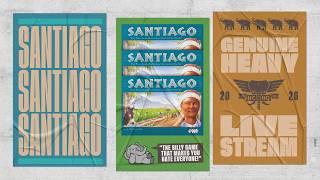





Santiago Deep Dive
What the Community Thinks About Santiago
Santiago, published by AMIGO in 2003, is a game reviewers rarely describe as simple, even though its rules are short. The box presents a gentle farming theme, but the reviews agree that the real game happens in the negotiation around the irrigation canal. Pair of Dice Paradise frames it as a farming game that is really about auctions, area influence, commodity speculation, and bribery. Getting Games takes a similar view, calling it a shared incentive game and a mean one, and places it third on a list that spans standout titles from 2003 and 2023.
Reviewers also agree on who the game suits. It rewards players who enjoy direct talk and bargaining, and it punishes players who expect a quiet, solitaire-style Euro. All You Can Board lists Santiago among its grail games and describes it as an interactive central board game for three to five players that plays in about 75 minutes. The strongest praise comes from reviewers who have played it repeatedly, while newer players tend to find the first few rounds confusing until the bidding and bribing patterns become clear.
The The Dice Tower revisit of older favorites shows that the game has aged in an unusual way. Tom Vassel placed it at number 63 on a 2005 top 100 revisit, noting that Vassel had not played it in roughly eighteen years and that it had faded from memory. Reviewers who return to it describe the design as more involved than its reputation suggests.
Core Mechanics That Define Santiago
Once-Around Auctions and the Canal Overseer
Each round begins with a set of plantation tiles that players bid on in a once-around auction. Because each bid must differ from the others, the lowest bidder becomes the canal overseer and places the irrigation canal for that round. The title is valuable because whoever holds it controls which fields receive water. Reviewers note that going first in the auction is not always an advantage. Getting Games describes situations where a player deliberately passes to take the overseer role and then earns very little because the round offers poor canal options. Other rounds turn the overseer role into a large payday when a neighbor pays heavily to have a particular field watered.
Heavy Cardboard, in its live game night video, shows how quickly this role changes hands. Players bribe the overseer with small amounts of money, sometimes a dollar or two, to place a canal next to their own fields, and the bribes often set up coalitions that last only one round. The designers, Claudia Hely and Roman Pelikan, built the auction and the canal system so that bidding and placement reinforce each other.
Irrigation Scoring and Region Majorities
Plantations only score if they are irrigated at the end of a round, and the irrigation canal is the mechanism that decides which ones survive. Getting Games points out that the game could almost be renamed irrigation, since much of the strategy comes from deciding where water will flow. Scoring is region based. Each color region counts its tiles, and each player receives that number of points for every token they own in it. A large region helps the player with the most tokens, but it also benefits anyone who owns even a few tokens there, so players often try to block growth rather than contribute to it.
Money plays a double role. Every unspent coin is worth points at the end of the game, so players who spend heavily on bribes are trading points for influence. Getting Games summarizes this as a game in which money is points, and spending it is always a decision with a cost.
The Santiago Experience
Negotiation and Bribery at the Table
The atmosphere is closer to a bargaining session than a traditional Euro. Heavy Cardboard's table talks through every canal placement, with players promising future favors, calling out suspicious bids, and joking about who is secretly helping whom. Players repeatedly build alliances that sound persuasive in the moment and fall apart when the next round's bids come in. That volatility is a large part of the appeal for groups who enjoy social deduction and haggling, and it is the reason reviewers describe the game as a social experience first.
The overseer's dilemma creates a steady stream of tension. A bribe that seems generous can still lose the vote, and a player who refuses to pay may find their fields dry out by the end of the round. Pair of Dice Paradise describes this as a situation in which bidding wars are fought over where water should go, with players sometimes spending money specifically to hurt other people's fields.
A Tight Economy Where Every Coin Matters
Because money is the only currency, the game feels like a small market in which prices and opportunities keep changing. Reviewers describe a steady pressure to decide whether to save coins for the final scoring or to invest them in water and tile positions that might pay off later. Getting Games notes that the economy rewards careful timing, and that a well-timed purchase can earn far more than it costs. The same pressure makes losing feel abrupt. Heavy Cardboard's players groan at several decisions in the same session, and the game's most memorable moments come from those narrow margins.
What Makes Santiago Stand Out
Irrigation Puzzles That Reward Clever Timing
Reviewers consistently praise how the irrigation system turns a simple placement decision into a puzzle with several layers. Getting Games highlights that the canal can make one player's fields thrive while silently drying out a rival's, and that every choice ripples into the region scoring. Players who think ahead about which tiles will be placed late in a round, and who understand which neighbors need water, tend to do best. The puzzle stays fresh because the tiles and bids change every round.
Money That Doubles as Victory Points
The decision to treat money as points is one of the design choices reviewers return to most often. It means that a player cannot simply hoard cash for the end, and it means that bribes have a real cost. Getting Games frames this as a core reason the game feels like an economy rather than a tile-placement exercise. Pair of Dice Paradise adds that the combination of auctions, area influence, and commodity speculation makes the game feel richer than its cover suggests.
Potential Drawbacks
Strong Dependence on Table Dynamics
Santiago depends heavily on the people playing it. Reviewers note that a game of negotiators can be exciting, but a group that dislikes bargaining or prefers quieter play may find the constant haggling tiring. Getting Games also observes that the game plays best at five players, the maximum count, and that the reviewer had been told by many people it was a five-player-only game. The reviewer has since said they want to test it at three and four players, which suggests that the lower counts are less established in the community.
Harsh Swings and Mean Moments
Several reviewers warn that the game can feel brutal. Heavy Cardboard's table reacts with exasperation at a number of turns, and players repeatedly spend money on bribes that fail to change the outcome. Getting Games calls it a mean game, and the reviewer acknowledges that a bad canal overseer round can leave a player with almost nothing. Players who want a gentler experience, or who are sensitive to losing money late in a session, should expect these swings.
If You Enjoy Santiago
Players who enjoy Santiago's auctions and area influence will find similar satisfaction in El Gaucho, which Pair of Dice Paradise presents as a game of cattle barons, worker placement, and a dice rodeo. Both games reward players who read the market and react to what others are doing. Players who value the way neutral walls and territory create shifting opportunities will find a related pleasure in Domain, which Getting Games discusses alongside Santiago as one of the defining Euro designs from the same era.
What Reviewers Are Saying
"Santiago may look like an innocuous little farming game but it's auctions area influenced commodity speculation and bribery make it anything but."
— Pair of Dice Paradise
"I've definitely seen situations where somebody essentially passes to become the canal overseer and then they make like one money because it just was a bad time to be a canal overseer."
— Getting Games
"This is such a brutal game."
— Heavy Cardboard