







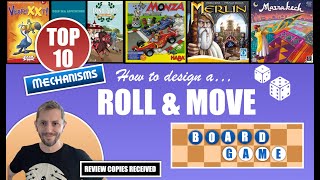

Monza Deep Dive
What the Community Thinks About Monza
Reviewers present Monza as a family racing game rather than a strategy title. The consensus is that it is quick to teach, easy to play, and enjoyable enough that adults do not mind joining in. Adam Porter of Adam in Wales - Board Game Design treats it as a deliberate entry point into dice-driven play for young players. Ryan of Rolls in the Family places it at the top of a list of kids' games for four-year-olds and says adults have a good time with it too. Tom Vasel of The Dice Tower is the most enthusiastic of the three, describing it as a little racing game for kids that just works really well.
The reviewers differ mainly in how much thinking they find in it. Ryan points to small sequencing choices that children gradually learn to notice, while Adam sees the decisions as modest and sometimes limited to one obvious path. Both views describe the same game: a simple roll-and-match design with just enough choice to reward careful play.
Core Mechanics That Define Monza
Dice-Driven Color Matching
On a turn, a player rolls a set of colored dice and uses them one at a time to advance a race car to a space of the matching color. Ryan describes it as very simple, rolling the dice and then matching colors, with a small touch of strategic decision added on top. Adam Porter gives a fuller account: the player rolls six colored dice, selects the order in which to apply the results, and moves one space at a time along the track, matching colors as they go. Because movement is set by what comes up on the dice, the roll decides which spaces are available, and the player decides how to use them. HABA, the German game and toy company that publishes Monza, is described by Ryan as a maker of many good kids' games, and Monza's roll-and-match design fits that tradition.
Choosing the Order of Dice
The decision layer comes from sequencing. Ryan explains that the order in which a player resolves their dice can determine how far a car travels. Going one way along the track can leave a car stuck without the color it needs, while resolving the same dice in a different order can carry it further. Adam Porter adds a variant rule in which an opponent's car matching the last color moved can also advance one space, which introduces a degree of positive interaction into an otherwise individual race. Both reviewers present these choices as the element that gives thought to what would otherwise be a straightforward roll.
The Monza Experience
Racing
Monza delivers the feeling of a short, colorful race. Players watch their cars move around a track one space at a time, and the excitement comes from seeing which car reaches the finish first. Tom Vasel calls it a little racing game for kids, and Adam Porter frames the goal as being the first to cross the finish line. The competition stays light because the rules are quickly absorbed and the race keeps moving from turn to turn. The variant rule, in which an opponent's car can also advance, makes the race feel shared rather than purely individual.
Gateway Accessibility
Monza is built to be learned quickly, and reviewers emphasize how far its appeal reaches. Adam Porter calls it a great game for young players aged five and up and a great stepping stone toward more complex strategy games. Ryan says it plays well across a range of ages, with older kids enjoying it, adults having a good time with it, and as many as six players able to race together. That combination makes it a practical choice for families with siblings or for mixed groups that want to bring grown-ups into a children's game.
What Makes Monza Stand Out
A Sequencing Puzzle Inside a Simple Roll
Reviewers praise the way Monza adds a thinking layer without adding rules weight. Ryan notes that children can play without considering the order of their dice at all, but that as they get older they begin to see a different sequence might carry their car further. Ryan says this is something to point out while teaching the game, so younger players can test alternatives and see how their decisions play out. Adam Porter describes the same kind of thinking as logic and planning, where there may be several viable options or sometimes just one obvious path.
Broad Player Count and Cross-Age Appeal
Monza is praised for working in many household configurations. Ryan points out that the game can accommodate up to six racers, which makes it useful for households with several children or for gatherings where adults and kids sit down together. Tom Vasel's praise is of the same kind, describing a game that just works really well with little fuss. Together these points explain why Monza tends to be pulled out when a group mixes children and adults, and why it is often recommended as a first racing game.
Potential Drawbacks
Limited Depth for Experienced Players
Reviewers are clear that Monza is not built for players seeking a heavy strategy experience. Adam Porter describes it as a stepping stone toward more complex strategy games, which positions it as a starting point rather than a destination. Adam Porter also notes that the choice of dice order may come down to one obvious path, which suggests that experienced players may find the decision space narrow. Ryan's recommendation is aimed at very young children and older kids, and the appeal Ryan describes centers on learning the game rather than being challenged by it.
Dependence on the Dice Rolls
Because movement is set by the colors that come up, a poor roll can leave a car with no matching space to move into. Ryan's own description of a car getting stuck without the needed color shows how much a single roll can shape a turn, and the order of resolution is the main tool for softening that effect. Adam Porter's broader criticism of roll-and-move games applies here, arguing that these systems can feel primitive and unfair when randomness goes unchecked, and that players can lose a long game purely because of bad rolls. Monza gives players only limited ways to offset that randomness.
If You Enjoy Monza
Players who enjoy Monza's racing theme and dice-driven movement will find a similar pull in Formula D. Adam Porter describes it as a more grown-up formula one experience in which each gear uses a differently shaped die, and in which push-your-luck risk comes from the corners of the track. Players who appreciate the sequencing decisions in Monza will find a related satisfaction in Valley of the Vikings, where the order in which players resolve their moves determines where they land on the dock. For a family race that rewards a little strategy and a lot of laughter, Ryan recommends Quedlinburg Dash, a kids' version of the bag-building game, describing it as a race in which anybody could win and which works for a wide range of ages all the way up to adults.
What Reviewers Are Saying
"Monza is a great game for young players aged 5 and up. The simple decisions involved in selecting different coloured dice to track a path require logic and planning. There might be multiple viable options or one obvious path. It's a great stepping stone towards more complex strategy games."
— Adam Porter, Adam in Wales - Board Game Design
"Another thing I love about Monza, it plays really well with a range of ages, like older kids will enjoy this. Honestly, adults have a good time playing it. And also a wide range of players, you can play up to six players racing, so it's a very versatile game."
— Ryan, Rolls in the Family
"Monza is a little racing game for kids, it's amazing. You roll dice and you move your race car on colors, it just works really well, eight out of 10."
— Tom Vasel, The Dice Tower