How to Design a ROLL & MOVE Board Game *Top 10 Mechanisms*
Games in This Video
16 games are featured in this video — they unlock as you watch.







Transcript
received review copies of monza and marrakech from their distributors for the purposes of this video so thanks to amarone and hachette board games uk throughout the 20th century and for several centuries before that roll and move was ubiquitous in board games it was simply how things were done on your turn you picked up one of those little cubes you chucked it across the table and moved your playing piece according to the number rolled so commonplace was dice driven movement that the instructions to games like hasbro's frustration didn't even feel the need to mention rolling the dice the mechanism's dominance seemed inevitable yet at the turn of the millennium board gaming staples started to be unpicked traditions overthrown no other mechanism had a fall from grace like roll and move the black sheep the anakin skywalker of the designer's toolbox in a few short years roller move went from revered to reviled where once randomness ruled modern games prioritized player agency designers strived to incorporate meaningful decisions into their games and role and move became a dirty word among the modern tabletop community i myself put out a video called dicer not the answer back in 2017 one of my most watched lamenting role and move and related mechanisms but in 2022 i feel like maybe just maybe we've tipped too far in the
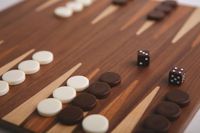
other direction thrown the baby out with the bath water if roland move is truly the darth vader of board game mechanisms then i have to believe that there's still good in there this video is a quest for redemption i'm adam porter i'm a board game inventor from cardiff in wales and over recent years i've made many videos covering different mechanisms in game genres abstract games polyaminos trick taking games and roland rights in this video we're going to look at 10 different ways that roll and move has been adapted in board games with varying degrees of success the goal is to pinpoint the appeal of the mechanism how did it become so popular and are there opportunities to revive the mechanism in the 21st century this is a toolbox for you as a game designer an opportunity to learn from what's been done before to reinvent subvert and identify gaps in the market opportunities for innovation i hope this video will demonstrate that when done well roller move is one of the most intuitive exciting mechanisms out there i'm not convinced that we have much to gain by delving into the long history of roll and move but suffice to say it seems to have been a major mechanism in the very earliest board games senate the royal game of uh backgammon and later snakes and ladders all use this mechanism each country has their own favored variation of parchisi in the uk kids play ludo in germany they play menschage diknikt in
france is jude these games have varying degrees of player agency but at its simplest roll a move is an entirely random mechanism in snakes and ladders players make zero choices in the entire game they simply roll the die and move their pawn the game is won or lost based purely on chance in a pure roll and move game the player rolls a die or spins a spinner and moves their playing piece according to the result this doesn't mean that such a game has to be devoid of choices in monopoly players must move clockwise as many spaces as shown on the dice but they then decide whether to purchase the properties that they land on and how much to bid for them this isn't the place to get into a critique of monopoly indeed i made a video on that topic a few years ago see the link above but one issue is the length and complexity of the game relative to its heavy reliance on chance a game which achieves a better balance is the 2004 kinder spieled as yares winner spooky stairs from dry magia spieler spooky stairs uses a pure roll of move mechanism on your turn you roll the die and move your pawn that many spaces racing to get to the end of the track before the other players however if you roll a ghost then you can swap a playing piece with a ghost piece which has a corresponding colour marked on its base but it can't be identified once it's on the board now if your piece has been replaced by a ghost whenever you roll a number you move any ghost of your choice
so there's a big memory element to the game which offsets the randomness of the dice rolling if you roll a ghost but all of the ghosts are already in play then you swap the positions of two different ghost pieces on the board further confusing the picture it's a game for five years and up so don't go into it expecting huge depth of gameplay but there's a variant for older players where upon rolling a ghost you can even swap out the player colors making the game stay even harder to track spooky stairs is a great example of a game where the roll and move mechanism itself isn't tampered with but the basic race mechanism is turned on its head by incorporating a chaotic memory mechanism reminiscent of the traditional cups and balls conjuring trick talisman is a perennial best-selling board game first released by games workshop almost 40 years ago designer robert harris was attempting to create a dungeons and dragons experience in board game form and he was heavily inspired by monopoly and other role and move games on the market at the time however unlike most of those games harris had the sense to offer players choices in talisman you roll the die and then you choose to move clockwise or anticlockwise around the board that one deviation from the purest role of move games the decision to go left or right immediately put talisman head and shoulders above most board games on the market at the time the game amassed a huge following and despite its heavy reliance on chance-based mechanisms it remains a
popular title to this day it's worth noting that the landlord's game the original 1904 game on which monopoly is based like talisman allowed players a choice of moving clockwise or anti-clockwise this decision was actually removed by parker brothers when they released their new implementation of the game in 1935 under the title monopoly of course we don't have to limit ourselves to left and right what about up and down hero quest was another d d inspired board game from the 80s but this time our heroes moved freely around a grid fighting monsters and searching for treasure heroquest is an interesting case in that the system is asymmetric several players control heroes whose moves are determined by dice rolls but one player controls the evil monsters in the dungeon and they move a little bit differently with each monster having a movement allowance a set number of spaces that they can move another deviation from talisman or monopoly is that each player can choose to move any number of spaces up to the number showing on the die they're not forced to move the entire distance as in talisman and that massively increases the choices available in the game hero quest showcases the strength of the roller move mechanism its elegant simplicity and the excitement of a successful role outrunning an ogre for example but it also highlights the frustrations of the system it can be really frustrating to lose a long game which you were totally invested in purely because you rolled badly
ghost fight and treasure hunters is another kinder spielders yares winner this time from 2014 which also uses roll and move in a grid based map the system is similar to hero quest in that you can move any number of spaces up to the total rolled it's a cooperative game in a similar vein to pandemic but much more approachable for families with players attempting to gather treasure and eliminate ghosts to prevent them creeping back into the haunted mansion and escalating this game beautifully highlights the intuitive nature of roll and move as a mechanism even after the board game revolution of the early 2000s roll a move is still familiar to children and adults alike it's one less thing for the rule book to explain and one less barrier to entry for a casual game purchaser perhaps the next obvious innovation in roll and move it's giving each player control over multiple playing pieces and then asking them to select which one they want to move based on the result of their die roll as in the very simple 2003 kinderspielder's yara's winner viva toppo and the more involved strategy game coliseum from days of wonder now when i say innovation this isn't a modern innovation it's the core of backgammon and all of the parcheesi related games but the most masterful implementation of the mechanism comes from the genius design team of kramer and kiesling in their 2005 spirit as yara's nominee for flixxt otherwise known as that's life more than any other on this list this game demonstrates how such a simple
mechanism can create agonizing decisions and a hugely interactive variable board game experience i can't recommend this one enough info flicks a track is made up of various tiles this can be randomized at the start of the game or you could use a suggested setup each player controls a number of pawns of their colour and on your turn you roll a single die and move one of your pawns that many tiles if you leave a tile with other pawns on it nothing happens but if you're the last to leave a tile you take that tile and place it into your personal stack the gap between tiles is closed and the game continues many of the tiles are totally undesirable they score negative points but some are positive and the most desirable tiles are the ladybird tiles which turn a negative into a positive in the advanced version of the game there are also guard pawns which are owned by no player these can be moved instead of your own pawns so long as they're not alone on a tile and of course if you move away from a tile with the guard on it you don't get to take the tile the game has an incredible arc as players strive to bunch up in the negative zones and spread out in the more positive parts of the track guards are moved to block your opponents or to free up your own pawns to collect positive tiles players engage in lengthy games of chicken just how long can a pawn hold out sat on a positive tile waiting for their opponent to move away so that they
can grab it for themself it's an incredibly mean game full of highs and lows and a demonstration that roll and move games don't have to be devoid of meaningful choices one feature of their flixt is the ability to adapt the track ahead of your opponent's moves by taking tiles from the track you alter their odds of landing on a desirable spot 2008 spieled as yara's nominee marrakesh is a roll and move game where the central decision of the game is about adapting the playing space to maximize your opponent's chances of landing on a nasty spot you do this by layering little rugs on the board the game also asks players to make the choice about the direction they're going to move before they roll the dice on your turn you either leave assam the shared pawn facing in the same direction or turn him 90 degrees to the left or right you then roll the dice and move assam according to the result if he moves off the grid he follows the arrows and re-enters facing in a different direction now if assam lands on an opponent's rug you must pay coins to that player equal to the number of spaces in the connected area of matching rugs the active player then lays one of their own rugs adjacent to assam's current position perhaps the most famous dice game in the world yahtzee demonstrated that we could mitigate the impact of unlucky dice rolls somewhat by allowing players to re-roll a selection of dice several times before settling on their final result
brain games pyramid of penguin makes use of this feature in a one versus all roll and move game of hidden movement the game uses custom dice and on a treasure hunter's turn they roll all of their dice then re-roll them as many times as they like until they get a result that they're happy with the caveat is that if they roll a mummy result that die must be set aside and will count as an additional movement when the mummy takes their own turn the hunter's dice feature the numbers one to four a mummy result and an arrow and if the hunter chooses the arrow result they can move as far as they like in a straight line until they meet an obstacle the hunters try to reach the treasure while avoiding the mummy and the mummy moves blindly around the maze trying to land on the same space as a hunter merlin is a big box strategy game designed by stefanfeld and michael reinik not the obvious place to find dice-driven movement but the mechanism is utilized in a much more cerebral manner here at the start of each round players roll a number of dice then on each individual turn they choose which of those dice they're going to use to generate their movement this clearly falls under the definition of roll and move but it feels very different the delay between rolling and activating the dice along with the myriad of ways in which you can mitigate against bad dice rolls removes the immediacy and excitement of the mechanism turning into another lever to pull in a fairly complex thinking euro game nautilian is a solo or two player
challenge where players attempt to move their submarine from one end of a track to the other before the enemy sub moves the entire length of the track in the opposite direction at the start of each turn three dice a roll to form a pool you then assign one die to your own submarine moving at the indicated number of spaces and the token that it lands on is collected and placed onto the nautilium board in its corresponding slot or placed face down to spend later to re-roll or rotate dice or to manipulate the track you choose a second die and assign it to the enemy submarine moving it along the track and discarding any token that it lands on and then the third die is assigned to the dark house now if this is a three or a four then you must discard one of your collected tokens you can only win the game by getting to the end of the track before the enemy sub gets to their end of the track and only if the nautilian board is filled with the correct tokens before you get there monza is a classic kids game from haber which also utilizes a pool of dice to power players race cars as they attempt to be the first to cross the finish line on the player's turn they roll six coloured dice then select the order to apply the results moving one space at a time along the track matching colors as they go when using the variant rules the opponent's race car matching the last color moved can also advance one space adding a degree of positive interaction into the game monza is a great game for
young players aged 5 and up the simple decisions involved in selecting different coloured dice to track a path require logic and planning there might be multiple viable options or one obvious path it's a great stepping stone towards more complex strategy games but for adults who want a more grown up formula one experience asthma day has you covered with formula d formula d has a great roll and move mechanism which i haven't seen replicated in any other game please correct me if i've missed one in this classic game each differently shaped die represents a different gear so when you're in a low gear and moving slowly you're rolling a four-sided die if you choose to increase speed you'll go up a gear and roll a six-sided die an eight-sided twelve-sided or twenty-sided die in top gear you'll be rolling a thirty-sided die and hurtling around the track the numbers on the dice aren't evenly distributed they're weighted towards the higher results so you're guaranteed to be moving fast it's just unpredictable exactly how fast and that's where the push your luck aspect comes into play at every corner there's a region marked where you must land if you overshoot it your car takes damage you take too much damage and you're out of the race so the game manages to simulate real racing pretty effectively with players slowing down for corners but putting their foot down when they need to catch up with the leaders even if it risks crashing out of the race
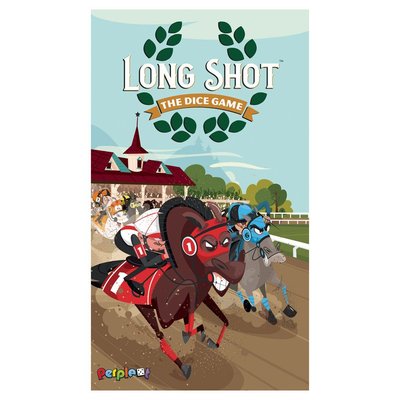
altogether push your luck and roll and move complement each other nicely the randomness of a dice roll tempts you to take risks there's always a chance of rolling big and generally the odds aren't hard to calculate the classic contest between slow and steady and high risk big reward behaviors creates an engaging dynamic in a game deep sea adventure is a game which makes the most of this dynamic here players represent divers gathering treasure from the ocean depths on your turn you roll the dice and move that many spaces towards the seabed when you stop on a space representing treasure you may collect it and hold on to it for future turns on future turns the air levels will reduce equal to the amount of treasure that you're holding but you also need to get back to the surface before the air runs out and crucially your progress is slowed down by the amount of treasure that you're carrying when you roll the dice you subtract one pip for each treasure token that you currently hold and any players who fail to reach the surface when the air is gone lose all treasures they were carrying and all associated points after three rounds the highest scorer wins long shot the dice game is a recent horse racing game which generated a lot of buzz in this game a simple dice roll determines which horse moves on each turn and how far but the twist here is that any player can benefit from the movement of any horse because the game is all about
betting on the winner and manipulating the game state so that horse comes in first this is a recurring mechanism in horse racing games such as the original long shot or home stretch 2014 shfield as yara's winner camel up uses a similar system here a die is released from a pyramid dice shaker and the colour of the dye determines which camel moves with the value determining the distance the big twist in camel up is that the racers can stack on top of each other and carry each other along the track whenever a lower camel in the stack makes progress again rather than owning a specific piece players are betting on the winning camel a game i particularly enjoy in this genre is manila from zok verlag the narrative here is not one of betting but attempting to get shipments of four luxury resources into manila's harbour players pay to position themselves on boats or at key locations in the harbour with the intention that they're going to get monetary rewards if their right boats come in at the right spot the movement of the boats is controlled by a simple dice roll and as the game progresses players amass shares in the different types of goods and when any share price maxes out then the game ends and the player who earned the most money from careful pawn placement and investment in shares wins the game among hobby gamers roll a move is widely considered something of an untouchable mechanism in 2022 and that's a shame
considering just how ubiquitous it was in previous centuries it's surprising how few role and move titles have been made in recent years the abundance of schmulez yares wins and nominations referenced in this video demonstrates just how effective this mechanism is at engaging a casual or family audience roll and move isn't a cursed mechanism every game featuring dice driven movement doesn't automatically need to be consigned to the dustbin like every mechanism roller move has strengths and weaknesses it can be used effectively to create an exciting intuitive system or it can be used ineffectively to create a wildly random experience which feels primitive and unfair so let me know your best and worst experiences with roland move in the comments and please subscribe if you enjoyed the video and i'll see you next time until then all the best