


We know a great deal about the evolution on Earth (and we hope that Evolution: New World helped you with that too). It's an exciting story of various creatures acquiring defensive & offensive traits to adapt to the ever-changing environment. What we don’t know is if there might be other worlds where completely different creatures dwell. Will the same laws of evolution apply there too? It's time to find out!
Evolution: Another World is a card game in a beloved Evolution: the Origin of Species series. In the game, you create animals and give them traits, so they survive and thrive in the chaotic world of wondrous creatures. The goal of the game is to give your creatures enough energy to transmute and transcend their state of existence. The first player to transmute three creatures wins the game.
This is a fast-paced, easy-to-learn game with a solo mode included in the core game. Mechanically, it is inspired by Evolution: New World, but trades some complexity for more dynamic and light gameplay.
This game is Family-friendly because animals can’t die or be eaten by predators. Competition is peaceful, but you can attack other players' creatures to gain energy. This game has a straightforward win condition: you don't need to count VP at the end of the game. Transmute 3 of your creatures and you win the game!
Part of the Evolution family — see Evolution for the combined view.


Evolution: Another World - Learn While Playing

Evolution: Another World - Playthrough
- Clear rule explanation and live demonstration
- Shows a wide variety of trait interactions and combos
- Prototype components may differ from final version; complexity may be challenging for new players
- creatures harvest energy from sources to transmute into higher level beings
- a far off other world with mystical creatures and energy sources
- rule-by-rule tutorial with live playthrough
Mechanics (from transcript analysis)
- activation step — each creature turn has three steps: optional add a new creature, optional add a trait, mandatory activate a non-sleeping creature
- attack actions — attack requires an attacking trait; attackers can remove energy, steal energy, or apply effects to target depending on trait
- carrying and energy transfer — carrying allows moving energy from one creature to another; energy can be distributed to optimize transmute timing
- defensive traits — traits like Fireproof and Flying modify attack outcomes or vulnerability
- deliberate sequencing and combos — traits interact across creatures (e.g., Charming causing a friendly gain of energy) to enable energy transfer and chain effects
- draw and hand management — end of round: discard all energy, draw new cards based on creatures with energy; hand size influences future draws
- gain energy from a source — creatures activate to gather energy from the energy source and place energy on themselves or onto energy tokens
- Hand Management — end of round: discard all energy, draw new cards based on creatures with energy; hand size influences future draws
- lull and vampire interactions — lull puts a target to sleep; vampire lets attacker drain energy from the target and gain energy
- metamorphic and astral traits — metamorphic allows copying a trait of a friendly creature; astral limits interactions to astral creatures
- round structure and energy setup — rounds have variable energy setups depending on player count; end-of-round steps reset sleep tokens and draw cards
- sleep tokens — creatures become sleepy after certain actions; sleeping tokens prevent further actions; round ends when every creature has a sleep token
- three-player energy rules — energy tokens display claws indicating energy gathering limits in a three-player game
- trait cards and customization — trait cards are double-sided; players choose a trait and slide it onto a creature
- Transmute — spend energy (four energy) to discard a creature and take a transmutation token; first to three transmutations wins
Video topics + discussion points
Quotes (from this video)
- creatures are never killed in this game
- the only way the game ends is when one player has three of these transmute tokens
- this game is definitely about Tempo and annoying when it's the right time to build out your creatures
- the game takes place over a variable number of rounds
References (from this video)
Mechanics (from transcript analysis)
Video topics + discussion points
Quotes (from this video)
- it's a brilliant train game system
- every map brings in completely new mechanics
- the Wisconsin map is excellent
- I love the fact that this is a system you can play so differently from one map to the next
- this game exists in that space between Cube Rails and 18xx
References (from this video)
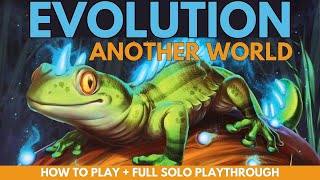
- Official solo mode included in the box, enabling a true one-player experience
- Streamlined rules that aim for quick teaching and family-friendly play
- Rich fantasy theming with magical creature abilities like fire breathing, astral, and flying
- Energetic, fast-paced turns that reward tactical creature management and trait sequencing
- Rule interactions can still be complex due to trait deck nuances and shade AI behavior
- Energy management and trait targeting can feel punishing when the Shade activates favorable combinations
- Some turns can feel fast or diffuse if players are new to the mechanic layering (traits, energy, and awakenings)
- Evolution and adaptation in a world of magic, power sources, and competing species; emphasis on trait manipulation, survival strategies, and asymmetric play
- A fantasy world populated by mythical creatures with magical traits and energy ecosystems; players shape creature populations through trait acquisition and interaction with an AI Shade antagonist.
- Tutorial-focused, real-time demonstration with step-by-step teaching and live play-by-play
- Evolution (base game)
Mechanics (from transcript analysis)
- Astral and ghost mechanics — Some creatures gain astral traits allowing restricted interaction (e.g., attack dynamics) and enabling ghost-like strategies where certain interactions are altered or blocked.
- Attacks and targeting — Creatures with attack capabilities can try to attack opponents' creatures, potentially removing or shifting traits or gaining energy; some traits alter how targets can be attacked or defended.
- Charming, caring, and energy transfer — Some traits allow characters to access higher energy areas or transfer energy to allies, enabling cooperative-like interactions within a competitive game.
- Choice deck for trait targeting — When the Shade must select a trait to remove or a target, a separate choice deck is used to determine outcomes, adding a layer of stochastic decision-making.
- Defensive traits and counters — Defensive traits such as fireproof or pestering influence outcomes when attacked or awakened, shaping decisions about risk and aggression.
- End-of-round resets and resource refresh — Rounds end with cleanup steps: remove sleep markers, refresh energy sources, pass the first-player token, and deal new Evolution cards based on creature energy.
- Energy sources and energy tokens — Players gain energy from sources to fuel actions; some energy is accessible only to creatures with specific traits, while other energy is universally accessible.
- Metamorphic and special rule overrides — Special traits can invert or override standard rules (e.g., metamorphic) or enable alternative modes of trait acquisition or attachment.
- Sleep and wake mechanics — Creatures can be put to sleep by certain actions or attacks; certain traits and actions can wake sleeping creatures, creating tense rhythm of play.
- Trait cards and attachment — Each creature can gain traits via cards drawn from a trait deck; traits can be face-up or face-down (upside-down) and are attached to creatures to modify capabilities.
- Transmute to win — A central victory condition where a player transmutes three creatures, typically requiring energy crystals and strategic prerequisite traits; the opponent can win earlier if they transmute a creature with sufficient crystals.
Video topics + discussion points
Quotes (from this video)
- There is an official solo mode in the box
- This is a streamlined and family friendly version of evolution
- 16 traits in all
- You transmute three of your creatures to win
- The shade wins if they transmute just one creature
- We are astral, so we cannot be attacked by non astral creatures
- Pestering lets a creature awake another sleeping creature by discarding that trait
- Metamorphic can override standard rules
- Flying can only be attacked by flying creatures, but still interacts with other targets
- End of round removal of sleeping tokens and refresh of sources
- One third of the way to Victory when a transmute token is placed
References (from this video)
- Accessible family-weight design
- Whimsical creature artwork and trait variety
- Faster, lighter alternative to Evolution: New World
- Good play length for 1-4 players
- Limited depth for seasoned eurogamers
- Potential for stalemates or energy crunch
- Some trait interactions can be opaque without learning the system
- Evolution, adaptation, and trait-driven conflict
- A whimsical prehistoric/alternate-world ecosystem where evolving creatures compete for energy
- Whimsical, lighthearted, kid-friendly
- Evolution: New World
- Oceans
Mechanics (from transcript analysis)
- Attacks and defensive traits — Using traits to attack opponents or defend, with counterplay and energy costs
- Energy economy and transmutation — Collecting crystals to fuel trait-based transmutation and creature creation
- Race — First player to transmute enough creatures and reach the finishing criteria wins
- Race-to-win objective — First player to transmute enough creatures and reach the finishing criteria wins
- Sleep and wake mechanics — Creatures can be slept to skip actions; awaken as rounds progress
- Trait management and drafting — Selecting and applying trait cards to individual creatures to shape their abilities
Video topics + discussion points
Quotes (from this video)
- it's a race instead of who gets the most points
- it's a bit more simple it's a bit more family weight
- it's all about collecting the crystals so that you can transmute
- the first two three transmuted creatures will be the winner
- it's a nice little family weight game
References (from this video)
- about 30 minutes per game, making it accessible and family-friendly
- supports solo play as well as 1-4 players
- card-driven gameplay with a clear trait system and thematic energy transmutation
- Kickstarter perks discussed (first 48 hours sleeves offer), appealing campaign incentives
- trait management can be complex for new players
- the density of trait interactions may feel heavy for casual players
- the lack of fixed rounds may be unfamiliar to some players
- Evolution of creature traits and energy-based power in a mythical setting
- A mystical magical world where creatures battle for Pure Energy and undergo transmutation to ascend to a new level of existence.
- expository overview with emphasis on trait-based evolution and competition
- Evolution (base)
- Evolution Climate
- Evolution Oceans
- Evolution New World
Mechanics (from transcript analysis)
- activation_step — On a player's turn, they may activate one of their creatures (if not asleep) to perform actions.
- add_trait_to_creature — You may attach a trait from your hand to an existing creature by placing the trait beneath that creature.
- attack_action — Attack actions are possible with attacking traits to deal damage to another creature, depending on the attacking trait.
- create_creature — On a turn you may create a new creature by playing a trait card face down in front of you.
- draw_and_refresh — After a round, players awaken, draw two Evolution cards plus one additional card per creature with at least one energy token.
- energy_management — Energy is gained from energy sources and trait interactions; some traits allow transferring energy between creatures.
- sleep_and_round_end — When a player has no actions left, their creatures receive sleeping tokens; when all creatures are sleeping, a new energy source card is flipped and the round ends.
- trait_types — Four trait categories exist: blue energetic, purple special, orange aggressive, and green defensive, each with unique interactions.
- transmutation — A creature accumulates energy and can transmute once it has enough energy (four, or three with the tiny trait) to advance toward victory.
- win_condition — The first player to transmute three of their creatures wins the game.
Video topics + discussion points
Quotes (from this video)
- in these games a lot of the times you're going to be creating creatures and then adding traits to them
- you are in a mystical World a magical world where creatures are fighting for this like magical Energy power
- to transmute and in this game you want to be the first player to transmute three of your creatures and you win the game
- it's a one to four player game so you can play this solo
- it plays in 30 minutes
- this is primarily a card game
- the first 48 hour deal so if you are a backer within the first 48 hours you will get free sleeves for the cards
References (from this video)
- Accessible, quick strategy with strong visual design
- Tight two-player interaction and pacing
- Vibrant artwork and high-quality components
- Rule quirks and potential confusion around energy top/bottom vs supply
- Standees/readability under camera angles can be challenging
- Video playthroughs can gloss some nuanced interactions
- Evolution and adaptation through trait-based creatures
- A world where creatures evolve using energy from a dormant volcano called The Source
- Casual, instructional playthrough with live commentary
- Evolution (Crowd Games) series
- Deep State (Crowd Games)
Mechanics (from transcript analysis)
- Activation of creatures — On a turn you have up to three actions: play a creature, add a trait, and activate effects; activation gains crystals, allows transmute, or initiates attacks.
- Attacks and sleep — Creatures can attack other creatures to gain crystals; some traits place targets to sleep; attacking a sleeping creature or applying certain traits changes the state of play.
- Energy sources and The Source — Energy crystals are gathered from The Source (a dormant volcano) or from the supply; energy is used to evolve or activate abilities and to fuel transmutation processes.
- Play a creature — On a turn, you place a creature and then apply traits to evolve it; initial setup uses face-down creatures and later activation.
- Round structure and sleep wake — Rounds consist of drawing/choosing cards, placing/activating creatures, resolving attacks, and then all creatures sleep; they wake at round end for the next cycle.
- Trait-based evolution — Traits come on cards in colors (blue, orange, green, purple) with top and bottom positions; you may stack traits to evolve a creature (no duplicates on a single creature).
- Transmute tokens and victory — Accumulate crystals on your creatures; when you transmute, you remove a creature and its traits to gain a transmute token; first to three tokens wins.
Video topics + discussion points
Quotes (from this video)
- Evolution another world is the newest in the evolution series from Crowd Games
- it's not too difficult it's it gives me an excuse to crush Brittany and it just feels right
- the artwork on it is beautiful, the colors are gorgeous
- we're evolving creatures to try to outdo each other and we're also trying to get energy from what is called The Source
- the premise of this game is me and Brittany are gonna go head to head and we're going to evolve creatures from another world hence the title
- Crowd Games I haven't been disappointed with anything that I've played from Crowd Games
References (from this video)
Mechanics (from transcript analysis)
Video topics + discussion points
Quotes (from this video)
- this is entirely card played
- the race to transmute three of them before their opponent does
- there are four different types of actions that you can take in the game
- you discard everything off the card and then you have basically transmuted that particular creature
- gain energy to place them onto our creature cards in order to transmute them
- prototype copy of the game which means things are subject to change in the future