














Conquest Princess: Fashion is Power Deep Dive
What the Community Thinks About Conquest Princess: Fashion is Power
Conquest Princess is a collaborative crisis management game that has captured reviewers' hearts with its combination of tactical depth, thematic coherence, and genuine warmth in design. The consensus is remarkably positive: this is a game that works beautifully as a solo experience but truly shines when players coordinate to overcome escalating challenges. While reviewers acknowledge the game's difficulty—particularly on standard difficulty and above—they consistently praise the system's fairness and the satisfaction that comes from mastering its mechanical layers.
One Stop Co-op Shop called it "a game with a lot of variety and a lot of tactical depth," while also noting it's "not for everyone" if you're seeking quick play or easy rules. Hungry Gamer felt the game was "so built with love" and "hits on all cylinders very very hard but very very satisfying to play." The common thread across all coverage: this is a game designed with genuine care, where every mechanical choice serves both thematic coherence and strategic challenge.
Core Mechanics That Define Conquest Princess: Fashion is Power
Bag Building for Combat
At the heart of Conquest Princess lies a bag-building system that drives all player actions. When agents attempt to shoot enemies, they reach into a shared "bag of destiny" containing tokens representing hits, misses, and critical misses. Unlike a deck-building game where your options are static, bag building creates a dynamic landscape: successful shots leave hit tokens on the board, physically changing your future draws. Missed shots stay in your personal load row until you decide to either remove them (granting an action) or lock them down (earning a power cube instead). This single mechanic creates cascading strategic decisions—do you spend actions clearing bad tokens from your bag, or do you accept their presence and play around them? Reviewers consistently highlight how this system makes every turn a puzzle, where bag state directly influences tactical options and creates the emergent difficulty the game is known for.
Cooperative Action Management
Conquest Princess uses a "move, shoot, engage" action system where each agent has four actions per turn—or five if you spend a power cube. The genius lies in sharing: if two agents occupy the same space, either can use the other's special abilities. Red's rage plate lets you draw two combat tokens and pick one; green's smart armor lets your first engagement not end your turn. This forces coordination without mandating it. One Stop Co-op Shop emphasized that "you can really see exactly what's going to happen, which things you need to deal with. Try to coordinate between players to help each other out. And you can share powers between each other when you're in the same space." This means victory doesn't come from individual optimization but from synchronized positioning and ability chaining, making the four agents feel like a true team rather than autonomous units.
The Conquest Princess: Fashion is Power Experience
Campy Sci-Fi Adventure
Conquest Princess establishes a distinct aesthetic that reviewers describe as pure Saturday morning cartoon energy. Board Games for One captured the vibe perfectly: "I feel like it's been a Saturday morning back in the 80s early 90s... it gives me that feeling I get when I play Conquest Princess if that wasn't the intent... the feeling I get when I play Conquest Princess." The game unites influences from Star Trek (teleportation mechanics), Sailor Moon (transformation mechanics), and Mighty Morphin Power Rangers (a giant robot suit), creating a genuinely earnest adventure where "Fashion is Power" isn't ironic—it's central to the game's soul. Characters like Ashi and the cosmic pet co-pilots give the experience personality, and the narrative framing (saving the timeline by dressing agents in combat fashion) elevates what could have been a generic crisis management puzzle into something memorable and fun.
Escalating Tension and Payoff
The crisis management core creates mounting pressure: minions spawn on your ship, goo spreads across planets, and the dark portal closes with each passing round. But unlike some crisis management games that feel punitive, Conquest Princess offers genuine tools for your counterplay. Reviewers noted that "the crisis management here is very tense" but also that managing the intersecting crises—repairing ship damage, clearing blobs, positioning the conquest princess robot—creates a satisfying puzzle where your coordination directly determines success. The game escalates naturally from tutorial (teaching you how to fight the Mechipede) through three increasingly complex missions, meaning players experience palpable growth as they master mechanics and learn to anticipate threats.
What Makes Conquest Princess: Fashion is Power Stand Out
Remarkable Production Quality and Accessibility
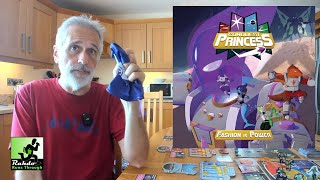
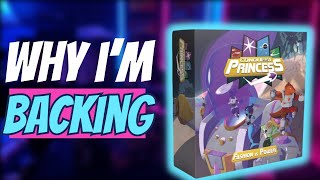
Multiple reviewers specifically praised the physical production: "recessed boards that are high quality these things do not warp they do not bend they do not separate," as Board Games for One noted. The artwork throughout is appealing without being cutesy, the component size is generous (no squinting at icons), and optional deluxe upgrades (light-up stand bases, the "bag of destiny") heighten table presence without being necessary. This matters because it signals respect for the player experience. The rulebook is dense, but the tutorial mission walks you through mechanics in context before sending you to solo scenarios, removing the barrier that complex systems often create.
Genuine Replayability Across Multiple Scenarios
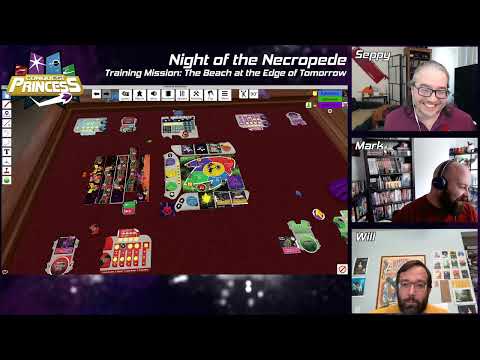
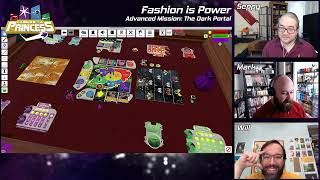
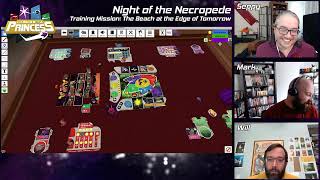
Conquest Princess includes multiple full campaigns with distinct mechanics. The standard mission teaches base mechanics; the advanced Dark Portal mission introduces flying, the conquest princess robot, and blob-splitting mechanics; and the mini-expansion Night of the Necroped brings poltergeist enemies that require new tactics. Board Games for One highlighted this directly: "Comparing this to other adventure crisis management games, this feels like it has almost three times as much content just because it is so varied to explore these different scenarios." Each mission feels mechanically distinct rather than a simple reskin, and event decks change what threats appear each round, ensuring multiple playthroughs feel fresh.
Potential Drawbacks
Substantial Difficulty, Especially Standard and Above
Reviewers were unified in flagging difficulty as a potential hurdle. Board Games for One warned directly: "the game is monstrously hard" on standard difficulty, and recommended starting on easy mode. Rod Runner's solo playthrough showed how quickly circumstances can spiral—one round of bad luck cascades into multiple crisis tokens mounting, forcing time rewinds that consume power resources. Hungry Gamer acknowledged this isn't wrong, but noted it excludes casual players: "if you're looking for a game that has a quick play time, that has a small footprint, that has super easy rules to digest, or one that's kind of easy and breezy and you can make mistakes without too much consequence, you might want to avoid this one."
Demanding Rules Overhead and Scenario-to-Scenario Learning Curve
The rulebook is genuinely thick, and rules change meaningfully between missions. Board Games for One flagged this: "the only small caveat for me is that you do have to refer to the rule book a lot because the rules do change quite a bit scenario to scenario." This isn't a casual grab-and-play game; it requires either patient teaching or a willingness to review the rulebook before each new scenario. For players who like to pick up a game and play quickly, this overhead can feel frustrating rather than rewarding.
If You Enjoy Conquest Princess: Fashion is Power
Players who gravitate toward Conquest Princess typically love cooperative crisis management. Consider these related experiences:
Players who enjoy Conquest Princess's emphasis on shared abilities and real-time coordination will find similar satisfaction in Pandemic, though Conquest Princess adds considerably more tactical individuality and bag-building agency.
Those drawn to Conquest Princess's emergency response loop—managing multiple crises simultaneously across different board locations—should explore Flashpoint: Fire Rescue, which uses a simpler action system but captures the same frantic teamwork spirit.
Players fascinated by the boss-battler framework (cooperative agents targeting a single powerful opponent with phases and pattern recognition) will recognize DNA from Spirit Island, though Spirit Island layers significantly more strategic complexity.
Reviewers most frequently compared Conquest Princess to adventure crisis management games and solo co-op experiences, suggesting that fans of coordinated defense mechanics under escalating pressure should prioritize it above lighter alternatives.
What Reviewers Are Saying
"This is a game that is so built with love from fighting in the Box games it just comes through everywhere it's a crisis management game it's a co-op game that just hits on all cylinders very very hard but very very satisfying to play."
— Hungry Gamer
"I feel like it's been a Saturday morning back in the 80s early 90s. I've enjoyed my Saturday morning cartoons and don't have to go to school but we're having the weekday afternoon cartoon shows. That's the feeling I get when I play Conquest Princess if that wasn't the intent I so feel like it's been a Saturday morning back in the 80s."
— Board Games for One
"The crisis management here is very tense. The scenarios are quite varied. There's some interesting bag building with the combat. The powers are incredibly cooperative. There's a lot of stuff you can do together."
— One Stop Co-op Shop