









Busy Beaks Deep Dive
What the Community Thinks About Busy Beaks
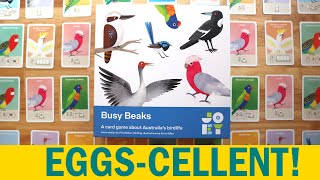
Busy Beaks is a bird-themed card game designed by Phil Walker Harding and published by Joey Games. It plays two to four players in about 30 minutes. Reviewers broadly agree that it is a quick, clean, and tactile set collection game with a clear identity, even when they disagree about how much depth it offers. Danny, Board Game Sanctuary calls it a fun, solid family card game and a hidden Australian gem, and scores it 7.5 out of 10. Meeple University describes it as a light game they would rarely bring to a hobby table, yet one that showcases Harding's talent for building smart touches into simple formats.
The strongest point of agreement is that the game is easy to teach and fast to finish. Chairman of the Board ranks it third in a batch of recent new-to-them games and calls it a sharp example of its genre, though not a revolutionary one. The main point of disagreement is luck. Meeple University and Danny both acknowledge that the card draw shapes outcomes, and both treat that as a feature for families and a limitation for players who want more control. Across the discussions, the consensus is that Busy Beaks is a polished, enjoyable card game that rewards attention to what other players are doing, without reinventing the genre.
Core Mechanics That Define Busy Beaks
Set Collection
The central goal is to gather five matching birds of one species and trade them in for eggs. Danny explains that the eggs are the victory points, and that the first player to trade a particular species earns a one-point bonus egg. Because the number of eggs in the supply is limited, every egg matters. Chairman of the Board notes that the eggs lose value as the game goes on, which pushes players to commit to their flocks early rather than wait. Board Game Dad describes the flocks as coming from the discard piles, so the cards that other players throw away are often the ones you use to complete your own sets. That dual role of discards as both a shared resource and a supply of opportunities gives the set collection loop its tension.
Hand Management
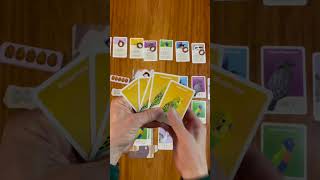
Each bird card has an ability, and each player must decide whether to play a card to resolve its power, keep it in hand to complete a flock later, or give it to another species to shape the board. Danny describes this as a balancing act between using what you hold and saving it, while avoiding opponents who might take what is in your hand. Chairman of the Board points out that the powers combine in interesting ways, such as a card that lets you discard a bird to reduce the number of birds needed for a flock, or one that lets you take any two species from the display. Both reviewers treat timing as the skill. A card that looks weak this turn can be the key to a flock next turn, and the sequencing of powers is what separates a strong player from a lucky one. The designer and publisher name matters here too: Phil Walker Harding and Joey Games have produced a game where hand decisions remain meaningful even in a family-friendly format.
The Busy Beaks Experience
A Tight Race for Eggs
Playing Busy Beaks feels like a sprint against the rest of the table. Reviewers repeatedly describe the early turns as a scramble to start building flocks before the eggs disappear. Danny notes that every egg counts toward the final total, and that a player who races ahead can often calculate who has secured the win well before the last turn. That same pressure can leave other players feeling empty-handed in the final rounds, which Danny describes as a natural consequence of a racing design. Chairman of the Board frames the appeal in similar terms, saying the game is fast and clean and keeps you moving. The mood is brisk, competitive, and a little anxious, with most of the drama coming from whether your flock arrives before someone else's.
Clever Combos on a Light Frame
Beneath its simple surface, reviewers find a satisfying tactical puzzle built from card combinations. Danny says that the bird power combos are a highlight and that the game keeps players busy managing their birds throughout. Chairman of the Board describes turns that can grow into grandiose sequences when you play the right card at the right moment, which is the feeling the reviewer enjoys most. Meeple University admits the game leans on card luck, but still sees clever light mechanisms inside it. The experience is that of a family card game that rewards players who think a few steps ahead, which is why several reviewers feel it works both for younger players and for more experienced gamers looking for a quick, meaty filler.
What Makes Busy Beaks Stand Out
A Modular Setup That Changes Every Game
Reviewers consistently praise the variable setup. The game includes about fourteen bird species, and only a subset of them appears in any one game. Chairman of the Board says each session is effectively a different setup, and that this gives the game good replayability. Board Game Dad describes it as a deck of cards where you pick and choose which species to play with, so you can keep trying new combinations to find the setup you enjoy. Danny also highlights that each bird has a unique power, so the combinations change from game to game. For players who like the same framework with different content, this variability is the main reason to keep coming back.
Bird Powers That Interact
The bird abilities are the other feature that reviewers return to. Chairman of the Board acknowledges that the powers are familiar from other games, but praises how they interact, with one card changing the cost of a flock and another letting you take multiple species from the display. Danny calls these bird power combos a real highlight, and Meeple University describes the core design as a Gateway version of a familiar idea with smart additions. Because cards you play into the central tree become available to other players, every action also has a ripple effect on the table. Reviewers agree that this interaction is what makes the game feel alive, even when the basic rules are simple.
Potential Drawbacks
Luck and Runaway Leaders
The most common criticism is that the card draw can dominate outcomes. Meeple University says they would not usually choose Busy Beaks for a hobby game night because so much of it depends on the luck of the draw, though they still find it a clever light design. Danny raises a related concern about the endgame. When one player builds flocks quickly, the rest of the table can see the outcome forming several turns before the game ends, which can leave trailing players with little to do. Reviewers who enjoy the racing element tend to accept this trade-off, but players who prefer steady control may find the late game frustrating.
Limited Originality
Some reviewers think the game is more polished than inventive. Chairman of the Board describes the design as nothing revolutionary and nothing terribly creative, though it is a strong example of set collection and card drafting. The reviewer also notes that the ideas in the powers are familiar from other games, so experienced players may find less novelty than they expect. This criticism is balanced by the fact that most reviewers still rate the game highly as an accessible, well-made option. Players looking for a breakthrough design may be disappointed, while players looking for a reliable and tidy card game are likely to be satisfied.
If You Enjoy Busy Beaks
Players who enjoy Busy Beaks's bird theme and power combinations will likely find Wingspan the most natural comparison. Chairman of the Board sees the two as part of the same market, while Danny points out that Busy Beaks does not rely on building a tableau the way Wingspan does. Instead, it is about caching cards, using their powers, and deciding whether to keep a bird or spend it. Players who enjoy the drafting side of the game may appreciate Sushi Go, which Meeple University treats as a classic light drafting game that became a gateway title. For players who like the satisfaction of combining powers into something bigger, Gizmos is the recommendation Meeple University makes, describing it as an engine building game with a tactile feel. Finally, Chairman of the Board compares Yokmok to a drafting game with many card sets and a shared time track, which may appeal to players who enjoy the variable setups in Busy Beaks.
What Reviewers Are Saying
"That balancing act of trying to use what you've got but also save what you've got, whilst trying to avoid other players from taking what's in your hand, makes this game feel really dynamic."
— Danny, Board Game Sanctuary
"I think this to me typifies what Phil Walker Harding is so good at. He has a Gateway version of almost every mechanism on the market with some smarts built into it."
— Meeple University
"Still nothing revolutionary here, nothing terribly creative, but it's a sharp and strong example of a genre."
— Chairman of the Board