




Open Season Deep Dive
What the Community Thinks About Open Season
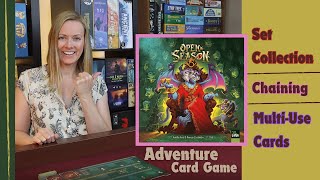
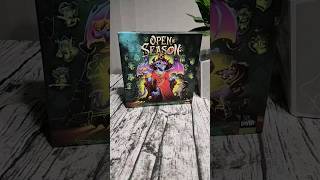
Open Season arrives with a clever premise that delights reviewers: you play as monsters, tired of adventurers invading your home, so you're collecting the heads of would-be heroes to display as trophies. The execution splits reactions into two camps. Enthusiasts like Kimberly from Tabletop Tolson rave about the clever puzzle and surprising replayability. Skeptics, including Phil from The Board Gaming Doctor, find the game's complexity at odds with its streamlined turn structure. What unites them is respect for the design: this is not a light game hiding in a small box, but rather a strategic puzzle that reveals itself over multiple plays. Reviewers consistently praise the art and production quality, the quick gameplay pace, and the depth of interaction, though some needed a learning curve to appreciate the board's layered restrictions and scoring systems.
Core Mechanics That Define Open Season
Card Drafting
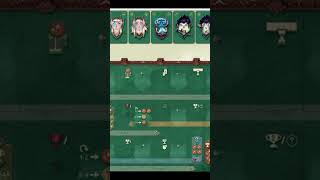
Every turn, you look out at five available cards and draft two of them. One goes to your wall, one goes to your stock. This is the heartbeat of Open Season, and it is devastatingly simple on the surface. Kimberly describes the turn flow as so easy that "you're done and done and done so fast." But that simplicity masks the puzzle beneath. The cards you choose ripple through your board state in ways that take several plays to fully grasp. What reviewers appreciate most is that drafting from a shared pool creates tension without constant negotiation. You take what you want, and your opponents adjust accordingly. This leads to the game's most satisfying moments, when you realize a seemingly random draft choice has positioned you perfectly for a cascade of bonuses in turns to come.
Tableau Building
Your wall and stock form a personal tableau that generates your score. The wall, in particular, is a puzzle. It has 11 fixed spaces arranged in rows of four, four, and three. Where you place each monster matters enormously. Some spaces offer bonus actions if you fill them in the right order or with the right combinations. Some spaces penalize you if you place the wrong hero type there. Some unlock rewards like tokens that copy adjacent cards. Kimberly calls this "a real puzzle" where "the further you get into the game the more you find these ways to just bank and bank and bank." Phil found the complexity of tracking all these rules daunting at first, but reviewers who stuck with it discovered a rich decision space. Your stock accumulates cards that you'll convert into your scoring pile at the end, and which cards you prioritized there determines what combos you can assemble on the wall.
The Open Season Experience
Puzzle-Like and Brain-Burning
Jenna from The Board Game Garden immediately latched onto Open Season as a "brain-burny puzzle game." Like a sudoku or other constraint-satisfaction puzzle, Open Season asks you to fit pieces into spaces under a web of restrictions. Can you place this barbarian here? No, you already have one barbarian in this row. Can you fill that bonus space in time? Not if you don't draft the right card in the next two turns. This creates a beautiful tension where you are constantly thinking two or three moves ahead, but the actual execution of your turn takes seconds. Multiple reviewers noted that the game rewards repeated play. Sophie from Board Stupid says that after the first game, "I understand it now I can do the combos." What felt overwhelming on turn one becomes second nature by turn four.
Interactive and Confrontational
Some board effects let you steal cards from an opponent's stock or replace their cards on the board, adding a confrontational edge. Sophie highlights this: if you match a card in your stock with one in the top row, you can trigger an action that "lets you steal a card from another player." It is not a heavy attack; the victim simply refreshes from the deck. But it is enough to create moments of "oh that is a little stinky" when someone takes the card you were counting on. This interaction keeps the game dynamic and prevents any single player from running away with the lead through pure puzzle optimization. Reviewers appreciated that the game stays fast and tense because of this thread of player-to-player engagement.
What Makes Open Season Stand Out
Instant Replayability Through Modular Board Design
The board is double-sided. Flip it over and the configuration of spaces changes. Kimberly explains: when you flip your board, "you're going to have your heads in a different configuration," and you get the option to score columns instead of rows using a special upgrade. Sophie confirms that "the other side you will have objective that you will activate so you need to activate the objective to win the points." This is not just cosmetic variation; it alters strategy fundamentally. Combined with the high-skill ceiling on the puzzle side, the double-sided design ensures Open Season feels fresh across multiple plays without requiring expansions.
Accessibility Meets Strategic Depth
The genius of Open Season is that the turn structure is absurdly accessible. Take two cards, place one on your wall, one in your stock. That is it. Jenna and Phil both underscore how quickly turns move. Yet beneath that simple action lies a genuinely difficult puzzle. This creates a rare dynamic: new players can join and participate immediately without slowing the game, while experienced players find rich strategic layer to exploit. Kimberly sums it up: "As the game goes on and you're competing with other players for the most, you start competing with other players for the most but as you see right here I put this figure down here to get the bonus but now if I have any of those Mages in my accolades pile at the end of the game I will lose two per." Balancing personal optimization against board restrictions and opponent interference is the core joy.
Potential Drawbacks
High Cognitive Load from Board Complexity
Phil from The Board Gaming Doctor names the central tension explicitly: "The gist of the game is pretty straightforward but the complexity of how this board works was a little hard to understand at first glance." Phil needed "a few games to realize kind of what was going on." The placement restrictions, bonus triggers, timing windows, and scoring criteria create a rulebook that is light on page count but heavy in comprehension. Players used to cleaner Euro designs may find the rule density frustrating given how simple each turn feels. Sophie allays this partly by noting that once you play, "you want to do another game immediately like I understand it now I can do the combos," suggesting the complexity is more intimidating than it is broken.
Thematic Disconnect
The goofy, monster-hunting theme of collecting hero heads is silly and charming, but some reviewers felt the theme contributed little to the puzzle experience. Jenna notes the theme "weirded me out because you're literally drafting these like monster heads that you have like on your wall I guess which is a little bit sad." The game could reskin entirely as abstract tableau-building and lose nothing mechanically. Kimberly leans into the theme by praising the art and calling it "goofy fun silliness," so it depends on your table whether whimsy lands or distracts.
If You Enjoy Open Season
Players who love the set-collection puzzle of Open Season will find satisfaction in Merchants of Magic, which Kimberly specifically recommends as a spiritual partner. Both games offer open card drafting, personal tableau building, and a satisfying flow between drafting and assembling your collection for points. Carcassonne scratches a similar itch for spatial puzzle-solving, though without the set-collection layer. For those drawn to the card-drafting core, Seven Wonders offers more negotiation and a longer play arc, though less of the personal puzzle. If the brain-burning placement restrictions appeal to you, That's So Clever and Roland Rights channel similar optimization on a different game board.
What Reviewers Are Saying
"This is such a streamline straightforward game with a lot moving parts that you have to consider as you take your turn, your turn is very simple. Look out there are five cards that are available, you're going to take one card and place it into an empty space on your wall and you take another of the five cards and you place it down here in your stock that's it, it's so easy."
—Tabletop Tolson
"This is a real puzzle. This is a nice strategy with five options where you're taking two of those and your choices start to get narrower and narrower as you go."
—Tabletop Tolson
"You have a lot of combos to resume, you have a lot of combos a lot of strategy you can do and you can play really fast to this game. So I have to admit that on the first game it's sometimes hard because you have to remember everything but after one game you want to do another game yeah immediately like I understand it now I can do the combos."
—Board Stupid